
Armenian law requires every buyer of a local SIM card to hand over a passport at the counter, a rule enforced at Viva-MTS, Ucom and Team Telecom shops alike. A foreign-issued travel eSIM is not covered by that law at all: because it is sold as an international roaming product rather than a SIM registered on Armenian soil, buying one online sidesteps the counter, the passport and the ten-minute registration entirely. That is the real trade-off between a physical SIM and a travel eSIM in Armenia, and it has almost nothing to do with how many gigabytes either one includes.
The passport rule, and why eSIMs skip it
SIM registration is a legal requirement in Armenia, not a store policy. Buy a physical SIM, even a short-stay tourist package, and staff scan your passport into the carrier’s system on the spot, a process that typically takes about ten minutes. Some shops also ask for a visa or your accommodation address. None of that applies to an eSIM issued by a foreign reseller: it rides on a roaming agreement with one of the three local networks, so from Armenia’s side it is a visiting SIM, not a locally sold one, and it never touches the registration system.
Three networks, one real coverage gap
Armenia has three mobile operators, and the national regulator’s most recent population-coverage figures show them far from interchangeable: Viva-MTS covers 99.9% of populated areas, Ucom 88.2%, and Team Telecom, the network most travellers still know by its old name Beeline, only 55.5%. Almost every travel eSIM sold for Armenia is quietly reselling access to one of those three networks. The seller’s page tells you the data allowance. It essentially never tells you which of the three maps you are actually buying, and that is the detail that decides whether you have signal outside Yerevan.

Team Telecom’s own network performs reasonably along the main tourist corridor — Yerevan, Lake Sevan, Dilijan and on to Tatev — even though it trails badly on national coverage. So a reseller running on that network is not necessarily a bad choice for a standard sightseeing loop; it is a bad choice if your itinerary strays off it, and there is usually no way to tell from the checkout page which network you have been assigned until you land.
How to find out which network your eSIM actually uses
Most eSIM marketplaces do not print the underlying carrier on the product page, but you can usually find it in the plan’s technical details or FAQ section, or by asking support directly before you pay. If a seller will not confirm which of Viva-MTS, Ucom or Team Telecom is carrying its Armenia plan, treat that as useful information on its own: a seller confident in its coverage generally says so. When two resellers offer similar gigabyte counts at similar prices, the one that names its network is the safer bet for anyone planning to leave Yerevan.
What a tourist SIM actually costs at the counter
All three carriers sell a short-stay tourist package priced identically at AMD 2,500 for 15 days, as listed on their own tariff pages in September 2026:
- Viva-MTS TOURIST UNLIM: unlimited data, 300 minutes, 300 SMS
- Team Telecom Be Free: unlimited data, 2,000 minutes, 500 SMS
- Ucom uWelcome: unlimited data, 300 minutes, 300 SMS
At the September 2026 exchange rate of roughly AMD 363 to the US dollar, AMD 2,500 comes to about US$6.90 for two full weeks of unlimited data on whichever network you picked. Travel eSIMs for Armenia start from around $0.90 a gigabyte on the cheapest resellers and run up to $9.90 a day for Holafly’s unlimited plan — meaning the passport-registered local option is not just cheaper, it is unlimited where most eSIMs are metered, for a fraction of the price of the eSIM plans that also promise unlimited data.
Staying longer than 15 days? The math changes a little
The AMD 2,500 tourist packages above are capped at 15 days. For a longer trip you would move to a standard 30-day data plan instead, and Ucom’s published uDrift tariff is a useful benchmark: 10 GB for AMD 2,900, or 30 GB for AMD 4,900, both good for 30 days. At the same September 2026 rate, that is roughly US$8 for 10 GB or US$13.50 for 30 GB over a full month, still well under what most travel eSIMs charge for equivalent volumes, and still requiring the same passport registration as the tourist package. There is no way around the registration step for a physical SIM regardless of how long the plan runs; it is a one-time counter visit, not a recurring one.
Landing at Zvartnots: what is actually waiting for you
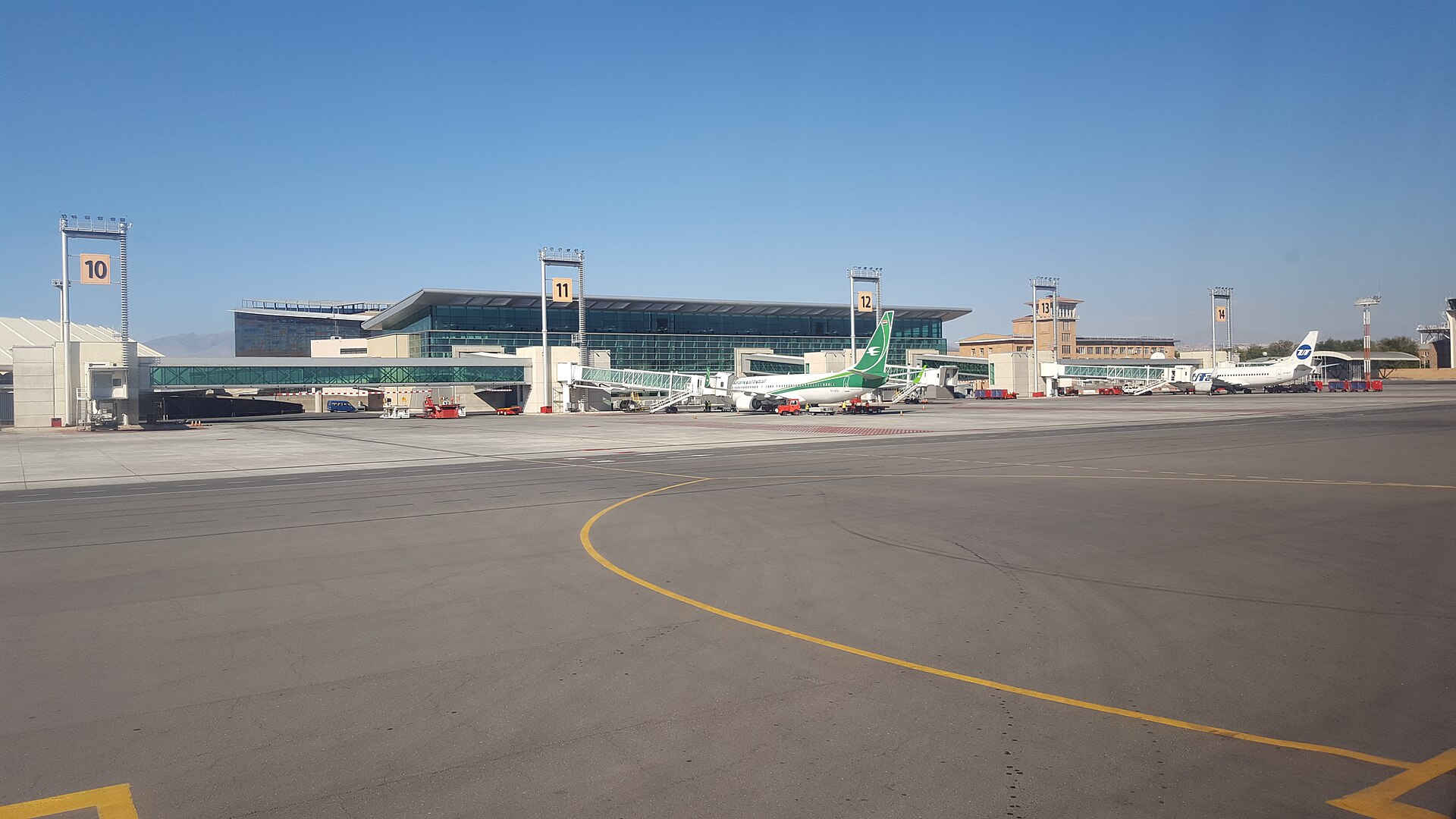
All three operators keep staffed kiosks in the arrivals hall at Yerevan’s Zvartnots International Airport, open around the clock, so buying a passport-registered SIM on arrival is realistic even on a late-night flight. You will see the counters before baggage claim ends. If you would rather not queue at 2 a.m. with your passport out, that is precisely the situation a pre-bought eSIM is built for.
When the eSIM is still the smarter buy
The local tourist SIM wins on price and data allowance for almost any stay of more than a day or two. An eSIM still makes sense for a short layover or a one- or two-day visit where the point is having data the moment you land, for a phone that only supports eSIM and where activating in the terminal is inconvenient, or simply for travellers who would rather not hand a passport across a phone-shop counter at all. If you are crossing overland from Georgia, note that the border post at Bagratashen keeps a Viva-MTS office open around the clock on the Armenian side, passport required, which is worth knowing before you plan a Georgia-Armenia trip that starts with our guide to Tbilisi.
Before you buy an eSIM: a short compatibility check
Not every phone sold outside a handful of markets supports eSIM, and carrier-locked phones bought on a contract sometimes have the feature disabled even on hardware that supports it. Before paying for an Armenia eSIM, confirm three things: that your phone model supports eSIM, that it is unlocked, and that it is not still tied to a home carrier that blocks alternate profiles. None of that is Armenia-specific, but it is the single most common reason travellers land with an eSIM that simply will not activate, and by then the passport-free convenience has cost more time than the counter at Zvartnots would have.
Where signal actually drops, regardless of carrier
Terrain, not network choice, explains most of the dead spots travellers report. Mountain passes such as the Selim (Vardenyats) route toward Sevan, and the ridge around the Tatev monastery and cable car, can lose signal on any of the three networks depending on which side of the mountain you are on. Download offline maps before you leave Yerevan and treat live navigation on these routes as a bonus rather than a plan. Central Yerevan is a non-issue on all three networks; it is the roads between destinations where the gap between “covered on paper” and “covered in practice” shows up.
What is not worth paying for
Skip the premium unlimited-per-day eSIM plans if your trip is longer than a couple of days: a passport-registered local SIM running on the same LTE network costs a fraction as much and is just as fast. The eSIM premium buys you convenience and anonymity from the registration desk, nothing more. If neither of those is worth roughly three or four dollars a day to you, buy locally at Zvartnots and register the SIM like everyone else does. If you are continuing on to Russia, where the rules for visitors are stricter still, our guide to eSIMs for Russia covers what changes across that border.
None of this changes if you are travelling with family or a group: each phone needs its own SIM or eSIM, and each physical SIM needs its own passport scan at the counter, even for a child’s device registered under a parent’s name. Budget the extra few minutes per person if you are buying locally at Zvartnots with more than one phone in hand.
Prices checked against operator listings in September 2026.
If the eSIM refuses to activate
Three failures account for almost all of it, in order of frequency. The handset is carrier-locked, so the profile installs but never attaches. Data roaming is switched off for the secondary line, which on both iOS and Android is a separate toggle from the primary one. Or the profile was installed on airport Wi-Fi with no mobile signal to register against — fix that one by toggling flight mode off and on once you are outside the terminal.
Install the profile before you fly, while you still have working data at home, but leave the line switched off until you land. Nearly every provider starts the validity clock on first network attachment rather than at the moment of purchase, so activating early can quietly cost you a day.
Where to stay once you are online
Yerevan is compact, and most visitors base themselves within walking distance of Republic Square or the Cascade. Rates outside the July–August peak are among the lowest of any European capital, and the city is small enough that paying a little extra for a central address genuinely saves time rather than just money.








Add comment