

If you are travelling to Slovenia from anywhere else in the EU or EEA on a plan from your home carrier, there is a real chance you do not need to buy an eSIM at all. Since 2017, EU “Roam Like At Home” rules let you use your domestic minutes, texts and data anywhere in the bloc at no extra charge, and that regulation was renewed in 2022 to run until 30 June 2032. Slovenia is fully inside it. The catch that trips people up is fair-use limits and the fact this only applies to an EU/EEA-issued SIM — a US, UK or Australian plan gets none of it, and still needs a local option.
It is an easy thing to get wrong precisely because eSIM shopping guides rarely mention it — including, until this rewrite, this one. Most articles comparing eSIM providers for a given country start from the assumption that you need one, then move straight to comparing gigabytes and prices. For an EU/EEA traveller visiting Slovenia, that assumption is often just false, and the honest first step costs nothing: open your carrier’s app and look for the EU roaming allowance before you open a comparison table.
Check this before you buy anything
Before adding anything to your cart, look at your home carrier’s roaming page for an EU/EEA fair-use data allowance. If you already pay for a plan in Germany, France, Poland or any other EU/EEA country, Slovenia is almost certainly included at no extra cost, up to your plan’s fair-use cap. Post-Brexit UK plans are a separate case: some UK carriers reinstated free EU roaming voluntarily, others did not, so check rather than assume. Everyone else — the US, Canada, Australia, and anywhere else outside the EU/EEA — pays full roaming rates or needs a local SIM or eSIM, full stop.
What “Roam Like At Home” actually covers
The rule itself is Regulation (EU) 2022/612, and it extends surcharge-free roaming across the EU/EEA through 30 June 2032. It is not unlimited: fair-use policies exist specifically to stop someone buying the cheapest EU country’s SIM and using it as their permanent line, so the regulation only protects “periodic travel,” not living abroad on a domestic plan. On the wholesale side, the cap carriers pay each other for roaming data has been dropping on a fixed schedule since 2022 and reaches €1 per gigabyte by 2027, which is part of why fair-use allowances have generally been getting more generous rather than less. The practical upshot: check your specific carrier’s fair-use cap in GB before you fly, rather than assuming “unlimited.”
In practice, “fair use” is enforced through data caps rather than a judgment call: your home carrier sets a specific gigabyte limit for roaming within the EU/EEA, usually tied to your domestic plan size, and you can burn through it exactly like your home allowance. Go over it and you either get throttled or pay a small per-megabyte surcharge, depending on the carrier — it does not usually mean a hard cutoff. The regulation exists to stop someone using a cheap Bulgarian SIM as a permanent UK line while paying Bulgarian prices, not to catch a two-week holidaymaker, so for ordinary travel use it rarely bites.
Who actually needs a Slovenia eSIM
Three groups: travellers arriving from outside the EU/EEA (the US, UK if your carrier does not cover it, Canada, Australia and similar); EU/EEA residents whose home fair-use allowance is too small for a data-heavy trip — working remotely, tethering a laptop, uploading video; and anyone combining Slovenia with a longer Balkans loop where per-country roaming adds up. If none of those describe you, save the money.
The three networks, and which one wins
Slovenia runs on three real operators: Telekom Slovenije, A1 and Telemach. Telekom Slovenije has the widest reach, with LTE and 5G covering close to the entire country; A1 and Telemach both run solid networks too, just with slightly less rural extension. In practice this matters far less here than in a geographically extreme destination — Slovenia is small (about 20,000 km²) and densely covered by comparison to somewhere like Chile or Argentina, so most travel eSIM brands deliver a perfectly usable signal on any of the three. The one place this changes is deep in the Julian Alps or Triglav National Park’s higher trails, where coverage thins out on every network, not just the ones travel eSIMs use.
Telekom Slovenije was the original state operator, and that legacy shows in its tower density outside the main cities — it is still the network locals point to for the most consistent coverage in the Soca Valley and the more rural stretches near the Austrian and Hungarian borders. A1 and Telemach have closed most of the gap in the last few years and are effectively interchangeable in Ljubljana, Maribor, Bled and the coastal towns like Piran. If you are only visiting the well-trodden route through Ljubljana, Bled and the coast, any of the three networks behind a travel eSIM will be fine; the distinction only matters if your itinerary pushes into the Alps or along the eastern border regions.
What it costs if you do need one
Prices checked against operator listings in September 2026. On Airalo’s Slovenia-specific plan, 1GB over 3 days starts around $4, a 5GB/30-day plan runs about $13, 10GB/30 days is roughly $19, and 20GB/30 days lands near $34. Nomad’s Slovenia plan starts cheaper at the small end — about $2 for 1GB over 3 days, or $4.50 for 1GB over 7 days — which suits a short city break better than a longer stay. If your trip also covers neighbouring countries, a pan-European eSIM (roughly $12–24 for 5–10GB across 30+ countries) usually beats buying separate single-country plans once you are crossing two or more borders.
- Short Ljubljana city break (3–4 days, light use): Nomad 1GB, about $2–4.50
- Two-week Slovenia trip, normal maps and messaging: Airalo 10GB/30 days, about $19
- Slovenia plus a Balkans loop (Croatia, Austria, Italy): a regional Europe eSIM, roughly $12–24 for 5–10GB
Where to stay once you are online
Ljubljana is small enough that almost any central base works, but staying inside or right against the Old Town, near Prešeren Square and the Triple Bridge, means you can walk to the castle funicular, the riverside cafés along the Ljubljanica, and the Friday food market without needing local transit at all.
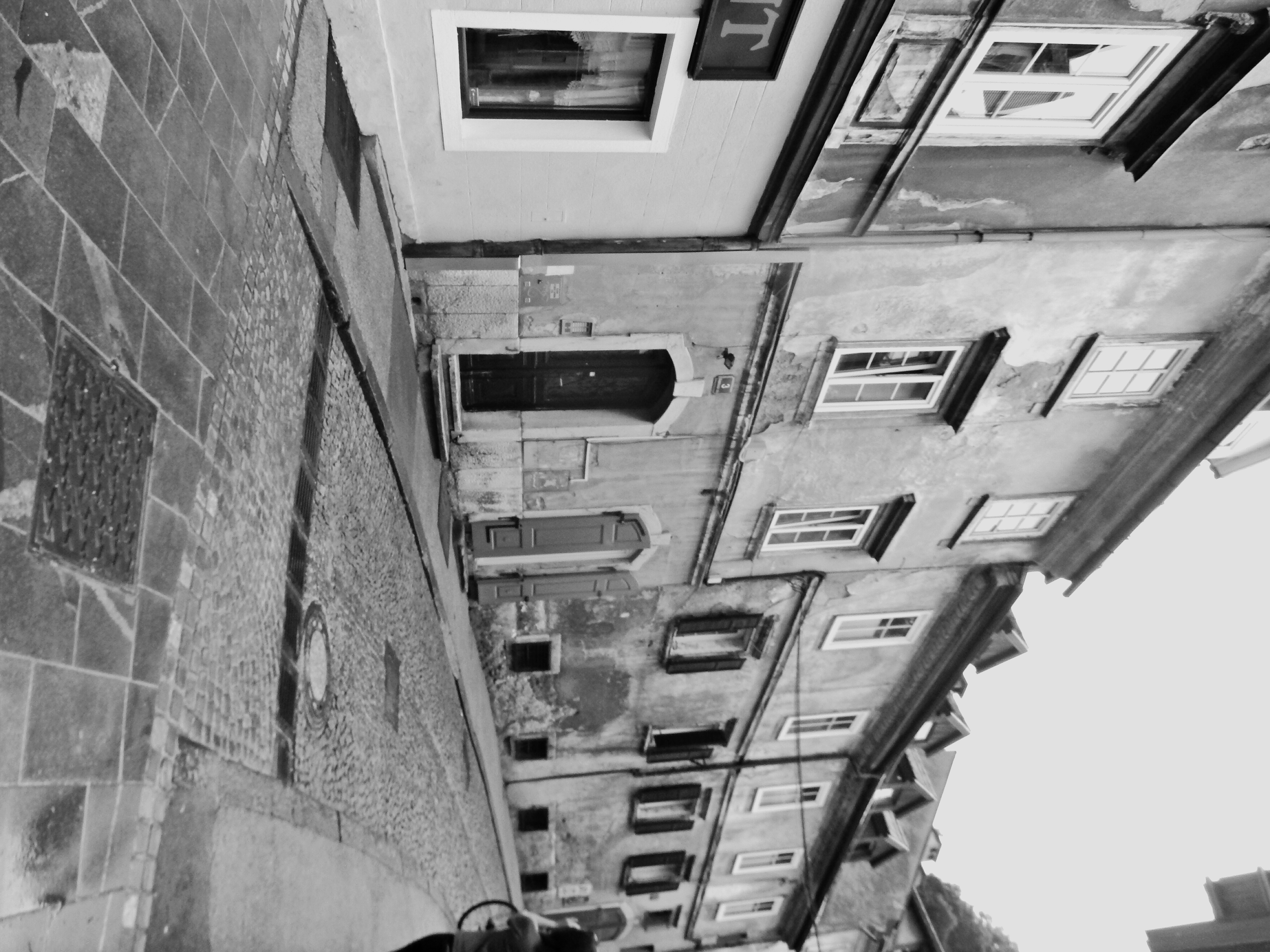
Rates in Ljubljana run noticeably lower than Vienna or Venice, both a few hours away by train, and a central room rarely costs much of a premium over something on the edge of town given how compact the whole city is.
What is not worth paying for
A pan-European eSIM bundling 30-plus countries is genuinely useful for a multi-country trip, but for a Slovenia-only visit it is usually more expensive per gigabyte than the country-specific Airalo or Nomad plans above, so buying one “to be safe” on a single-destination trip mostly just costs you more for coverage you will not use. Unlimited-data plans are the other one to skip here: Slovenia is compact and Wi-Fi is common in hotels, cafes and even on some intercity buses, so most visitors use well under 5GB in two weeks, and a capped plan works out cheaper every time. If a provider is pushing you toward its biggest bundle, that upsell is not really about your trip.
Buying local instead: why most visitors cannot
A local Slovenian SIM or eSIM is often the cheapest data in the country per gigabyte, but almost every operator requires proof of residence and a Slovenian tax number (davčna številka) to activate one, which rules it out for most short-term visitors regardless of nationality. This is the opposite problem from somewhere like Chile, where a passport is enough but the process is a hassle; in Slovenia, the process itself is closed to you unless you are actually resident. That is the real reason a travel eSIM, or your EU roaming allowance if you already have one, ends up being the only realistic option for a visit under a few weeks.
Getting from the airport, and getting around
Ljubljana Jože Pučnik Airport sits about 26 km north of the city, roughly 20–30 minutes by road. There is no train link, so the realistic choices are the shared shuttle bus, a public city bus with a transfer, or a pre-booked private transfer straight to your hotel — worth arranging in advance if you land late, since the public bus schedule thins out in the evening.
Once you are in the city, Ljubljana itself has no metro or tram; the LPP bus network covers it well, but the Old Town core is fully walkable and most visitors barely use the buses except to reach the airport or the train station.

Lake Bled is the classic half-day trip from Ljubljana — about an hour each way by car, or a direct bus — and needs no separate eSIM plan or border crossing to reach, unlike a Balkans loop that also takes in Zagreb or the Croatian coast, where a different country’s eSIM or roaming rules apply the moment you cross the border.
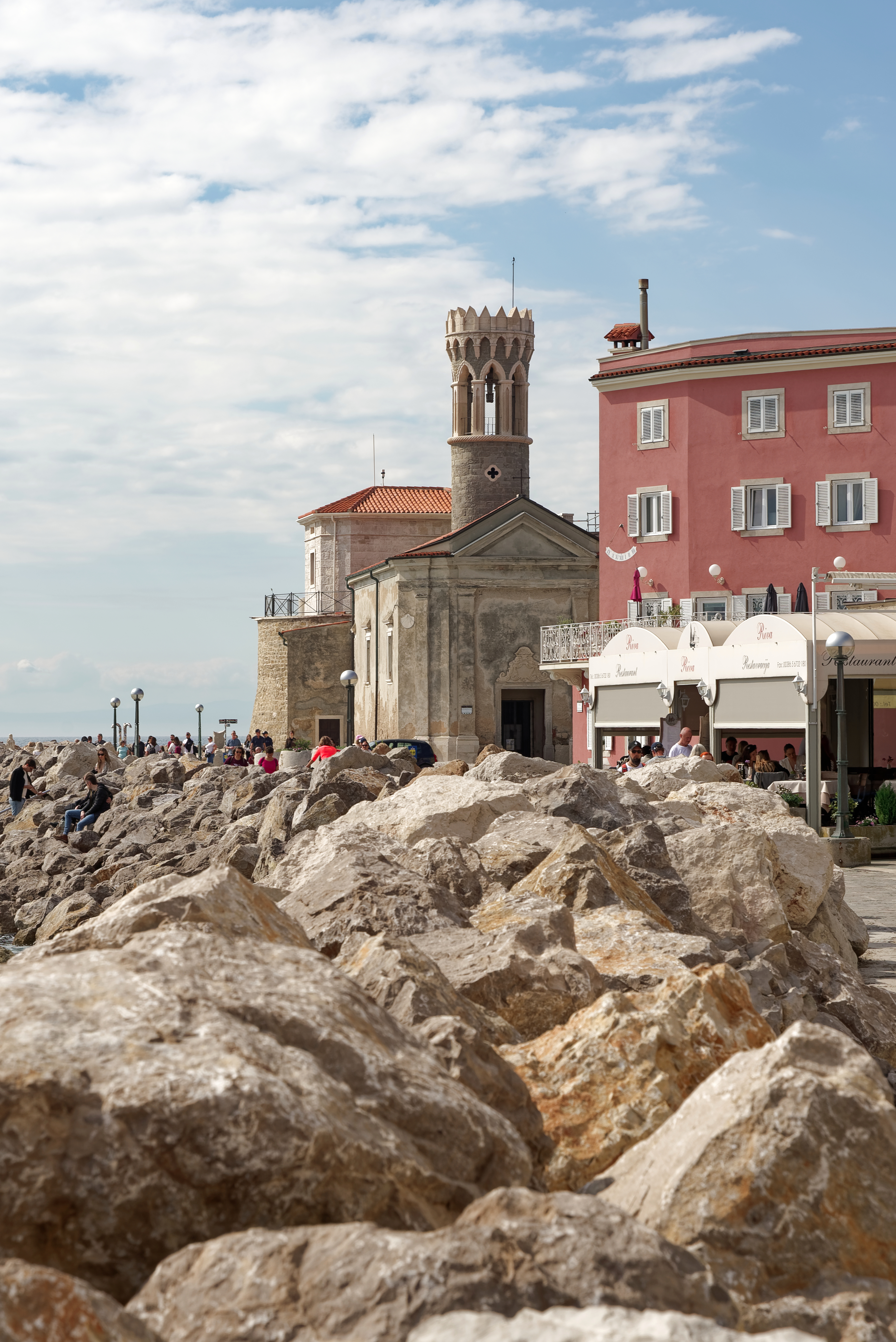
Slovenia’s own coast is short — just Piran and a handful of neighbouring towns — which is why most itineraries that include it also cross into Croatia within the same week; if that is your plan, see our guide to renting in Zagreb for what changes once you are over the border.
Setting it up
Install the eSIM profile from the QR code before you fly; on every major brand, the plan’s validity period only starts counting from first connection inside Slovenia, not from the moment you buy it, so there is no cost to installing it early. Hotspot and tethering are included on the plans listed above, and your home number stays on your primary SIM, so calls, texts and app verification codes keep working as normal.
The short version
If you already have an EU/EEA SIM, check your carrier’s fair-use allowance before spending anything — Slovenia is covered under Roam Like At Home through at least 2032, and for most trips that is the end of the story. If you are arriving from outside the EU/EEA, or your fair-use cap will not stretch to a data-heavy trip, Airalo or Nomad’s Slovenia-specific plans cover a standard visit for well under $20 in most cases. If Slovenia is one stop on a wider loop, our guides to renting a motorcycle in Zagreb and motorcycle rental in Zadar cover the Croatian legs, and if Italy is next on the route, our guide to eSIM for Italy is worth checking before you buy a second country-specific plan you might not need.








Add comment