
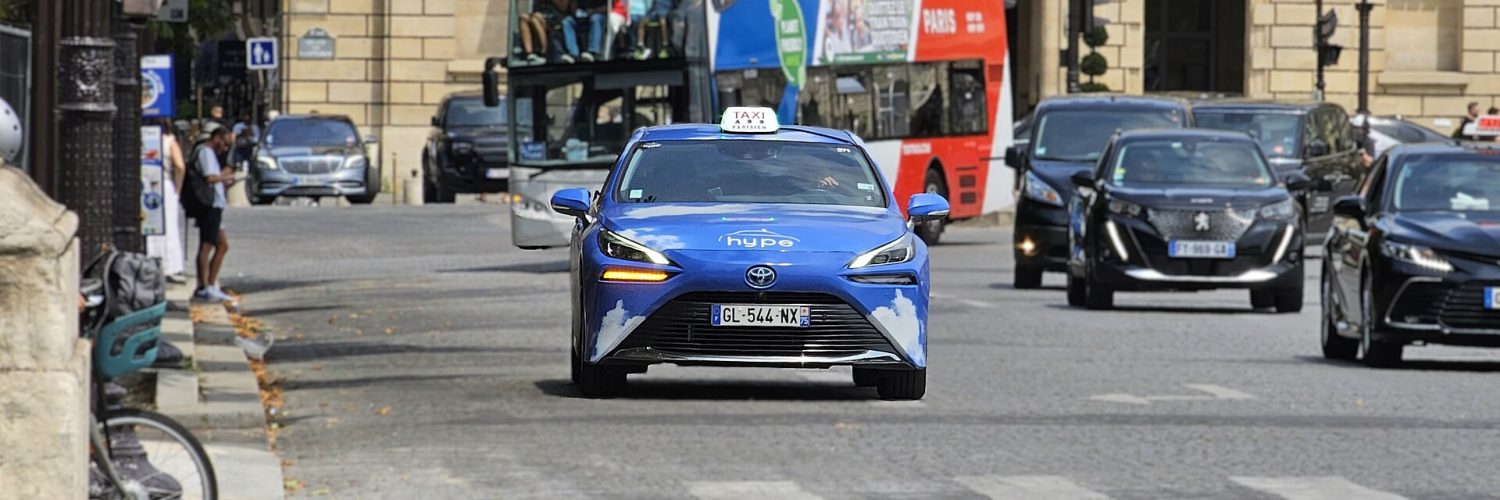
Two things changed in Paris in 2026 that make the taxi question completely different from what almost every guide online still describes. The RoissyBus, the direct coach from Opéra to Charles de Gaulle, ran its last service on 28 February 2026 and was permanently discontinued from 1 March. And the paper metro ticket — the little cardboard ticket t+ that generations of visitors bought in carnets of ten — is being retired across the network through 2026, having already stopped working on buses.
The result is that more visitors are looking at taxis than were a year ago, and a lot of them are working from out-of-date price information. Here is what a Paris taxi actually costs in 2026, when it is the right choice, and when it very much is not.
The airport flat fares — the most useful numbers in this article
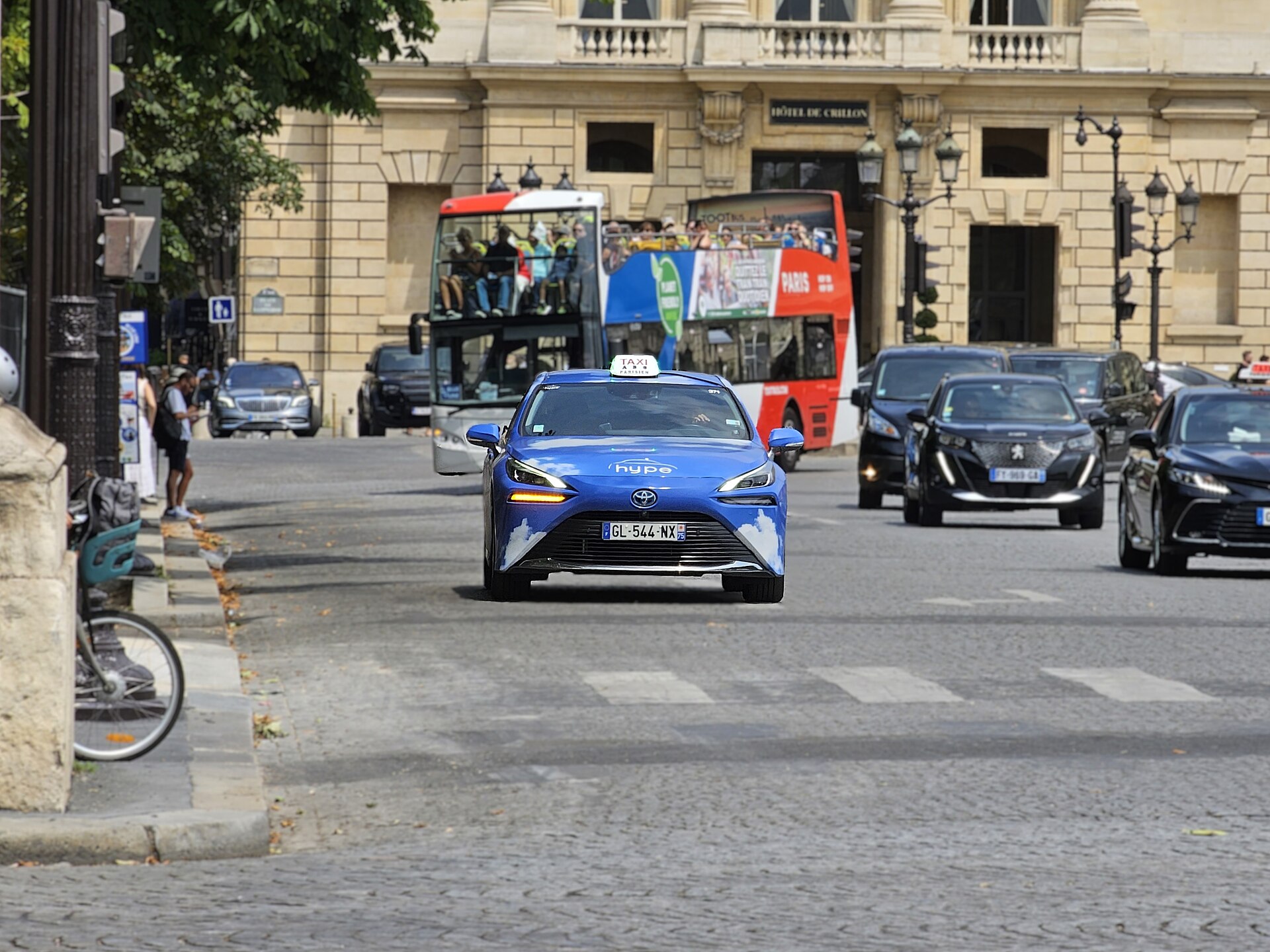
Taxis between the Paris airports and the city do not run on the meter. They run on flat rates fixed by prefectural decree, and those rates are the same in both directions, day or night, weekday or Sunday.
Charles de Gaulle (CDG) ↔ Paris, since 1 February 2026:
- Right Bank (Rive Droite) — €56
- Left Bank (Rive Gauche) — €65
Orly (ORY) ↔ Paris:
- Left Bank (Rive Gauche) — €36
- Right Bank (Rive Droite) — €45
The Right Bank is the north side of the Seine — Louvre, Opéra, Champs-Élysées, Marais, Montmartre. The Left Bank is the south side — the 5th, 6th, 7th, 13th, 14th and 15th arrondissements. Note the reversal between the two airports: CDG is north of the city, so the Left Bank is the further, more expensive side; Orly is south, so it is the other way round.
Luggage is free. A Paris taxi driver may not charge you a supplement for suitcases, at any time, on any journey. If a driver adds a bag surcharge to an airport flat fare, that is not a legitimate charge.
The one scam to know about
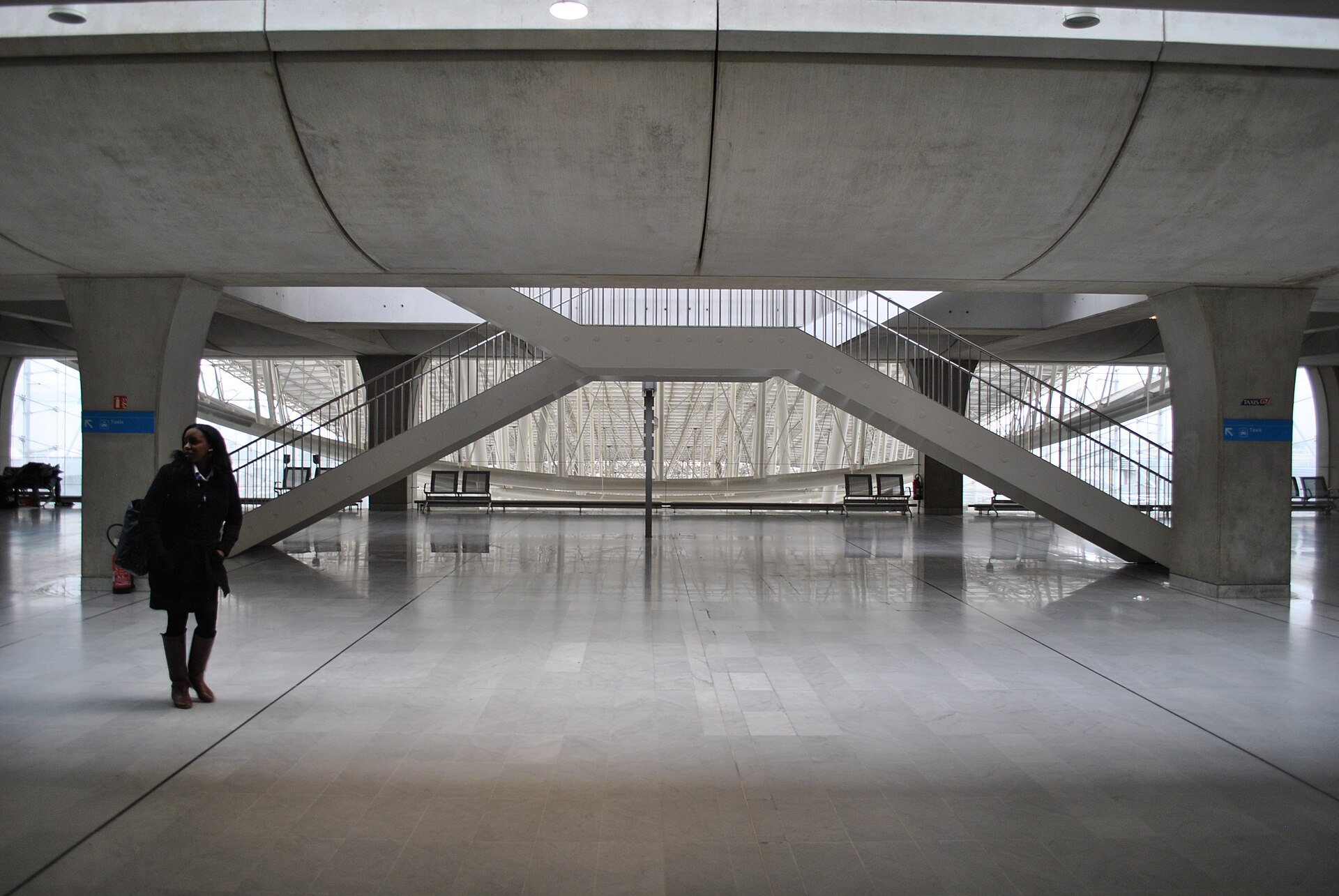
The airport flat fare only applies if you take an official taxi from the official rank. The rank is signposted, staffed at busy times, and outside the arrivals hall of each terminal.
Anybody who approaches you inside the terminal building offering a taxi is, by definition, not operating from the rank. This is the single most common way visitors get overcharged at CDG, and the amounts involved are large — three-figure fares for a journey that has a legally fixed price of €56. Walk past, follow the signs, join the queue. The queue moves faster than it looks.
A legitimate Paris taxi has an illuminated roof sign and a visible meter, and must accept card payment.
Taxi, Uber, or pre-booked transfer?
Street taxi from the rank. Best for airport runs, because of the flat fare. No app, no surge, no negotiation, price known in advance. The downside is queueing at peak arrival times.
Uber and other VTCs. Legal and widely used in Paris, and often cheaper than a taxi for journeys within the city. At the airports they are a weaker option: ride-hailing drivers are not permitted to use the taxi pick-up areas, so you will walk a considerable distance to a designated VTC point, usually in a car park, with your luggage. Airport pricing also surges precisely when a lot of flights land. Uber does now let you order an actual metered taxi through the app, which is a reasonable compromise.
Pre-booked private transfer. The case for this is not luxury, it is certainty: a fixed price agreed before you fly, a driver meeting you in arrivals, and no queue at 06:00. It is the sensible option if you are arriving late, travelling with children or a lot of luggage, or in a group of three or more where a taxi would need to be a larger vehicle anyway.
What replaced the RoissyBus
Since the RoissyBus ended, the direct public-transport link from central Paris to CDG is the RER B, which runs to both Terminal 1 (via the free CDGVAL shuttle) and Terminal 2. It is the fastest option in traffic and by some distance the cheapest.
Metro Line 14 has also been extended toward Orly, making that airport considerably easier to reach on public transport than it used to be. For Orly, the Orlybus and the tram remain, and the Orlyval connects to RER B.
So the honest hierarchy for CDG in 2026: RER B if you are travelling light and it is running; taxi at the fixed fare if you have luggage or it is late; pre-booked transfer if you want neither uncertainty nor a queue.
Fares inside the city
Journeys within Paris run on the meter rather than a flat rate, with a base charge plus a per-kilometre rate that changes by time of day and day of week. There is a minimum fare for very short trips. In practice a crosstown journey inside the city is usually somewhere in the €15–30 range, and traffic matters more than distance — a 4 km trip at 18:00 can cost more than a 7 km trip at 22:00.
Because of that, taxis are rarely the efficient way to cross central Paris. The metro is faster than a car for almost any journey inside the périphérique during the day, and it is now fully digital: a Navigo Easy card costs €2 as a one-off and holds single tickets, with a single ride at €2.55 since 1 January 2026. The monthly Navigo pass is €90.80.

What the meter actually charges
Paris taxi tariffs are set by prefectural decree rather than by the driver or the company, so they are identical in every licensed cab in the city. Four numbers cover almost every metered journey inside Paris in 2026:
- Pick-up charge, €4. It lands on the meter the moment the journey starts, whatever the distance.
- Minimum fare, €8, supplements included. A two-minute hop still costs €8, which is why very short taxi rides are poor value.
- Rate A, €1.22 per km. Inside Paris, Monday to Saturday, 10:00 to 17:00. This is the cheap daytime rate.
- Rate B, €1.61 per km. Inside Paris, 17:00 to 10:00 Monday to Saturday. Most evening journeys run on rate B.
- Rate C, €1.74 per km. The dearest rate. Inside the city it applies only from midnight to 07:00 on Sundays.
Two supplements catch people out. Booking a car in advance instead of taking one from a rank adds roughly €7 to the fare, and a fifth adult passenger, where the vehicle can legally carry one, adds about €5.50. Both are legitimate, and both should be itemised rather than simply absorbed into a round number.
Outside the city boundary the letters shift: rate B runs 07:00 to 19:00 Monday to Saturday and rate C covers everything else. That is why the same suburban distance costs noticeably more on the way home at midnight than it did in the afternoon. None of it applies to the airport runs, where the fixed fare stands whatever the meter shows.
These figures are revised most years, usually in February. Treat them as the shape of the pricing rather than as permanent numbers, and glance at the tariff card that every licensed taxi is required to display.
Practical notes
- All Paris taxis must accept cards. If a driver claims the terminal is broken, that is not your problem to solve — you are entitled to pay by card.
- Tipping is not obligatory. Rounding up, or 5–10% for genuinely good service, is normal and sufficient.
- A taxi will normally carry a maximum of four passengers; larger groups need a van, which must be booked.
- The flat airport fares apply to journeys between the airport and Paris proper. Destinations in the suburbs are metered and can be considerably more.
- Taxi ranks are marked with a blue “Taxi” sign. Hailing in the street works, but only if the roof light is lit.
- Traffic into the city from CDG is genuinely unpredictable. Allow 45–75 minutes rather than the 35 the map suggests.
If you would rather drive yourself
For trips beyond the city — Giverny, Reims, the Loire — a car makes sense, though not for Paris itself, where parking is expensive and the low-emission zone rules apply.
Where to stay
Whether you want the Left Bank or the Right Bank affects your taxi fare from CDG by €9, which is the least important reason to choose between them. Compare across your dates:
Your receipt is the thing that makes a complaint possible
A Paris driver must issue a receipt — the bulletin de course — whenever the fare exceeds €25, and must produce one on request for anything below that. Ask every time. It is not a formality: the slip carries the vehicle’s taxi number, and without that number a complaint has nowhere to go.
If something goes wrong — a card terminal that is suddenly broken, a meter running on an airport journey that has a legally fixed price, a route that made no sense — the complaint goes to the Préfecture de Police, to the office that licenses Paris taxis. You will be asked for the taxi number, the date and time, the pick-up and drop-off points, and an account of what happened. The receipt gives you the first of those and corroborates the rest.
That same number is also what recovers a bag left on the back seat, which is the more common reason travellers wish they had kept the slip. And if a dispute goes nowhere, France operates a free transport mediation service that reviews the file and proposes a settlement, normally inside ninety days.
Further reading
- Charles de Gaulle Airport Transfers
- Orly Airport Transfers
- Cheap Car Rental in Paris
- Things to Do in Paris




Add comment