

Nairobi has somewhere north of a million motorcycles moving through it, and almost none of them are ridden by visitors. That gap is worth understanding before you decide which side of it you want to be on, because the reasons are practical rather than snobbish: the licensing rules are stricter than most people expect, the traffic culture is genuinely its own thing, and the boda boda — the motorcycle taxi that dominates the city — is so cheap and so ubiquitous that hiring your own bike often solves a problem you do not have.
This guide covers what you legally need in order to ride in Kenya, what hiring costs, when a self-hired motorbike is the right call and when it plainly is not, and where to actually ride once you have got out of the city.

The licence rules, which are stricter than people expect
Kenya requires a motorcycle entitlement, not merely a driving licence. Under the National Transport and Safety Authority’s classification, motorcycles fall under their own class, and your entitlement must cover them.
For visitors the practical position is this: you need your national driving licence with a motorcycle category on it, plus an International Driving Permit, which rental companies in Kenya will ask for as a matter of routine. A foreign licence is generally accepted for a limited period — commonly cited as up to three months — after which residency-style conversion to an NTSA-issued Kenyan licence is required. If you are visiting for a fortnight, the IDP route is the one that applies to you.
Obtain the IDP in your home country before travelling. As everywhere, it is a translation of the entitlements you already hold and cannot create a motorcycle category you do not have.
Helmets are compulsory in Kenya for rider and passenger alike, and this is one of the more consistently enforced traffic rules in Nairobi. Commercial boda boda operators are separately required to carry two helmets meeting Kenya Bureau of Standards specification, register with the NTSA and belong to a SACCO — a regulatory regime that has been tightened repeatedly in recent years.
Should you hire a bike in Nairobi at all?
Be honest with yourself about this one.
Nairobi traffic is heavy, the jams are legendary enough to have their own vocabulary, and lane discipline is aspirational. Matatus — the minibuses that carry most of the city — stop wherever a passenger appears. Roundabouts operate on assertion. Rain turns unsealed shoulders into mud, and potholes on some arterial roads are large enough to be genuinely dangerous on two wheels. Kenya drives on the left.
None of that makes riding impossible; experienced riders do it daily. But it does mean Nairobi is not a place to ride for the first time, and it is not a place where a bike saves you meaningful money over the alternatives.

Where hiring genuinely wins is leaving. The roads out of Nairobi towards Naivasha, the Aberdares and Mount Kenya are good, scenic and far calmer, and a bike turns a long shared-taxi day into an actual trip. That is the use case worth paying for.
For getting around the city itself, boda bodas hailed through ride-hailing apps cost very little, come with a fixed price, and transfer the risk of Nairobi traffic to somebody who navigates it for a living. Add a helmet of your own if you plan to use them regularly — the ones offered are frequently inadequate.
What hiring costs, and what to check
Motorcycle hire in Nairobi is a smaller, more informal market than in Southeast Asia or the Mediterranean, and rates vary widely between a backpacker-oriented shop and an adventure-touring outfit renting a 650cc dual-sport with luggage. Weekly and multi-week rates fall sharply, and most serious riding in Kenya is done on trips of a week or more.
What to verify before you pay, in the order that causes the most trouble:
- Insurance and excess. Ask specifically what happens in a collision with a third party, what the excess is, and whether cover is void outside tarmac roads. Off-road exclusions are common and easy to miss.
- Whether the bike is road-legal and insured in its own right. Ask to see current insurance and inspection paperwork.
- Two helmets if you will carry a passenger, and check the fit rather than accepting whatever is handed over.
- Tyres, chain and brakes. Kenyan road surfaces are hard on all three.
- Never leave your passport as a deposit. Offer a cash deposit or a copy.
- Photograph the bike from every angle before leaving, and note existing damage on the agreement.
Getting in from the airport
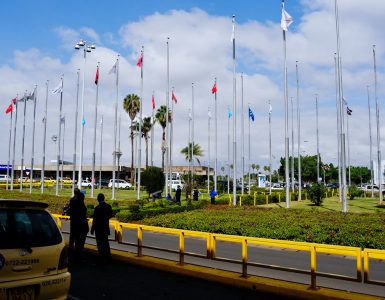
Jomo Kenyatta International sits south-east of the centre, and the drive in takes anywhere from 30 minutes to well over an hour depending on Mombasa Road. Many long-haul arrivals land in the evening or early morning, which is not the moment to collect an unfamiliar motorcycle and ride into Nairobi traffic for the first time.
Book the transfer, sleep, and pick the bike up the following morning. It is a small cost against the value of arriving with your luggage intact and your judgement working.
Where to stay, and why it matters for riding
Westlands is where most visitors end up: restaurants, bars, decent hotels, and reasonable access to the Waiyaki Way corridor heading out of town. Traffic here is heavy at peak.
Karen and Langata, out to the south-west, are green, quiet, low-rise and close to the Giraffe Centre, the Karen Blixen Museum and the Nairobi National Park gates. Much more pleasant riding on the doorstep, at the cost of being 30–45 minutes from the centre.
Kilimani and Lavington sit between the two, central without being in the CBD.
The CBD itself is convenient for transport but not where most visitors want to sleep, and parking a bike safely is a real consideration.
Wherever you choose, ask specifically about secure overnight parking for a motorcycle. Anything left on the street is a poor idea, and hotels with guarded compounds are the norm rather than the exception.

Where to ride
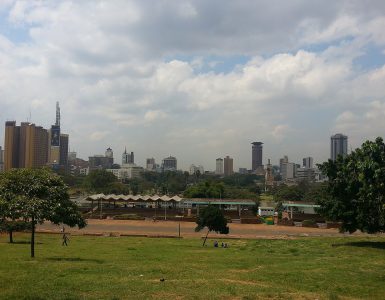
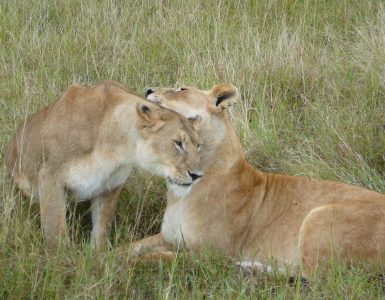
Nairobi National Park is the obvious oddity — a genuine wildlife park with lions and rhino directly against the city skyline — but motorcycles are not permitted inside. You will need a vehicle for that, which is worth knowing before you plan a day around it.
Ngong Hills, about an hour south-west, is the classic short ride: a ridge of green hills with wind turbines along the top, views into the Rift Valley on one side and back over the city on the other.
The Rift Valley escarpment and Lake Naivasha, roughly 90 km north-west on the A104, is the best full day out. The descent from the escarpment viewpoint is genuinely spectacular, and Hell’s Gate National Park near Naivasha is one of the few parks in Kenya you can enter on two wheels or a bicycle.
Mount Kenya and the Aberdares, three to five hours north, are the serious multi-day option, and where Kenya’s adventure-riding reputation comes from.
Karura Forest, inside the city, has surfaced trails, waterfalls and caves, and is a pleasant escape though generally better on a bicycle or on foot than a motorbike.

When to go
Nairobi sits at about 1,795 m, which is why it is far cooler than its equatorial latitude suggests — daytime highs are usually in the low-to-mid twenties Celsius and evenings can be genuinely chilly. Bring a layer; visitors expecting equatorial heat are routinely caught out.
There are two rainy seasons: the “long rains” around March to May, and the “short rains” around October to December. For riding, the drier windows of January–February and June–September are far preferable, both for comfort and because wet Kenyan roads are considerably more hazardous.

Practical notes
- Riding is on the left.
- Carry your documents — passport, home licence, IDP, and the bike’s insurance — as police checks are routine.
- Avoid riding after dark outside the city. Unlit roads, unmarked speed bumps and heavy lorry traffic combine badly.
- Speed bumps are everywhere on Kenyan highways, frequently unpainted, and are a genuine hazard at speed.
- Fuel is easy to find on main routes and much sparser off them. Fill up before rural sections.
- M-Pesa, the mobile money system, is accepted almost universally and is often easier than cash or card.
Further reading
- Things to do in Nairobi — the city in full.
- The Ha Giang Loop by motorcycle — the same vertical in a very different setting.
- Motorbike rental in Mexico — another market where insurance rules catch visitors out.
Add comment