
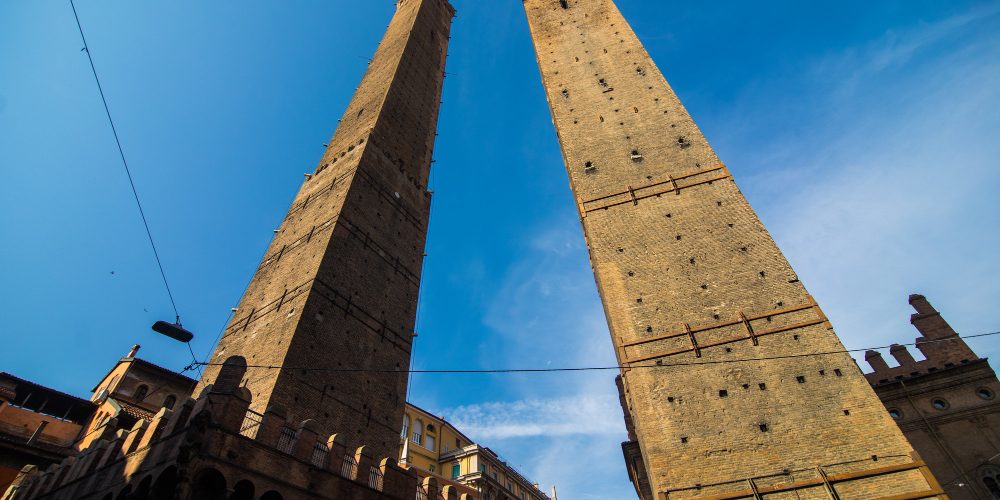
Nobody rents a motorbike in Bologna to ride in Bologna. The historic centre is a ZTL with porticoes on both sides and nowhere to put a bike; the city is better on foot than on anything with an engine.
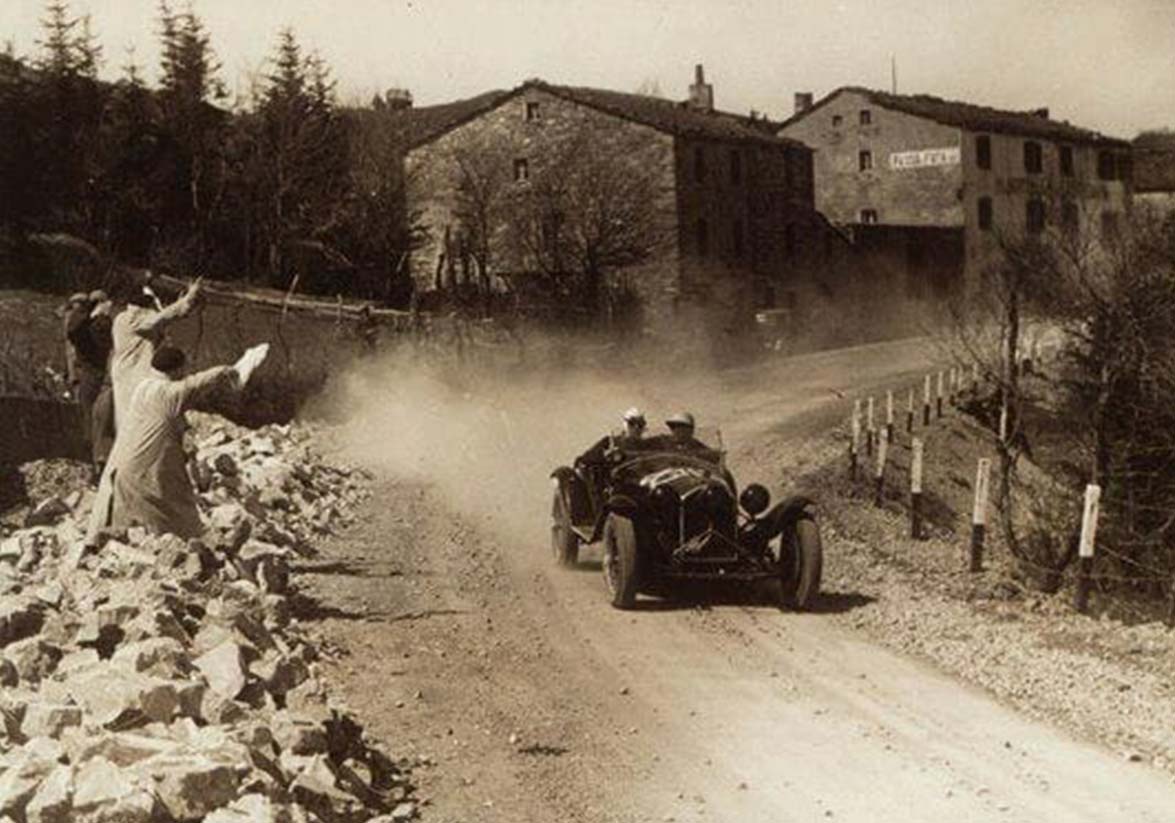
You rent here for one reason: the SS65 starts at the edge of town and goes over the Apennines to Florence via two passes that were on the Mille Miglia route from 1927 to 1957. The Futa and the Raticosa are the road. Everything else in this guide is logistics around getting you onto them.
The Futa and the Raticosa
The SS65 runs roughly 100 km from Bologna to Florence, and the section that matters covers both passes in about 43 km: the Passo della Futa at 903 metres and the Passo della Raticosa at 968 metres. From central Bologna you are on the good part inside forty minutes.
The character is not alpine. There are no dramatic hairpin stacks and very few photographs worth stopping for. What there is instead is rhythm — long linked curves at a pace that flatters an average rider, on a surface that in places genuinely feels like a circuit. That last quality is also the problem: it is one of the most heavily ridden roads in Italy, and the crash statistics reflect it.
The square at the top of the Raticosa is the meeting point. On a spring or summer weekend it fills with bikes from across Emilia-Romagna and Tuscany and functions as an open-air lounge — coffee, tyre discussions, and a lot of people who ride this road every week and know exactly where it goes.
Ride it on a weekday if you have the choice. Weekend traffic on the SS65 is a mix of very fast locals and very slow tourists in the same lane, and you will be overtaken by both.
The Motor Valley, which is the other reason to have a bike
Bologna sits in the middle of the densest concentration of motoring history anywhere. Within about an hour: the Ducati factory and museum in Borgo Panigale on the western edge of the city, Lamborghini at Sant’Agata Bolognese, and the Ferrari museums at Maranello and Modena. Pagani is at San Cesario sul Panaro.
These are scattered across small towns on the Emilian plain, and public transport between them is genuinely poor — this is the trip where having your own transport converts a logistical mess into an easy day. Book factory tours well in advance; the Ducati and Lamborghini production tours in particular sell out weeks ahead and cannot be walked up.
What the two passes are actually like
The Futa and the Raticosa are not alpine roads. There are no hairpin staircases and no snow poles. What you get instead is roughly seventy kilometres of continuous medium-speed curve on the old Bologna–Florence road, with long sightlines, decent surface on most of it, and gradients gentle enough that a 400cc bike is genuinely enough. That is precisely why the Mille Miglia used this route and why every Bolognese rider still does.
Two practical warnings. First, this is the region’s favourite Sunday road. Between roughly 10am and 4pm on a fine weekend you will be sharing it with fast local group riders and with cyclists on the climbs, and the combination is where most of the trouble happens. Ride it on a weekday morning if you have the choice. Second, the Raticosa side is more exposed and collects fog and wet leaves in autumn well before the Futa side does. The temperature drop between the city and the top is routinely eight to ten degrees, which is a lot when you have dressed for Bologna in the sun.
Fuel is the other thing people misjudge. There are stations at either end and few in between, and several of the small ones are unattended card-only pumps outside working hours. Fill up before you climb rather than assuming something will appear at the pass.
The ZTL, which will bill you
Bologna operates one of Italy’s larger limited-traffic zones over the historic centre, and it applies to motorcycles and scooters, not only to cars. Entry points are camera-controlled. The fine reaches you weeks later through the rental company, with an administration fee added on top, and a single distracted loop through the centre can produce several separate fines.
Practical approach: treat the walls of the old city as a boundary you do not cross on the bike. Park outside, walk in. If your accommodation is inside the zone, the hotel can usually register your plate for a temporary permit — but you have to ask before you ride in, not afterwards.
Licence and paperwork
The Italian rule that catches most visitors: Italy lets its own residents ride up to 125cc on a full car licence, and that concession does not extend to foreign licence holders. Without an A1, A2 or A category you are not licensed above 50cc here, and riding without it generally voids the rental insurance and most travel policies. The full explanation is in our guide to renting a scooter in Naples.
For the machines worth hiring in Bologna — and this is a region where people rent something with an engine rather than a scooter — you will need a full A category anyway. Non-EU riders should carry an International Driving Permit alongside the home licence.
The museums, and which ones need booking
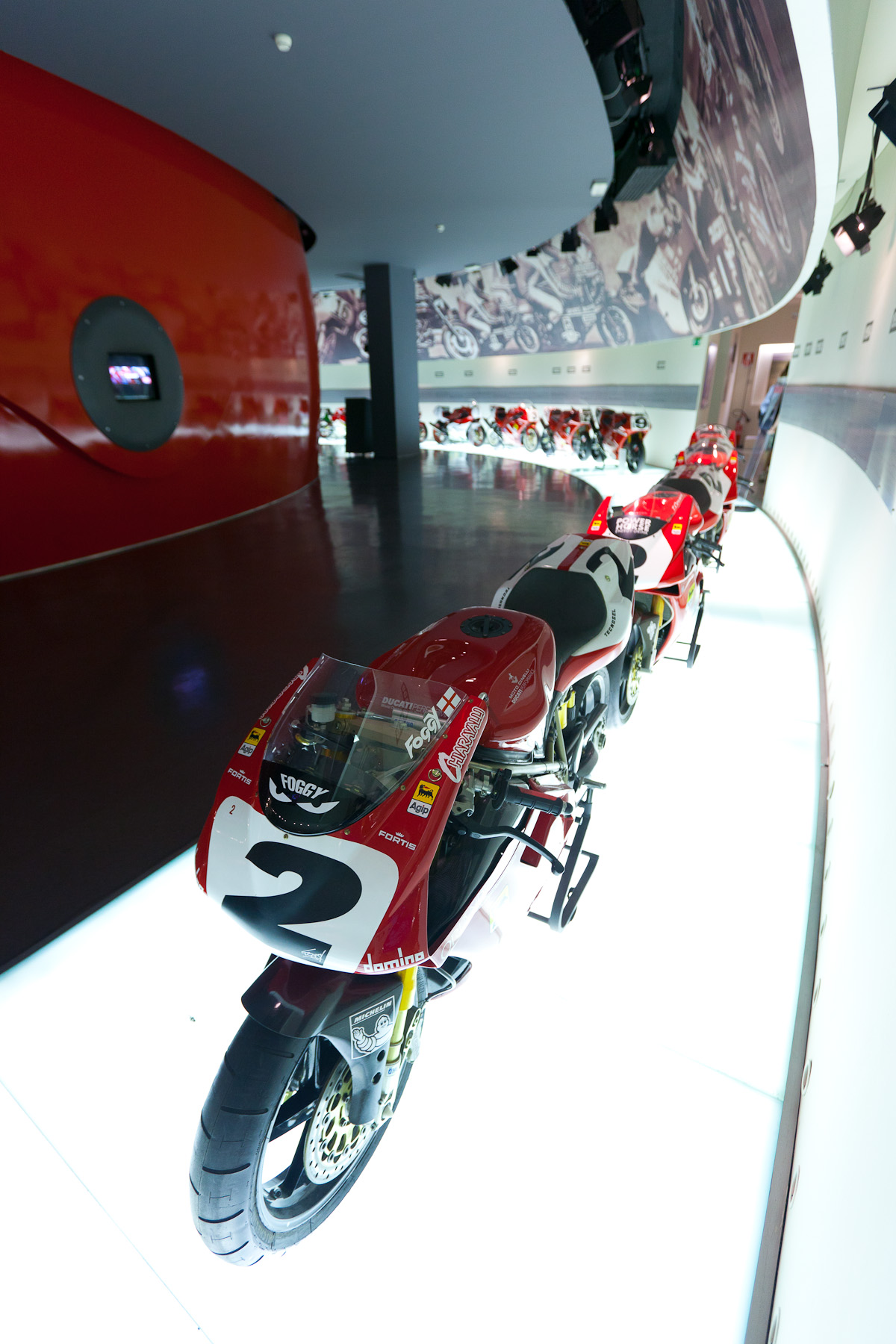
The Motor Valley museums are the reason a lot of people put Bologna on the map in the first place, and they behave very differently from one another. The Ducati factory and museum at Borgo Panigale runs guided visits on fixed slots and the factory tour in particular sells out days ahead, especially in the weeks around a MotoGP round at Misano. The Lamborghini museum at Sant’Agata Bolognese is thirty minutes north and takes walk-ins more easily, but its production line tour does not. Maranello, for Ferrari, is a full hour away and is better treated as its own day than as a detour.
The practical rule is that anything described as a factory tour needs booking and anything described as a museum usually does not. If you are riding, note that all three sit outside their towns on industrial roads with real parking, which is the opposite of the problem you have in central Bologna.
Bologna’s own paid sights are small and cheap by Italian standards: the Asinelli tower climb, the archaeological museum, and the guided visits to the anatomical theatre. None of them need a full day, and several combine into a single morning before you collect the bike.
What it costs
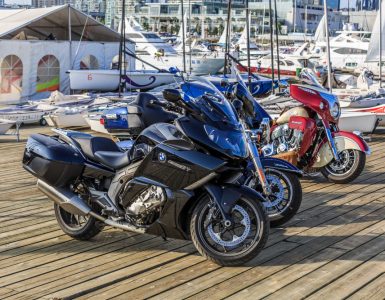
Bologna is a mid-price Italian city for hire. Small scooters sit at the bottom of the range; mid-capacity naked bikes and adventure machines run into the low hundreds of euro per day, and the Ducati-flavoured end of the market — which exists here for obvious reasons — costs more again.
Two clauses to read before the headline rate. First, mileage: some Italian operators cap daily kilometres and charge per kilometre beyond it, which matters on a day that includes both passes and a museum run. Second, the deposit, held on a credit card in the rider name for the duration — commonly several hundred euro on a scooter and well into four figures on a large bike.
Terms checked against operator listings in August 2026. Confirm the mileage clause and deposit with the supplier before booking.
A day that works
Leave Bologna by 08:00 on the SS65 southbound. Over the Futa, over the Raticosa, and down toward Firenzuola for coffee. Continue to Florence if you want the city, or — better for a riding day — turn west at Firenzuola and come back over the Passo della Futa on the smaller roads through the Mugello valley, past the circuit. Back in Bologna mid-afternoon, around 150 km total, before the evening traffic on the ring road.
If you would rather spend the day on four wheels of other people’s making, invert it: Maranello in the morning when the museum opens, Modena after lunch, and the passes on the second day.
Where to sleep, and the parking problem
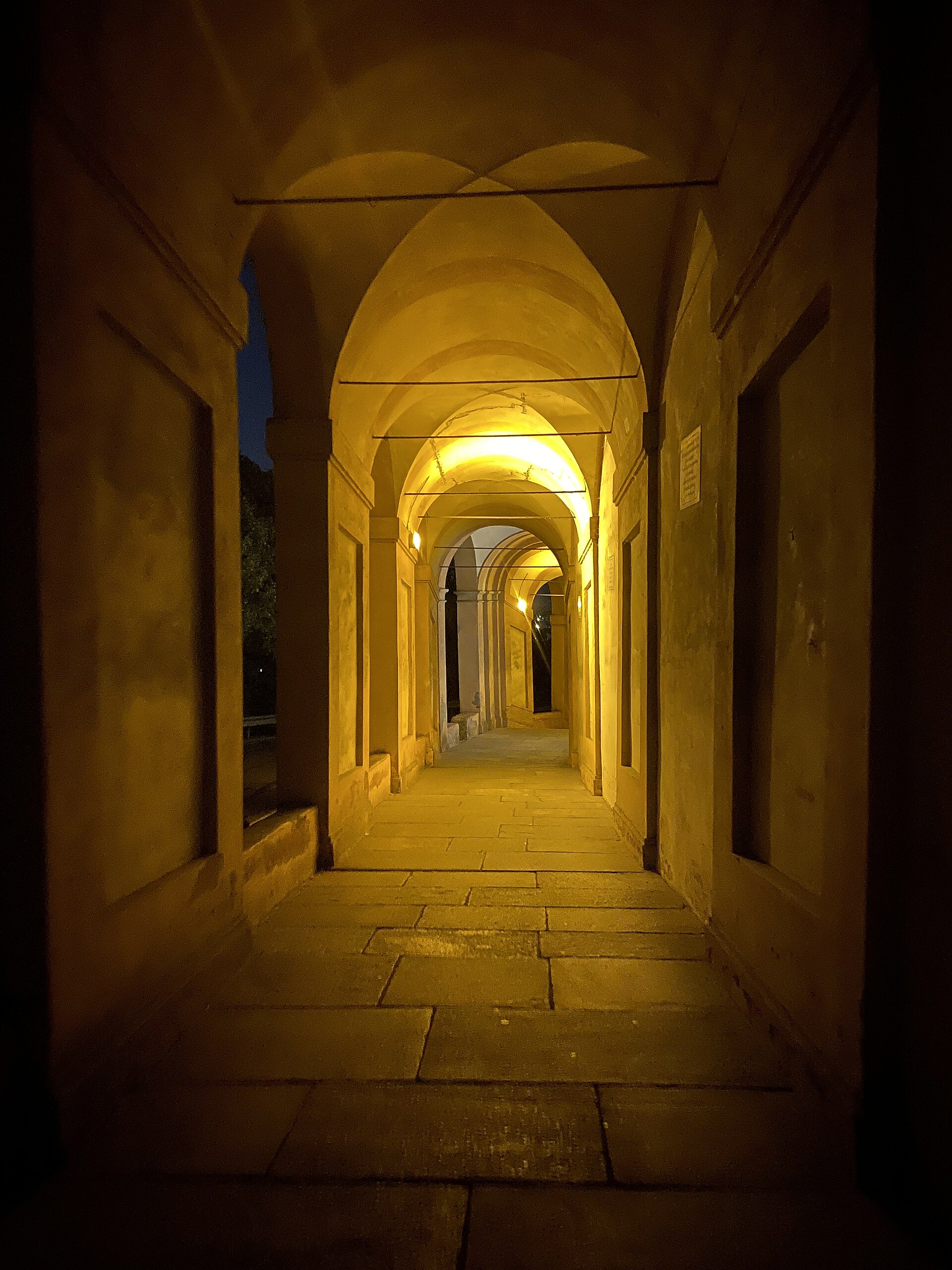
Bologna’s porticoes are the reason the city is a UNESCO site and also the reason accommodation choice matters more here than usual: almost the entire historic centre sits inside the ZTL, and a hotel inside it will not automatically come with a place to leave a bike. Before you book, ask two specific questions — is there a private garage or courtyard, and is the address inside the restricted zone. Many small central hotels answer yes to the second and no to the first, which leaves you paying for a public garage every night.
Staying just outside the walls, around the station or towards the Fiera district, usually solves both problems at once and costs less. You are then ten minutes’ walk or one bus ride from Piazza Maggiore, and you can leave in the morning without crossing a camera line.
If you are visiting during a trade fair — Bologna runs a lot of them — rates in the whole city triple and availability collapses. Check the fair calendar before you fix dates, not after.
When to ride
Late April to June and September to mid-October. The Apennines hold weather that the plain does not: the passes can be in cloud and ten degrees colder than Bologna on the same afternoon, so carry a layer even in June. July and August are hot and hazy on the plain and busy on the road. Winter closes nothing officially, but ice and fog on the passes are real and the SS65 is not the place to discover either.
If you would rather have four wheels
Two situations make a car the better call here. The first is travelling as a pair where only one of you rides, because the Futa is a poor place to discover that your passenger hates being a passenger. The second is autumn or early spring, when the passes are genuinely cold and wet often enough that a bike booked for a week can sit unused for three days of it.
A car also opens up the parts of Emilia-Romagna that are dull on a bike and excellent otherwise: the balsamic cellars around Modena, the Parmigiano dairies, and the Adriatic coast. Rates at Bologna airport are usually well below the city-centre desks, and the same ZTL rules apply, so the parking advice above does not change.
Practical notes
- Emilia-Romagna enforces speed with average-speed cameras on the main roads out of the city. The SS65 itself is patrolled at weekends.
- Helmets are compulsory for rider and passenger on every machine.
- Fuel: servito costs more than fai da te at the same forecourt. In the mountains, fill up before you leave the valley.
- Autostrada A1 tolls apply if you take the motorway to Florence rather than the pass. Two wheels pay a reduced class — but taking the A1 defeats the entire purpose of the rental.
- Photograph the bike before you leave, panels and tyres included.
Further reading
More Italian riding: motorcycle rental in Sardinia for the best road in the country, and motorcycle rental in Italy for the national rules in one place.
Add comment