
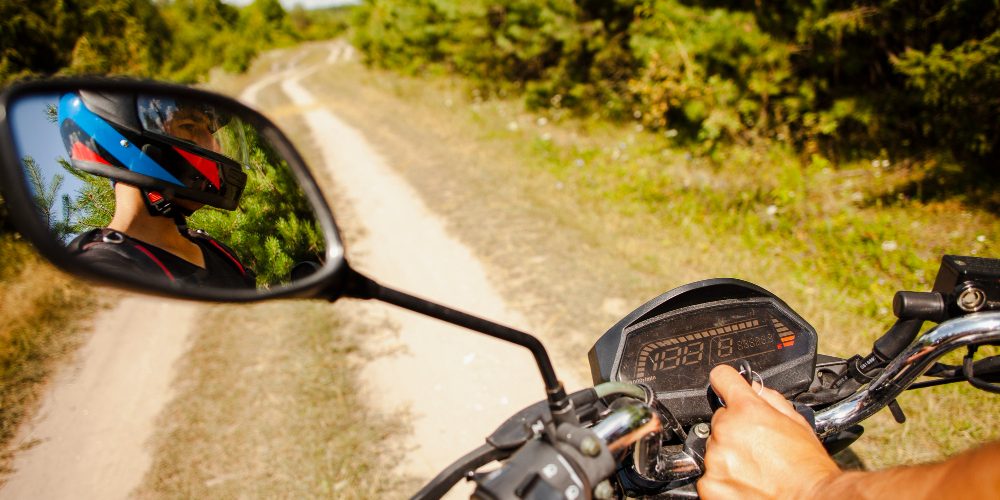
There is no such thing as a cheap day out on a hired motorcycle in Auckland. The operators serving the city are set up for touring, not for hourly hire, and their terms say so plainly: minimum bookings of three days in the off-season and five days over summer, a bond held against your credit card for the whole period, and a daily kilometre allowance you can burn through in a single ambitious morning. If you were picturing a Sunday ride around the Waitakeres for the price of a rental car, the North Island market is not built for you. If you were planning a two-week loop, it is built for almost nothing else — and the economics get dramatically better the longer you keep the bike.
Your licence has to say motorcycle on it
New Zealand lets you ride for up to 12 months on a current licence from your home country or on an International Driving Permit, and that 12-month clock restarts with each separate visit. The catch is the wording: you may only ride the categories you are licensed for at home. A car licence gets you nothing on two wheels here. There is no local equivalent of the European concession that lets a car licence cover a 125 — your licence has to show a motorcycle entitlement, and rental staff will check that the entitlement is visible on the document itself.
If your licence is not in English you need either an accredited English translation or an IDP carrying the motorcycle endorsement. Carrying it is not optional either: every driver in New Zealand must have the licence or permit on them while riding. The penalties for getting this wrong are specific — an infringement fee of NZ$400, or up to NZ$1,000 on conviction in court. Police can also forbid you from riding until you produce a valid licence, and if you carry on regardless the machine can be impounded for 28 days at the owner’s expense. On a rented bike, that owner is the rental company, and the recovery of that cost lands on you.
The quieter consequence is the insurance one. Riding without the correct entitlement puts you outside the terms of the rental agreement, which is where the cover stops. A crash in that position is not an excess claim — it is the whole bike.
Bonds, excess, and the number that actually matters
Unlike much of southern Europe, New Zealand motorcycle hire generally comes with comprehensive cover bundled into the daily rate rather than sold as an add-on. That sounds reassuring until you look at the excess figures, which are large by international standards.
At the Auckland operator based out of Auckland City Honda in Penrose, the published structure is:
- 500cc to 750cc: excess of NZ$3,000, reducible to NZ$1,500.
- 751cc and above: excess of NZ$4,000, reducible to NZ$2,000.
- Excess reduction: halves your liability for NZ$25 per day.
- Bond: a NZ$3,000 hold authorisation placed on your credit card for the duration of the hire.
- Third-party property liability: indemnified to NZ$5,000,000.
Two details in the fine print are worth more than the headline numbers. First, the excess cap applies to damage — but the cost of recovering the motorcycle sits on top of it. Break down somewhere remote and the retrieval bill is separate from your capped liability. Second, the list of things charged against the bond is broader than most people assume: scratches, seat damage, lost keys, and topping up the tank if you return it short. Traffic fines that arrive after you have flown home get charged to the same card.
On a 22-day hire, NZ$25 a day for excess reduction is NZ$550 — approaching the value of the reduction itself. A travel insurance policy from home that covers rental vehicle excess is usually the cheaper route, but it has to be arranged before you leave, and it has to explicitly name motorcycles. Many policies exclude them, or exclude anything above a stated engine capacity.
Most Auckland rental depots sit south of the CBD toward the airport and Penrose, so a central-city hotel means a taxi ride before you even see the bike. If the rental is the point of the trip, weigh a base near the depot against one on the waterfront before you book.
The 350km rule, and the one-way fee
This is the charge that catches people out, because it is invisible at the booking stage. The standard Auckland daily rate includes 350 km per day, with additional kilometres charged at 50 cents each. That allowance is generous for a touring pace and tight for an ambitious one. A single Auckland-to-Taranaki push will eat most of a day’s allowance before you have ridden anything interesting. The allowance is typically pooled across the hire rather than enforced daily, which is why long, varied itineraries work better here than a series of long-haul transit days.
The second structural cost is the one-way fee. Picking up in Auckland and dropping in Christchurch — or the reverse — costs NZ$799 on any hire of 19 days or fewer. On hires of 20 days and over the fee disappears entirely. That single cliff-edge reshapes a lot of itineraries: a 19-day one-way trip and a 20-day one-way trip can cost almost the same, and the longer one buys you an extra day plus a lower daily rate.
For reference, published Auckland rates run roughly from NZ$145 per day for a Honda CB500X on a short low-season booking to NZ$299 per day for a BMW R1200GS at high-season short-hire rates, with every model dropping by NZ$20 to NZ$50 per day as you cross the six-day and 22-day thresholds. Low season runs 1 April to 31 October with a three-day minimum; high season is 1 November to 31 March with a five-day minimum. Rates include the insurance, panniers, roadside assistance, taxes, toll road fees, a puncture repair kit and chain lube.
Where the riding actually is
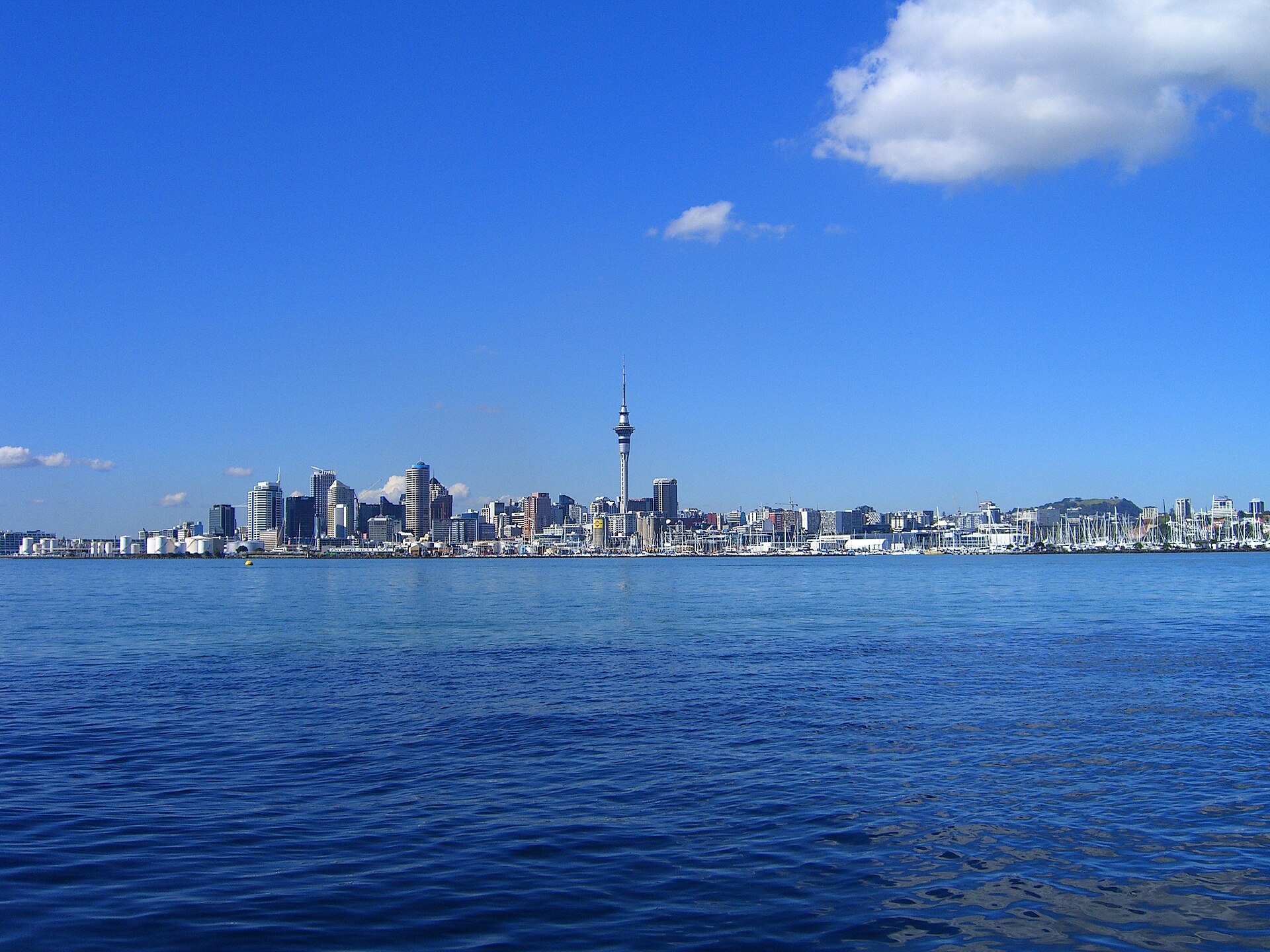
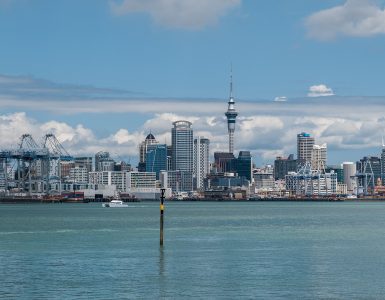
Auckland is a starting point rather than a destination for riders, and being honest about that saves people money. The city itself is congested, the motorway network is unrewarding, and most of what makes New Zealand worth riding is at least a half-day away. What Auckland does give you is the North Island, and the North Island has one road that is worth structuring a trip around.
State Highway 43, the Forgotten World Highway, runs 148 km between Stratford in Taranaki and Taumarunui in the King Country, and takes about three hours if you do not stop — which you will. It climbs three saddles: Strathmore, Whangamōmona and Tahora. Fourteen kilometres past Whangamōmona you ride through the Moki Tunnel, a 180-metre single-bore cut from 1936 that locals call the Hobbit’s Hole. Past the far end is the Tangarakau Gorge, with walls just under 60 metres high. Whangamōmona itself declared independence in 1989 after a boundary revision pushed it out of Taranaki, and has been issuing its own passports ever since.
The important update, and the reason older guides to this road are now wrong: the 12 km gravel section through the Tangarakau Gorge — the last unsealed stretch anywhere on the New Zealand state highway network, and the main reason SH43 once appeared on police lists of the country’s worst roads for crashes — was sealed in February 2025. The road is tarmac end to end now. It is still narrow, still blind in places, and still not a road to hurry, but the loose-surface hazard that defined its reputation is gone. If you were avoiding SH43 because you had read it was gravel, that advice is out of date.
For the days off the bike — and Auckland weather will give you some — these are the city experiences worth reserving ahead rather than deciding on the morning.
Riding conditions people underestimate
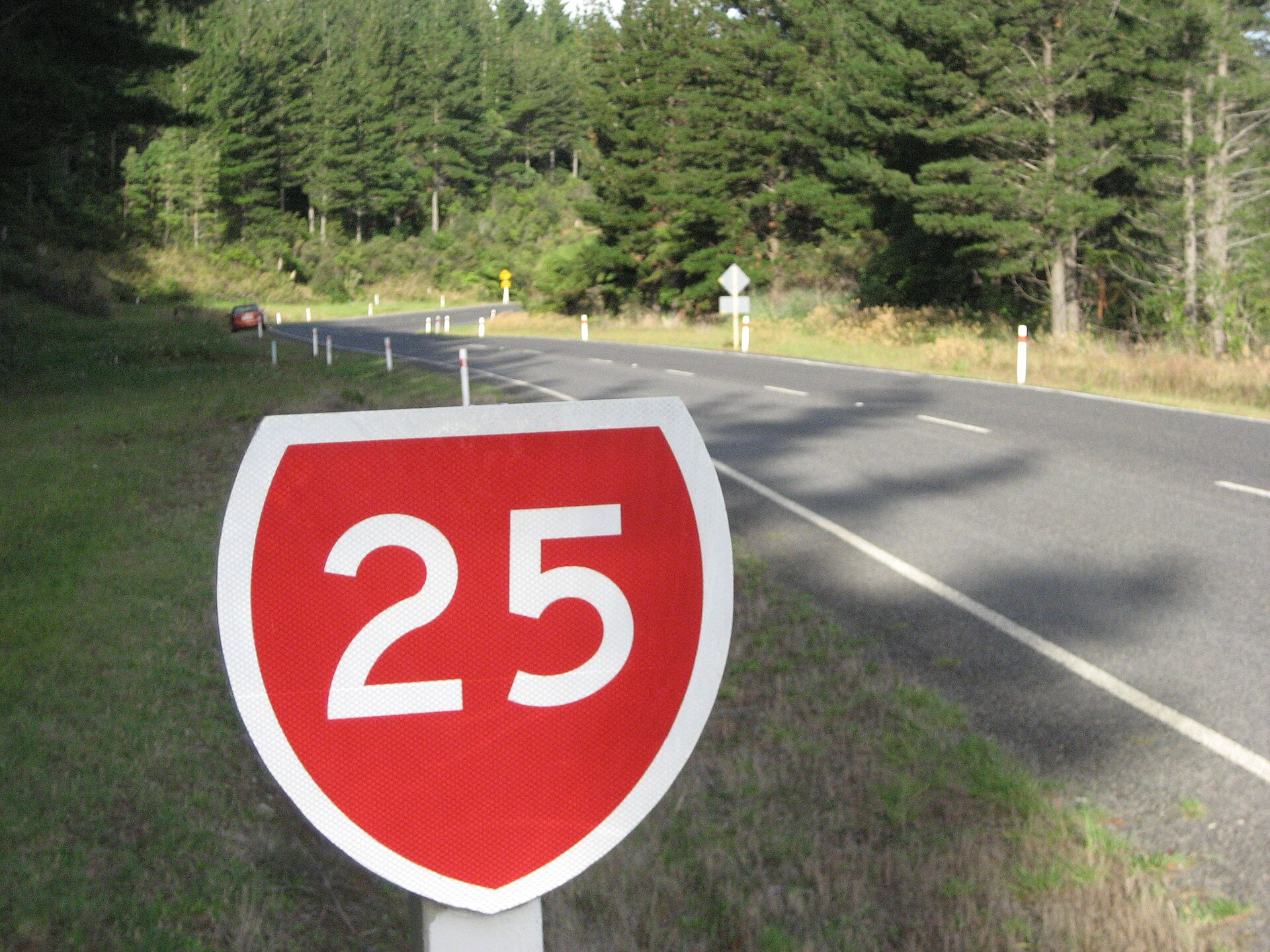
New Zealand drives on the left, and roughly 98% of the network is single-lane in each direction. The consequence is that overtaking is a deliberate act on most roads rather than a lane change, and that a slow vehicle ahead sets your pace for a long time. Distances also mislead: the country is small on a map, but hilly and winding terrain means that average speeds on the good roads are far below what the kilometre figure suggests.
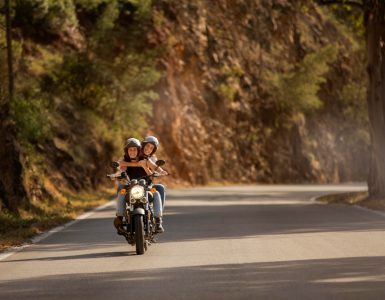
Helmets are compulsory for riders and pillion passengers. Motorcycles must run a headlight at all times, day included. And the weather on a North Island tour can change several times inside a single riding day, which is a packing problem rather than a route problem — but it is the reason experienced riders here treat a waterproof layer as permanent luggage rather than an optional extra.
When hiring is the wrong answer
Some of these recommendations earn us nothing, which is rather the point:
- A trip of under three days. The minimum-hire rules mean you will pay for days you cannot use. If you have a weekend in Auckland, spend it elsewhere.
- A big-capacity bike as a default. The 751cc-and-over class carries a NZ$4,000 excess and a higher daily rate, and New Zealand’s best roads are tight rather than fast. A 500 to 750 twin is cheaper on every line of the contract and is arguably the better tool.
- A one-way Auckland–Christchurch hire of 19 days. Either shorten the trip and ride a North Island loop back to Auckland, or extend to 20 days and lose the NZ$799 fee. Nineteen days is the worst-value length available.
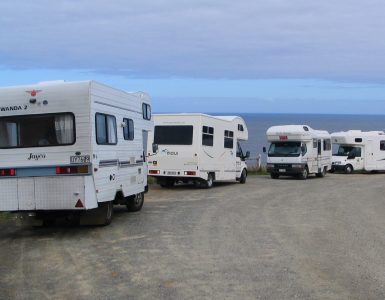
- Hiring at all, if you are travelling as a couple with luggage. A campervan covers accommodation and transport in one line item and is usually the cheaper total across a two-week trip. It is a worse holiday if you came to ride, and a better one if you did not.
The airport is 21 kilometres from the city and the bike will not be waiting at arrivals. Sort the airport-to-hotel leg separately, sleep off the flight, and collect the motorcycle the next morning when you can actually concentrate on the handover.
Booking checklist
- Confirm your licence shows a motorcycle entitlement, and arrange an IDP or English translation if it is not in English.
- Check the excess for the exact cc class you are booking, not the fleet minimum.
- Check whether your travel policy covers rental motorcycle excess before paying NZ$25 a day at the counter.
- Model your route against 350 km per day and price the overage honestly.
- If you are near 19 days on a one-way booking, price 20 days before you commit.
- Confirm your credit card can carry a NZ$3,000 hold alongside your other travel spending.
Prices checked against operator listings in August 2026. Rates, excesses, bonds and one-way fees change seasonally; confirm current figures with your operator before booking.
Related reading
- Motorcycle rental in New Zealand — the national picture, including how the South Island market differs.
- Campervan rental in New Zealand — the honest alternative if the sums above do not work for you.
- Auckland airport transfers — useful, since most rental depots are in the suburbs rather than at the terminal.

Add comment