
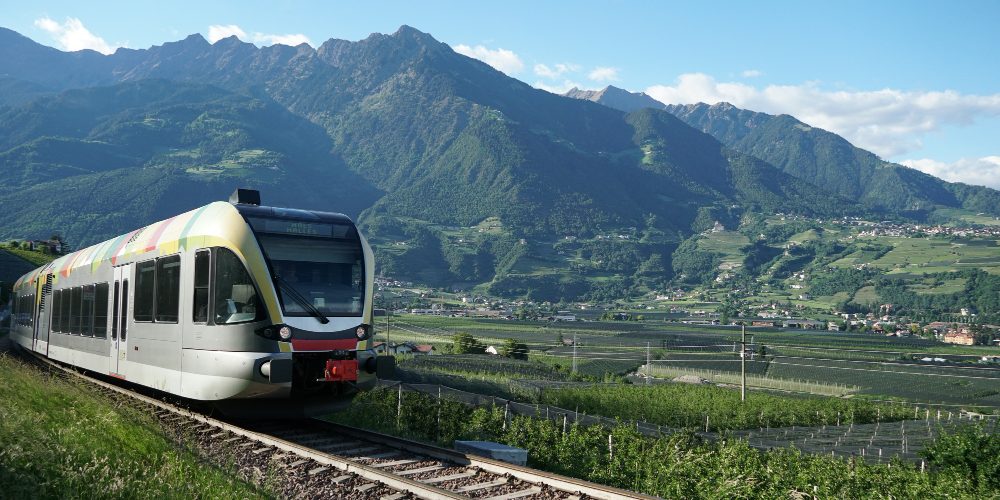
Spain is the only country in Europe where three high-speed operators sell seats on the same tracks, and the difference it makes is not academic: the same Madrid–Barcelona journey can cost €20 booked two months out on the right operator or €150 bought at the station on the day. Here is who runs what, when the cheap fares open, and the booking quirks — rejected foreign cards, airport-style bag scans, named tickets — that catch visitors out at exactly the wrong moment.
How to book train tickets in Spain
Spain is the most competitive high-speed rail market in Europe, and that single fact changes how you should book. Since the network was opened to competition, three operators run the busiest routes and they undercut each other constantly:
- Renfe — the national operator. Its high-speed brand is AVE, and Avlo is its no-frills low-cost version on the same tracks. Renfe also runs everything the others do not: Media Distancia regional trains, Cercanías commuter lines and the scenic narrow-gauge routes along the north coast.
- Ouigo — the Spanish arm of French railways SNCF. Double-decker trains, low fares, and a deliberately basic service. Runs Madrid–Barcelona, Madrid–Valencia, Madrid–Alicante, Madrid–Seville and Madrid–Málaga.
- iryo — a joint venture between Trenitalia and Air Nostrum, using Italian Frecciarossa trains. Generally the most comfortable of the three. Runs Madrid–Barcelona, Madrid–Valencia, and Madrid–Córdoba onward to Seville and Málaga.
On a route served by all three — Madrid to Barcelona is the obvious one — checking only Renfe means you are looking at roughly a third of the available seats. It is worth the extra two minutes.
When to book
Spanish rail fares behave like low-cost airline fares: dynamic, and rising as the train fills. Renfe and iryo generally release their cheapest fares 60 to 90 days ahead. Ouigo often opens sales considerably earlier.
The practical consequence: Madrid–Barcelona can be a €20 to €30 journey booked two months out and a €120 to €150 journey bought at the station on the day. If your dates are fixed, book as soon as the calendar opens. Renfe’s cheapest tiers (Básico and the promotional fares) are non-refundable and limited in number — they disappear first.
Where to buy
- Direct with the operator — renfe.com, ouigo.com and iryo.eu, or their apps. Cheapest, since there is no booking fee, and it is the only way to manage changes directly.
- Aggregators — useful for comparing all three operators on one screen, at the cost of a small booking fee. Worth it on competitive routes.
- At the station — ticket machines and counters work fine, but you will pay the walk-up fare, which is the most expensive one on offer.
Things that catch visitors out
- Payment failures. Renfe’s website has a long history of rejecting some foreign cards. If it fails, try the Renfe app, a different card, or book through an aggregator instead. It is a known quirk, not a problem with your card.
- Security screening. Long-distance trains have airport-style bag scanning. Arrive 20 to 30 minutes before departure at Madrid Atocha or Barcelona Sants; 10 minutes is not enough.
- Named tickets. High-speed tickets carry your name and passport or ID number. Enter it exactly as it appears on the document you will be carrying.
- Luggage limits. Ouigo in particular enforces a strict baggage allowance and charges for extra bags. Read it before you book if you are travelling with large cases.
When flying beats the train
For the main corridors the train wins comfortably — Madrid to Barcelona is around 2 hours 30 city centre to city centre, which no flight can match once you add airports. But rail is not always the answer. The Balearics and the Canaries are not reachable by train at all, Galicia and the far northwest are slow going from the south, and some regional routes involve long connections. On those, compare the air fare before committing:

The trains that are not high-speed — and when they are the smarter buy
Almost every guide to Spanish rail stops at AVE, and that is a mistake that costs people money on short hops. Renfe runs three tiers below its flagship, and on journeys under about two hours the cheapest tier is often faster door-to-door once you account for the security queue.
Avant is the one worth knowing. These are high-speed trains running short regional distances — Madrid–Segovia, Madrid–Toledo, Seville–Cordoba, Alicante–Murcia, A Coruna–Ourense — sold as medium-distance rather than long-distance fares. The train is the same hardware doing 250 km/h; the ticket is a fraction of the AVE price for the same rails. If your route has an Avant service, check it before you check AVE. Renfe does not surface it prominently, because it earns less on it.
Media Distancia covers regional intercity routes on conventional track. Slower, no reserved-seat scramble, no bag scan, and priced low. It is the right tool for places the high-speed network simply does not reach — most of Extremadura, much of the interior, the Cantabrian coast.
Cercanias (called Rodalies in Catalonia) is the commuter network inside and around the big cities. This is the tier tourists systematically overpay to avoid. The Cercanias line from Madrid Atocha to Aranjuez, or Barcelona Sants out to Sitges, costs a few euros and needs no reservation at all — you tap through like a metro. Several airport connections run on it too.
One 2026 change worth checking if you are staying put for a few weeks: Spain consolidated its various discounted commuter passes into a single flat-rate Abono Unico covering Cercanias, Rodalies and Media Distancia. It is designed for residents and commuters and the terms have shifted more than once, so confirm current eligibility and validity on Renfe’s own site rather than assuming a short-stay visitor qualifies.
If you are building a rail itinerary around Barcelona, the museum and Gaudí sites that need timed entry are worth locking in before you travel — several sell out days ahead in high season.
Rail passes rarely win in Spain
This is the honest answer people do not want to hear. An Interrail or Eurail pass works far better in Germany, Switzerland or Italy than it does here, for one structural reason: nearly every Spanish long-distance and high-speed train requires a compulsory seat reservation on top of the pass. You pay the pass, and then you pay again per journey — and the reservation quota for pass holders is a small allocation that sells out well before the train does.
Meanwhile the thing the pass is supposed to protect you from — expensive walk-up fares — is exactly what three-way operator competition has already crushed. When Ouigo and Avlo are selling Madrid–Barcelona seats in a flash sale for a euro or two, and normal advance fares sit in the twenties, a pass plus reservation fees is straightforwardly worse. Passes only start making sense if your trip is heavily improvised, crosses several countries, and leans on regional trains where no reservation is needed.
Night trains in Spain are mostly gone
Plenty of older travel writing still tells you to take the Trenhotel sleeper from Madrid to Galicia, or the overnight to Lisbon. Do not plan around it. Spain’s domestic Trenhotel sleeper services were withdrawn in 2020 and have not returned, and the Madrid–Lisbon overnight went with them. There is no meaningful domestic sleeper network left; the surviving overnight options are a handful of international services, and Renfe’s recent night-train activity has been on routes elsewhere in Europe rather than at home.
The practical consequence: for long north–south journeys, Spain expects you to travel by day at 300 km/h and arrive in four hours rather than sleep through it. Budget an extra hotel night rather than a sleeper berth. The genuine exceptions are the luxury tourist trains such as the Transcantabrico, which are multi-day holidays with a price to match, not transport.

What competition actually did to fares
It is worth knowing the scale, because it should change your instinct about how early to book. Academic work on the Spanish liberalisation found industry-wide price falls of roughly 19 percent on Madrid–Barcelona and about 22 percent on Madrid–Valencia after new entrants arrived, and average Madrid–Barcelona fares are now dramatically below the old Renfe-monopoly level. Renfe has responded with recurring promotional campaigns — Avlo seats from around 7 euros, AVE and long-distance from around 15 — that appear and vanish without much warning.
Two things follow. First, the competitive corridors are the cheap ones; a route with only Renfe on it has not seen the same collapse, so do not assume a bargain exists everywhere. Second, because operators release inventory on different horizons — some as far out as eleven months, some around 90 days — the “book exactly X days ahead” rule that works in France does not transfer. Check all three operators for your specific date rather than trusting a single rule of thumb.
One practical consequence of cheap high-speed rail: it is often worth basing yourself in one city and making day trips out, rather than moving hotels every two nights.
The bottom line
Book 60 to 90 days out on the competitive corridors, compare all three operators rather than defaulting to Renfe, enter your name exactly as it appears on the passport you will carry, and be at Atocha or Sants 20 to 30 minutes before departure for the bag scan. Do that and the train beats flying on almost every mainland route that matters — and costs less than the taxi to the airport would have.


Add comment