
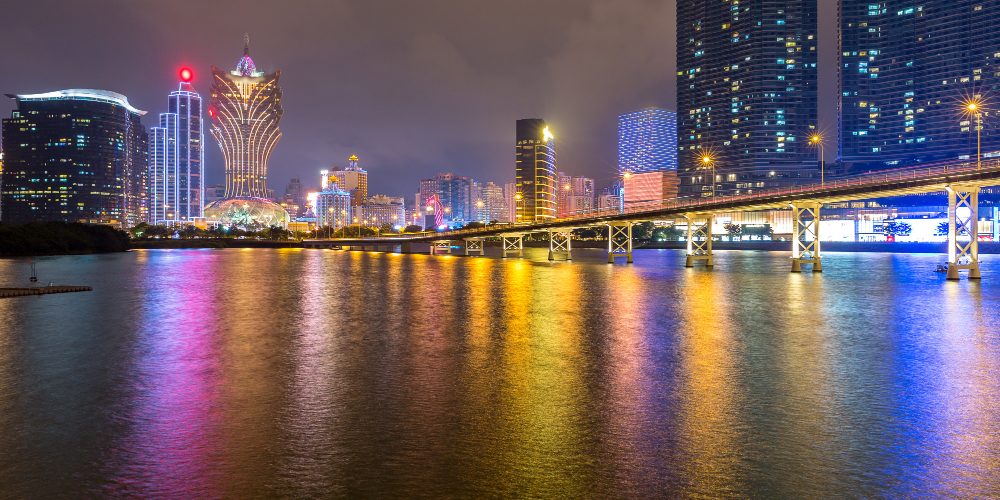
Macau’s mobile market has been rebuilt twice in fifteen months, and most English-language advice about it still describes the version that no longer exists. SmarTone closed its Macau operation on 11 November 2024 and handed its subscribers to CTM. The territory’s 3G licences expired on 4 June 2025, and the last 3G network went dark at midnight on 5 June. Then, on 12 January 2026, CK Hutchison sold 3 Macau to CTM for 10 million patacas. Four independent networks became three licences under two owners, inside a single tourist season.
That matters to you for a reason that has nothing to do with corporate structure: the guide you are reading elsewhere may be recommending a carrier that no longer exists, and the plan you are about to buy may not cover this territory at all.
Macau is a separate destination, and your China plan knows it
This is the single most expensive mistake here. Macau is a Special Administrative Region with its own telecommunications regulator (the CTT, the Macao Post and Telecommunications Bureau) and its own licensing regime. In every eSIM catalogue we have checked, Macau appears as a distinct destination from mainland China. A plan sold as “China” frequently does not include it.
Read the destination list literally rather than geographically. If the product page names Macau, you are covered. If it names China and lists provinces, you are not, and you will discover that at the ferry terminal.
The corollary: you do not need a firewall workaround here
Travellers who buy a China plan routed through Hong Kong are usually paying for access to services the mainland restricts. Macau does not sit behind that filtering. Google, WhatsApp, Instagram and the rest work on an ordinary Macau plan with no VPN and no special routing.
So the Hong Kong-routed China product solves a problem you do not have in Macau, while risking the one you do — coverage that excludes the territory. If Macau is your only stop, buy Macau.

The 3G shutdown detail that strands older handsets
When the 3G licences expired in June 2025, the CTT publicly warned residents and visitors to check handset compatibility. The specific trap: if your device does not support VoLTE, it cannot place voice calls on a local network now that 3G is gone. Data is unaffected, and travel eSIMs are data-only anyway, so most visitors never notice. But if you were planning to buy a local prepaid voice line for an older phone, that option quietly closed.
Which network your eSIM actually lands on
Worth knowing, because the operator map moved:
- CTM is the incumbent and, since January 2026, also the owner of 3 Macau — which continues to trade under its own brand and its own licence rather than being folded in.
- China Telecom Macau is the third licensee and the only one now outside CTM’s ownership.
- Airalo’s Macau products are sold under “Macao Mobile” and the regional “Asialink” label, and connect via the Hutchison network — that is 3 Macau, CTM-owned since January but still a separate network.
- 5G is not evenly available to visitors. All three operators launched 5G on 3500 MHz (band n78) in November 2022, but as of April 2025 only CTM had opened 5G to prepaid customers. A 5G badge on a Macau travel plan is therefore worth reading twice.
What the plans cost right now
Airalo’s single-country Macau line-up, as listed in September 2026, gives you a sense of the market floor:
- 1 GB / 3 days — US$4.00
- 3 GB / 7 days — US$7.00
- 5 GB / 7 days — US$9.00
- 10 GB / 30 days — US$16.00
- 20 GB / 30 days — US$23.00
The regional Asialink plans start at the same US$4.00 for 1 GB over 3 days but cost more per gigabyte as the buckets grow, which is the trade you would expect: you are paying for a footprint across Asia rather than for Macau alone.
“Unlimited” here means 3 GB a day, then 1 Mbps
Every unlimited-branded Macau plan we looked at is a daily-allowance plan wearing a marketing label: roughly 3 GB per day at full speed, then a throttle to about 1 Mbps for the rest of that day. At around US$11.50 for three days against US$7.00 for 3 GB spread over seven, unlimited only makes sense if you are tethering a laptop or working from the hotel. For a normal casino-and-egg-tart weekend it is money spent on a ceiling you will never reach.
Most of what people actually do in Macau — the tower, the pandas, the museum passes — is sold as timed entry, so it is worth booking before you cross the border rather than queuing on arrival.
Data-only, and what that quietly costs you
Airalo’s Macau plans carry no local number and no SMS. Neither do most travel eSIMs. For messaging and calls over WhatsApp this is irrelevant. It becomes relevant the moment something wants to send a verification code to a local number — a booking platform, a loyalty sign-up, a delivery service. Keep your home number reachable for SMS, or accept that those sign-ups will not complete.
How much data a Macau trip actually needs
Macau is a walking city with hotel Wi-Fi in almost every bed you might book, which pushes real consumption lower than people expect. For a two- or three-day visit built around maps, messaging, ride-hailing and photographs, 1–3 GB is the honest range, and the 3 GB / 7 days plan at US$7.00 is comfortably enough for most weekends. A week of sightseeing without heavy video lands nearer 5 GB.
The one case that genuinely changes the answer is tethering. If you are working from a laptop on cellular for several days, skip the small buckets and price the 10 GB or 20 GB plans, which fall to roughly US$1.15–1.60 per gigabyte and are better value than repeatedly topping up a small one.
Install before you fly
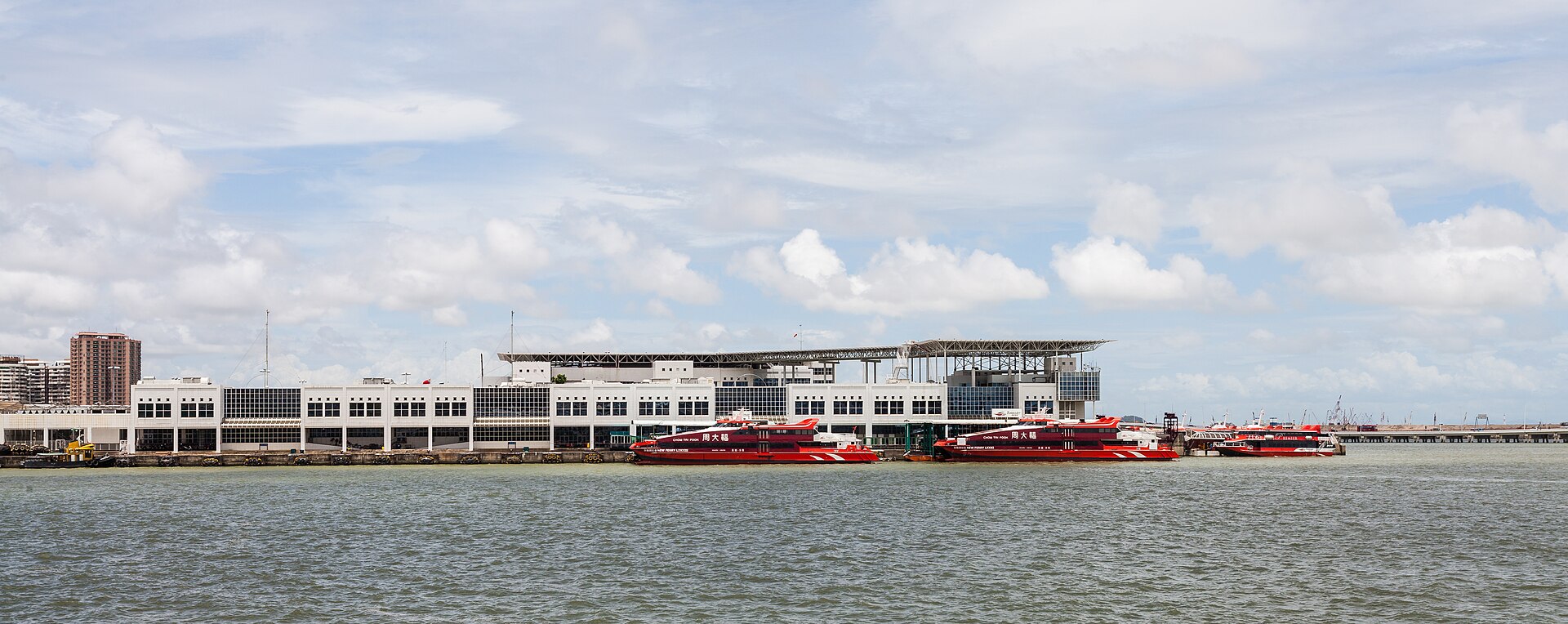
An eSIM needs a working connection to install and activate, so do it at home rather than at the border gate. Then set the travel profile as your data line, leave your home line’s data roaming switched off to avoid surprise charges, and switch data roaming on for the travel profile specifically — travel eSIMs are technically roaming products, and a phone-wide roaming block will silently disable them. If you are crossing to Hong Kong on the same trip, install both profiles before departure; most modern handsets store several and let you switch between them without reinstalling.
The Hong Kong day trip is a two-territory problem
The bridge and the ferry are international borders as far as your phone is concerned. A Hong Kong plan does not cover Macau and a Macau plan does not cover Hong Kong, however short the crossing. Your options are a plan that explicitly lists both territories, an Asia regional plan, or simply two cheap single-country plans bought separately.
Run the arithmetic rather than assuming. At current single-country pricing, two small buckets are often cheaper than one regional plan sized to cover both, and you avoid paying for twelve countries you will not visit.
If you would rather not manage buckets at all, DrimSim bills per megabyte across borders instead of selling you country blocks, which suits a multi-stop Asia itinerary better than it suits a single weekend in one territory.
If you are arriving by ferry with luggage rather than on a hotel shuttle, a pre-booked transfer removes the one genuinely awkward leg of a Macau trip.
What we can and cannot tell you about coverage
What we can say with confidence: Macau is dense, small and comprehensively built out, 3G is gone entirely, and the LTE and 5G layers on all three licences cover the peninsula, Taipa and Cotai. For ordinary use you should not think about coverage at all.
What we will not do is publish speed figures we have not measured. The weak points travellers report are the predictable ones for a place like this — deep interiors of the very large casino complexes, underground car parks, and network handovers mid-crossing on the Hong Kong–Zhuhai–Macau Bridge. Treat those as reports rather than measurements, and note that none of them is a reason to choose one plan over another.
What we would skip
- Greater China mega-bundles if Macau is your only destination. You pay for mainland and Hong Kong footprint you will not use, and you take on the risk that the mainland product excludes Macau anyway.
- A local prepaid SIM for a short visit. SIM registration has been mandatory in Macau since the end of 2019 and requires submitting identity documents and waiting for processing. For two days, that is a poor trade against a US$4.00 eSIM.
- Anything bought at the ferry terminal or airport counter before you have compared it against a plan you could have installed at home for a quarter of the price.
Staying overnight rather than day-tripping changes the data question entirely — hotel wifi covers most of it, and the eSIM becomes a border-crossing tool rather than your main connection.
Related reading
- Connectivity for a Japan itinerary
- What the same decision looks like in Thailand
- Choosing a base in Kyoto
Prices checked against operator and reseller listings in September 2026. Macau’s operator map changed three times between November 2024 and January 2026, so verify any guide you read against its publication date.









Add comment