

Updated August 2026: prices and providers refreshed.
The Bali eSIM question has a one-word core: Telkomsel. It is the network with the coverage that matters — rural Bali, Nusa Penida, the Gilis, the volcano roads — and every option worth buying rides on it. Everything else is price: the same connectivity costs a few dollars bought in an app at home, and several times that bought at a counter in Denpasar arrivals.

What a Bali eSIM costs in 2026
- Airalo’s Indonesia plans start around US$4.50 for 1 GB and roughly US$16–20 for 10 GB valid 30 days, running on Telkomsel. Installation is a two-minute QR scan done at home before you fly.
- Local Telkomsel packages, topped up through the MyTelkomsel app, are the cheapest per-gigabyte option for heavy users once you are settled — the trade-off is buying the first SIM in person with your passport.
- The airport counters at Denpasar quote several times the online price for the same network. Land connected instead.
- Multi-country trips: if Bali is one stop of many, a single global profile such as DrimSim saves you re-shopping at every border — run the per-GB arithmetic against your route before choosing it for Bali alone.
Do you actually have to register anything?
This is the question that sends people down a rabbit hole of outdated forum posts, so here is the short version. Indonesia has required IMEI registration for devices connecting to local networks since 2020, but the rule is aimed at handsets that stay in the country, not at tourists. If you are visiting for under 90 days and using your own phone, you do not need to register its IMEI. Inbound roamers — which is exactly what you are when you use an international eSIM — are not asked to register with Customs at all.
That is the practical case for an eSIM beyond price: it sidesteps the paperwork entirely. A travel eSIM is a roaming profile, so there is no passport registration, no counter queue and no form.
Buying a local physical SIM is different. Foreigners must register the card against a passport number, and staff at an official Telkomsel GraPARI store will do the scan and the registration for you. No Indonesian tax number is needed for tourists. If you are staying beyond 90 days, or you buy a handset in Indonesia, IMEI registration does become mandatory and is handled through the customs process on arrival.
Why Telkomsel keeps winning, in numbers
Recommending Telkomsel is not brand loyalty, it is arithmetic. Telkomsel 4G reaches roughly 97% of Indonesia population, and its Hyper 5G service now runs across 56 cities and regencies. In Opensignal independent Mobile Network Experience report for Indonesia published in July 2026, Telkomsel was the sole winner in Coverage Experience with 8.6 out of 10 — not a shared award, an outright one.
One technical change is worth knowing before you fly. Telkomsel has begun switching off its 3G network region by region, starting around Jakarta and its satellite cities, and refarming that spectrum to 4G. For a traveller this only matters if you are carrying an older handset: once 3G is gone in an area, a phone that cannot do 4G data and VoLTE calling has nothing to fall back on. Any phone new enough to support eSIM is new enough to be unaffected.
How much data you actually need
Most travellers buy too much. Bali runs on Wi-Fi more than people expect: villas, warungs, cafes and co-working spaces almost all have it, and it is usually good enough for the heavy lifting. Your mobile data is really there for the gaps — maps on a scooter, ride-hailing, WhatsApp, and the occasional upload.
- 1 GB covers a long weekend of maps, messaging and ride-hailing with room to spare.
- 3 to 5 GB is the realistic sweet spot for a standard two-week trip that leans on Wi-Fi at the villa.
- 10 GB or more only makes sense if you are posting video daily, tethering a laptop, or working remotely without reliable Wi-Fi.
Two habits blow through an allowance faster than anything else: uploading video over mobile data instead of waiting for Wi-Fi, and leaving photo backup set to sync on cellular. Turn the second one off before you land and a 3 GB plan will usually outlast the trip.
Nusa Penida, the Gilis and the boat crossings
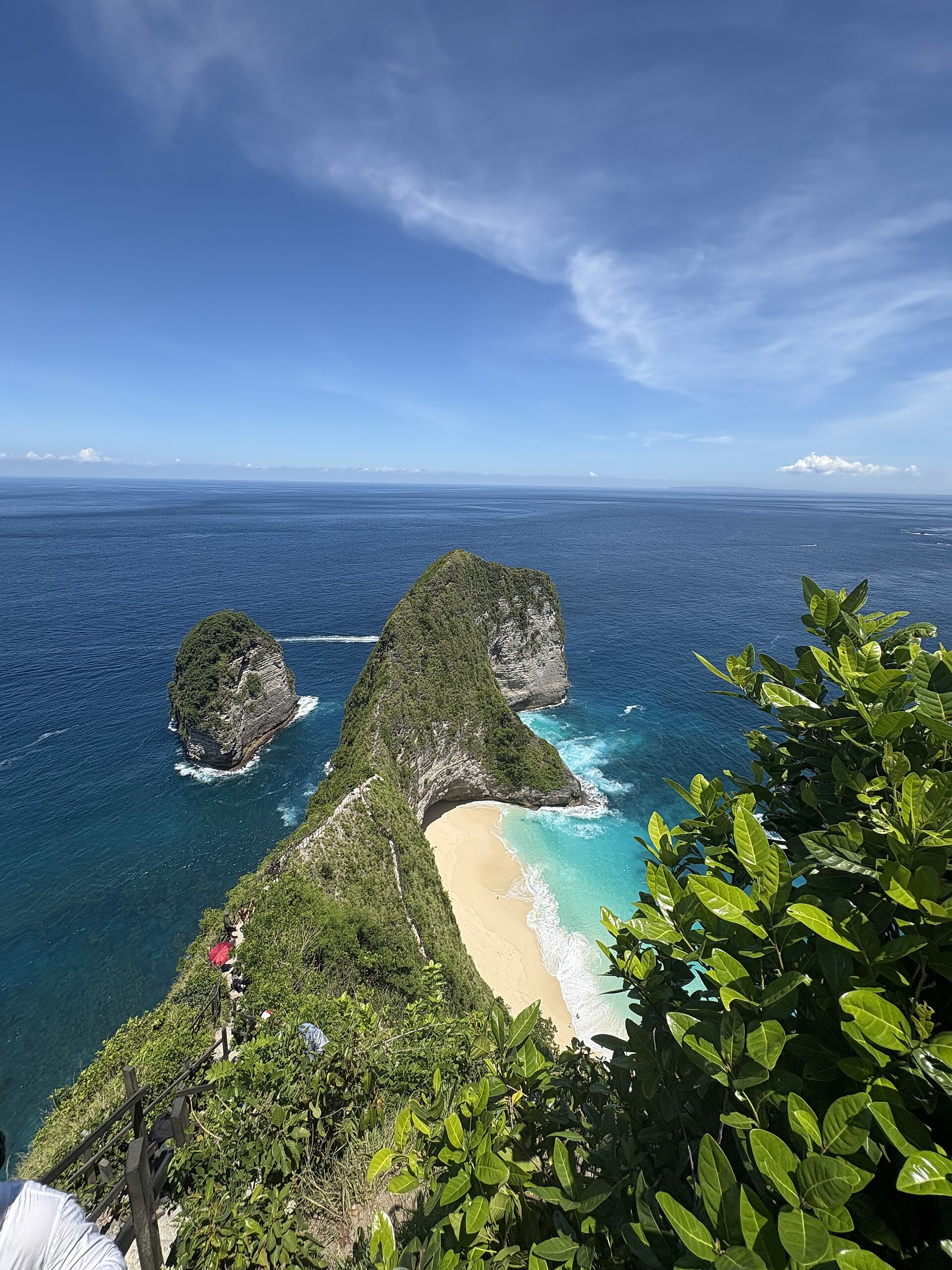
Coverage on the islands is a different proposition from the Bali mainland. On Nusa Penida the main ring road and the big viewpoints are generally fine on Telkomsel, but the steep descents — Kelingking most obviously — and the interior tracks drop out fast. The Gilis have workable signal in the village strips and less of it on the far shores.
The crossings themselves are the real dead zone. Fast boats from Sanur and Padangbai lose usable data within a few minutes of leaving the harbour and do not get it back until they are close to the other side. That matters more than it sounds, because it is exactly when people want to message a driver about a pickup. Sort that out before boarding.
The rule that saves the day: download offline maps for the whole island before you leave your accommodation, screenshot your booking references, and treat any signal you get at a waterfall or a clifftop as a bonus rather than something to plan around.
Five mistakes that cost people money
Buying at the airport. The Denpasar arrivals counters sell the same Telkomsel connectivity at several times the online price, to people who have just stepped off a flight and have no way to compare. Land with a profile already installed.
Leaving home roaming switched on. An eSIM does not disable your usual carrier. If your primary line stays active on data roaming you can collect a bill from home while paying for local data as well. Turn data roaming off for the home line and set the eSIM as the data line.
Assuming any phone will take an eSIM. The handset must be both eSIM-capable and carrier-unlocked. A phone still on a contract lock will accept the profile and then refuse to connect, which is a miserable thing to discover in a taxi queue.
Buying a 30-day plan for a 10-day trip. Validity windows are priced in. Match the plan to the trip and top up if you run short.
Installing on arrival. Installing the profile needs a working internet connection, which is the thing you do not yet have. Install at home over Wi-Fi and activate on landing.

Coverage: where it works and where it will not
South Bali, Ubud and the east-coast tourist belt are dense and fast on any network. Head up the volcano roads, across to Nusa Penida or out to the Gilis and the gap between Telkomsel and everyone else opens up quickly. Even Telkomsel goes quiet in the gorges around Sidemen and on the inland stretches of the Munduk ridge — download offline maps before a driving day, and treat signal at a waterfall car park as a bonus rather than a plan.
Setup, in the right order
- Check your phone is carrier-unlocked and eSIM-capable.
- Buy and install the eSIM at home over Wi-Fi; activate on landing — activation usually starts the validity clock.
- Set the eSIM as the mobile data line, keep your home SIM for calls and texts, and switch data roaming off on the home SIM.
- Keep the provider’s app installed — top-ups mid-trip take a minute and cost less than a beach-club coffee.
Flying between islands? Our Indonesia domestic flights guide covers how to hop from Bali to Komodo, Java and beyond — and your eSIM keeps working on every island on the Telkomsel map. For getting around Bali itself, see our Bali scooter rental guide.
The short version
- Buy before you fly: an app-store eSIM on Telkomsel, installed at home.
- US$4.50 for 1 GB / US$16–20 for 10 GB is the fair 2026 range — airport counters charge multiples of it.
- Staying a month or more? Switch to local Telkomsel top-ups once settled.
- Offline maps for Nusa Penida, the Gilis and the mountain roads — no plan covers a gorge.
Somewhere to sleep is the other half of the booking — compare accommodation for your dates:

Add comment