
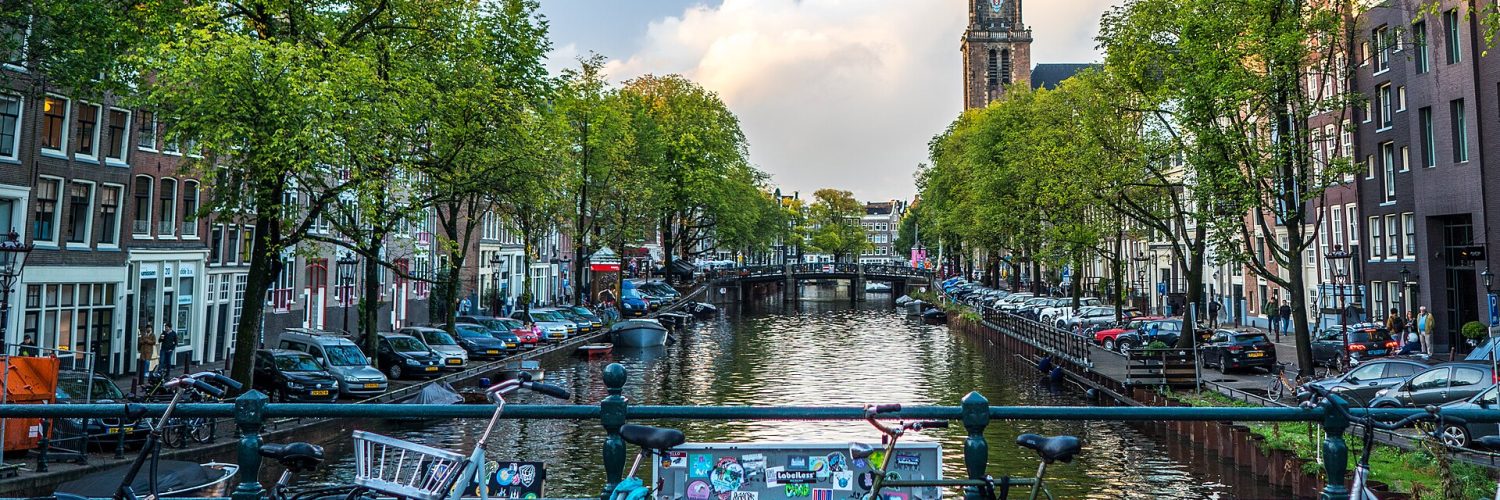
There are more bicycles than people in Amsterdam. That statistic gets quoted constantly, and it hides the useful part: those bikes belong to commuters moving at 18 km/h who have somewhere to be, and they will not slow down for you. Renting a bike here is easy. Riding one without becoming an obstacle takes about twenty minutes of knowing the rules.
Here is what rental actually costs in 2026, which shops are worth using, the unwritten etiquette that stops the bell-ringing, and the theft reality that determines how much you should care about the lock.
What a rental bike costs
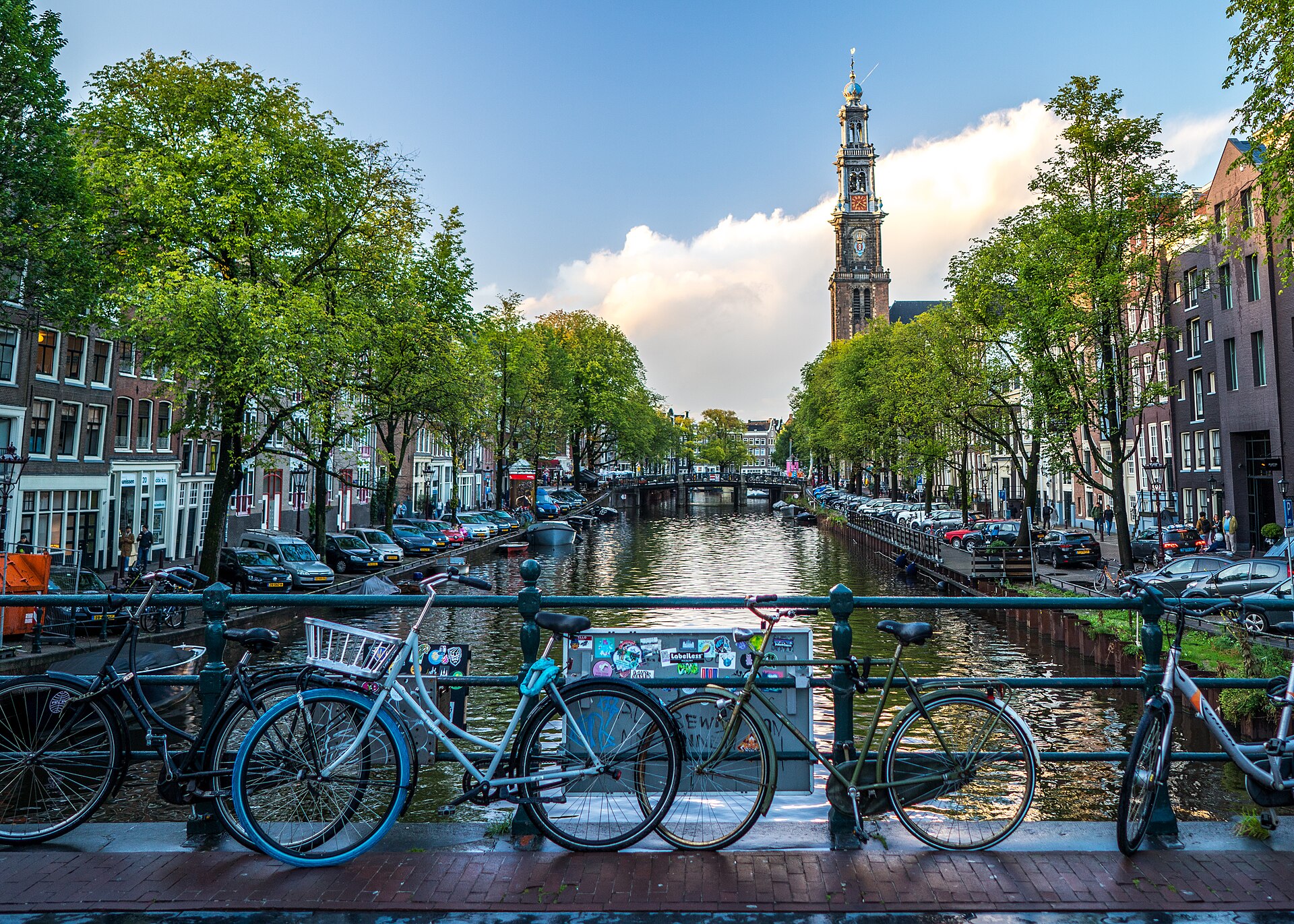
Prices have converged across the main operators. Typical 2026 rates in central Amsterdam:
- 3 hours: €8–€12
- 24 hours: €12–€18 for a standard coaster-brake city bike
- 3 days: €30–€45
- One week: €55–€80
- E-bike: €25–€40 per day — almost never necessary in a city with no hills
- Hand-brake / gear bike: add €2–€5 per day
Two costs sit outside the headline rate. Deposit: €25–€100, or a card pre-authorisation, or occasionally an ID card held at the shop (decline that one — never surrender a passport). Theft insurance: €3–€5 per day, and unlike most travel add-ons this one is worth considering seriously. More on that below.
Which rental shop
The well-known chains — MacBike, Yellow Bike, Black Bikes, A-Bike — are all reliable, centrally located, and roughly the same price. Two practical distinctions:
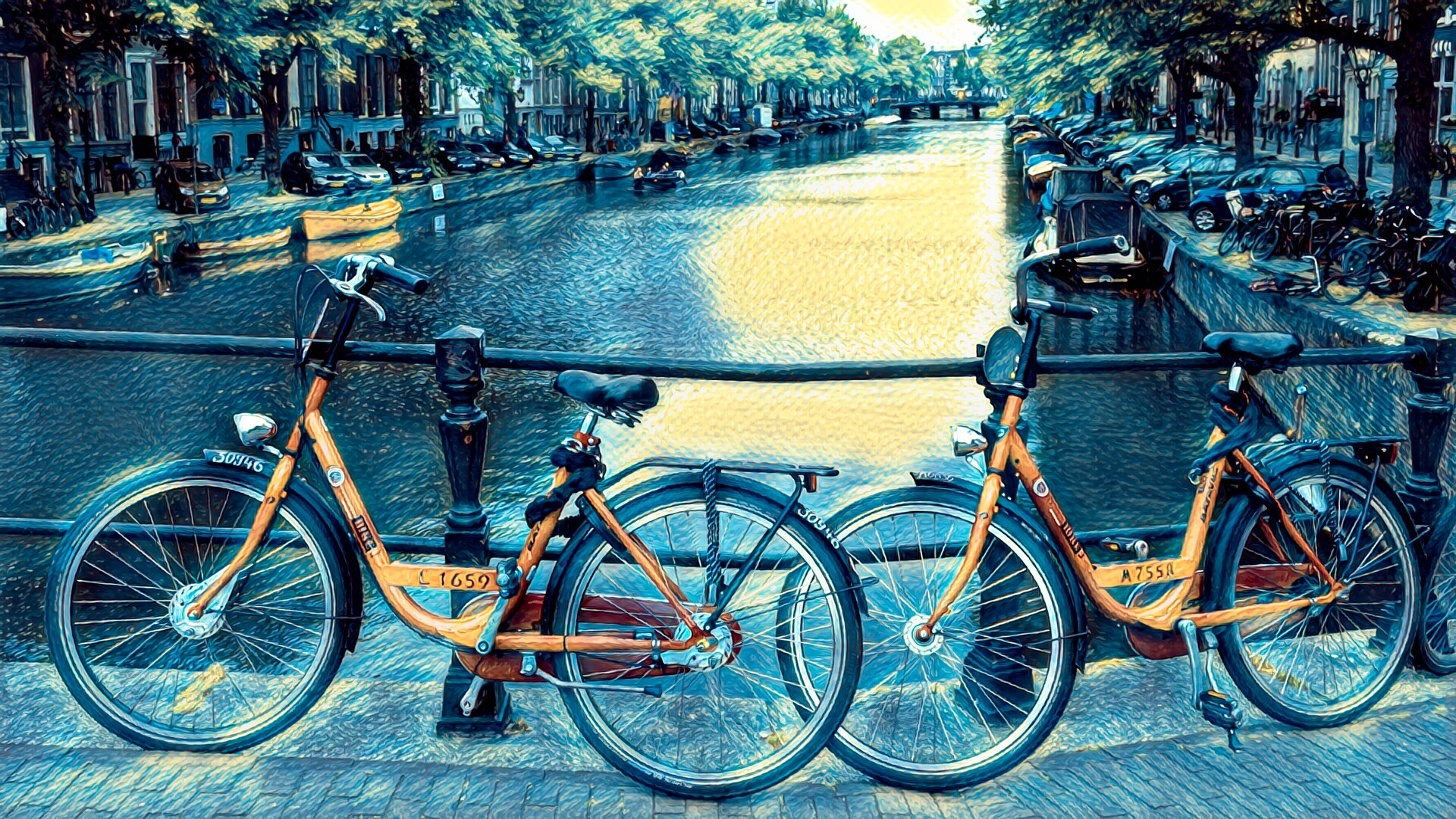
- Branded vs. plain bikes. MacBike’s red frames and A-Bike’s yellow ones mark you instantly as a tourist, which affects how locals ride around you and, some argue, how thieves assess the bike. Black Bikes rents unbranded bikes for exactly this reason.
- Neighbourhood shops in De Pijp or Oud-West run €2–€4 cheaper per day and have far shorter queues than the Centraal Station operations, where a summer morning wait can hit 30 minutes.
Book ahead in July and August. Walk-in availability in peak season is genuinely tight, and the shops that do have stock at 11am on a Saturday are charging for it.
The rules that are actually enforced
Dutch police do fine cyclists, and tourists get stopped as readily as anyone. The ones that matter:
- No phone in your hand while riding. Fine is around €160. Mount it or pocket it.
- Lights after dark are mandatory — white front, red rear. Around €70 if you are caught without. Check both work before you leave the shop; this is the most commonly broken thing on a rental.
- No riding two-abreast if it blocks traffic, and no carrying a passenger on a bike without a proper rear seat.
- Red lights apply to bikes. Locals run them; that is not a defence when you are the one who gets stopped.
- Helmets are not required and virtually nobody wears one. Rental shops rarely offer them.
- Drinking and cycling carries fines from around €200 upward.
The etiquette that stops the bell-ringing
None of this is law. All of it is how you avoid being the reason someone brakes hard.
- Keep right, pass left. The bike lane has a fast lane and it is not where you are.
- Signal with your arm before every turn. Every single time. Locals do it reflexively and expect you to.
- Do not stop in the bike lane to check your map, take a photo, or wait for your friend. Pull fully out first. This is the single most common tourist behaviour that causes actual crashes.
- A ring of the bell means “I am behind you”, not “you are an idiot”. Move right and carry on.
- Trams always win. Cross tram rails at as close to a right angle as you can manage — a wheel in the groove puts you on the ground instantly, and wet rails are worse.
- Watch for scooters in the bike lane. They are legal there, faster than you, and quieter than you expect.
Theft: the part that is not exaggerated
Tens of thousands of bikes are stolen in Amsterdam every year. Rental bikes are a known target and the replacement charge in your contract will be €300–€600. Three habits handle almost all of the risk:
- Use both locks. Rentals come with a ring lock through the rear wheel and a chain. The ring lock alone stops nobody — it just means the bike gets carried away instead of ridden away. Chain the frame to something immovable.
- Never lock to a bike rack alone if the rack is not bolted down, and never lock only the front wheel.
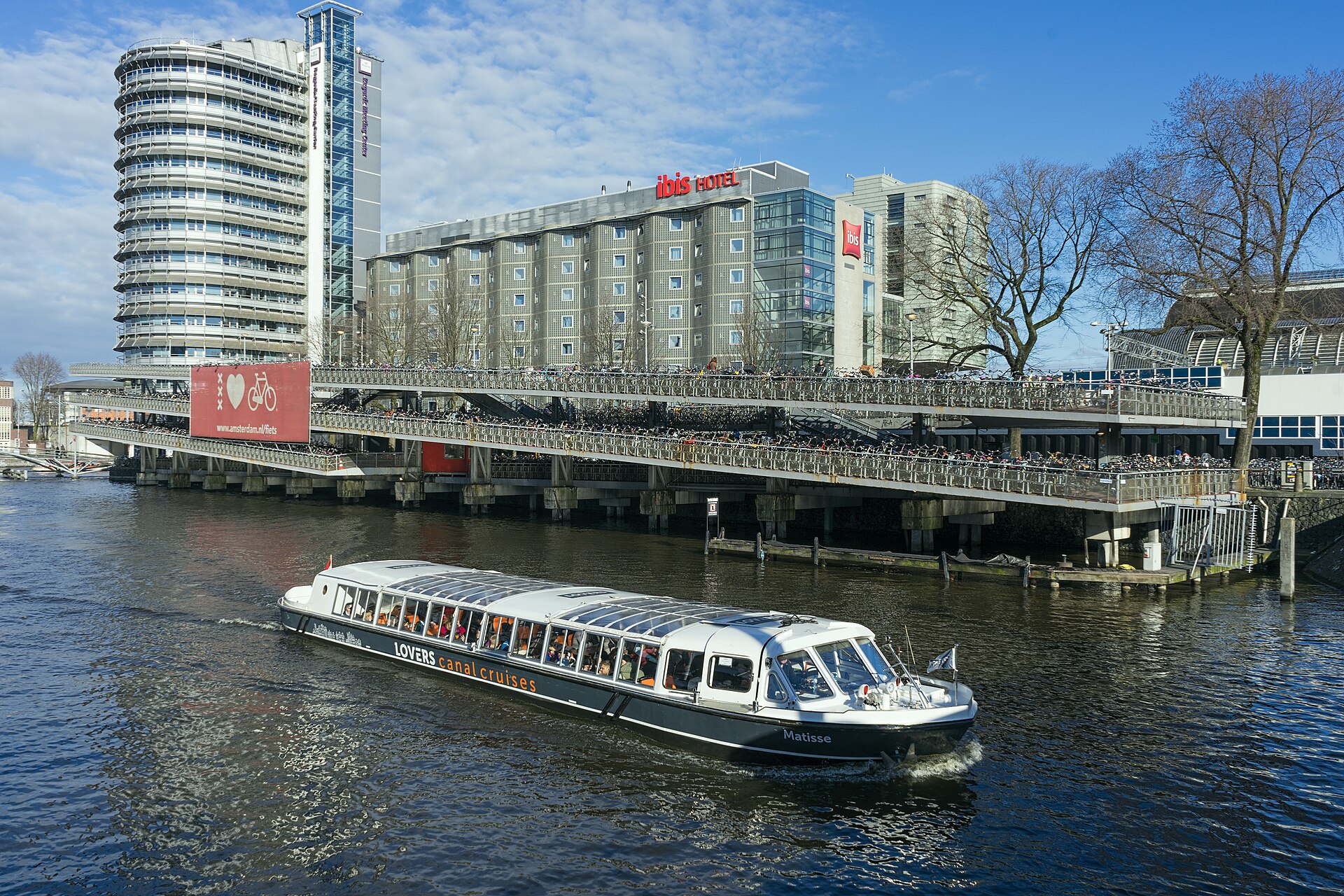
- Use the guarded garages. The underwater garage at Centraal Station and the one at Leidseplein are free for the first 24 hours and monitored. If you are leaving the bike overnight, this is where it goes.
Given a €300+ liability, the €3–€5 daily theft insurance is one of the rare add-ons that prices correctly. Read what it excludes — most policies void the cover if the bike was not locked to a fixed object, and many require you to return the key to claim.
Where to actually ride
The canal belt is beautiful and, in July, a slow-moving crush of pedestrians stepping into bike lanes. Better rides:
- Vondelpark to Amstelpark along the Amstel river — flat, mostly car-free, and the fastest way to feel like you are cycling rather than surviving.
- Amsterdam-Noord via the free ferry behind Centraal Station. Bikes ride on for nothing. NDSM Wharf, quiet dyke roads, and a completely different city within 15 minutes.
- Waterland loop — north through Durgerdam and Ransdorp, roughly 35 km round trip through polder landscape and villages. This is the ride people remember.
- Amsterdamse Bos to the south, a forest park bigger than Central Park with dedicated paths.
Skip riding through Dam Square and the Red Light District. Both are pedestrian crushes where a bike is a liability rather than transport.
Getting there and staying there
Schiphol to Amsterdam Centraal is 15–20 minutes by train for around €5.50, running roughly every 10 minutes and through the night at reduced frequency. It is the correct choice for nearly everyone. If you land very late with luggage or as a group, a pre-booked fixed-price transfer removes the queue.
On accommodation: staying in Oud-West, De Pijp or Amsterdam-Noord instead of the centre typically saves €40–€80 a night and, with a bike, costs you about eight minutes. That is the whole argument for renting one for the full stay rather than by the day. Compare Amsterdam neighbourhoods and rates.
E-bikes and fatbikes: what changed in 2026
If you are tempted by an electric rental, know where the legal line sits. Dutch law treats an e-bike as an ordinary bicycle only when the motor is rated 250 watts continuous, pedal assistance cuts out at 25 km/h, and any throttle stops helping above walking pace, around 6 km/h. Anything that pushes you past 25 km/h under power is not a bicycle in the eyes of the law, and the consequences land on the rider, not the shop.
Fatbikes are the live issue. Amsterdam has moved against the fastest of them after a run of serious injuries, and from 11 May 2026 fatbikes are banned from Vondelpark, with the rule written around tyres wider than seven centimetres. Police in Amsterdam, Rotterdam and The Hague now run roller-bench checks and stop riders at random to test whether a motor has been derestricted. A national helmet requirement for under-18s on e-bikes and fatbikes is working its way toward parliament in autumn 2026, so expect this to keep moving.
For a visitor the sensible reading is that a standard rental bike carries no legal ambiguity at all, and an e-bike from an established shop is fine as long as you do not ask for anything unlocked. If a rental listing advertises speeds above 25 km/h, walk away — that is a moped in a bicycle’s clothing, and it needs insurance, a plate and a helmet.
Taking the bike further: trains, ferries and day trips
The bike you rented in Amsterdam does not have to stay in Amsterdam, but the train rules are specific enough to catch people out. A full-size bicycle needs its own Day Ticket Bike on NS domestic and regional services, priced at roughly €7, and it is not valid during weekday rush hours — 06:30 to 09:00 and 16:00 to 18:30. That restriction lifts at weekends, on public holidays, and for the whole of July and August. Folding bikes travel free when folded, and international services have their own rules entirely.
Before you plan around this, check your rental contract: several central shops restrict their bikes to the city or to a defined region, and taking one to Rotterdam can void the theft cover you paid for. Where a bike is not allowed on the train, the practical answer is to return it and pick up a bike at the other end.
The cheapest ride out of the centre needs no ticket at all. The IJ ferries behind Centraal station run around the clock, carry bicycles free, and drop you in Amsterdam-Noord within minutes, where the lanes widen, the traffic thins, and the route toward Durgerdam and the Waterland dykes turns into the ride most visitors remember. It is the single best argument for renting a bike here rather than relying on trams.
Check accommodation and dates
Data and directions
You will be navigating constantly, and the Netherlands is one of the few countries where a dedicated cycling routing app genuinely beats the default map. Keep the phone mounted, not in your hand. An EU or Netherlands eSIM covers you from landing, and the same plan usually works across the border if you are continuing to Belgium or Germany.
Worth it?
Yes — but rent for your whole stay, not for an afternoon. A bike stops being a sightseeing activity around day two and starts being how you get everywhere, which is the point at which the €14 a day pays for itself in tram tickets alone. Compare the numbers with our Prague bike rental guide if you are hopping between European cities.
Add comment