
Here is the arithmetic that trips up every family group planning an Ontario road trip. Six people. Two rental cars at roughly CAD 70 a day each, or one minivan at roughly CAD 130. The two cars look cheaper on the booking page. They are not cheaper by the end of the week, and by day three most groups have worked out why.
This is a breakdown of what a minivan actually costs in Ontario, what the two-car alternative really costs once you add everything up, and the specific rules and routes that make or break a family trip out of Toronto.

The two-car maths, done honestly
Take a seven-day July trip: Toronto, Niagara, Prince Edward County, Algonquin, back to Toronto. Roughly 1,100 kilometres.
Two mid-size cars:
- Rental: 2 × CAD 75 × 7 = CAD 1,050
- Fuel: two cars covering the same 1,100 km, roughly 8.5 L/100 km each, at CAD 1.65/L = about CAD 310
- Parking: doubled everywhere. Downtown Toronto overnight is CAD 25 to 45; Niagara attraction lots run CAD 20 to 30 a day. Over the week, an extra CAD 150 to 250
- Two sets of insurance excess, two damage risks, two drivers who cannot drink at dinner
One minivan:
- Rental: CAD 130 × 7 = CAD 910
- Fuel: roughly 11.5 L/100 km, so about CAD 210
- Parking: single vehicle, roughly CAD 150 to 250 total
- One insurance excess, one vehicle to inspect, one driver rotation
The minivan comes in around CAD 300 to 400 cheaper across the week, and that is before you count the thing that actually matters: everyone is in the same vehicle. No convoy. No lost second car at a highway exit. No coordinating two parking spots at Tobermory on a Saturday. No arguments about who drives the slow one.
Compare minivan rates in Toronto against the two-car option before you decide — the gap widens in peak summer, when compacts get scarce and their prices climb faster than the van fleet.
What you actually get: 7 seats is not 7 seats with luggage
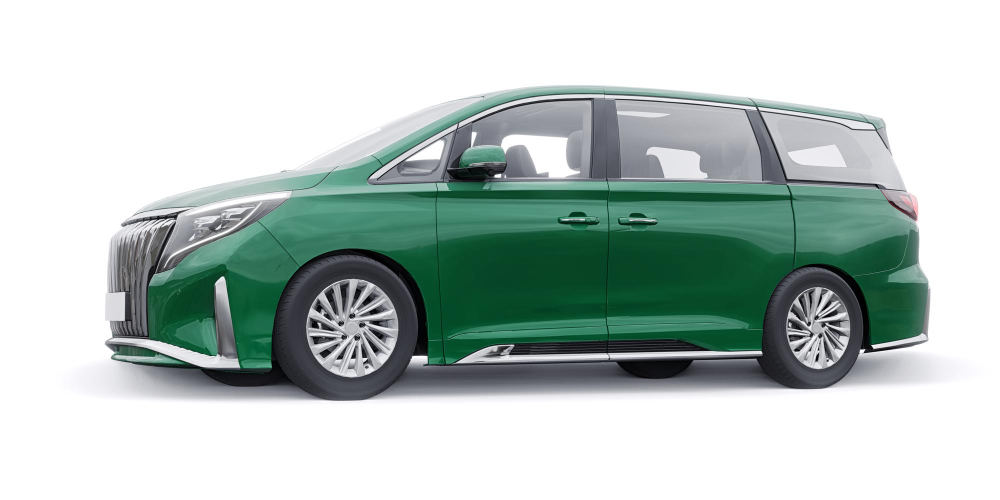
Every minivan in the Ontario fleet is sold as a 7-seater. That number assumes the third row is up, and with the third row up you have roughly 900 litres of cargo space behind it — enough for four carry-ons and a cooler, not enough for six people’s checked bags.
The practical configurations:
- 6 passengers, third row up, middle seat of row three folded: workable for a week if everyone packs soft bags
- 5 passengers, third row folded flat: genuinely cavernous, roughly 2,400 litres, and the configuration most couples-plus-kids groups end up using
- 7 passengers with checked bags: you need a roof box, and rental roof boxes in Ontario are rare and expensive. Plan around it rather than assuming
The Chrysler Pacifica’s Stow n Go seats fold into the floor, which is the best system in the fleet. The Sienna and Carnival third rows fold but the second row does not disappear — it slides and tumbles. If cargo flexibility matters, ask for a Pacifica specifically. Most agencies will not guarantee a model, but asking at the counter costs nothing.
Highway 407: the toll road that bills you months later
This is the single most common surprise on an Ontario rental invoice. Highway 407 ETR runs across the top of the Greater Toronto Area and it is entirely electronic — no booths, cameras only. It is fast, it is genuinely useful for skipping the 401 through Toronto, and it is expensive.
If you drive it in a rental, one of two things happens. Either the vehicle has a transponder and you pay the toll plus the rental company’s administration fee, or the plate is photographed and the bill lands with the rental company weeks later, at which point they charge your card the toll plus an administration fee that is often CAD 20 to 40 per incident.
A full-length crossing can run CAD 30 to 50 in peak hours. Peak-hour rates per kilometre are among the highest of any toll road in North America. Ask at the counter how 407 charges are handled, and if you do not need it, set your navigation app to avoid tolls. The 401 and the 403 are free.
Child seats: Ontario law is stricter than most visitors expect
Ontario requires a rear-facing seat until at least 9 kg, a forward-facing harnessed seat after that, and a booster seat until the child reaches any one of: 8 years old, 36 kg, or 145 cm tall. Enforcement is real and fines start around CAD 240 plus demerit points on the driver’s licence.
Rental agencies charge roughly CAD 12 to 18 per seat per day, often capped at CAD 60 to 90 per rental. For a two-week trip with two kids, that is CAD 120 to 180. Bringing your own seats is usually free on the plane as checked items with most airlines flying into Toronto — worth checking, because it is one of the few genuinely free savings in this whole list.
Where a minivan actually earns its keep: four Ontario routes
Toronto to Niagara — 130 km, 1.5 hours
The obvious one, and worth doing properly rather than as a day trip. The QEW gets you there fast; the Niagara Parkway from Niagara-on-the-Lake is the scenic alternative and adds 40 minutes. Parking at the Falls is CAD 20 to 30 a day in the official lots. Niagara-on-the-Lake is the better overnight base and the wineries along the Niagara Parkway make the minivan-with-a-designated-driver arrangement suddenly very sensible.

Toronto to Algonquin Provincial Park — 280 km, 3 to 3.5 hours
Highway 400 north, then 11 to Huntsville, then Highway 60 into the park. The Highway 60 corridor is the accessible slice of Algonquin — Lookout Trail, Track and Tower, the Logging Museum, canoe rentals at Lake of Two Rivers. A day-use permit runs about CAD 21 per vehicle, which is the moment a single minivan beats two cars again. Book accommodation in Huntsville or Dwight well ahead in July and August; Huntsville area stays sell out for summer weekends by spring.

Toronto to Tobermory and the Bruce Peninsula — 300 km, 3.5 hours
The Grotto at Bruce Peninsula National Park requires a pre-booked parking reservation in summer, tied to a four-hour window and a specific vehicle. One reservation, one vehicle — another point for the minivan. Tobermory is also the ferry terminal for Manitoulin Island if you want to extend north.
Toronto to Prince Edward County — 220 km, 2.5 hours
Wine country on Lake Ontario, plus Sandbanks Provincial Park, which has the largest freshwater sand dune system in the world and a vehicle capacity limit that fills by mid-morning on summer weekends. Arrive before 10:00 or arrive at 16:00.
Search minivan availability across suppliers
The fees that show up on Ontario rental invoices
- Airport concession recovery fee: renting at Toronto Pearson adds roughly 12 to 18 percent versus a downtown or suburban branch. If your first two days are in Toronto without a car, picking up downtown on day three can save CAD 80 to 150 on a week’s rental.
- Young driver surcharge: drivers aged 21 to 24 pay roughly CAD 25 to 35 per day. Most Ontario suppliers will not rent a minivan to anyone under 25 at all.
- One-way drop fee: Toronto to Ottawa or Montreal is commonly CAD 150 to 400. Ontario is big enough that a loop usually beats a one-way.
- Additional driver: roughly CAD 13 to 15 per day, often waived for a spouse. Ask.
- Winter tires: not legally required in Ontario (unlike Quebec, where they are mandatory from December to March). If your trip crosses into Quebec in winter, this becomes a legal issue, not a preference.
Insurance: the one Canada-specific thing to check
Many Canadian and US credit cards include rental vehicle collision coverage, but a large number of them explicitly exclude vehicles with a seating capacity over seven, or exclude vans outright. Read the exclusions before you decline the counter product, because minivans sit exactly on the line. If your card excludes them, the counter Loss Damage Waiver at roughly CAD 25 to 35 per day is the realistic option, or book through a broker where full cover is included in the quoted price. Check Pearson Airport minivan rates with cover included.
Arriving without the car
If your first nights are downtown, do not rent at the airport. Pearson to downtown Toronto is 25 to 35 minutes without traffic and considerably more at rush hour. The UP Express train runs to Union Station in 25 minutes for about CAD 12.35, which is unbeatable for two people with light bags. For six people with luggage, a pre-booked van transfer is usually cheaper than two taxis and far less stressful — compare Pearson transfer options.
Connectivity on the road
Cellular coverage on the 400-series highways is solid. It degrades noticeably in Algonquin, on parts of the Bruce Peninsula and across northern Ontario. Download offline maps for the whole province before you leave Toronto. If you are visiting from outside Canada, a Canadian eSIM is far cheaper than carrier roaming — Canada eSIM plans start in the low single-digit dollars for a few gigabytes.
Verdict
For four people, two cars and one minivan are close enough that it comes down to preference. For five or more, or for any group travelling with kids and car seats, the minivan wins on cost, wins on logistics and wins on the part of a road trip you actually remember — everyone in the same vehicle, arguing about the playlist.
Related reading
Prices are indicative for 2026 in Canadian dollars and vary by season and supplier. Some links on this page are affiliate links; using them costs you nothing and helps keep this site running.