
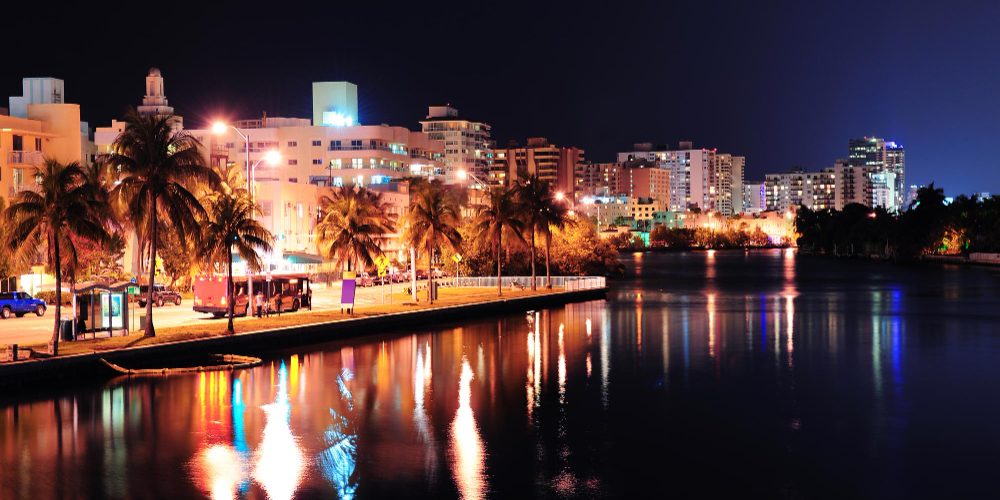
From downtown Miami to the southernmost point of the continental United States is about 165 miles, and the last 113 of them — the Overseas Highway — hop across 42 bridges and a scatter of coral islands where the Atlantic sits on your left and the Gulf on your right. It’s routinely called one of America’s great drives. It’s also a route you can cover by bus for the price of lunch, or fly in 45 minutes. Which option actually makes sense depends on one question almost nobody asks first: what are you going to do with a car once you’re in Key West?
The drive itself: what you’re signing up for

Without stops, Miami to Key West takes 3.5–4 hours. Nobody sane does it without stops. US-1 through the Keys is one lane each way for long stretches, speed limits swing between 35 and 55 mph, and weekend traffic (especially Sunday afternoons northbound and any holiday Friday southbound) can add two hours. The reward is the roll call of stops measured in mile markers: John Pennekamp Coral Reef State Park at Key Largo (MM 102) for glass-bottom boats and snorkelling, feeding the tarpon at Robbie’s of Islamorada (MM 77), the Turtle Hospital in Marathon (MM 48), the Seven Mile Bridge (MM 47 — yes, it’s really seven miles), and Bahia Honda State Park (MM 37), owner of the Keys’ best natural beach. Leave Miami by 8 am, stop three times, and you roll into Key West by mid-afternoon with the day’s best light still ahead.
Option 1: Rent a car — the full-freedom play
An economy car out of Miami (airport or South Beach) runs $35–60 a day in 2026; convertibles — and the Keys are the single best convertible road in America — go for $70–120. Tolls out of Miami on the Turnpike are electronic, so ask the counter about the toll program. Two cost items surprise people: a one-way rental dropped in Key West adds a $75–150 drop fee, and Key West itself punishes cars — Old Town hotel parking runs $25–50 a night and street parking is a competitive sport. Compare Miami rental prices across suppliers here; booking a week or more out, the airport locations usually beat the beach offices by 20%.
The car wins outright if you’re doing the Keys properly — a night in Islamorada or Marathon, snorkel gear in the trunk, sunrise at Bahia Honda. As a road trip, it has no substitute.
Option 2: The bus and shuttle — $25 and no parking bill
Greyhound/FlixBus runs Miami to Key West from about $25–45 one way in roughly 4.5 hours, and shared shuttle vans (several operators) charge $70–90 door to door. It sounds unglamorous, and the view from a bus window over the Seven Mile Bridge is honestly still spectacular. This is the right answer for anyone spending their whole stay inside Key West — because once you’re there, the town is two miles by four, everything walkable or bikeable, and a parked rental car is just a $40-a-night pet that eats.
Option 3: Fly — 45 minutes, and the view is the argument
American and Silver fly Miami to Key West International (EYW) in about 45 minutes, typically $150–300 round trip booked a few weeks ahead. The approach — low over the reef and the flats, water in ten shades of green — is one of US aviation’s prettiest landings. Fly if your time is tight, then do the Overseas Highway as a one-day round trip another time; check our guide to cheap US domestic flights for booking-window tactics, or search dates directly below.
Somewhere to sleep is the other half of the booking — compare accommodation for these dates:
The hybrid strategy the regulars use

Rent the car in Miami, drive down slowly with a night in the Middle Keys, drop the car at Key West airport on arrival (accepting the drop fee as the price of freedom), spend your Key West days on foot and bicycle, then fly or bus back. You get the great drive once, skip the traffic-jammed return leg, and pay zero for parking. Total cost usually lands within $50 of keeping the car the whole week — while being a strictly better trip.
The Card Sound Road alternative, and why locals use it
Almost every set of directions sends you down US-1 through Florida City and across the 18-Mile Stretch into Key Largo. There is a second way in, and on a bad traffic day it is the better one. Card Sound Road — County Road 905A — leaves the mainland further east and rejoins the Keys in northern Key Largo, bypassing the stretch of US-1 that backs up worst.
It is not a shortcut in distance and it is not faster on an empty road. It is narrower, rougher in places, and has a toll bridge. What it has instead is almost no traffic and genuinely different scenery: the high-level Card Sound Bridge gives you the only real elevation on the entire drive, and the road runs through mangrove and hardwood hammock that looks much like the Keys did before development. If you have driven US-1 once and found it a strip-mall corridor with water occasionally visible, this is the corrective.
Three practical notes. The toll is small — around a dollar for a standard passenger car, with roughly fifty cents for each additional axle, so towing a trailer costs a little more. The trap is paying it in a rental car. Toll collection here is electronic, which means the charge lands on your rental company’s account and comes back to you later as an administrative fee that can dwarf the toll itself. Check your rental agreement’s toll policy before you commit to this route; if the car has a transponder package you have already paid for, use it, and if it does not, the dollar you save on traffic may cost you fifteen in processing.
Second, there are no services. Once you turn off, there is no fuel, no shop and no reliable drinking water until you reach Key Largo in one direction or Florida City roughly twenty-six miles back in the other. Fill the tank and carry water before you turn off. Third, the road is unlit, narrow and popular with wildlife after dark. It is a daylight drive. At night, take US-1.
If you would rather cycle part of it
Running alongside US-1 for much of its length is the Florida Keys Overseas Heritage Trail, a paved path built substantially on the old Overseas Railroad alignment and its retired bridges. It is not continuous end to end — sections still require riding on the highway shoulder, and that shoulder is not a pleasant place to be — but the completed stretches are genuinely good, particularly where the trail crosses disused railway bridges with traffic nowhere near you.
This is worth knowing even if you are not planning a cycling trip, for one reason: it gives you a way to experience a historic bridge crossing on foot or by bike rather than at 55 mph with a truck behind you. Several communities along the chain rent bikes by the day. Treating one Keys stop as a bike day, rather than driving every mile of the route, is the change most people say they would make if they did the trip again.
Key West once you’re there
Old Town runs on bicycles and those egg-shaped electric rental cars; a beach cruiser is $15–25 a day and covers everything from the Hemingway House to the sunset scrum at Mallory Square. Accommodation is the budget’s biggest line — Old Town guesthouses run $250–500 in winter high season, dropping hard in late summer. Compare Key West stays here and look at Midtown for 30% savings a ten-minute bike ride from Duval Street. Warm-water bonus: hurricane season (June–November) brings real risk of itinerary chaos but also the year’s best hotel rates — travel insurance stops being optional. And stay connected on the drive: cell coverage is solid on US-1, but if you’re visiting from abroad, an eSIM for the USA sorted before landing beats airport kiosk prices by miles.
So: car, bus, or plane?
Doing the Keys, not just Key West → rent the car, take two days, stop everywhere. Key West only, on a budget → bus down, bike everywhere, fly back if funds allow. Time-poor → fly both ways and buy the convertible fantasy another trip. Miami-based with a spare day → the drive works as a long day trip, but leaving before dawn is what makes it work. Whichever way you go, the moment the mainland drops away at Key Largo and the water opens up on both sides, the argument settles itself.
Overseas Highway logistics: the questions everyone asks
When’s the best time to drive it? December through April is the dream window — dry, 25°C, and the water at its clearest for snorkelling stops. It’s also peak price season everywhere in the Keys. May and early June split the difference: hot but gorgeous, with hotel rates already sliding. If you go in hurricane season, buy refundable rates and watch the forecast from five days out; when an evacuation order comes, US-1 becomes a very long, very slow one-way street north.
Where do you eat? The Keys run on fish shacks. The unwritten rule: eat where the parking lot has local plates. Islamorada and Marathon both do dockside grouper sandwiches worth planning around, and no southbound trip is legal without key lime pie — the pale yellow kind, never green, ideally somewhere that’s been making it since before you were born.
Is the drive scary? No — the bridges are wide, modern and barriered, including the Seven Mile. What it can be is tedious in traffic, which is why the departure time matters more than the vehicle. The old abandoned bridge sections running parallel (remnants of Flagler’s 1912 railroad) make great photo stops, especially at Bahia Honda where the broken span frames the sunset.
Can you do it by motorcycle or with kids? Both, famously well. It’s one of America’s classic motorcycle runs — see our guide to motorcycle rental in the USA — and with kids, the Turtle Hospital and Robbie’s tarpon dock convert back-seat misery into the trip’s highlights. Pack reef-safe sunscreen (required in the Keys), water, and patience for MM 90–80, the stretch where everyone simultaneously remembers they’re on vacation and slows to look at the water.






Add comment