
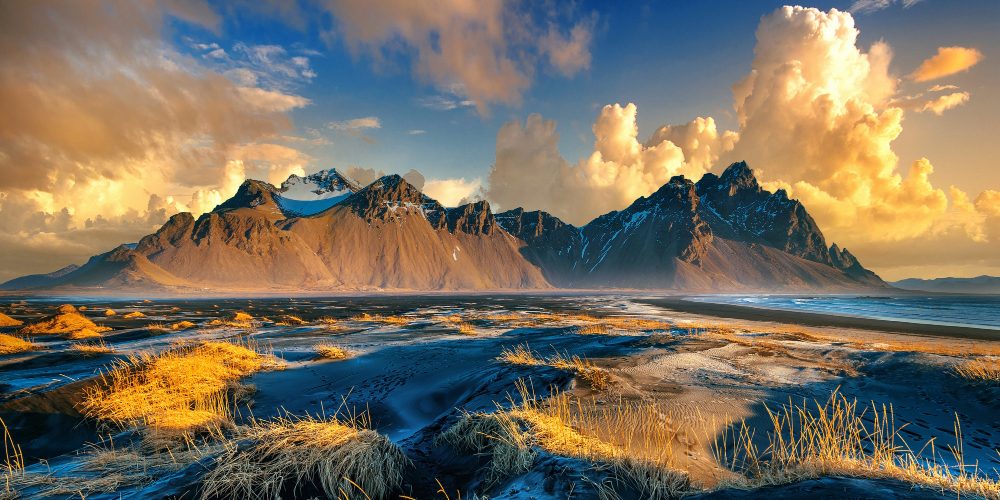
Iceland’s Ring Road — Route 1 — is 1,322 kilometres of volcanic desert, glacier tongues, fjord switchbacks and single-lane bridges, and it is entirely doable in a rental car. What trips people up isn’t the driving. It’s the booking: choosing between a 2WD and a 4×4, decoding Icelandic insurance add-ons, and understanding why the cheapest quote on the comparison site is sometimes the most expensive car you’ll ever rent. Here’s the full picture, with real 2026 numbers.
The Ring Road in numbers
The full loop is 1,322 km (821 miles), almost entirely paved, with a 90 km/h limit on paved rural roads and 80 km/h on gravel. Driving it non-stop takes about 17 hours; nobody does that. A realistic minimum is 7 days, and 10 is comfortable. Fuel runs around 310–330 ISK per litre (roughly $2.20–2.40), so budget $250–350 in petrol for the loop in a small car — more like $450 in a thirsty 4×4. Speeding fines start around 20,000 ISK and cameras are common near towns, so set the cruise control and enjoy the scenery.
2WD or 4×4 — the honest answer
Between May and September, a 2WD hatchback handles the entire Ring Road without drama. The road is paved, graded and plowed. Where a 4×4 becomes mandatory — legally, not just practically — is on F-roads, the mountain tracks into the Highlands (Landmannalaugar, Askja, Þórsmörk). Driving an F-road in a 2WD is illegal in Iceland and voids every insurance you have. If the Highlands aren’t on your itinerary, save the money.
From October to April the calculation flips. Snow, ice and wind make a 4×4 with studded winter tyres (fitted by law in winter months) genuinely worth the premium, especially in the north and the East Fjords. It won’t make you invincible — it makes you recoverable.
Prices move a lot between suppliers and between the Keflavík airport desks and the Reykjavík city branches. Compare across companies for your dates before booking:
What it really costs in 2026
Realistic daily rates booked a couple of months ahead, from the Keflavík Airport pick-up desks:
- Economy 2WD (Kia Picanto, VW Polo): $55–85/day summer, $35–55 winter
- Compact SUV 4×4 (Dacia Duster — Iceland’s unofficial national car): $85–130/day summer, $60–90 winter
- Full-size 4×4 (Land Cruiser, Defender): $180–280/day summer
- Campervan (2-berth): $130–220/day summer, campsites $15–20 per person on top
July and August sell out first in the SUV category. Book 8–10 weeks out and you’ll pay 25–40% less than walk-up rates. You can compare most Icelandic suppliers, including the strong local ones like Blue and Lagoon, in one search here: compare car rental prices at Keflavík Airport.
The insurance add-ons nobody explains
Icelandic rentals come with unusually specific coverage tiers, and they exist because the damage they cover actually happens:
- Gravel Protection (GP): covers chips and cracked windscreens from stones thrown up on gravel sections. Windscreen replacement in Iceland runs $800+. Worth it.
- Sand and Ash Protection (SAAP): covers paint stripped by wind-blown volcanic sand, mostly on the south coast near Vík and Skeiðarársandur. Sandstorms can strip a car to bare metal in an hour — a real four-figure bill.
- Wind damage: here’s the one that catches everyone. Doors ripped backwards by gusts are the most common rental damage in Iceland and are often excluded from every package. Hold the door with both hands, park nose into the wind.
- River crossings: never covered. Not on any policy, ever. If you drown a Duster in a Highland river, you bought it.
Winter driving is a different sport
From November to March, daylight shrinks to 4–7 hours, storms close sections of Route 1 for a day at a time, and the east and north can be properly hostile. Two websites become your co-pilots: road.is for live road conditions and vedur.is for weather warnings. Icelanders genuinely respect orange and red warnings — when locals don’t drive, you don’t drive. Build a buffer day into any winter itinerary, and don’t book a flight home the morning after your last long driving day.
A realistic 7-day loop
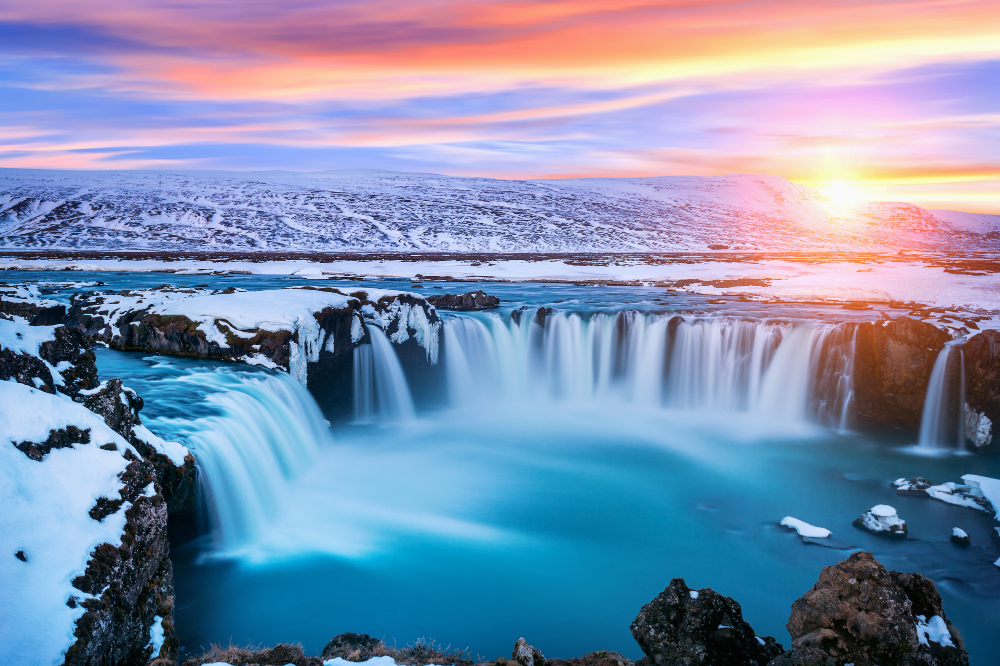
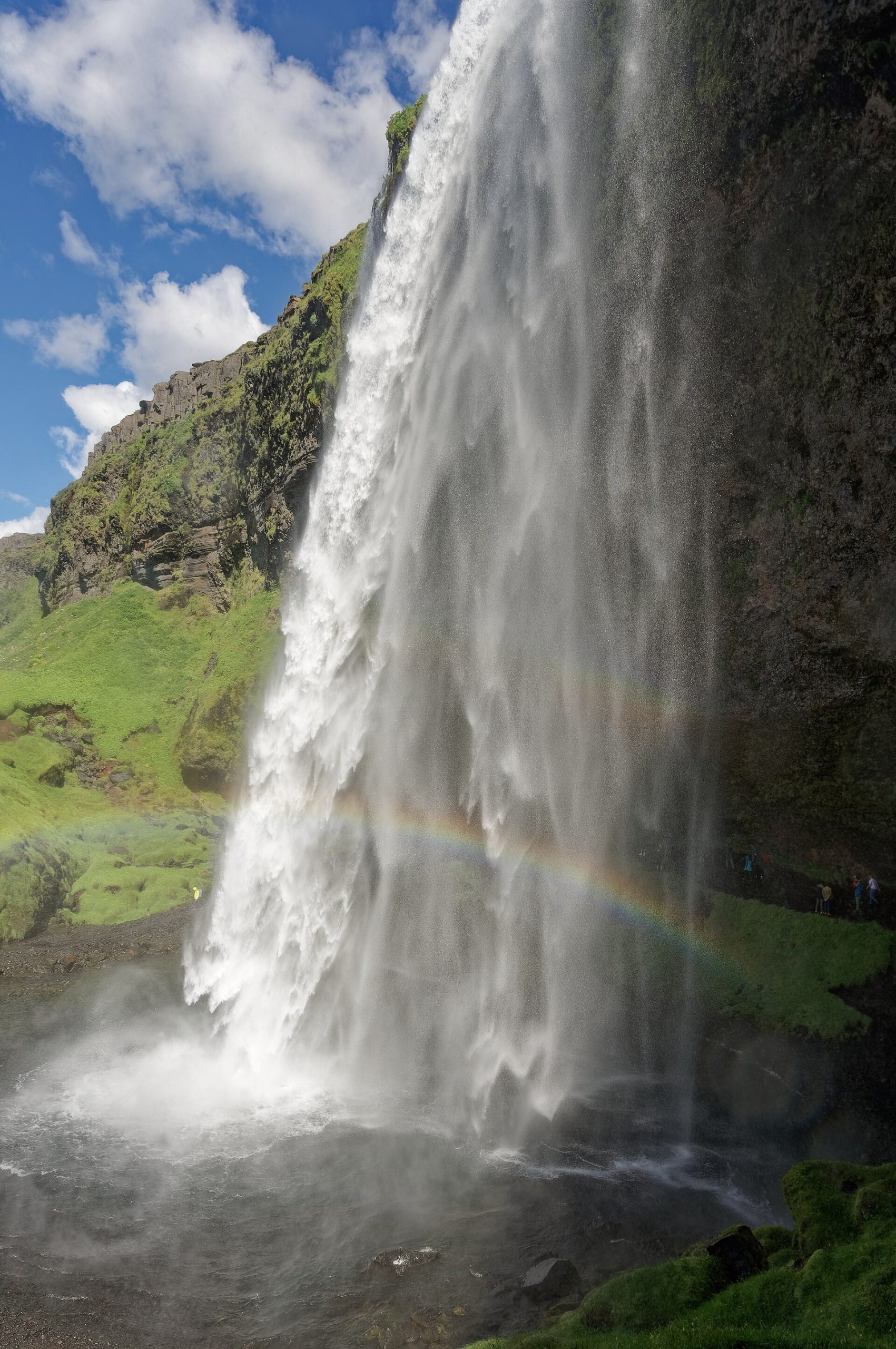
Counter-clockwise from Reykjavík: Day 1 Golden Circle (Þingvellir, Geysir, Gullfoss), sleep near Selfoss. Day 2 south coast waterfalls Seljalandsfoss and Skógafoss, Reynisfjara black beach, sleep in Vík. Day 3 Skaftafell and the Jökulsárlón glacier lagoon, sleep in Höfn. Day 4 East Fjords to Egilsstaðir. Day 5 Dettifoss and Lake Mývatn. Day 6 Akureyri and the north. Day 7 back to Reykjavík via Borgarnes, or detour a day for Snæfellsnes if you have one spare. If you’d rather skip the two longest driving days, domestic flights within Iceland connect Reykjavík with Akureyri, Egilsstaðir and Höfn cheaply.
Booking checklist
Search with your full driver history ready — Iceland requires a licence held for at least one year, and most suppliers set the minimum age at 20 (23–25 for 4x4s), with a young driver fee under 25. Pay attention to the fuel policy (full-to-full is standard and fine), mileage (should be unlimited), and the excess: a “cheap” $40/day rate with a $3,500 excess and no gravel cover is a worse deal than $60/day fully covered. Run your dates through the search below, then sort by total price including coverage, not the headline rate.
Getting from the airport to your accommodation is the one leg worth arranging before you arrive — compare fixed-price transfers here:
One last practical note: mobile data is essential for road and weather checks, and roaming charges add up fast. An eSIM for Iceland costs a few dollars and takes five minutes to set up before you fly. You can also compare rental prices for pick-up in Reykjavík city if you’re spending a few days in the capital first — city pick-ups sometimes undercut the airport by 10%.
Iceland punishes the unprepared and rewards everyone else. Book the right category, take the gravel cover, hold onto your doors, and the Ring Road will be the best drive of your life.
Iceland car rental FAQ
Do I need a credit card? Almost universally yes — a physical credit card in the main driver’s name for the deposit hold, which can be $1,500–3,500 depending on the excess you chose. Some suppliers now accept debit cards with a higher-tier insurance package; filter for it specifically if that’s your situation, and read the counter rules before you fly rather than after you land.
Is there anything to know about tolls? Just one: the Vaðlaheiðargöng tunnel near Akureyri, about 1,500 ISK, paid online at tunnel.is within 24 hours of driving through. There are no toll booths — miss the payment window and the fine goes to the rental company, which adds an admin fee. Put a reminder in your phone the moment you exit the tunnel.
What about electric cars? Iceland’s charging network along Route 1 is now genuinely good — ON and Ísorka fast chargers at most towns — and EV rentals are often cheaper than petrol equivalents in the shoulder seasons. The catch is winter: cold cuts real-world range by a third exactly when you want maximum buffer between charges in the East Fjords. Summer EV loop: easy and cheap. February EV loop: for planners only.
Can I sleep in a normal car to save money? No — sleeping in vehicles outside registered campsites is illegal in Iceland, and it’s enforced. If you want wheels and a bed in one, book a proper campervan and use campsites; the campsite fee is a fraction of a guesthouse and the vans come winterised with heaters.
One tank rule worth adopting: in the east and the Westfjords, never pass a petrol station below half a tank. Distances between pumps reach 100+ km, most rural stations are unmanned card-only kiosks (your PIN-enabled card is essential), and running dry in a place with no phone signal turns an inconvenience into a rescue.
Update for 2026: the road tax nobody quotes you
Since 1 January 2026 a government road charge of roughly 1,550 ISK per day — about €11 or $13 — applies to rental vehicles in Iceland. It is generally not included in the online quote and is collected at the desk on arrival, which means a ten-day rental is quietly €110 more expensive than the price you compared. Factor it in before you decide the headline rate looks reasonable.
Two insurance points worth restating, because they are the two most expensive surprises on this island. Sand and ash protection covers paint stripped by wind-driven volcanic grit on the south coast, typically ISK 1,000–2,500 per day, and it is excluded from ordinary waivers. Water damage from river crossings is excluded from essentially every policy including Super CDW unless you buy the specific river-crossing cover — and F-roads, where the crossings are, are legally closed to 2WD vehicles in any case.
Car and rooms, or a camper?
The alternative to a rental car is a campervan, and the comparison has changed. Wild camping has been illegal for campervans since 2015, campsites charge roughly 1,500–2,500 ISK per person per night plus a camping tax, and the same 2026 road charge applies. Once you add the higher rental rate and the higher fuel burn, a small car plus guesthouses is frequently the cheaper trip as well as the more comfortable one. We set out the full arithmetic in a campervan in Iceland is no longer the cheap option.
If you are going with the car, book rooms early. Accommodation along the eastern fjords and in the north is thin and fills months ahead for June to August.



Add comment