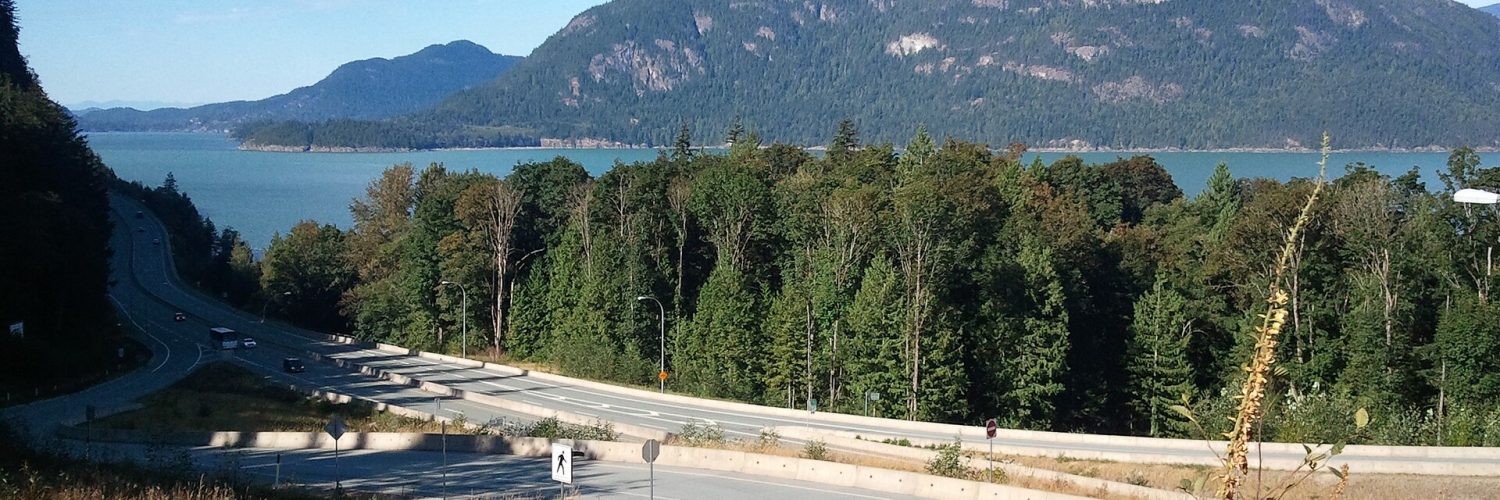
There is a $121-per-axle fine waiting for you 20 minutes north of Vancouver, and most visitors never hear about it until they are already in the winter tire zone. Highway 99 — the Sea to Sky, the road to Whistler — requires winter-rated tyres on every vehicle from 1 October to 31 March, and the mandatory zone begins just north of Horseshoe Bay. Police do enforce it, and being turned around at the checkpoint with three kids in the back is a worse outcome than the fine.
This matters more for a minivan than for anything else you might rent, because the minivan is the vehicle families book specifically to do the Whistler run — and it is also the vehicle most likely to come off the lot on all-season rubber if you do not ask.
The winter tire rule, precisely
British Columbia designates specific highways as winter tire routes. On most of them the requirement runs 1 October to 30 April; on the Sea to Sky and several coastal routes it runs 1 October to 31 March. Signs at the start of each zone tell you which.
A legal winter tyre carries either the 3-Peak Mountain Snowflake symbol or the M+S (mud and snow) marking, and must have at least 3.5 mm of tread. Most Vancouver rental fleets run M+S all-seasons through the winter months, which satisfies the letter of the law. If you are driving to Whistler in January and want to satisfy more than the letter of it, ask specifically for 3PMSF-rated tyres when you book — some companies offer them as an add-on and some do not offer them at all.
Chains in the boot are an accepted alternative on some routes but not a substitute everywhere. Carrying them and not knowing how to fit them is not a plan.
What a minivan actually gets you
The Vancouver fleets are mostly Chrysler Pacifica, Toyota Sienna, Honda Odyssey and Kia Carnival — seven or eight seats, sliding doors, and a third row that folds flat.
The number that decides the booking is not seats, it is seats plus luggage at the same time. With all eight seats up, most minivans have room behind the third row for roughly three carry-ons and a couple of soft bags. Seven people with seven suitcases does not fit in any minivan sold in North America. If that is your group, you want two vehicles or a full-size SUV plus a roof box.
The Sienna is a hybrid and returns noticeably better fuel economy on the Sea to Sky than the alternatives, which matters when BC petrol is among the most expensive in Canada. All-wheel drive is available on the Sienna and Pacifica and is worth asking for if you are going to Whistler between November and March — though it is the tyres, not the drivetrain, that keep you on the road.
What it costs
Minivans are the tightest category in the Vancouver market, because supply is limited and demand is entirely seasonal.
- July and August: C$130–200 per day is normal, and availability genuinely runs out. Book eight to twelve weeks ahead.
- Winter holidays and spring break: C$120–180 per day, with the Whistler-driven peak around Christmas and Presidents’ Day week.
- Shoulder season (May, June, September, October): C$80–130 per day and much easier to find.
Add to that: a 5% GST, an 8% PST on the rental, airport concession fees if you collect at YVR, and roughly C$15–25 per day for each child seat. Insurance excess reduction is C$25–40 per day; check whether your credit card already covers rentals in Canada before you buy it at the counter.
Where to pick up: YVR or downtown?
YVR has all the major desks in the parkade a short walk from arrivals, the widest minivan selection, and airport concession fees that add roughly 15–20% to the total. If you are heading straight for the Sea to Sky it is also on the wrong side of the city — you will cross Vancouver in traffic to reach Highway 99.
Downtown branches are cheaper and closer to the bridge, but have far fewer minivans and shorter opening hours.
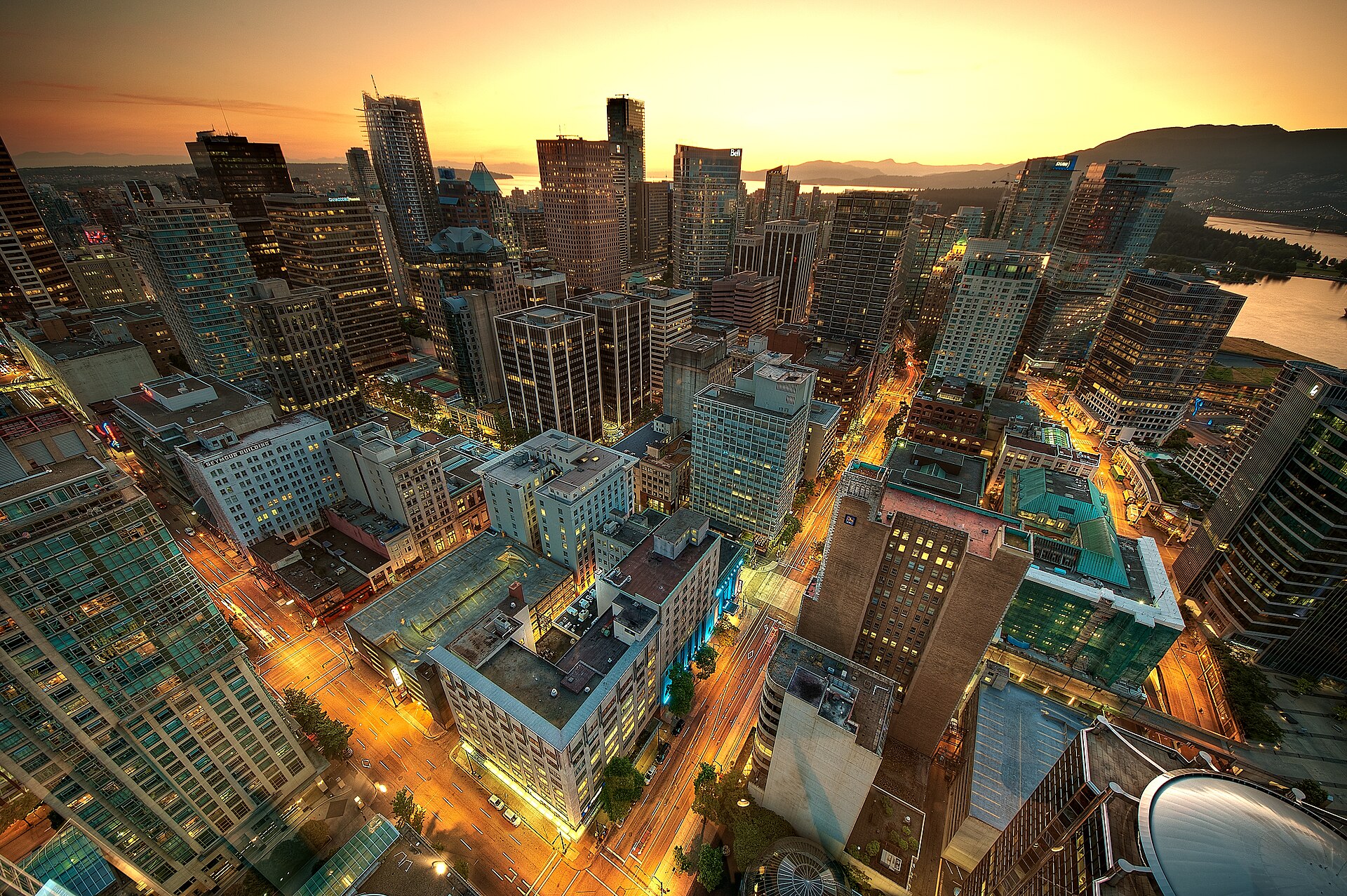
A common and sensible pattern: spend the first two or three days in Vancouver without a car — the city is walkable, the SkyTrain works, and downtown hotel parking runs C$35–60 a night — then collect the minivan on the morning you leave for Whistler or the Interior.
Child seats, and the BC rule that surprises people
British Columbia requires a booster seat until a child is 9 years old or 145 cm tall, whichever comes later. “Later”, not “either” — an eight-year-old who is already 150 cm still legally needs a booster. Infants must be rear-facing until at least one year old and 9 kg.
The penalty for getting it wrong is a fine of several hundred dollars plus penalty points, and rental company seats are expensive and of unpredictable condition. If you are flying in, bringing your own seats is usually free as checked baggage on flights to Canada and is the cheaper and safer option. Local specialist rental companies deliver clean, current seats to hotels and to YVR if you would rather not carry them.
Note that taxis and ride-hailing vehicles in BC are exempt from providing child restraints — which is another reason a rented van, correctly equipped, is the simpler answer for a family week.
Where the minivan actually pays off
The Sea to Sky Highway to Whistler — about 120 km and 1 hour 45 minutes without stops, and it is one of the great short drives in North America. Stop at Porteau Cove, Shannon Falls and the Sea to Sky Gondola in Squamish. In a van the kids can spread out; on the shuttle bus they cannot.
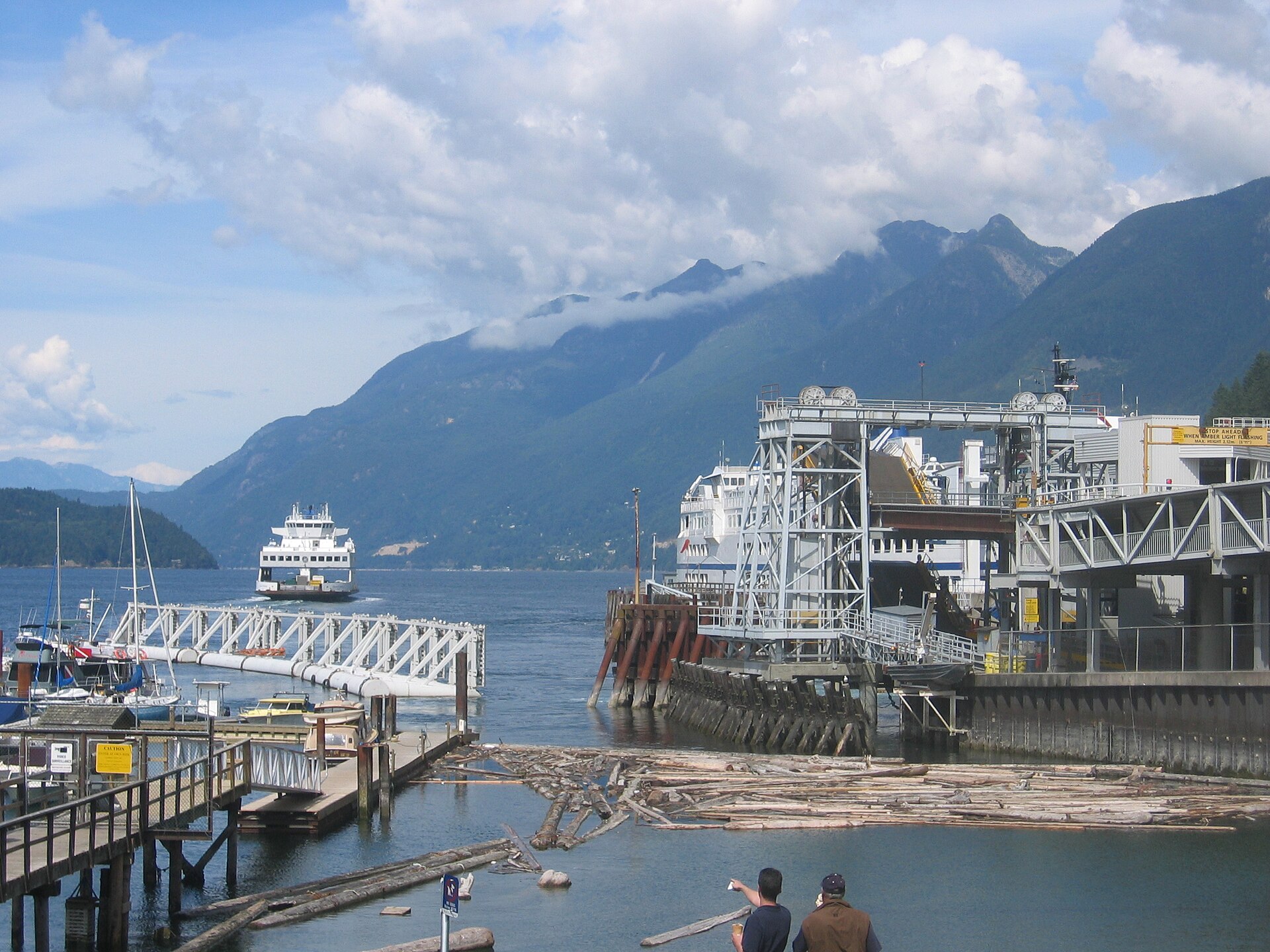
Vancouver Island via BC Ferries from Horseshoe Bay or Tsawwassen — vehicle fares are charged by length, and a standard minivan falls in the under-20-foot band, so you pay the normal car rate rather than an oversize surcharge. Reserve the sailing; drive-up in summer means waiting for the second or third boat.
The Okanagan — four to five hours east on Highway 5 and 97, wine country and lake towns, and a drive where boot space and a cooler earn their keep.
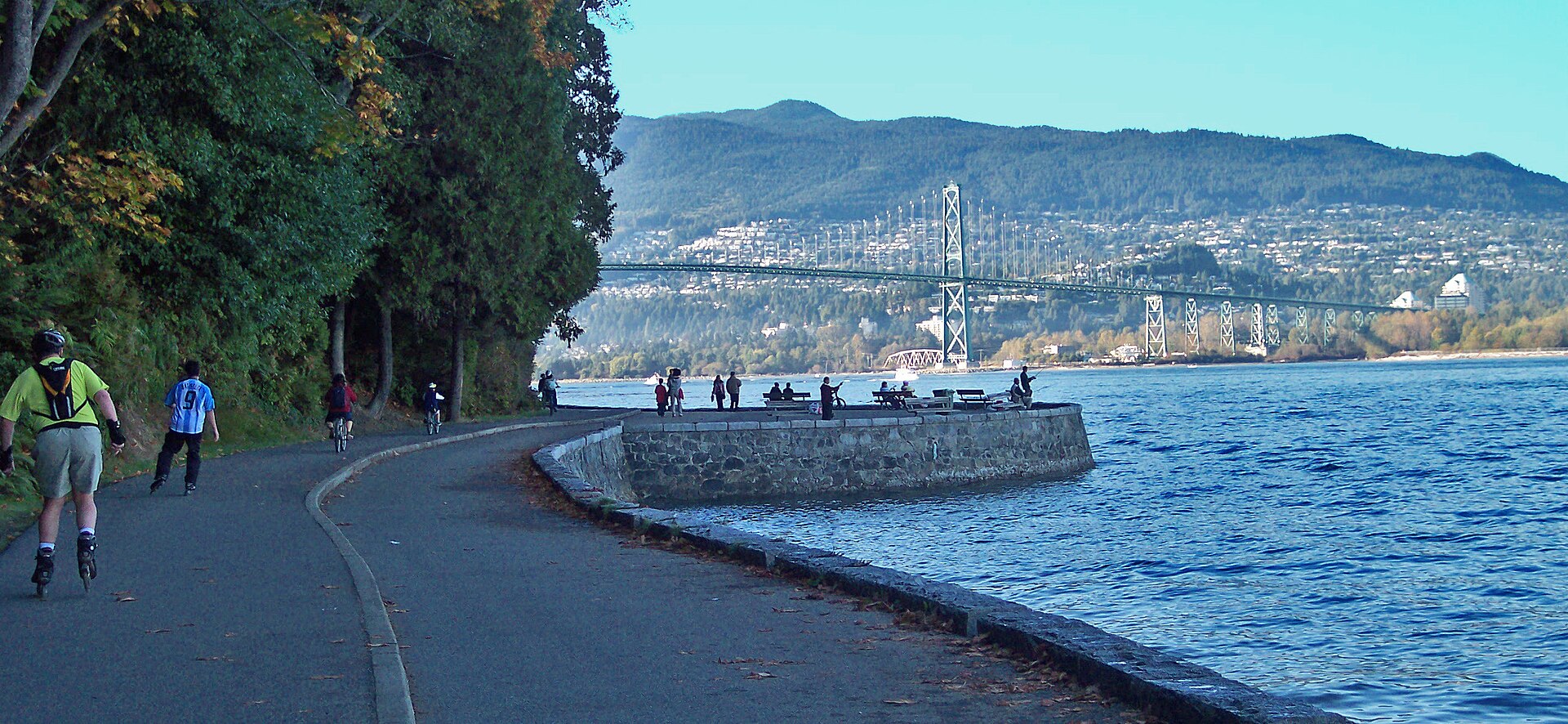
Around the city, honestly, the van is a liability. Stanley Park, Granville Island, Gastown and the beaches are all better on foot, by bike or on transit, and downtown parking is both scarce and priced accordingly.
Driving in BC: the rules visitors get wrong
- Right turn on red is permitted after a full stop unless signed otherwise.
- Slow down and move over for stopped emergency and maintenance vehicles — this is enforced with large fines.
- Distracted driving penalties are among the harshest in Canada. Do not touch the phone, even at a red light.
- Wildlife on Highway 99 and in the Interior is a genuine hazard at dawn and dusk. A deer strike in a minivan is a trip-ending event.
- Fuel is sold by the litre and BC prices are consistently the highest in the country. Fill up in Squamish rather than Whistler.
- Bridge tolls were removed from the Port Mann and Golden Ears crossings, so the Lower Mainland is toll-free.
Where to stay
If you are splitting the trip between city and mountain, book them as two separate stays rather than driving back and forth. Whistler Village accommodation is expensive in ski season and surprisingly reasonable in September and October; Vancouver is the reverse, peaking in July and August.
התיקון: לעטוף כל ווידג’ט 4038 בשני div — חיצוני נגלל אופקית, פנימי עם min-width 620px: