Ask why Manila feels architecturally disjointed — glass towers ten minutes from war-scarred prewar shells, a walled Spanish city sitting next to corrugated-iron rooftops — and the honest answer isn’t decades of neglect. It’s one month in 1945. Almost everything a first-time visitor finds confusing about Manila traces back to the five weeks it took to destroy the city and the eight decades it has taken to rebuild it in pieces.
A City Rebuilt in a Hurry
In early 1945, Japanese General Tomoyuki Yamashita declared Manila an open city and ordered his forces to withdraw. Rear Admiral Sanji Iwabuchi ignored the order and dug in with roughly 17,000 sailors and soldiers, determined to make the American and Filipino advance costly. The Battle of Manila that followed, from 3 February to 3 March 1945, killed more than 100,000 Filipino civilians and over 1,000 American soldiers in a single month. Historian William Manchester put the physical toll at seventy percent of the city’s utilities, seventy-five percent of its factories, eighty percent of its southern residential districts, and one hundred percent of its central business district razed to rubble — a level of destruction historians rank alongside wartime Warsaw and Berlin.
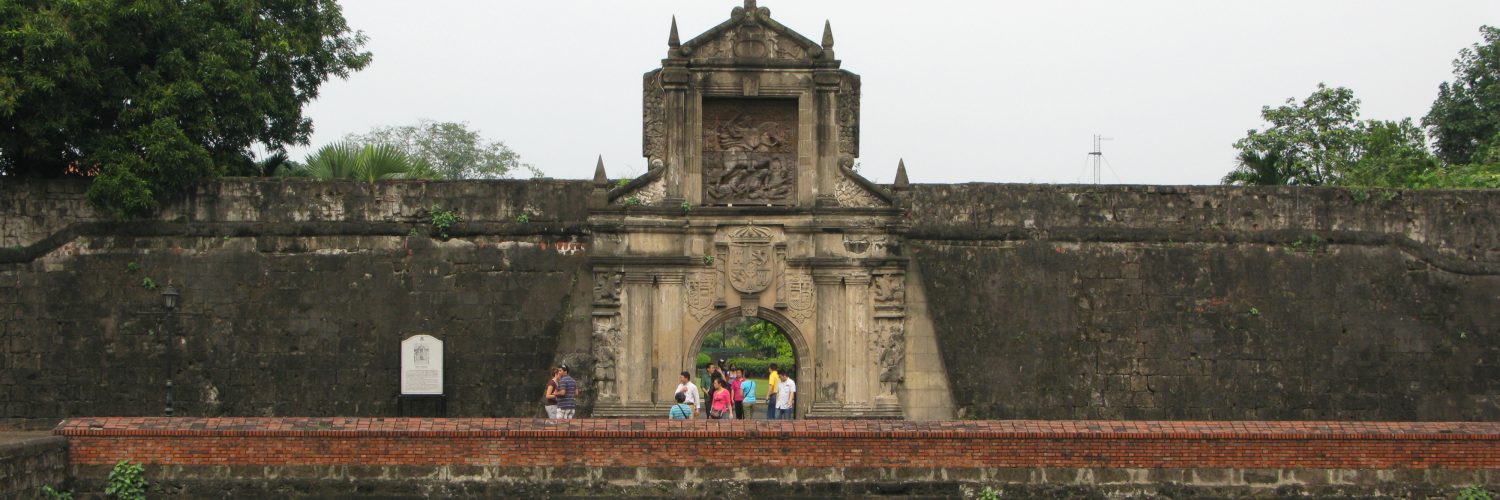
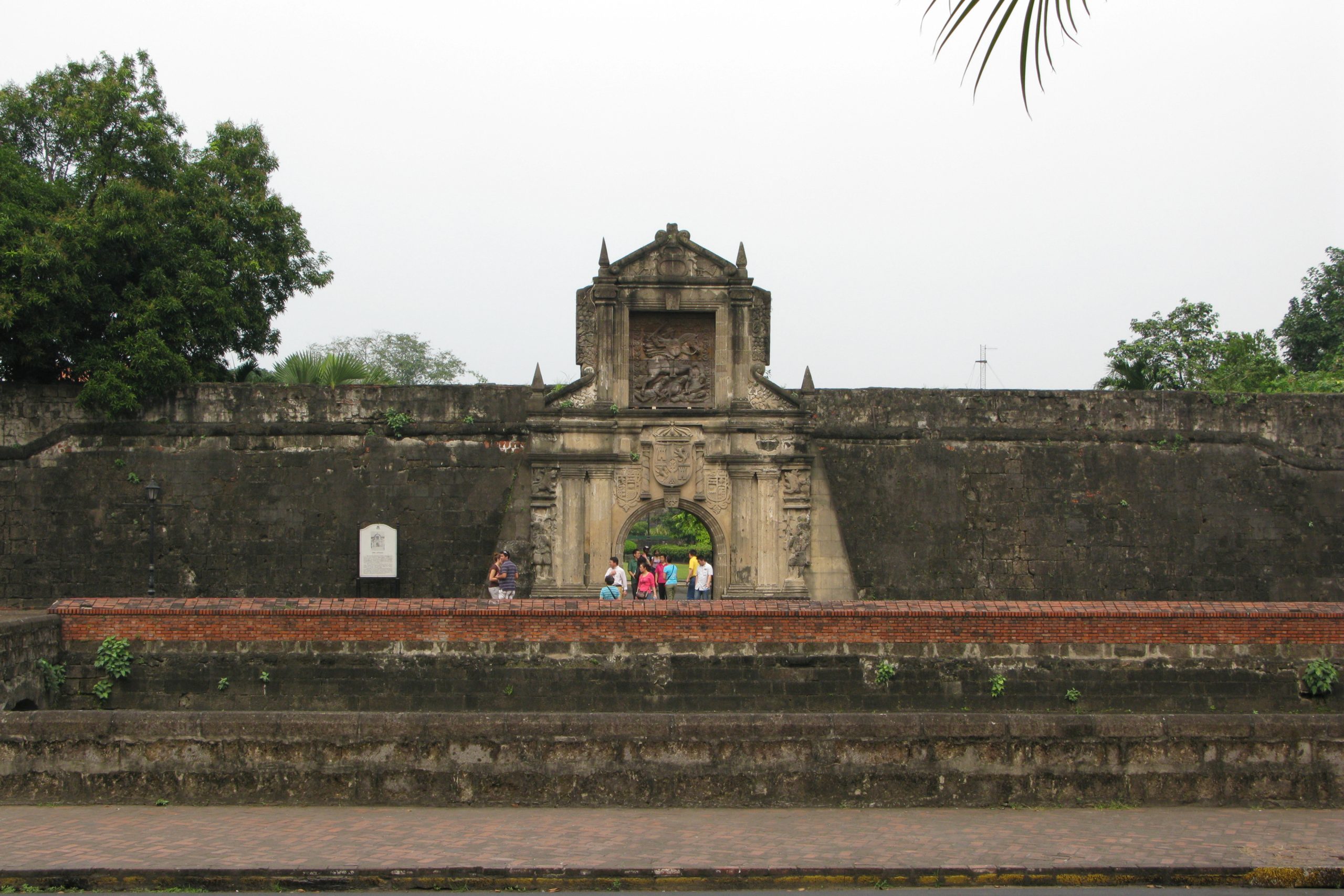
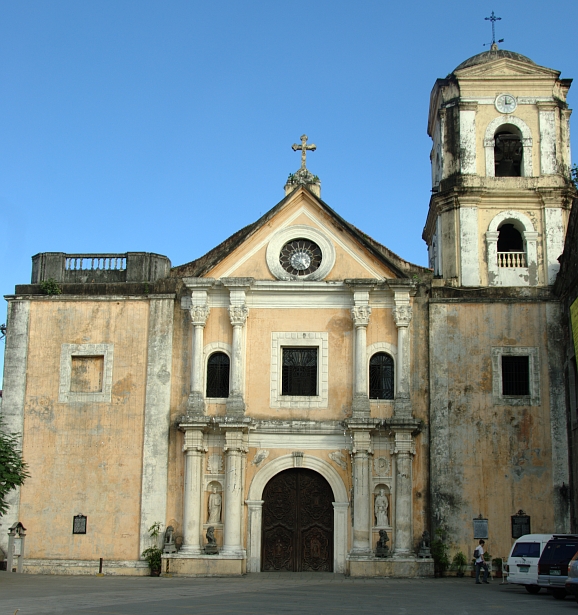
Intramuros, the three-hundred-year-old Spanish walled city, took the worst of it. Of the seven churches inside its walls, only San Agustin Church came through standing. Everything else visitors see inside Intramuros today — Fort Santiago’s gate, the reconstructed Manila Cathedral, the restored stretches of wall — is a postwar rebuild, not the original. That single fact reframes the whole city: Manila isn’t an old capital that modernized unevenly, it’s a flattened capital that has been rebuilding, plot by plot, ever since, which is exactly why a 1590s church facade can sit two blocks from a 2020s condo tower with nothing coherent in between.
Getting In From the Airport
Ninoy Aquino International Airport (NAIA) has four terminals and a reputation for congestion that is, at this point, earned. Grab is the easier option for almost everyone: a ride from NAIA to Makati typically runs ₱300–500, and Grab’s “Airport to Anywhere” program blocks surge pricing on rides leaving the airport, so the fare doesn’t spike because your flight landed at 11pm. A metered taxi covers the same route for roughly ₱250–500 depending on traffic, while the airport’s fixed-rate coupon taxis charge a flat ₱600–1,000 — more predictable, but rarely cheaper. Booking a transfer in advance removes the arrivals-hall haggling entirely:
If Manila is a stop on a wider Philippines trip, island-hopping from here usually means a domestic flight rather than a ferry — our guide to domestic flights in the Philippines covers routes, airlines, and what the budget carriers actually charge once the baggage fees are added.
What’s Worth Booking Ahead
Intramuros is the obvious first stop, and its sites now run on a QR-based ticketing system with timed entry at Fort Santiago and Casa Manila, which makes booking ahead genuinely useful rather than a formality. San Agustin Church, the only one of Intramuros’s original seven churches left standing, was named a UNESCO World Heritage Site in 1993 under the collective “Baroque Churches of the Philippines” listing, and its museum and cloister charge a separate entrance fee from the working church itself. Manila Ocean Park, on the bay side of Rizal Park, is worth pre-booking too: the online bundle tickets run around ₱950–2,000 for the oceanarium, penguin exhibit, and sea lion show combined, versus walk-in gate prices that regularly exceed ₱2,000 on their own.
What Costs Nothing
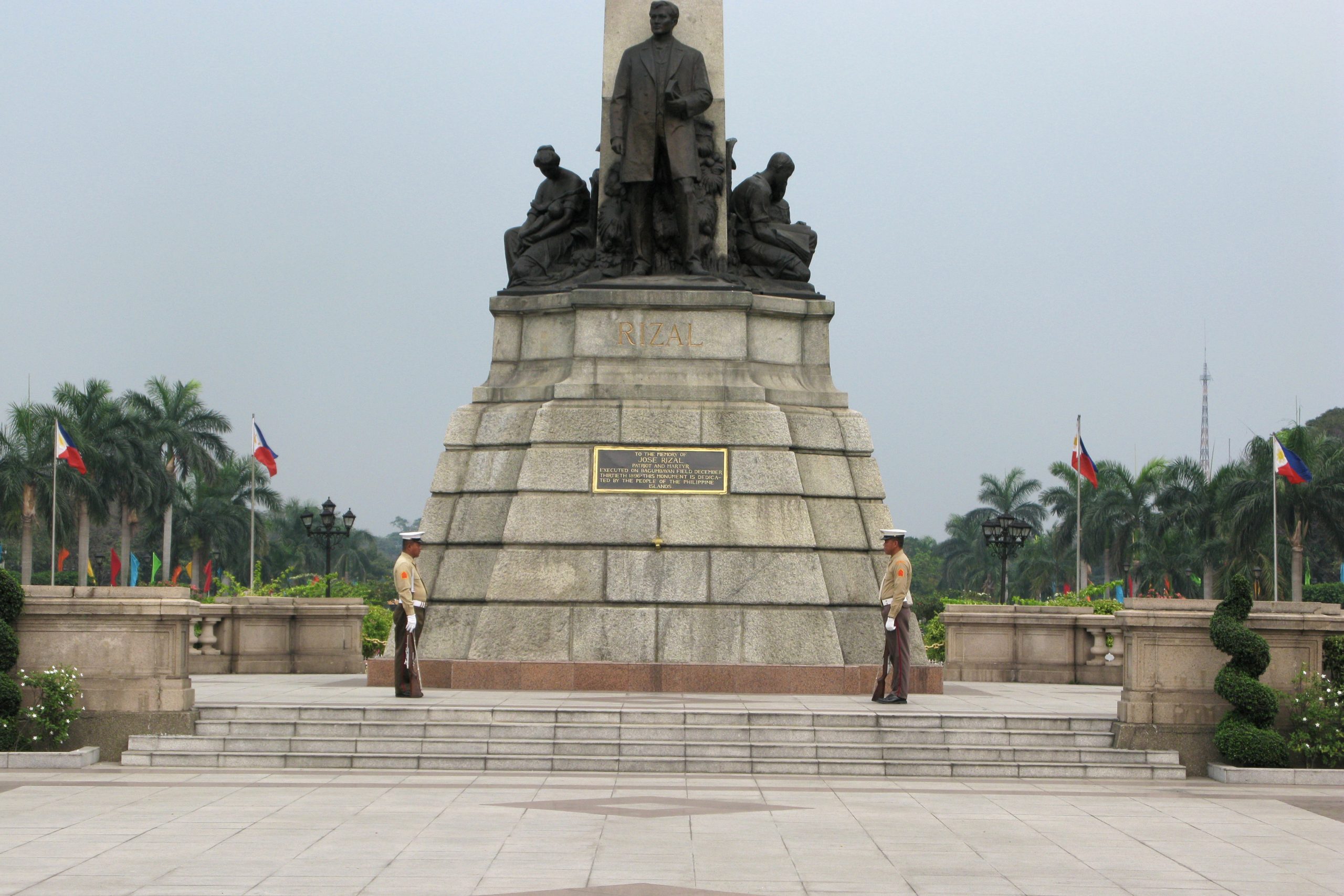
- Rizal Park (Luneta) itself is free to enter, including the grounds around the 1913 Rizal Monument marking the execution site of national hero Jose Rizal — though a few enclosed sections, like the Chinese Garden and children’s playground, do charge small fees.
- Manila Cathedral’s exterior and (during open hours) its interior cost nothing, and it sits directly on Intramuros’s central plaza.
- Baywalk along Roxas Boulevard is Manila’s best free hour: benches, street food carts, and a Manila Bay sunset that the city genuinely delivers on.
- Walking Binondo costs nothing except the food you inevitably buy along the way.
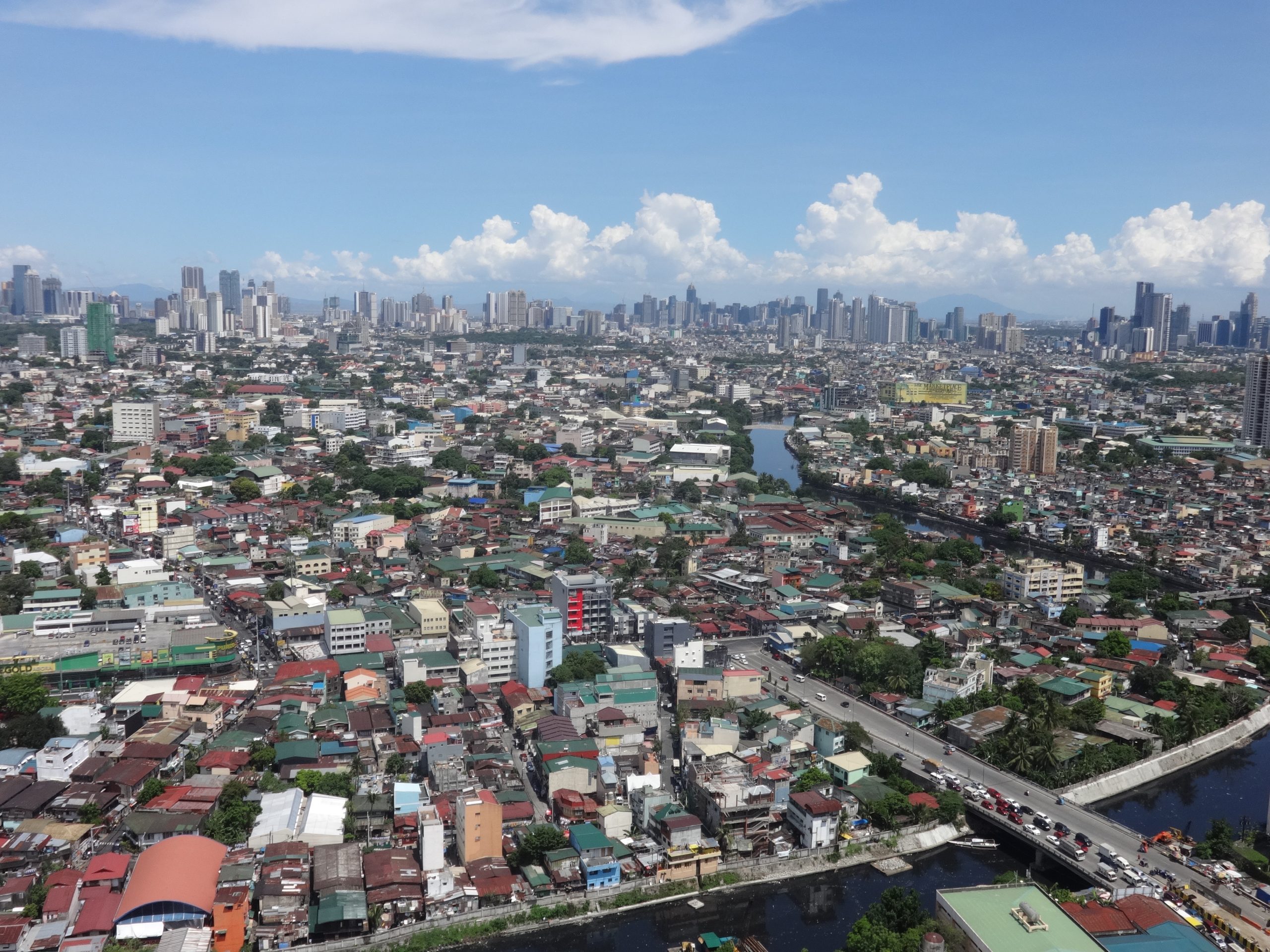
Manila’s wider metro area compounds the puzzle further. What tourists call “Manila” is really Metro Manila, a sprawl of sixteen cities and one municipality — Manila proper, Quezon City, Makati, Taguig, Pasig, and more — stitched together with no single unified skyline, because no single plan ever governed how it grew back after 1945. Each district essentially rebuilt itself on its own timeline and budget, which is why the transition from one neighborhood to the next can feel like crossing into a different city entirely rather than a different postcode.
Which Neighborhood For What
Intramuros is the history: cobblestone streets, Spanish-era walls, and the only part of Manila that still looks three hundred years old, because in a sense it was rebuilt to. Binondo, just across the Pasig River, has a fair claim to being the world’s oldest Chinatown, established by the Spanish in 1594 as a settlement for Chinese traders and Catholic converts; it’s still the best place in the city to eat, especially along Ongpin Street. Makati is the polished, corporate Manila — upscale malls, embassies, and the city’s densest concentration of good restaurants and nightlife. Bonifacio Global City (BGC), just southeast of Makati, is newer, flatter, and genuinely walkable by Metro Manila standards, with wide sidewalks and none of the jeepney-choked traffic that defines most of the city. Malate and Ermita, south of Rizal Park, are the budget base: older, a little rougher around the edges, but close to the bay and a fraction of the cost of Makati or BGC.
A 3–4 Day Route
- Day 1 — Intramuros and Rizal Park: Fort Santiago in the cool of the morning, San Agustin Church, lunch inside the walls, then Rizal Park and the Rizal Monument in the late afternoon before the Baywalk sunset.
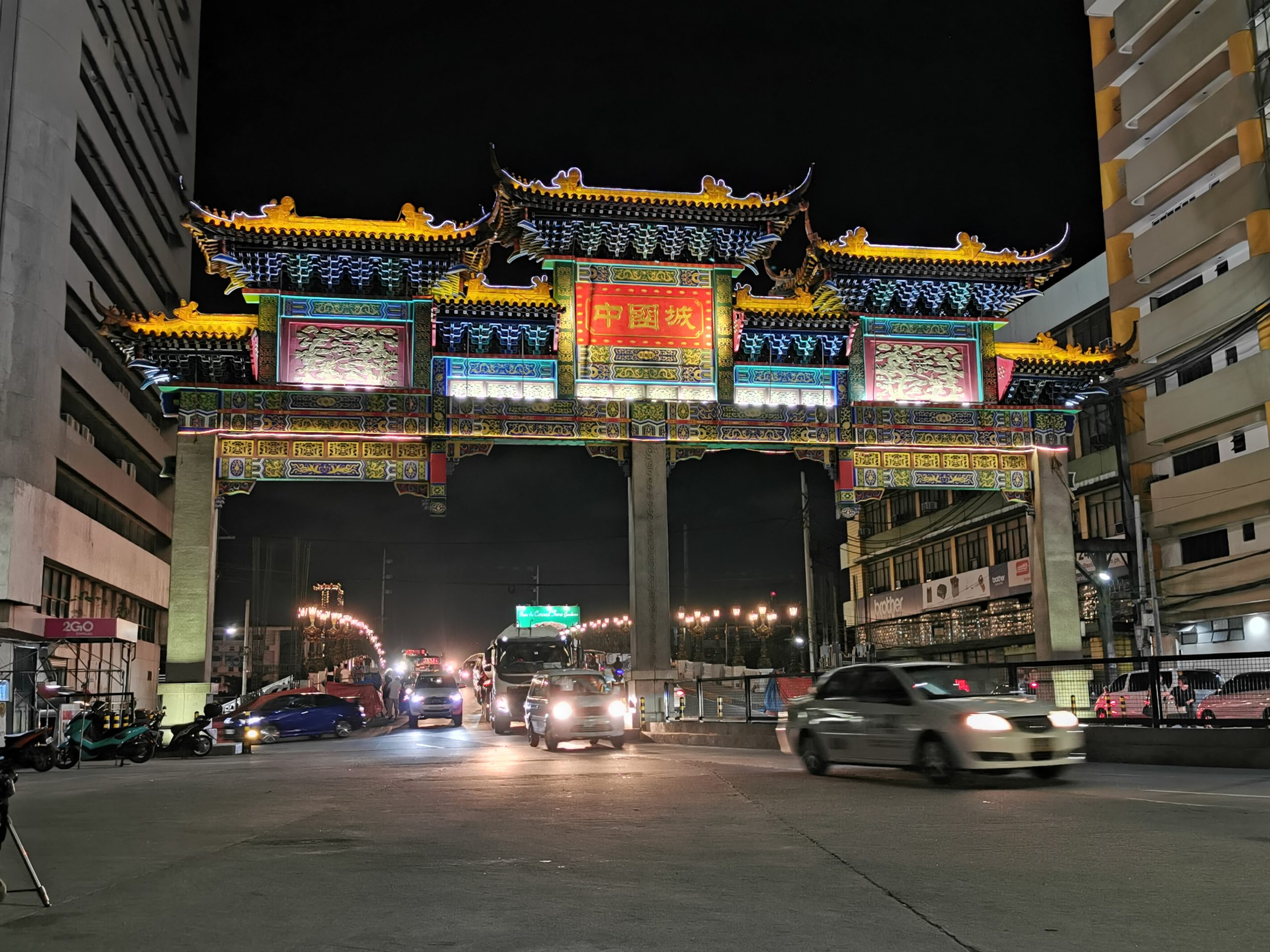
- Day 2 — Binondo: a slow, hungry walk through the world’s oldest Chinatown — dumplings, hopia, and fresh lumpia from stalls that have been there for generations — then the Filipino-Chinese Friendship Arch and Manila Cathedral on the walk back.
- Day 3 — Makati and BGC: daytime shopping and museums in Makati, then dinner and nightlife in BGC, which stays walkable and pleasant well after dark.
- Day 4 — day trip or Ocean Park: Manila Ocean Park if traveling with kids, or a day trip south to Tagaytay for the Taal Volcano view if the weather cooperates.
Food and Everyday Culture
Filipino food doesn’t get the international attention Thai or Vietnamese food does, which mostly just means it’s underpriced for what you get. Adobo — meat braised in vinegar, soy sauce, and garlic — is the closest thing the country has to a national dish, and every region and household has its own version. Sisig, sizzling chopped pork face and belly on a hot plate, started as a way to use every part of the pig and is now a beer-hall staple across the city. Halo-halo, a shaved-ice dessert layered with sweetened beans, jackfruit, and leche flan, is the correct answer to Manila’s heat. And jeepneys — the elaborately painted, repurposed military-jeep buses that still run fixed routes everywhere — are as much folk art as they are transport; riding one, even for a few blocks, is a better introduction to the city than most museums.
Safety is better than its reputation suggests in the areas most visitors actually spend time in — Intramuros, Makati, and BGC are heavily patrolled and well-lit at night. The usual big-city caution applies: keep bags zipped and in front on jeepneys and LRT trains, agree on a fare before boarding a non-metered tricycle, and avoid flashing phones or cash in crowded markets. Tipping isn’t mandatory but is increasingly expected in restaurants that don’t already add a service charge; ten percent is standard among tourists, though most Filipinos round up more modestly.
Getting Around
The LRT and MRT lines are the fastest way across town when traffic is bad, which is most of the time. A fare discount that took effect on 23 March 2026 cut LRT-2 fares roughly in half: expect ₱6.50–16.50 with a stored-value Beep card, or ₱8–18 for a single-journey ticket, depending on distance. Grab remains the default for door-to-door trips and is generally cheaper and less stressful than flagging a taxi. Inside Intramuros specifically, the kalesa — a horse-drawn carriage — is still operating as of 2026, though the Intramuros Administration and animal-welfare groups like PAWS have an ongoing, unresolved dispute over passenger limits and rest periods for the horses; it’s worth knowing that context before deciding whether to ride one.
Practical Notes
- Best time to visit: December to February, the dry season, with daytime temperatures around 25–30°C and noticeably lower humidity. April and May are the hottest months; June through November is the wet season, when the city gets uncomfortably humid even on days it doesn’t rain.
- Where to stay: Makati or BGC for comfort and nightlife, Malate or Ermita for budget travelers who want to stay near the bay.
- Money: carry small bills for jeepneys and street food; Grab and most malls take cards, but sari-sari stores and market stalls are cash-only.
Manila rewards the traveler who stops expecting it to look like Prague or Hoi An and instead reads it as what it is: a capital that was leveled in a month and has spent every year since patching itself back together, one district at a time.