Seoul is one of the few capital cities where the third day costs less than the first. A single subway ride is ₩1,550 with a transit card, but a three-day Climate Card — the city’s unlimited pass for buses and the Seoul subway — is ₩10,000, which works out to the price of roughly six and a half rides for seventy-two hours of movement. The royal palaces charge ₩3,000 and waive it entirely if you turn up in hanbok. And for most visitors reading this in 2026, the entry paperwork costs nothing at all — a situation that has an expiry date printed on it.
That deadline is the single most useful thing to know before booking. South Korea has extended its K-ETA exemption for citizens of dozens of countries — including the United States, Canada, the United Kingdom, Australia, New Zealand, Japan, Singapore and most of Western Europe — through 31 December 2026. From 1 January 2027, the K-ETA becomes mandatory again for visa-free travellers, which means an online application, a fee, and a processing window before departure. If your trip is loosely planned for “sometime in the next year,” the cheaper and simpler version of it happens before New Year’s Eve.
Why Seoul looks the way it does
Almost nothing you see in central Seoul is more than sixty years old, and that is not an accident of taste. The city changed hands four times during the Korean War and was left substantially flattened. What rose afterwards was built fast, under a state-directed industrial programme, and it shows: enormous uniform apartment estates, elevated expressways, and a grid that privileges car throughput over street life.
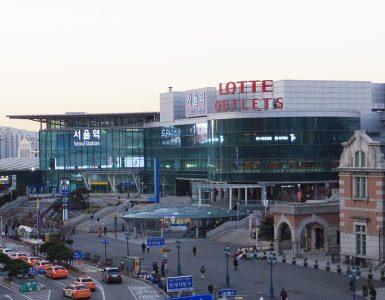
The interesting part is what happened next. In 2003 the city began tearing down the Cheonggyecheon elevated highway that ran through the middle of downtown, and in 2005 reopened the stream it had been built over. That decision reset the city’s priorities in public. Since then Seoul has been steadily converting road space into walkable space — Seoullo 7017, the old overpass turned into a planted skywalk near Seoul Station, is the same logic applied again. Understanding this explains something visitors often find confusing: Seoul has both the concrete brutality of a city rebuilt in a hurry and unusually generous public amenities, because it has spent twenty years apologising for the first with the second.
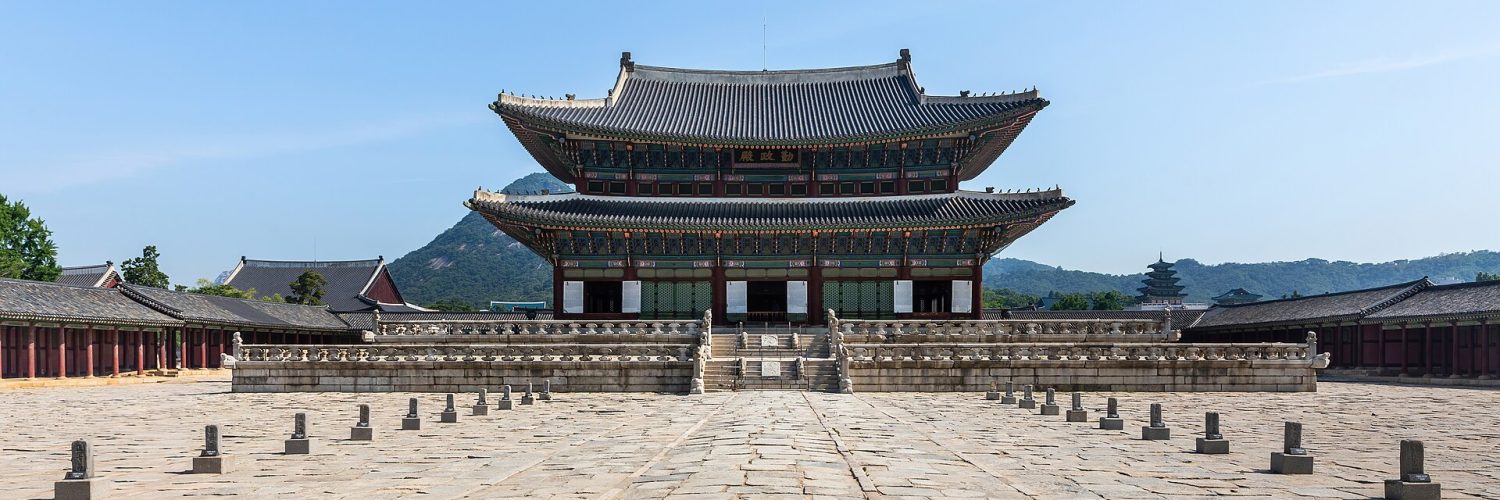
It also explains the palaces. Gyeongbokgung, Changdeokgung and the rest were not preserved so much as rebuilt, some of them within living memory, after Japanese colonial demolition and wartime damage. They are restorations, and the Korean state treats them as a national project rather than a museum — which is why admission is priced at pocket change instead of at what the market would bear.
Getting in from Incheon — and what each option really costs
Incheon International Airport sits about 50 km west of the city on reclaimed land between two islands, so nothing from it is quick. There are three sensible ways in and they separate cleanly by budget.
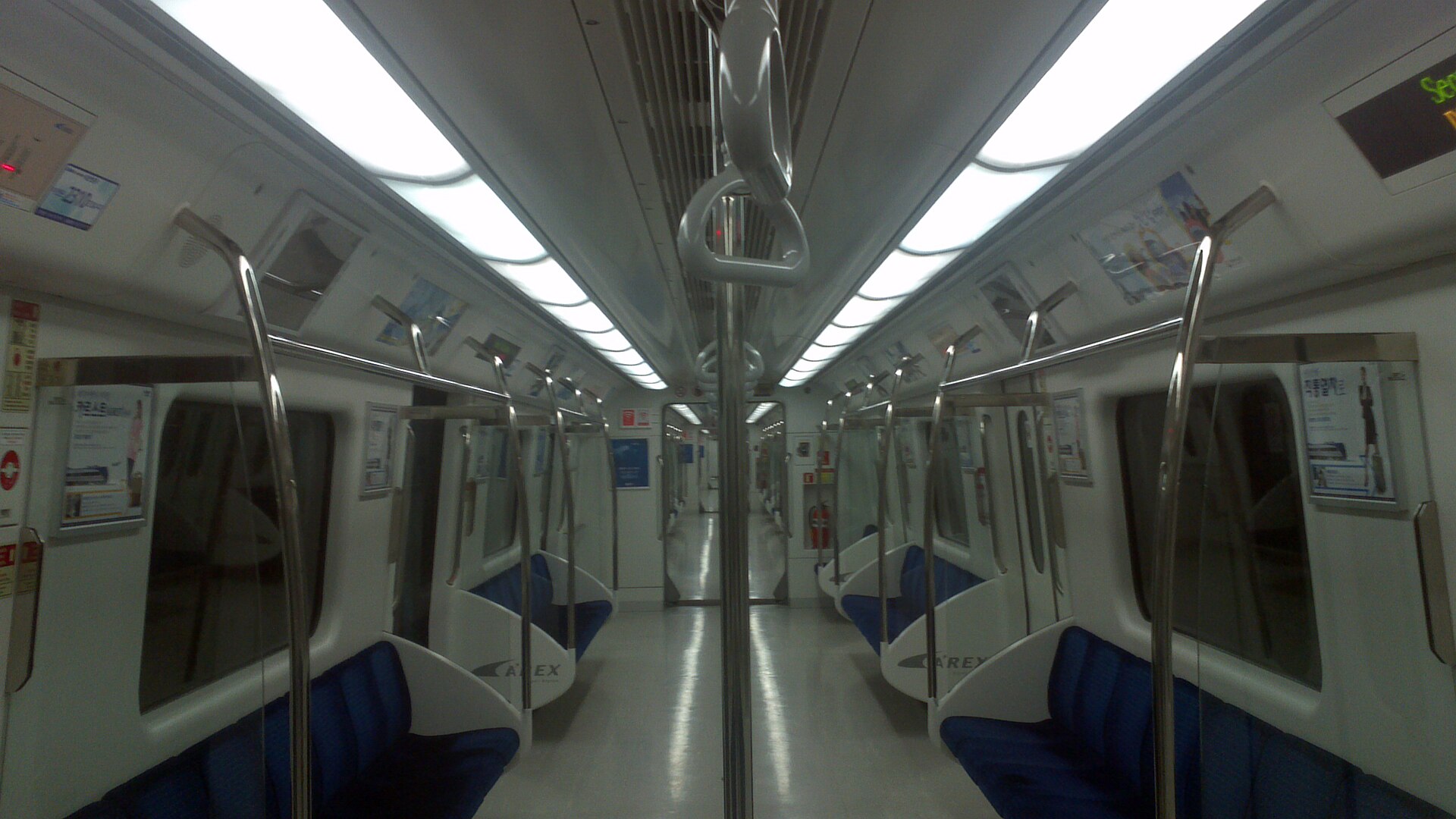
The AREX Express is the non-stop airport train to Seoul Station: 43 minutes from Terminal 1, 51 from Terminal 2, departures every 30 to 40 minutes, and a reserved seat. The walk-up fare is ₩13,000, though advance tickets are commonly sold online closer to ₩11,000–11,500. The AREX All-Stop line runs the same route with local stops for up to ₩5,350 and takes around an hour — it is the same railway, just slower and without a guaranteed seat, and it accepts a T-money card at the gate like any other subway line.
Airport limousine buses drop at hotel clusters across the city and cost roughly ₩17,000–18,000, which makes them worth it only if your accommodation is far from a Seoul Station connection and you have luggage. A metered taxi to central Seoul typically lands between ₩65,000 and ₩90,000 depending on traffic and time of day, with a late-night surcharge after midnight. A pre-booked private transfer sits in between: a fixed price, a named driver, and no queue at 5am — which is when a lot of long-haul flights from Europe and North America actually land.
If you want the full breakdown of routes, night-bus timings and which terminal your airline uses, we have a dedicated guide to Seoul airport transfers.
What you should book ahead, and what it costs
Seoul punishes spontaneity in exactly one area: timed-entry cultural sites. Everything else you can decide on the morning of.
- Gyeongbokgung Palace — ₩3,000 for foreign adults aged 19–64; free for under-19s and over-65s. Free on the last Wednesday of each month (Culture Day). Free at any time if you arrive wearing hanbok, but the rule is strict: you need a matching upper and lower garment. A jeogori over jeans will not pass, and neither will a durumagi robe on its own.
- Changdeokgung Secret Garden — ₩5,000 for adults, ₩2,500 for youth, free under 7. This one is a guided, capped-size tour and it does sell out; book it rather than turning up. Hanbok waives the main palace admission but not the Secret Garden ticket.
- Royal Palace Pass — ₩10,000 for single entry to Gyeongbokgung, Changdeokgung (including the Secret Garden), Changgyeonggung, Deoksugung and Jongmyo Shrine, valid three months. If you plan to see three or more, this is the obvious purchase.
- Discover Seoul Pass — a bundled attractions pass covering 70-plus sites. Roughly ₩34,000 for 24 hours, about ₩49,700 for 48, ₩90,000 for 72 and ₩130,000 for 120. It only pays off if you are genuinely doing two or three paid attractions per day; for a palace-and-markets trip it does not.
For everything else — observation decks, DMZ day tours, temple visits, K-pop experiences, the Lotte World and Everland parks — availability is the constraint rather than price, especially at weekends and during Korean public holidays. Current Seoul availability and pricing:
What is free, and no worse for it
Seoul’s best hours cost nothing. The changing of the guard at Gyeongbokgung’s Gwanghwamun gate runs several times a day in the palace forecourt, outside the ticket line. Cheonggyecheon stream is an eleven-kilometre walk through the middle of downtown that most visitors only see the first two hundred metres of. Bukhansan National Park is inside the city limits and reachable by subway and a short bus — a genuine mountain hike that ends with you back on the metro.
Add to that: the Banpo Bridge rainbow fountain on summer evenings, Namsan Park’s wooded trails if you would rather walk up than pay for the cable car, the riverside parks along the Han where Seoulites rent bicycles and eat fried chicken on the grass, and the enormous free observation floors in a couple of the city’s government and commercial towers. The N Seoul Tower observatory charges admission; the terrace at its base, with most of the same view, does not.
Neighbourhoods, and what each one is for
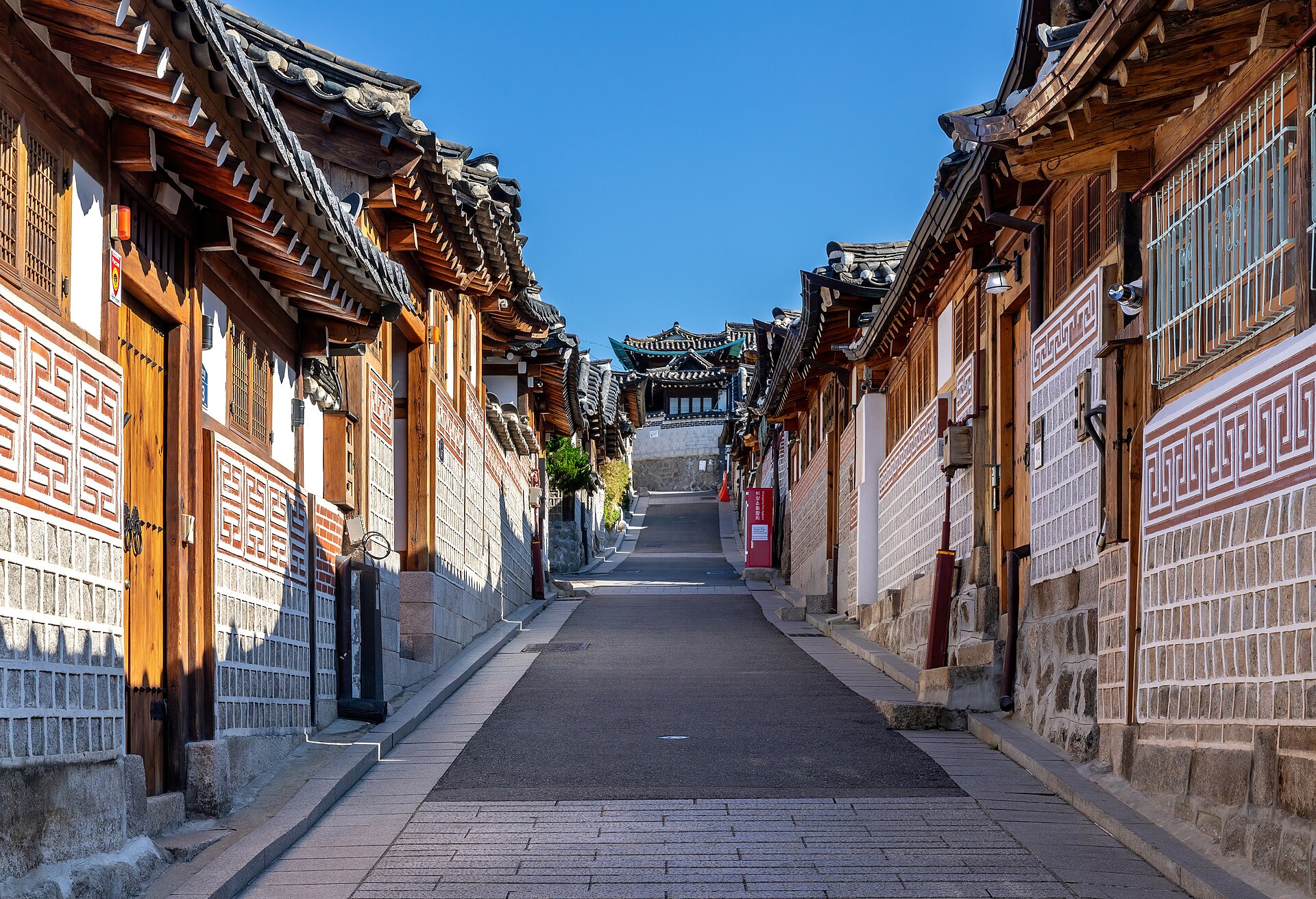
- Jongno and Bukchon — the old core. Palaces, hanok lanes, temple stays, the best walking. Quietest at night. This is where you stay if the history is the point. Note that Bukchon is a residential neighbourhood with posted quiet hours and access restrictions on some lanes; it is not an open-air museum.
- Myeongdong — the shopping and cosmetics district, and the densest hotel cluster in the city. Extremely convenient, extremely loud, and food here is street-stall priced rather than good-restaurant priced.
- Hongdae — university district. Live music, cheap food, buskers, the youngest crowd in Seoul. Also the noisiest place to sleep.
- Itaewon and Hannam — the international quarter, and increasingly the design and restaurant one. Good base if you want variety over proximity to the sights.
- Gangnam and Jamsil — south of the river. Business hotels, department stores, Lotte World Tower, COEX. Efficient, expensive, and a subway ride from anything old.
- Seongsu — a former shoe-factory district turned into Seoul’s coffee and concept-store neighbourhood. Very little accommodation, worth an afternoon.
Three days that actually work
Day one — the old city. Start at Gyeongbokgung early, before the tour coaches. Walk out the east gate into Bukchon, then down through Insadong for lunch. Afternoon at Changdeokgung with a pre-booked Secret Garden slot. Evening along Cheonggyecheon to Gwangjang Market.
Day two — the river and the south. Morning at the War Memorial of Korea or the Leeum museum in Hannam, then cross to Gangnam or Jamsil. Late afternoon on the Han River — Yeouido or Banpo — and up Namsan at dusk.
Day three — pick a direction. Either out of the city (DMZ tour, Suwon’s Hwaseong Fortress, or the Korean Folk Village) or deep into one district: Seongsu for coffee and design, Hongdae for music, or Bukhansan for a half-day on a mountain.
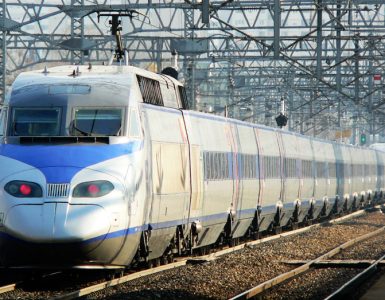
A fourth day is better spent on a day trip than on more of central Seoul. If you have longer, the KTX makes the south of the country genuinely viable — see our guide to getting from Seoul to Busan.
Eating: markets first, restaurants second
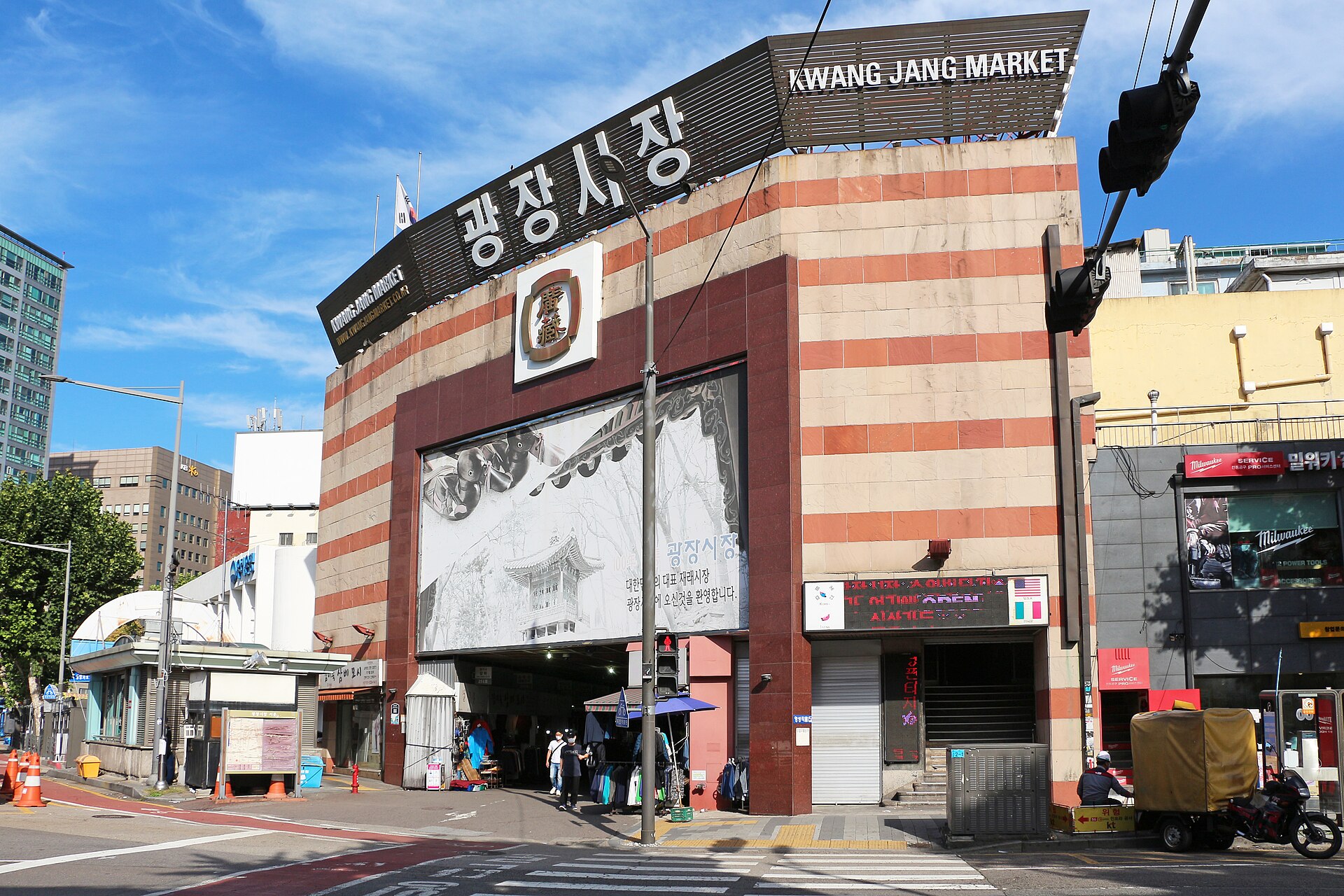
Gwangjang Market is the one to do properly. It is a working market with a food alley in the middle, and the things to order are bindaetteok (mung bean pancake), mayak gimbap (small seaweed rolls with mustard sauce), and raw beef tartare if you are feeling brave. Cash is still faster than card at many stalls. Noryangjin fish market is the other classic: buy downstairs, carry it upstairs, pay a small fee to have it prepared.
Beyond markets, Korean eating out is organised around specialisation rather than variety. A samgyetang restaurant sells ginseng chicken soup and essentially nothing else. A gopchang place sells grilled intestines. This is a feature, not a limitation — the narrower the menu, the better it usually is. Budget roughly ₩8,000–12,000 for a solid single-dish lunch, ₩20,000–35,000 per head for barbecue with sides, and note that banchan (the small side dishes) are free and refillable everywhere.
One practical warning: Korean restaurants often refuse single diners at barbecue and stew places because the portions are built for two. Solo travellers eat better at gimbap chains, noodle counters and market stalls.
Getting around: the ₩10,000 decision
Seoul’s subway is the backbone and it is excellent — signed in English, announced in English, and running on nine numbered lines plus a dense mesh of suburban ones. Buses fill the gaps the subway misses, particularly up hills.
You have two payment options and the choice is straightforward arithmetic. A T-money card costs about ₩4,000 at any convenience store, is topped up in cash, and deducts ₩1,550 per subway journey — slightly less than the ₩1,650 single-ride ticket, with free line changes and a discounted bus transfer if you tap on within 30 minutes of exiting. A Climate Card short-term pass gives unlimited subway and city bus travel inside Seoul: ₩5,000 for one day, ₩8,000 for two, ₩10,000 for three, ₩15,000 for five and ₩20,000 for seven, plus a one-off ₩3,000 for the physical card, cash only.
The break-even is about four rides a day. Below that, T-money wins. Above it — which is most itineraries that involve crossing the river — the Climate Card is cheaper and removes the mental arithmetic entirely. The important limitation: the Climate Card covers Seoul, not the AREX Express to Incheon and not most intercity travel, so it is a city pass rather than an everything pass. Keep a T-money card as well; it also works on buses and taxis nationwide and in convenience stores.
Where to sleep
Seoul’s accommodation splits into four honest categories. Business hotels in Myeongdong and around Seoul Station are small, spotless and priced for convenience. Boutique hotels in Jongno and Hannam cost more and give you a neighbourhood worth walking in. Guesthouses and hanok stays in Bukchon and Seochon are the memorable option — a hanok room is a floor mattress on ondol underfloor heating, shared bathrooms are common, and it is not for everyone. Then there are the residence-style apartments in Gangnam, which make sense if you are staying a week or more.
The one rule that matters more than star rating: be within a five-minute walk of a subway entrance, and check which exit. Seoul stations frequently have a dozen numbered exits spread across several hundred metres, and the wrong one adds fifteen minutes and a hill. Rates rise sharply around cherry blossom season in early April, the autumn foliage weeks in late October and early November, and Korean holidays including Chuseok and Lunar New Year.
If you are pairing Seoul with the Kansai region, our guides to where to stay in Osaka and things to do in Kyoto cover the equivalent neighbourhood logic there.
Day trips worth the early start
- The DMZ. Only reachable on an organised tour — independent travel into the Civilian Control Line is not permitted. Tours run roughly 7–9 hours and require your passport. JSA access is separate, more expensive, and frequently suspended at short notice for operational reasons; treat it as a bonus rather than a plan.
- Suwon. Forty minutes by subway. Hwaseong Fortress is an 18th-century walled circuit you can walk the full perimeter of in about two hours, and Suwon is where the galbi is from.
- Incheon. Not just the airport — Chinatown, the open-port colonial quarter, and ferries out to the West Sea islands.
- Nami Island and Chuncheon. Popular, crowded, and genuinely pretty in autumn. Roughly 90 minutes by ITX train.
- Busan. Two and a half hours on the KTX. Too far for a comfortable day trip, ideal as the second half of a week.
Practical notes that save money or trouble
- Entry: K-ETA exemption for eligible nationalities runs to 31 December 2026; from 1 January 2027 a K-ETA is required again. Confirm your own nationality’s status before booking — the exemption list is specific.
- Cash: Card acceptance is near-universal, but markets, the Climate Card kiosk and some older restaurants are cash-only. Carry ₩50,000–100,000.
- Wi-Fi and data: free public Wi-Fi is genuinely widespread, including on the subway and buses. A local eSIM is still worth it for maps and taxi apps.
- Taxis: hailing on the street works, but the local apps are far easier if you do not read Korean addresses. Tipping is not expected anywhere in Korea.
- Timing: late April to early June and late September to early November are the comfortable windows. July and August are hot, humid and monsoon-prone; January is dry and genuinely cold.
Seoul rewards people who commit to walking it. The subway will take you anywhere, but the city’s character sits in the gap between stations — the stream, the hanok lanes, the market alleys, the hill you did not expect. Buy the three-day pass, then use it less than you planned.
More city guides in the region: Tokyo, Singapore and Bangkok.