Ask anyone who has been to Singapore how to get from Changi into town and you will get the same answer: take the MRT, it is cheap and it works. That is true. It is also, for a large share of arrivals, the wrong answer — and the reason is a single transfer at a station called Tanah Merah, plus the fact that the airport line does not run for a good chunk of the hours at which long-haul flights actually land.
This is a comparison of every realistic way out of Changi Airport, with current fares, honest journey times, and the specific circumstances where each one wins. Prices are in Singapore dollars.
The four options, priced
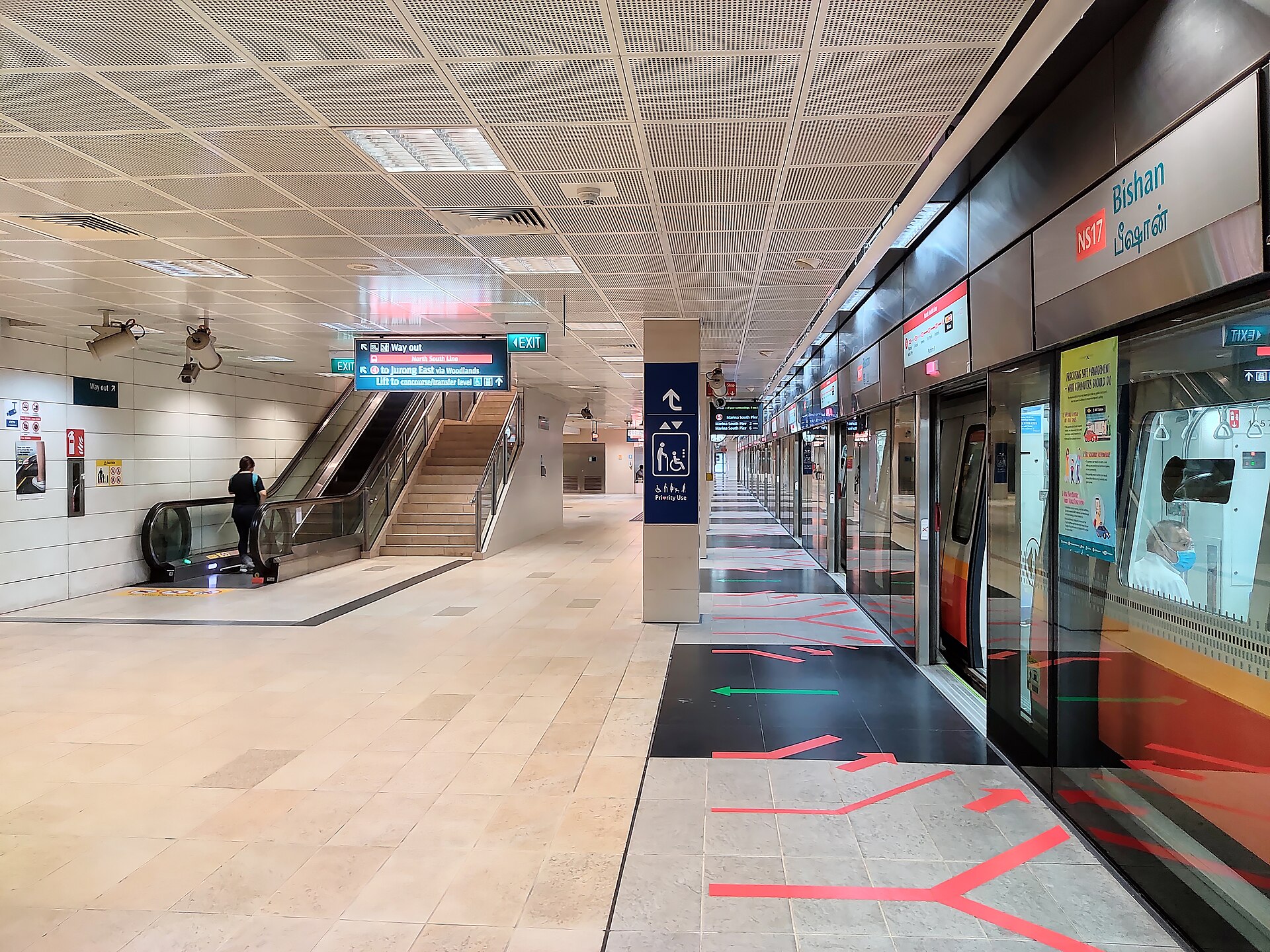
MRT. Roughly $1.50–$2.20 with a stored-value or contactless bank card to central stations, or about $2.30–$2.70 on a standard ticket. Changi Airport station sits at the end of a short branch line, so almost every journey into the city requires a change at Tanah Merah onto the East West Line. Realistic door-to-platform-to-door time to City Hall or Raffles Place is 35–45 minutes once you add the walk from the terminal.
Taxi. Around $28–$45 on the meter to the city centre during the day, and $35–$55 after midnight. The meter itself is modest — the surcharges are what move the number. There is an airport surcharge of roughly $8 in the evening peak and about $6 the rest of the time, plus a late-night surcharge and, on public holidays, more again. Journey time is 20–30 minutes outside peak.
Ride-hailing. Grab and Gojek both operate and are usually within a few dollars of a metered taxi, sometimes cheaper off-peak and noticeably more expensive during surge. The advantage is a fixed price shown before you commit and no cash.
Pre-booked private transfer. A fixed price agreed in advance, a driver holding a sign at arrivals, and a vehicle sized for your luggage. It costs more than a taxi for one person and frequently less than two taxis for a family of four with cases.
So is the MRT really best?
It depends on four things, and none of them is money.
What time you land. The MRT does not run around the clock. Long-haul arrivals from Europe and the US routinely touch down between midnight and 06:00, and if yours does, the train is simply not an option. Changi’s 24-hour bus service exists but is slow, and at 2am with luggage the realistic choice is a taxi, a ride-hail, or a pre-booked car.
How many people you are. One traveller with a backpack: the MRT is unbeatable at under three dollars. A family of four: 4 × $2 is still cheap, but you are managing four suitcases through a transfer at Tanah Merah, and a $40 taxi starts to look reasonable.
Where you are staying. If your hotel is a two-minute walk from an East West Line station, the MRT is genuinely door-to-door. If it is in Sentosa, Dempsey, the East Coast, or anywhere requiring a second change plus a bus, the calculation collapses.
Which terminal. Terminals 2 and 3 connect directly to the station. Terminals 1 and 4 require the Skytrain or a shuttle bus first, adding ten to fifteen minutes.
Paying for it: what actually works in 2026
Singapore has moved almost entirely to open-loop payment. A contactless Visa or Mastercard, or a phone wallet, taps straight onto MRT gates and buses at adult fares — there is no need to buy an EZ-Link card unless you want one. The tourist passes only pay off if you plan an unusually heavy day of riding; ordinary sightseeing rarely reaches the break-even point.
Two things to know. Foreign card transaction fees are charged per tap by some issuers, which quietly erodes the saving. And you must tap out as well as in — failing to do so charges a maximum fare.
Don’t rush out of the airport
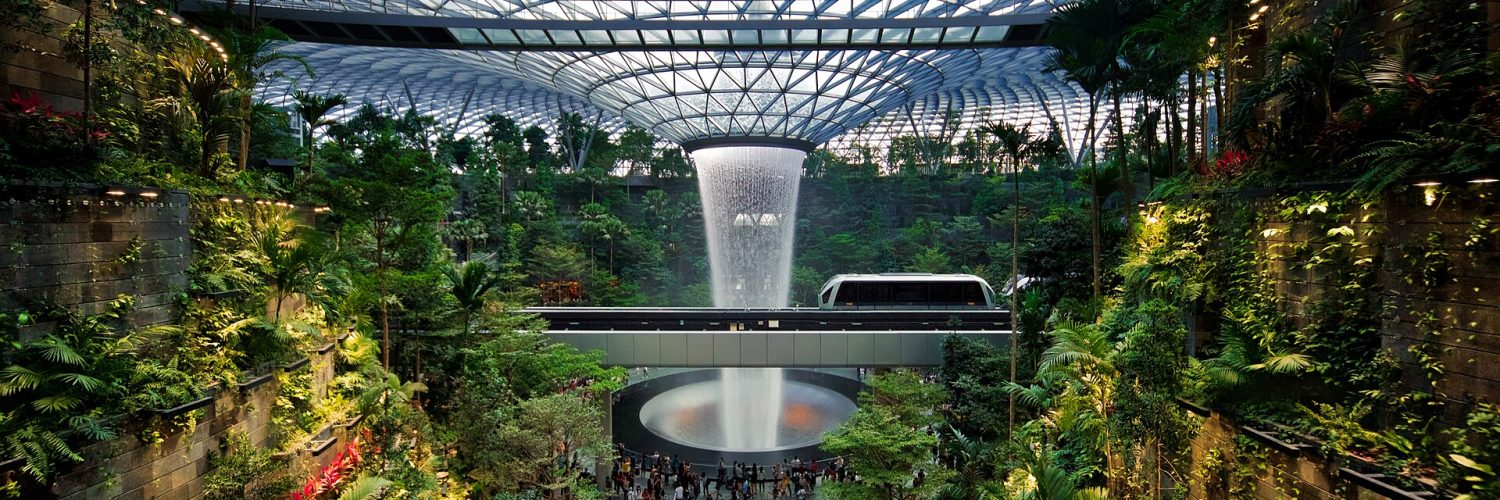
Changi is one of the few airports in the world where the sensible advice is to stay a while. Jewel, the complex attached to Terminal 1 and connected to 2 and 3 by bridges, is publicly accessible without a boarding pass. The Rain Vortex — a 40-metre indoor waterfall through the centre of the building — is free to look at, and the Shiseido Forest Valley terraces around it are free to walk. The paid attractions upstairs (the canopy bridge, the mirror maze, the bouncing nets) are aimed squarely at children and are skippable for adults.
If you are in transit with a long layover, this is a much better use of six hours than a city dash — and if your layover is genuinely long, Changi’s free city tour has run for years and is worth checking at the transit desk.

Where the transfer takes you
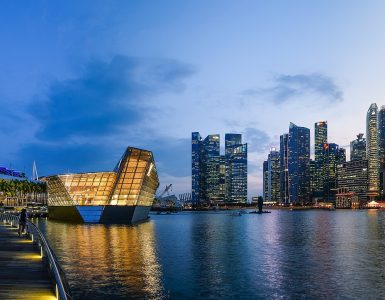
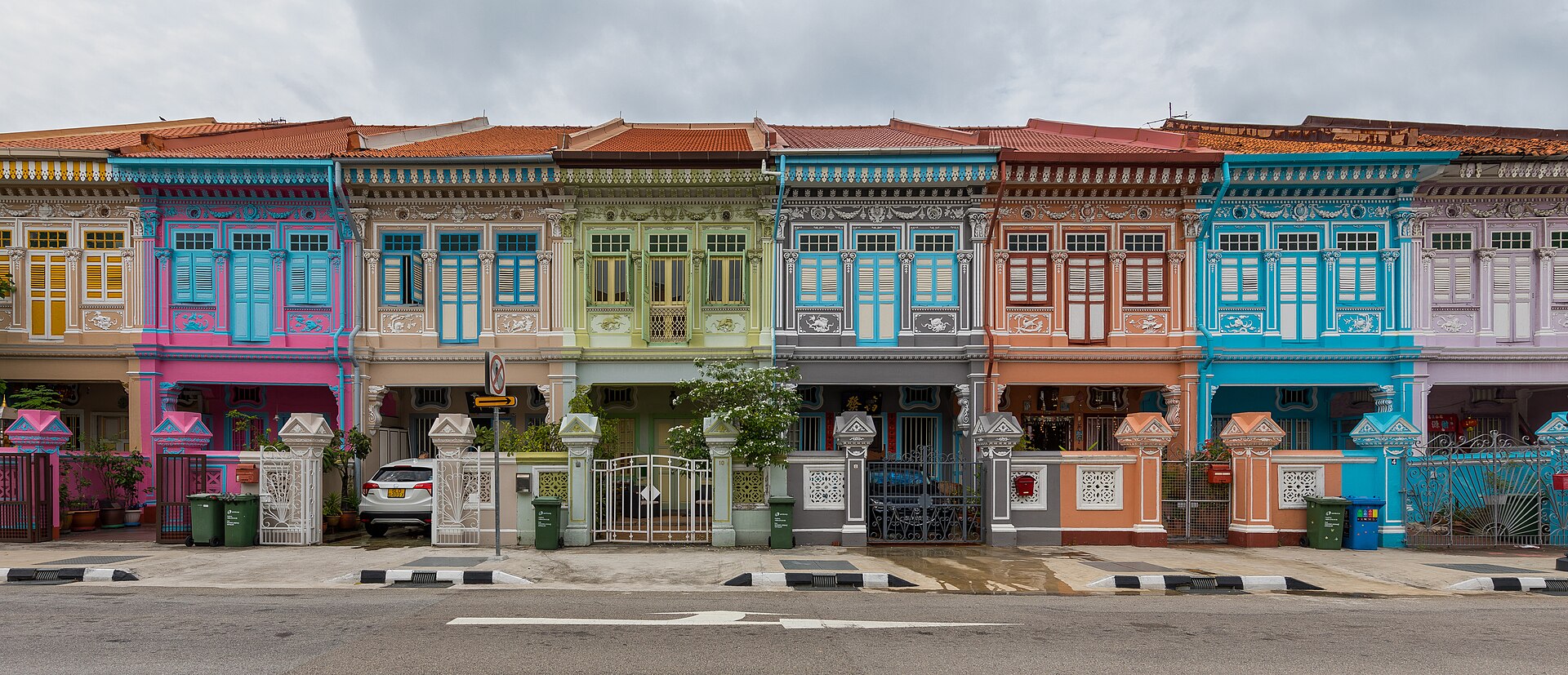
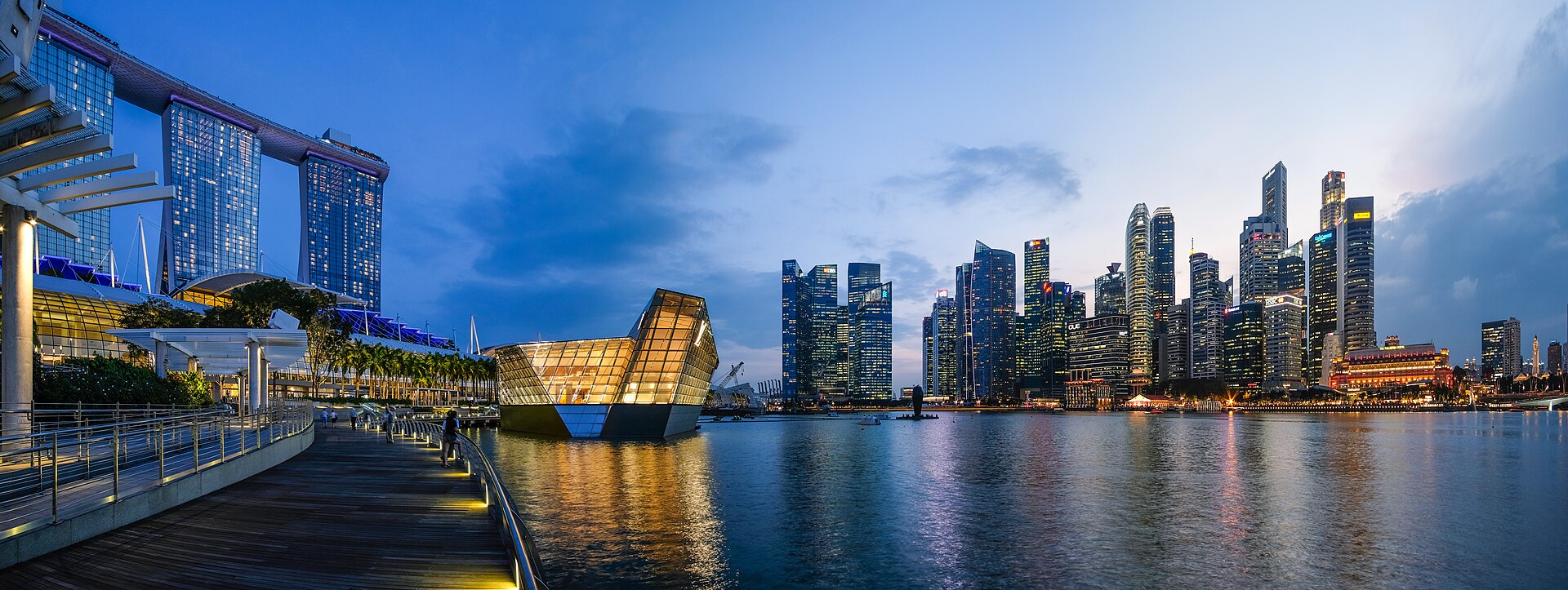
Singapore’s centre is not one district. Marina Bay is the postcard skyline and the most expensive beds. Orchard Road is shopping and mid-range hotels with the best MRT connectivity. Chinatown, Kampong Glam and Little India are where the older shophouse fabric survives, with cheaper rooms and much better street food. Sentosa is a resort island — fine if that is the trip, a mistake if you plan daily city sightseeing.
Because the MRT is so comprehensive, the usual “stay central at any cost” advice does not apply here. A hotel three stops out on a direct line is functionally central and often 30–40% cheaper.
What to book before you land
Singapore’s headline attractions run on timed entry and sell out on weekends and school holidays — the Sands SkyPark observation deck, Gardens by the Bay’s conservatories, Universal Studios and the cable car among them. Current availability and pricing:
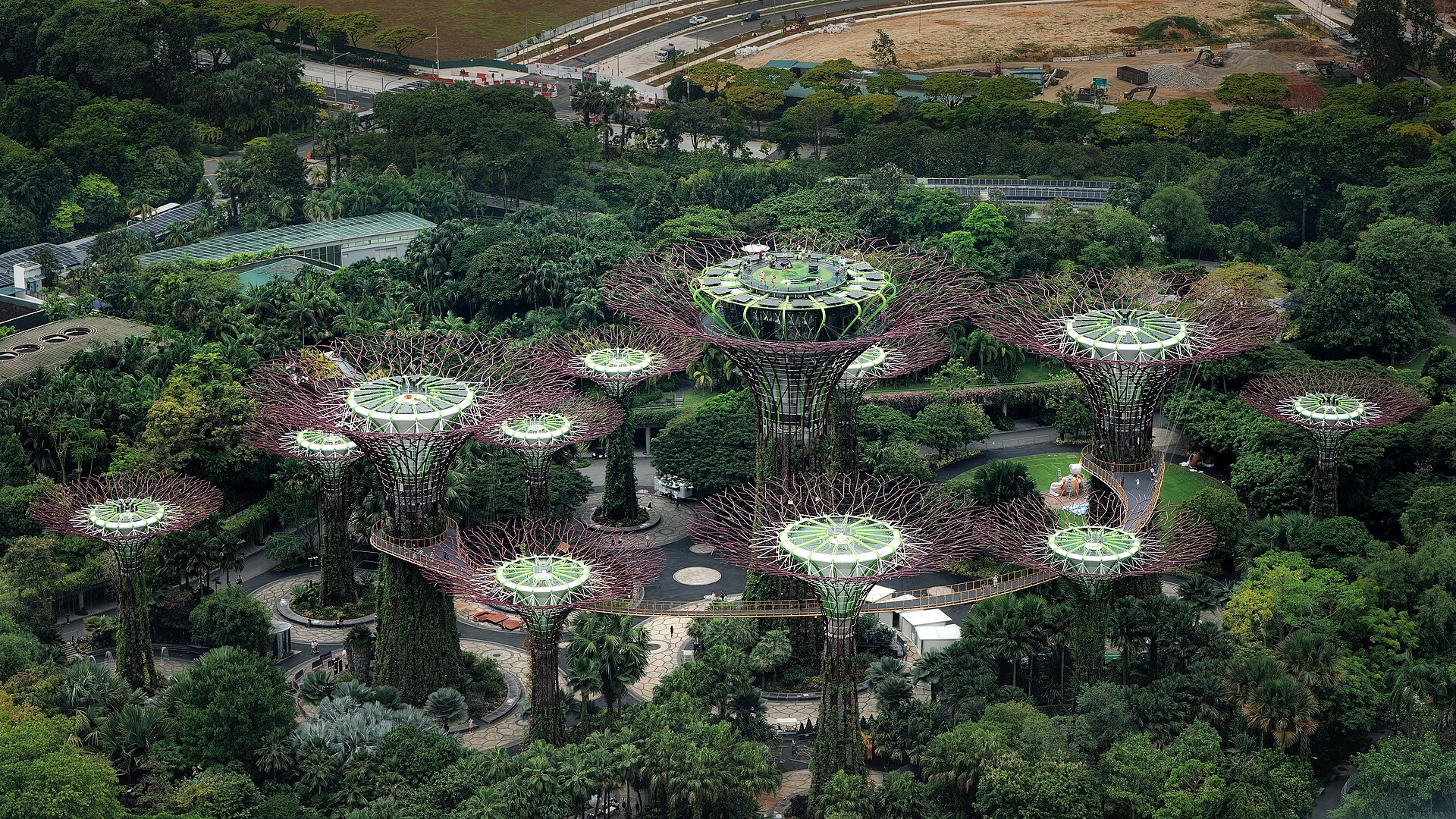
Being honest about what is worth it: Gardens by the Bay’s outdoor Supertree Grove is free, and the light show at night is free. The two conservatories — Flower Dome and Cloud Forest — are the paid part and genuinely good. The SkyPark deck gives you a view of the skyline that famously does not include the building you are standing on; the cheaper alternative used by residents is to buy a drink at a rooftop bar instead. Universal Studios is a full-day commitment and priced like one.
The decision, in one paragraph
Land between roughly 06:00 and 23:00, travelling light, staying near an East West Line station: take the MRT, tap a contactless card, change at Tanah Merah, done for under three dollars. Land in the middle of the night, or travel as a family, or stay somewhere the MRT does not reach cleanly: book a car. The difference between $3 and $45 is real, but so is the difference between arriving rested and dragging four suitcases through a transfer at 01:30.
A few things about Singapore that surprise people
- It is one degree from the equator. Temperatures barely move across the year — high twenties to low thirties Celsius, humid, with a heavy afternoon downpour most days. There is no cool season to aim for; there is only a slightly wetter monsoon around November to January.
- Hawker centres are the food, not a budget compromise. Two of them hold Michelin recognition. A plate of chicken rice or char kway teow costs a few dollars, and the queue length is a reliable quality signal.
- The rules are real. Fines for eating and drinking on the MRT, for littering, and for smoking outside designated areas are enforced, not decorative. Chewing gum import restrictions still exist.
- Tap water is drinkable straight from any tap, which quietly saves a lot of money and plastic.
- Alcohol is expensive. A beer in a bar frequently costs more than a full hawker centre meal, and there are late-night retail sale restrictions.
Leaving again
The same logic reverses, with one addition: Changi’s check-in halls are enormous and the airport recommends arriving three hours before a long-haul departure. Early-morning departures are the mirror image of late-night arrivals — if the MRT is not running when you need it, a pre-booked car with a fixed price beats standing on a hotel forecourt hoping for a taxi. Several Singapore hotels also offer in-town check-in for selected airlines, which is worth asking about.