
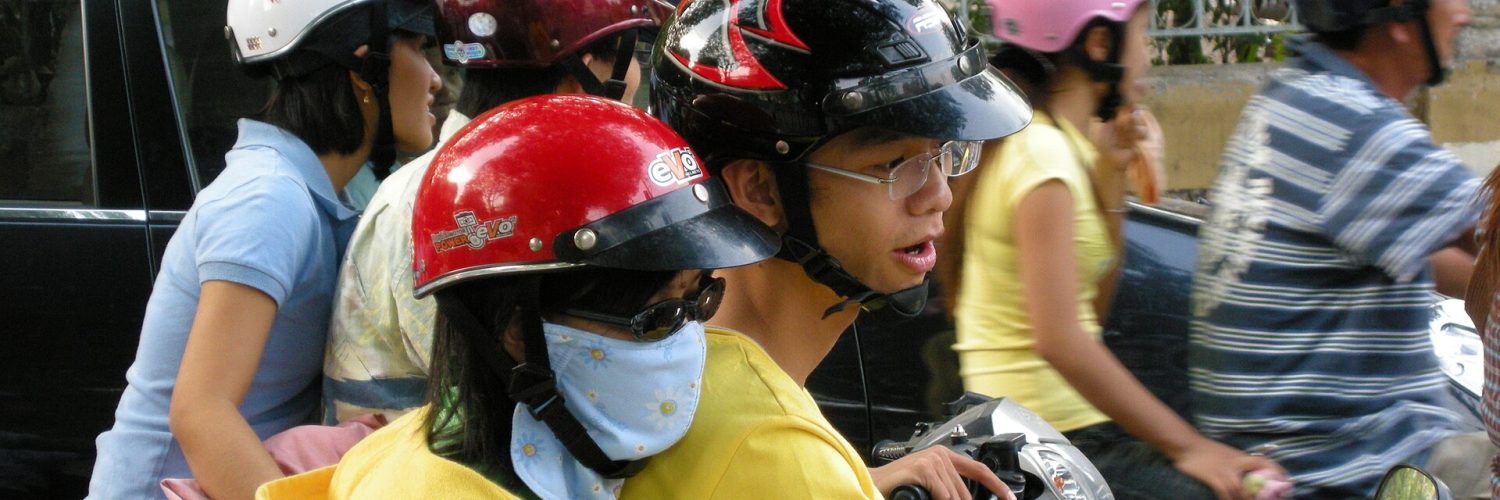
Almost every rental shop in Da Nang, Hoi An and Hanoi will hand you a scooter without asking to see a licence. Almost every one of them is happy to take your money and let you find out the rest yourself. The rest is this: for most Western visitors, riding that scooter is not legal, and if you crash, your travel insurance will very likely decline the claim.
That is not a reason to write off riding in Vietnam. It is a reason to know exactly where you stand before you turn the key. Here is the 2026 position, the fines, the workarounds that are real, and the ones that are wishful thinking.
The licence rule, stated plainly
To ride a motorcycle or scooter legally in Vietnam you need one of two things:
- A Vietnamese driving licence of the right class, or
- An International Driving Permit issued under the 1968 Vienna Convention, carried together with the home licence it is based on.
The catch is in the second point. There are two international conventions that produce documents called an IDP, and Vietnam recognises only one of them. Vietnam is a party to the 1968 Vienna Convention. It is not a party to the 1949 Geneva Convention.
The United States, Canada, Australia, New Zealand, Japan and Ireland issue IDPs under the 1949 Geneva Convention. Those IDPs are not valid in Vietnam, no matter what the issuing motoring association’s website implies. Most of continental Europe, the UK and many others issue 1968 permits, which are valid.
There is a further condition that trips people up even when the convention is right: your IDP and the home licence behind it must actually cover motorcycles. A car licence with a 1968 IDP does not authorise you to ride a scooter. Countries where a car licence includes a small-moped entitlement do not export that entitlement automatically.
What it costs if you are stopped
Vietnam overhauled its road traffic law in 2024, with the new penalty regime taking effect from the start of 2025. Enforcement has visibly tightened since, and checkpoints are more frequent, particularly around Da Nang, Hoi An, Nha Trang and the Ha Giang region.
- Riding without a valid licence: broadly in the range of 1,000,000 to 3,000,000 VND, roughly 40 to 120 US dollars.
- Impoundment: the bike can be held for up to seven days. This is the part that actually ruins trips. You are then dealing with the rental shop, a police compound and a schedule you no longer control.
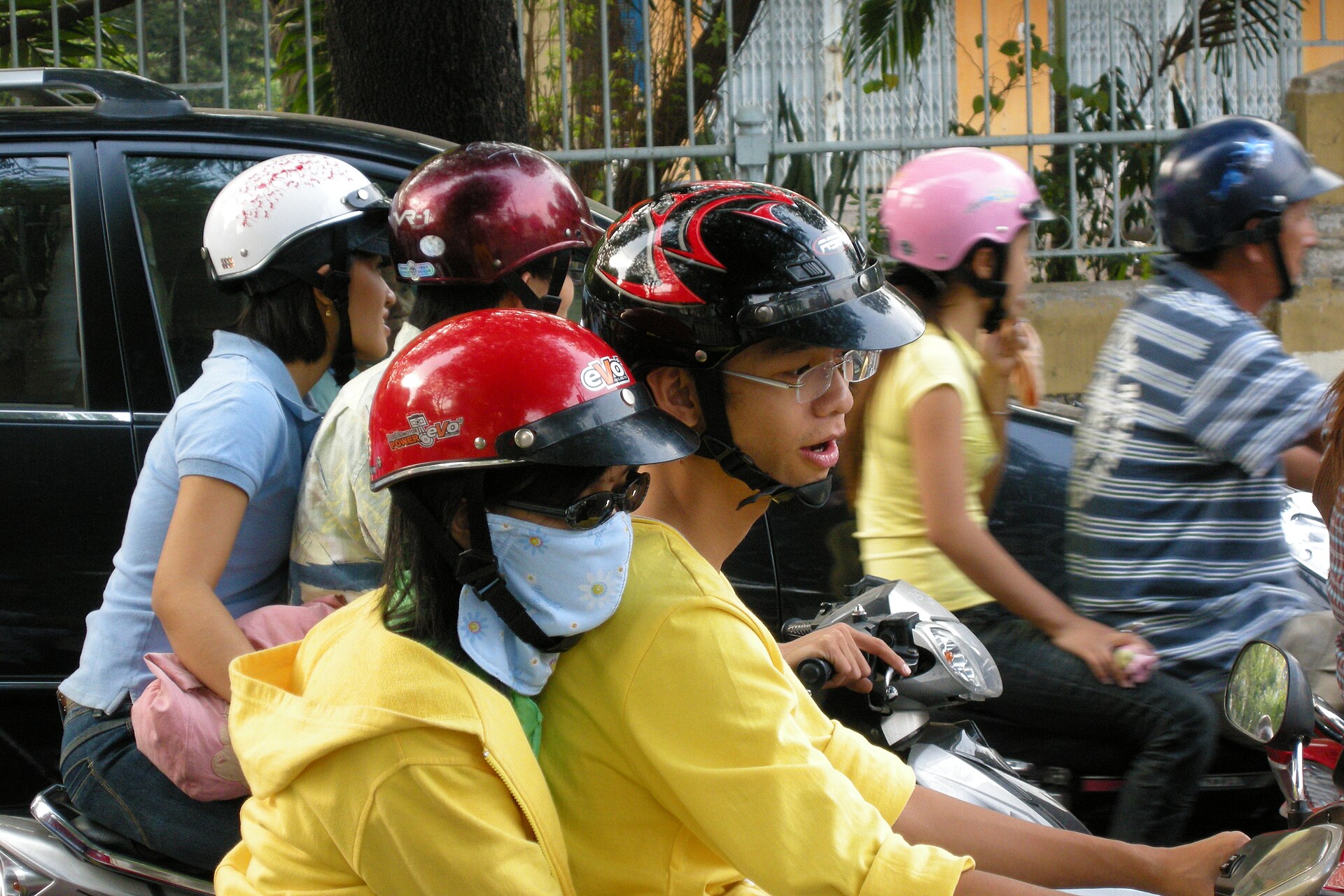
- Helmet offences: around 400,000 to 600,000 VND, and this applies to an unfastened strap and to your passenger as well as to you.
- Alcohol: Vietnam operates a zero-tolerance limit for riders. Not a low limit. Zero. Penalties are severe and enforcement is routine.
The fine is the smallest of these problems. The real exposure is insurance. Standard travel policies exclude claims arising from operating a vehicle you were not licensed to operate in that country. A minor scooter accident in Vietnam can produce a serious medical bill, and an uninsured medical evacuation is a five-figure event.
The routes that are actually available to you
If you hold a 1968 IDP with a motorcycle category: you are fine. Carry both documents, always.
If you hold a 1949 IDP: your options are to convert to a Vietnamese licence, ride something that falls outside the licensing requirement, or not ride. Conversion is realistic only if you are staying a while: it is handled by the provincial Department of Transport, requires a visa or residence permit with meaningful validity remaining, a notarised translation of your home licence, a health check and passport photos. It typically takes about a week. Note that converting a car licence gives you a car licence; it does not add a motorcycle class.
Small-capacity mopeds. Vehicles of 50cc and under have historically sat outside the motorcycle licensing requirement in Vietnam, and a number of shops in Da Nang and Hoi An now rent exactly these for exactly that reason. Treat this as something to confirm on the ground rather than to assume: the 2024 law reorganised the licence classes, and a 50cc moped is genuinely underpowered for anything hilly or fast. It will not get you comfortably over the Hai Van Pass with a passenger and luggage.
The alternative that most experienced travellers end up choosing: ride pillion. Grab and Be operate motorbike taxis in every city for very little money. For the famous routes, the easy rider model, where a local driver takes you and your bag over the pass, costs a fraction of an accident and is genuinely one of the better experiences in Vietnam. On the Ha Giang Loop this has effectively become the default for foreigners, partly through enforcement and partly because the road punishes inexperience.
What renting actually costs
Daily rates are low and have stayed low. As a guide, in 2026:
- Automatic scooter such as a Honda Vision or Air Blade: roughly 120,000 to 200,000 VND a day, about 5 to 8 US dollars.
- Semi-automatic such as a Honda Wave: often around 100,000 to 150,000 VND.
- Manual bikes in the 150cc range for touring: 250,000 VND and up.
- Monthly rates collapse to roughly 1,000,000 to 1,800,000 VND, which is why long-stay travellers rent by the month.
- Fuel runs at roughly 20,000 to 25,000 VND a litre and a scooter tank holds four or five litres, so a full tank costs about the same as a bowl of pho.
- One-way rentals between Hue and Hoi An are standard, with a bike-transfer fee of usually 10 to 15 US dollars.
The other thing worth locking in before you arrive is anything timed: the Ba Na Hills cable car, My Son at opening, or a Marble Mountains ticket on a hot afternoon.
For the bike itself, you can compare motorbike and scooter rental across Vietnam here if you would rather have the price and terms fixed before you arrive than negotiate at a kerbside.
The passport question
Many shops ask to keep your passport as security. Do not leave it. Vietnamese law expects you to be able to produce identification, your hotel may need it for registration, and recovering a passport from a shop that has closed or from an owner in a dispute over a scratch is a genuinely miserable process.
Reasonable alternatives that most shops will accept: a cash deposit, a photocopy of the passport plus your visa page, or a driving licence you can afford to be without. If a shop refuses everything except the original passport, walk to the next one. There are always more.
Checks to run before you ride away
- Photograph the bike from every angle including the underside of the fairings, with the shop’s staff visible if you can. Scratch disputes on return are the most common rental complaint in Vietnam.
- Test the brakes in the forecourt. Rear-drum brakes on well-used rental scooters are frequently worn to nothing.
- Check the tyres. Bald tyres on wet Vietnamese tarmac are how most tourist accidents actually happen.
- Buy your own helmet. The thin plastic bowls handed out with rentals meet no meaningful standard. A properly certified helmet costs 300,000 to 600,000 VND at any bike shop and is the single best purchase of your trip.
- Confirm the blue registration card is in the bike. Riding without it is another fineable offence, and it is the shop’s job to provide it.
Riding in Vietnamese traffic
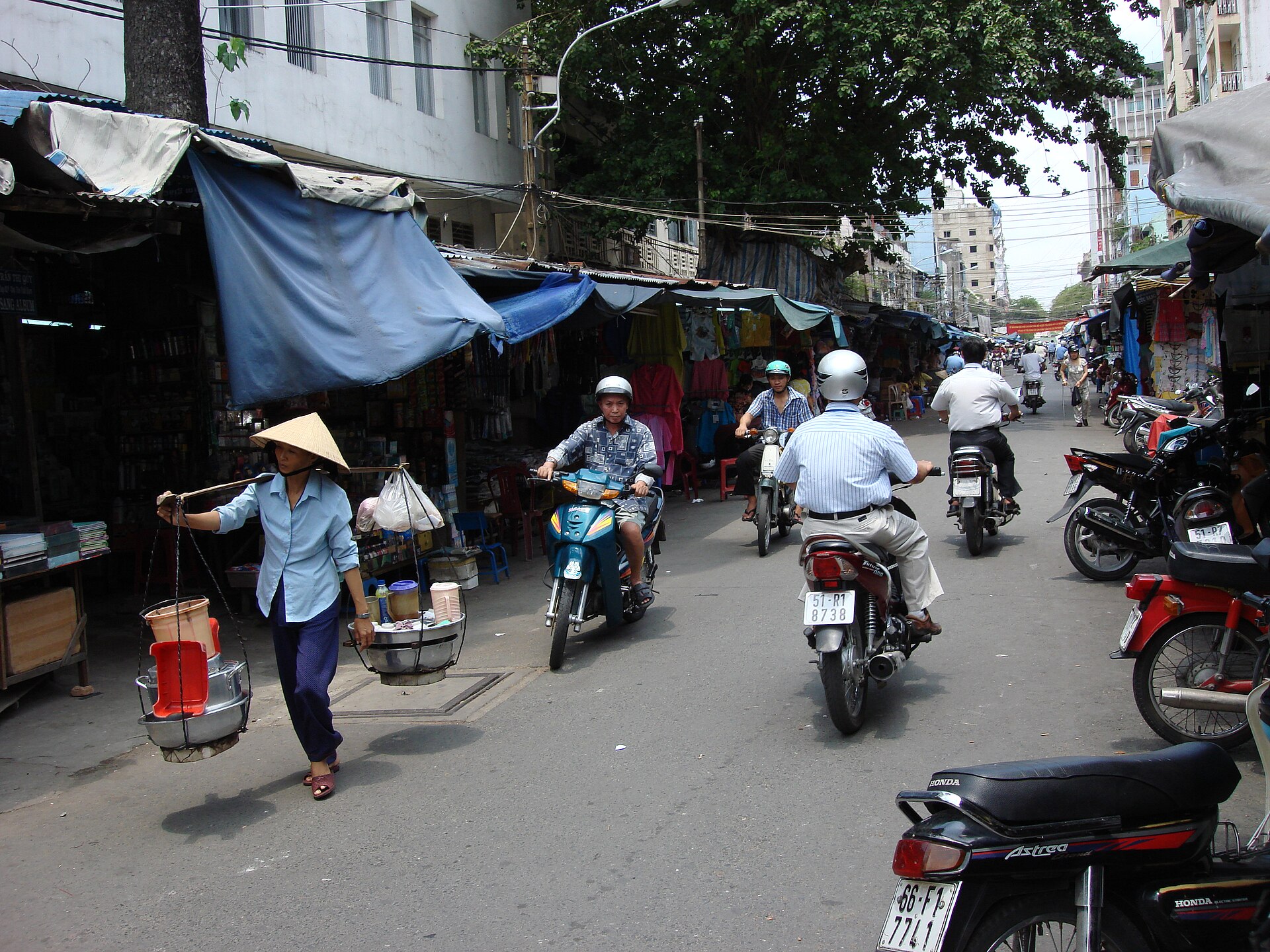
Traffic here runs on flow rather than right of way. Vehicles merge into gaps continuously and everyone assumes everyone else will keep moving predictably. The dangerous act is the sudden one: braking hard, swerving, or stopping to check a map. Move slowly and consistently and the traffic absorbs you.
A few specifics. The horn means “I am here”, not “you idiot”, and you should use it. Larger vehicles have de facto priority regardless of the law, and buses and trucks on the north-south highway will not yield. Avoid riding at night outside towns, where unlit vehicles and livestock are both common. And in central Vietnam, from roughly September to December, the rain is heavy enough that riding becomes genuinely unpleasant and roads flood.
The rides worth the trouble
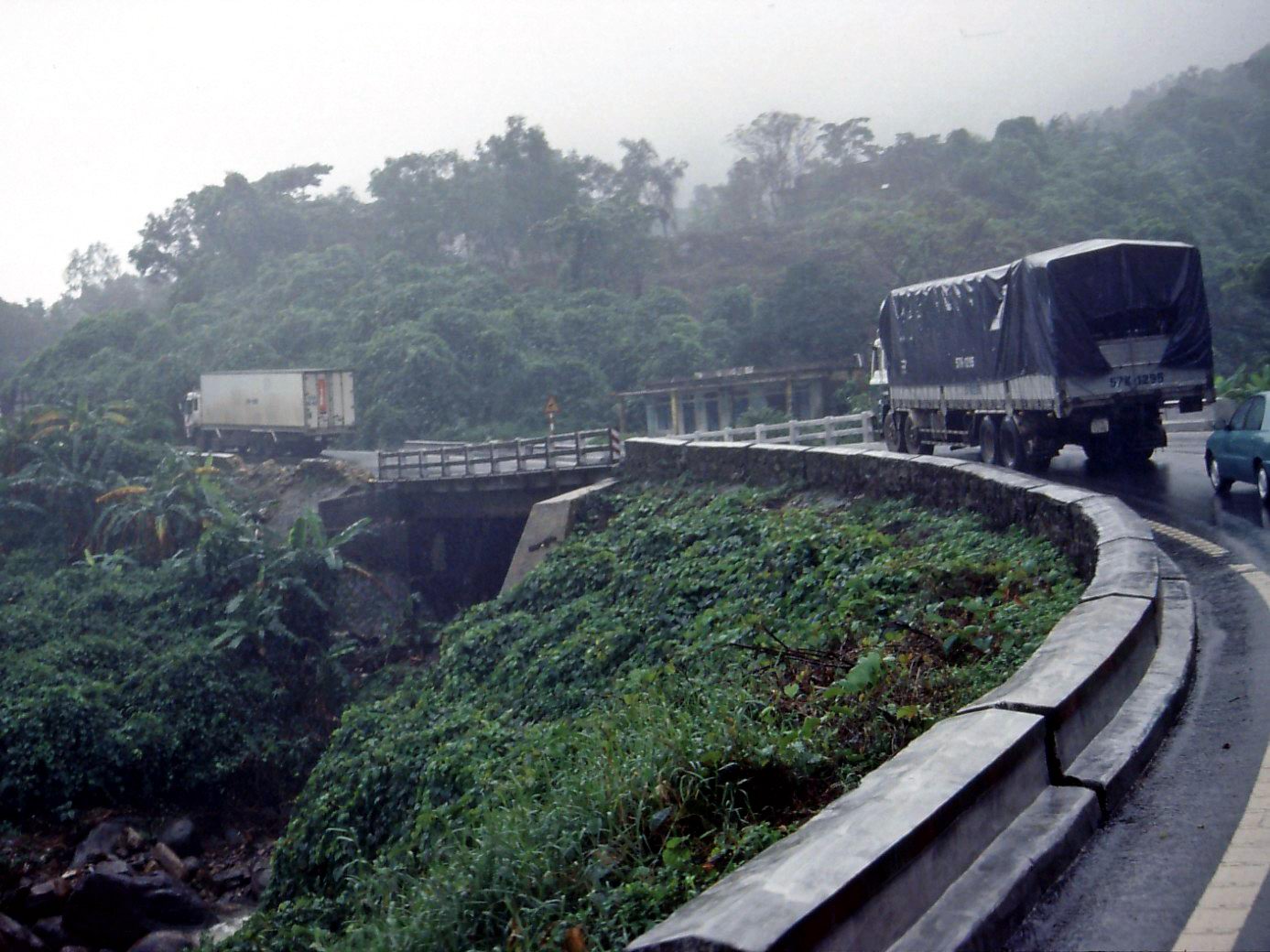
The Hai Van Pass between Da Nang and Hue is about 21 km of switchbacks over a headland, and it deserves its reputation. It is also short enough to do as a half-day and easy enough for a competent rider on a decent bike. Take the pass rather than the tunnel; the tunnel bans motorcycles anyway.
The Ha Giang Loop in the far north is 350-odd kilometres of mountain road and is the most spectacular riding in the country. It is also the least forgiving, and foreigners riding it independently now face heavy enforcement. Our Ha Giang Loop guide covers the practicalities.
Shorter and easier: the Marble Mountains and Son Tra peninsula loop from Da Nang, the countryside between Hoi An and the beaches, and the pine roads around Da Lat.
Where to base yourself
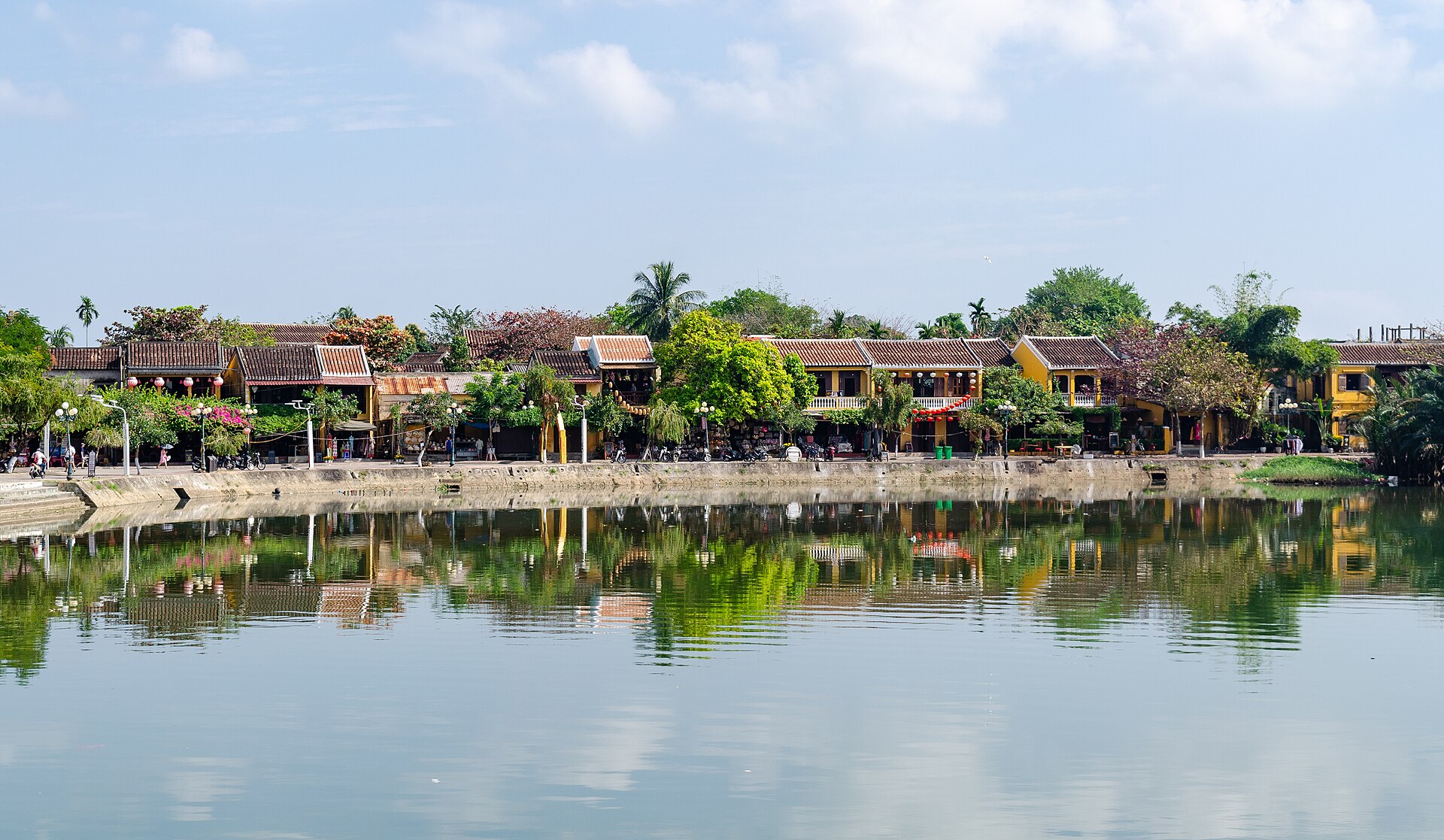
Da Nang and Hoi An are the easiest places in Vietnam to be a rider: flat, compact, close to the good roads, and with the largest concentration of rental shops used to foreign customers. Hanoi and Ho Chi Minh City are for confident riders only, and there is little reason to ride in either when a Grab bike costs almost nothing.
If you are arriving with luggage and would rather not start your trip riding it across a city, a fixed-price transfer from the airport to your first hotel is a sensible first hour.
The honest summary
Riding a scooter in Vietnam is one of the great pleasures of travelling there and one of the more common ways travellers get seriously hurt. The two are not in tension; they are the same fact. If you hold a 1968 IDP with a motorcycle category, ride, wear a real helmet and stay off the roads at night. If you hold a 1949 IDP, understand that you are riding uninsured, and decide with that in front of you rather than after a shop owner has waved you off.
Further reading
- Scooter rental in Da Nang
- Motorcycle rental in Hanoi
- Riding the Ha Giang Loop
- Cheap motorcycle rental in Vietnam