The advertised price of a rental car in Ireland is one of the least useful numbers in European travel. A quote of €18 a day is real, and it is also nowhere near what you will pay. The gap is not hidden fees in the ordinary sense — it is insurance, and Ireland handles rental insurance differently from almost everywhere else you have rented a car. Understanding that one difference is worth more than any amount of shopping around.
Here is what actually happens at the counter, what the numbers look like in 2026, and where the real money is won and lost.
The insurance thing, explained properly
Collision Damage Waiver is normally included in the headline price of an Irish rental. That sounds reassuring and is slightly misleading, because standard CDW in Ireland leaves you liable for an excess — the amount you pay before the waiver does anything — that typically runs from about €1,500 to €2,500, and at some suppliers up to €3,500.
That excess has to be secured. The rental desk will pre-authorise, or “freeze”, it on the main driver’s credit card. Common holds are €3,000 and up, and with some suppliers €5,000 or more. The card must be a genuine credit card in the main driver’s name — debit cards are frequently refused outright for this purpose in Ireland, which is the single most common reason people get turned away at an Irish rental desk.
You then have three ways forward, and they cost very different amounts:
1. Take the supplier’s Super CDW at the counter. Also sold as an excess waiver. This drops your liability to zero or near-zero and typically costs €15–30 per day. On a ten-day trip that is €150–300 on top of your €180 base rate. It is expensive, it is the most profitable product the rental desk sells, and it is also completely painless: buy the zero-deductible version and there is usually no hold on your card at all.
2. Rely on your credit card’s rental insurance. This is where Ireland catches people out. Ireland — along with Israel and Jamaica — is a standard exclusion on a great many credit card rental-collision policies. If your card does cover Ireland, the rental company will generally require a formal letter from your card issuer explicitly naming Ireland, presented at the desk, and they will still place a very large hold on the card. Turning up and saying “my card covers it” without the letter does not work.
3. Buy third-party excess insurance before you travel. An annual or per-trip standalone excess policy is dramatically cheaper than the counter product. The catch is that it is a reimbursement product: the rental company still freezes the full excess on your card, and if there is damage they charge you and you claim it back. You need the credit limit and the patience for that. It saves real money if you are comfortable with the mechanics.
There is no universally right answer. If your trip is short, the counter waiver’s simplicity may be worth the premium. If you are renting for two weeks, third-party excess cover will save you a couple of hundred euro. What is always wrong is arriving without a plan and deciding under pressure at the desk after a transatlantic flight.
Book an automatic, and book it early
The Irish fleet is predominantly manual. Automatics exist but they are a minority, they cost meaningfully more, and in summer they sell out. If you do not drive a manual comfortably and confidently, this is not negotiable: an Irish boreen — a single-track rural lane with stone walls and hedges on both sides — is a genuinely poor place to be relearning a clutch and hill starts, on the left, while a tractor waits behind you.
Book the automatic months ahead for June through August. “We will sort it at the airport” does not work in an Irish July.
Size down, deliberately
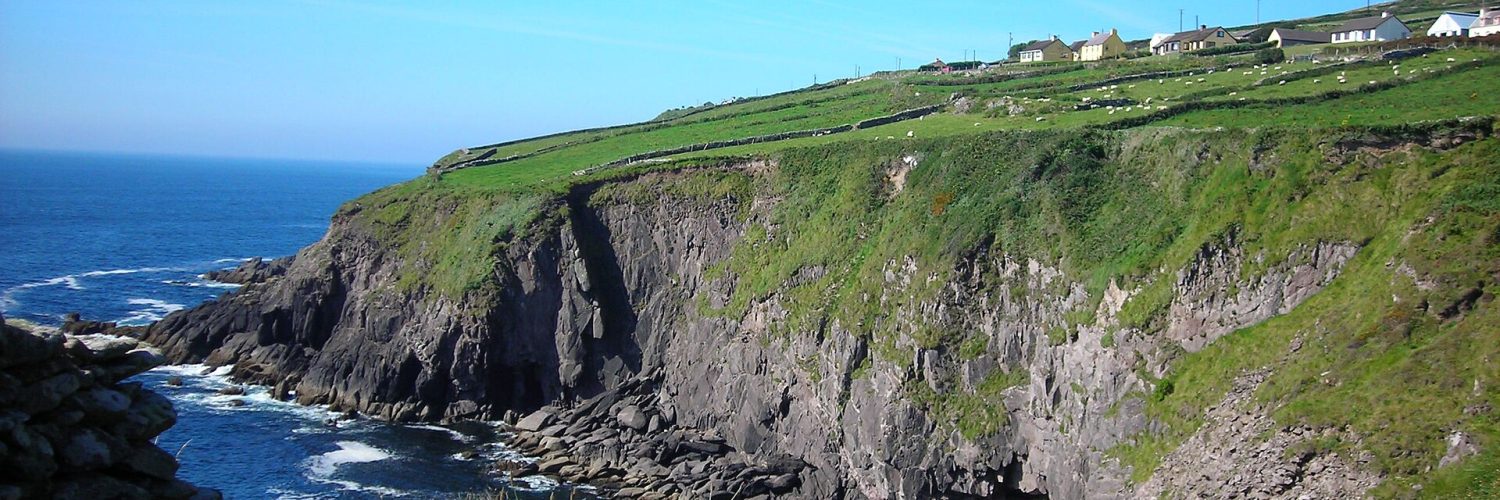
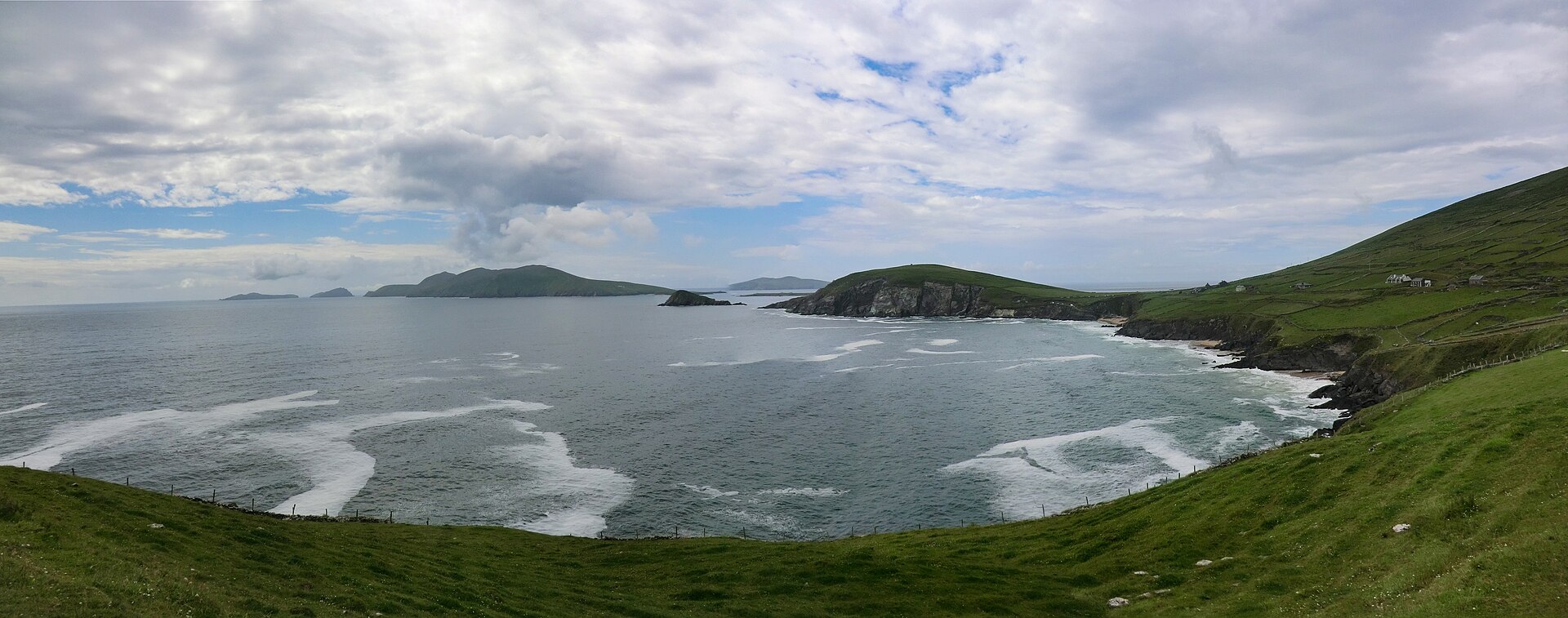
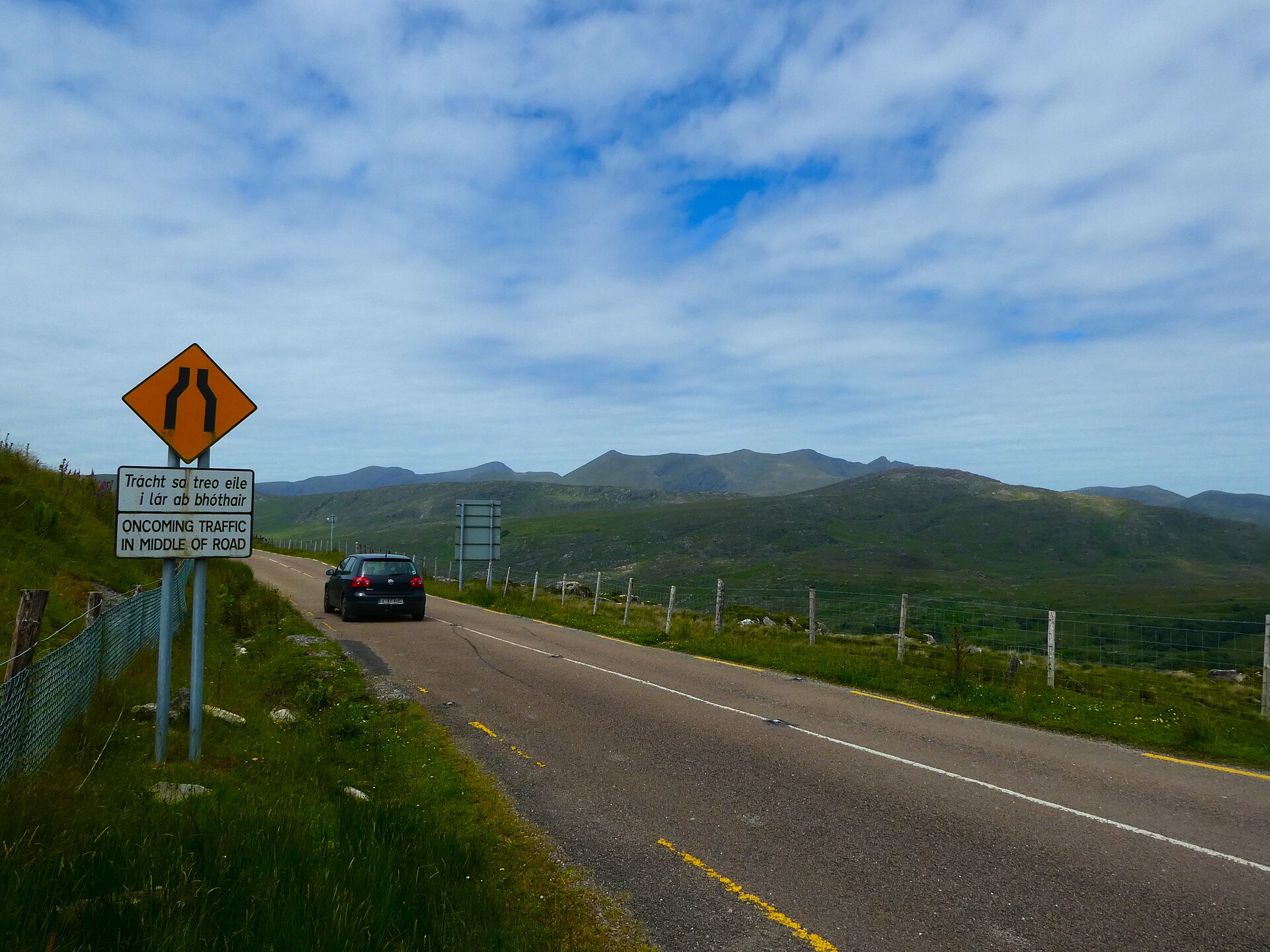
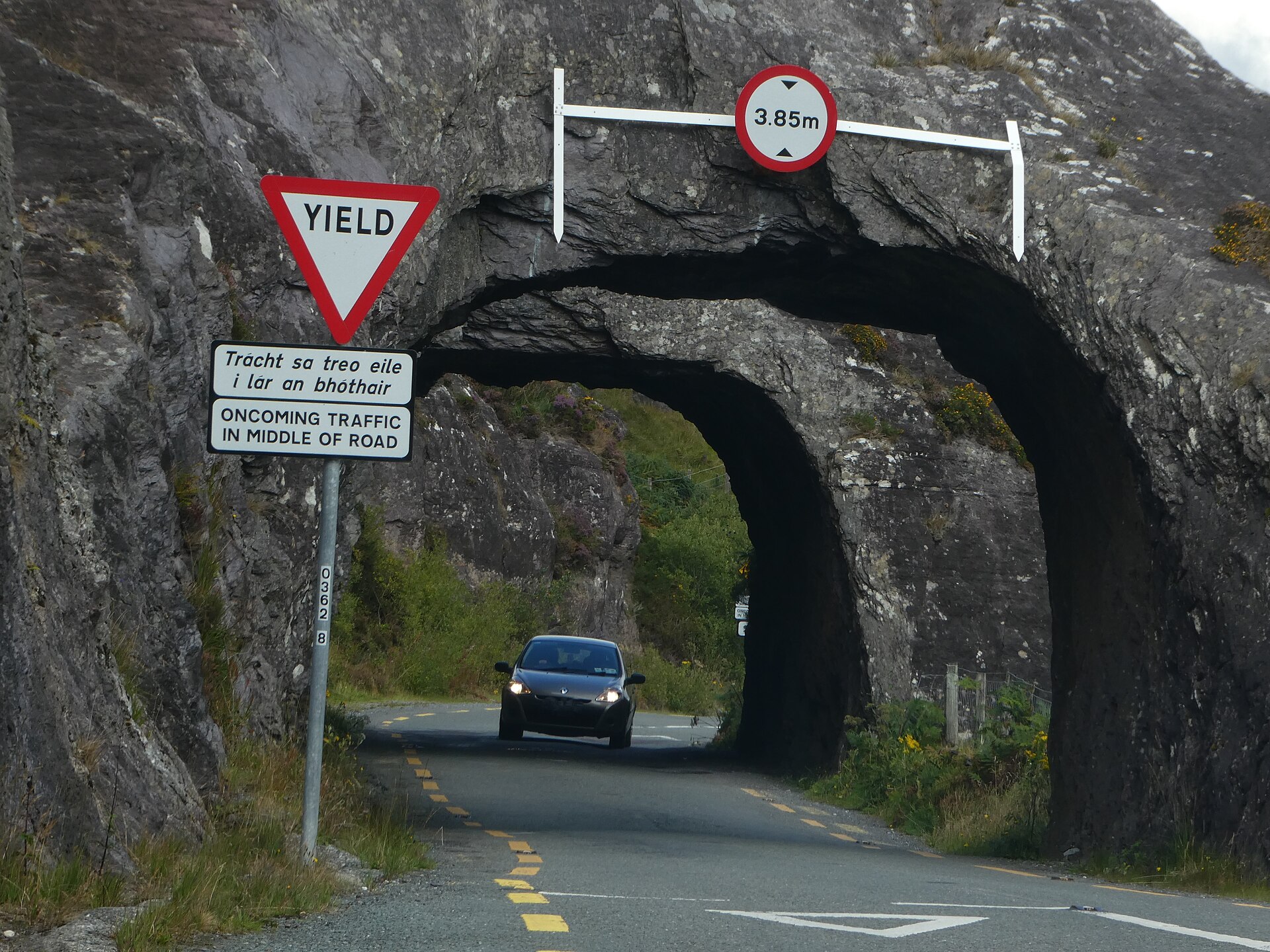
Every experienced visitor gives the same advice and most first-timers ignore it: rent a smaller car than you think you need. The scenic roads that make Ireland worth driving — Slea Head, the Healy Pass, the Caha Mountains, most of Connemara — are narrow, walled, and frequently have oncoming traffic on what looks like a single lane. Stone walls and hedgerows do not yield. The overwhelming majority of Irish rental damage claims are scrapes to the nearside wing, wheels and mirrors, collected at very low speed.
A compact car with four seats and a small boot will get you everywhere and cost you less in fuel, less in stress, and much less in excess claims. If you are four adults with large suitcases, take an estate rather than an SUV — the height gains you nothing and the width costs you constantly.
Tolls: the M50 will find you
Most Irish toll roads have booths where you pay cash or card. The M50 around Dublin does not. It is barrier-free, camera-based, and it is almost impossible to avoid if you are collecting a car at Dublin Airport and heading anywhere south or west.
As of 1 January 2026, the M50 car rate is €2.60 with a tag, €3.20 with a video account, and €3.80 unregistered. The €3.80 is what applies to most rental drivers.
The deadline is the part that hurts. You must pay by 8pm the day after you use the road. Miss it and the escalation is brutal: an initial penalty of about €4, then €50, then €123.50, and ultimately court proceedings with fines that can run into thousands. Rental companies handle this in one of two ways — either the car has a tag and they bill you the toll plus an administration fee per crossing, or they leave it entirely to you and pass on any penalty they receive, with their own admin charge stacked on top.
Ask which system your car uses when you collect it. If it is on you, pay online at eFlow the same evening, every evening. It takes two minutes. People who assume “the rental company will just bill me” are the ones who receive a letter three months later for a great deal more than €3.80.
Where the base price actually goes up
Beyond insurance, the recurring extras are worth knowing before you compare quotes:
- Additional driver — charged per day by most suppliers, and it adds up on a long trip.
- Young driver surcharge — applies under 25 and can be substantial. Some suppliers will not rent at all under 21, and a minority set the floor at 23.
- Cross-border into Northern Ireland — usually permitted but must be declared, and some suppliers charge for it. Not declaring it can void your cover. The border itself is invisible and unmarked, so it is entirely possible to cross without noticing, which is exactly why you declare it in advance. Note also that Northern Ireland uses miles and pounds sterling.
- Airport surcharge — collecting at Dublin, Shannon or Cork costs more than a city depot.
- Fuel policy — full-to-full is the only one worth accepting. Petrol is unleaded; diesel pumps are black in Ireland, and misfuelling is not covered by any waiver you can buy.
- One-way fees — picking up in Dublin and dropping in Shannon or Kerry is a common and sensible itinerary, but the drop fee can be significant. Price it before you plan around it.
Driving on the left, honestly
The first ninety minutes are the hard part, and the two things that catch people are roundabouts (clockwise, yield to the right) and drifting left because you are misjudging where the nearside of the car is. Both settle quickly.
A few Ireland-specific points. Speed limits are in kilometres per hour and the signs are green and white; some rural limits are posted at 80km/h on roads where 40 is the sensible speed, and the number is a maximum, not a target. Overtaking on rural roads is rarely worth it. On narrow lanes, the convention is that whoever is nearer a passing place reverses to it, and on a hill the vehicle going up has priority. A raised finger off the steering wheel is the standard thank-you and you will use it constantly.
Do not plan by distance. Plan by time, then add a third. A 150km day on the Wild Atlantic Way is a full day, not two hours.
Where to stay along the way
Ireland’s rural accommodation — guesthouses, farmhouse B&Bs, small-town hotels — books out early in summer, and the west coast in particular has limited supply in the villages that are most worth stopping in. Booking a base for two or three nights and driving out from it beats moving hotel every night, both for cost and for the amount of your holiday spent packing.
If you land late, or would rather not drive on day one
There is a good argument for not collecting the car at the airport at all. Dublin traffic and the M50 are a rough introduction to left-hand driving after an overnight flight. Taking a transfer into the city, sleeping, and collecting the car from a city depot the next morning costs a little more and starts the trip far better. Shannon, by contrast, is an easy airport to drive out of and puts you straight onto the west coast.
When to go, and what it does to the price
July and August are peak: highest rates, thinnest automatic availability, busiest roads, and the best chance of long evenings. May, June and September are the sweet spot — noticeably cheaper, quieter roads, and daylight until well into the evening. October through March is cheap and often lovely, but daylight is short, many rural attractions and some accommodation close for the season, and Atlantic weather on exposed coastal roads is a real consideration rather than a romantic one.
A short, honest summary
Book early, book small, book automatic if you need one, and decide your insurance strategy before you leave home rather than at the counter. Bring a credit card with a real limit in the main driver’s name. Pay the M50 the same evening. Then stop optimising and go drive, because the roads are the reason you are doing this.
Further reading
- Car rental for Scotland’s NC500 — the closest comparison, with the same single-track etiquette
- Car rental on Iceland’s Ring Road
- Car rental in the Norwegian fjords
- Car rental in the Algarve