Every year a few thousand people work out that a guided Kenyan safari costs more per day than a decent hotel in Paris, look at the map, and think: it is a national reserve with roads in it, how hard can it be to drive myself?
The answer is that it is entirely possible, it is much cheaper than a lodge package, and the thing that will actually break your budget is not the vehicle. It is the gate fee — and in the second half of 2026 that fee doubled.
The number that decides your trip
Maasai Mara National Reserve charges non-residents by the person, by the day. For 2026 the published rate is USD 100 per adult per day from 1 January to 30 June, and USD 200 per adult per day from 1 July to 31 December. Children aged 9 to 17 pay USD 50; children of eight and under are free.
Read that again with two people in the car. A four-night Mara trip in September costs USD 1,600 in gate fees alone before you have paid for the vehicle, the fuel or a bed. In February the same trip costs USD 800. That single line item is larger than almost every other decision you will make, and it is the reason the shoulder season is not a compromise in Kenya — it is the whole strategy.
One useful detail: the fee covers a 24-hour period from the moment you enter, not a calendar day. Entering at 15:00 means your ticket runs to 15:00 the following day, so an afternoon arrival buys you a full morning game drive on the same ticket. Plan the entry time deliberately.
Nairobi National Park, which you can reach in twenty minutes from the city, charges non-resident adults USD 80 per day and children USD 40. Payment at the main Mara gates — Sekenani, Talek and Sand River — is accepted in US dollar cash, Kenya shilling cash, Visa, Mastercard and M-Pesa. Carry a backup method; card terminals at gates do fail.
What vehicle you actually need
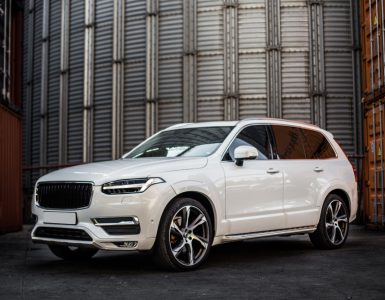
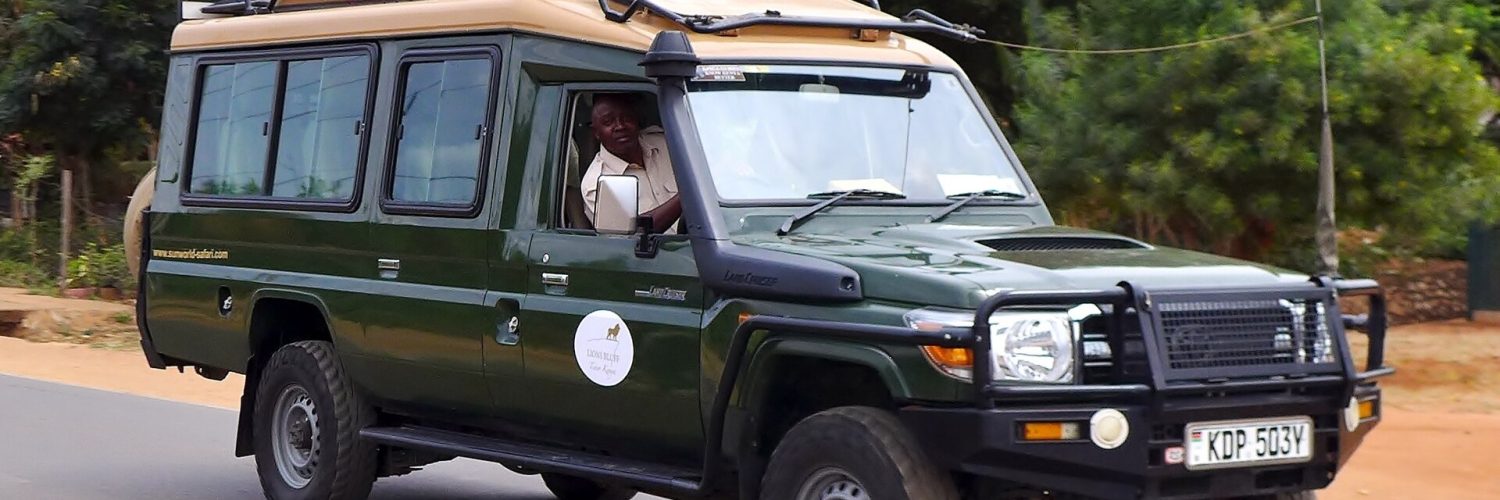
Not a soft-roader. The requirement in the Mara is high ground clearance and genuine four-wheel drive, because the reserve tracks are black cotton soil — a clay that is firm in the dry season and behaves like wet cement within an hour of rain. A vehicle that handles a gravel road in Europe will be stuck to the axles in the Mara in March.
What works, in rough order of how often you will see it:
- Toyota Land Cruiser (70 series or Prado) — the default. Parts and mechanics exist in every town in Kenya, which matters more than any spec sheet.
- Toyota Hilux double cab — cheaper, tough, less comfortable over five hours of corrugation.
- Land Rover Defender — capable, and the older ones need a driver who is relaxed about mechanical character.
- Suzuki Jimny or similar — fine for Nairobi National Park and Hell’s Gate, marginal for the Mara, and too small to sleep near.
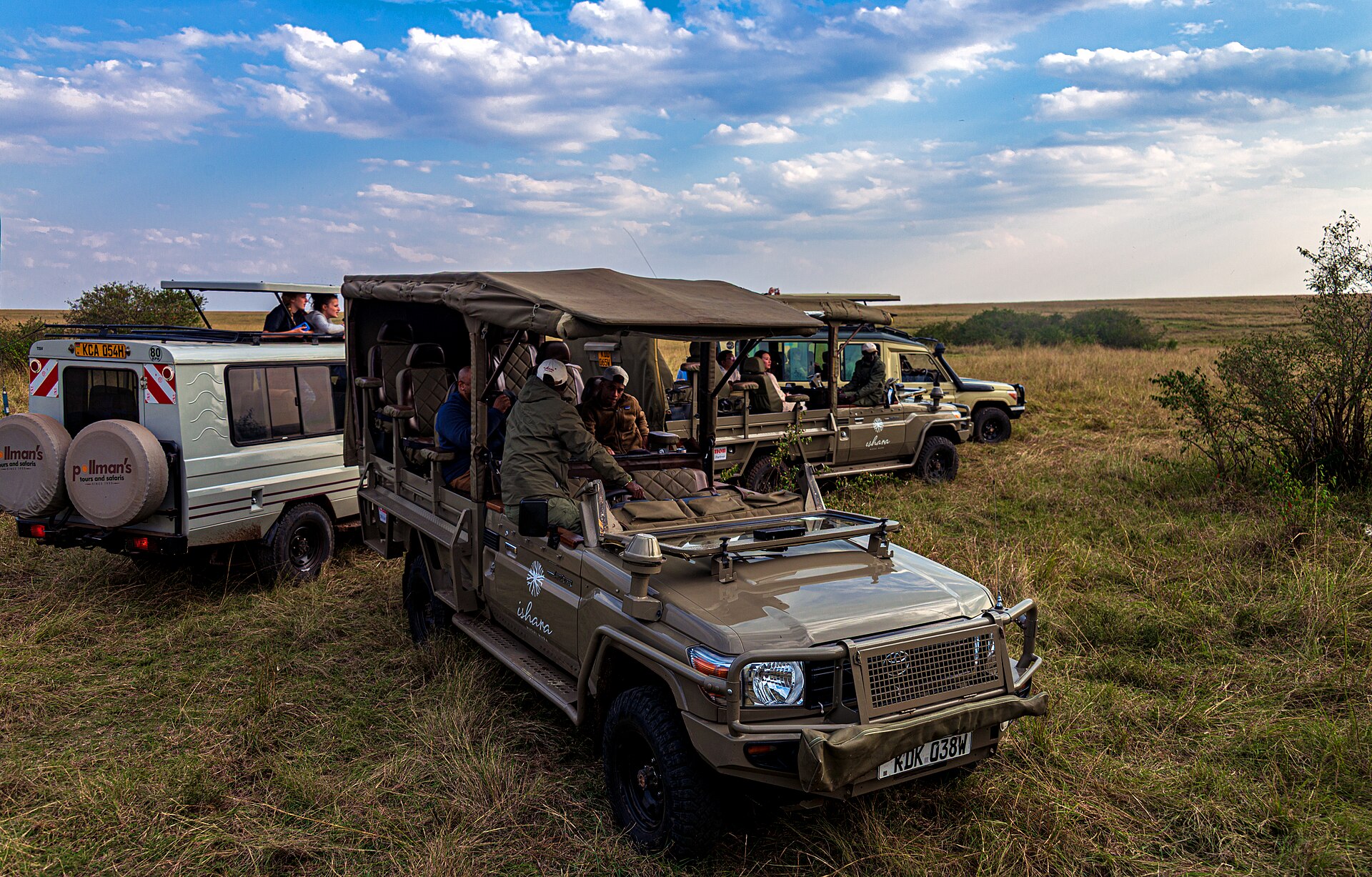
Two options are worth paying extra for. A pop-top roof hatch changes game viewing completely — you stand up through it rather than shooting through a window. And a rooftop tent turns the vehicle into your accommodation, which in Kenya is a real budget strategy rather than a gimmick.
Ask three questions before you book anything. Does the rate include unlimited mileage, or is there a daily kilometre cap? Is a second spare wheel included — you want two, not one, on Mara tracks. And is the vehicle allowed inside national parks and reserves at all? Some cheaper rental agreements quietly exclude them, which turns the whole plan into an insurance problem the first time you go through a gate.
Paperwork and rules
Kenya drives on the left. Your home licence works for short visits if it is in English, and an International Driving Permit carried alongside it is expected and removes any argument at a roadblock. Most rental companies set a minimum age of 23 and want a credit card in the driver’s name for the deposit.
Police checkpoints are routine and usually uneventful. Have licence, IDP, rental agreement and insurance certificate together in the glovebox. Speed limits are enforced with mobile cameras on the main highways and the fines are real.
Inside the reserve the rules matter more. Off-road driving is prohibited and enforced by rangers, no matter how many vehicles you see doing it. Game drives run roughly 06:00 to 18:30 — you must be out of the reserve or at your camp by dusk. Do not get out of the vehicle except at designated points. And keep a sensible distance from animals: the vehicle is a hide, and it only works as one while everyone stays inside it.
What it costs to run
Fuel is the second-largest line. Nairobi pump prices set by the regulator for 15 August to 14 September 2026 are KSh 214.03 per litre for super petrol and KSh 217.86 for diesel. A Land Cruiser on safari tracks does not return brochure figures — budget 15 to 20 litres per 100 km and more if you spend the day idling around a lion sighting.
Fill up in Narok on the way to the Mara. Fuel inside the reserve area is scarce, considerably more expensive, and occasionally absent. The same rule applies on the road to Amboseli and to Samburu: the last real town is the last real petrol station.
Budget in shillings for tips at gates and camps, and keep small notes. M-Pesa is close to universal in Kenya and is genuinely the easiest way to pay for fuel, food and campsite fees once your phone has a local number.
The drive itself
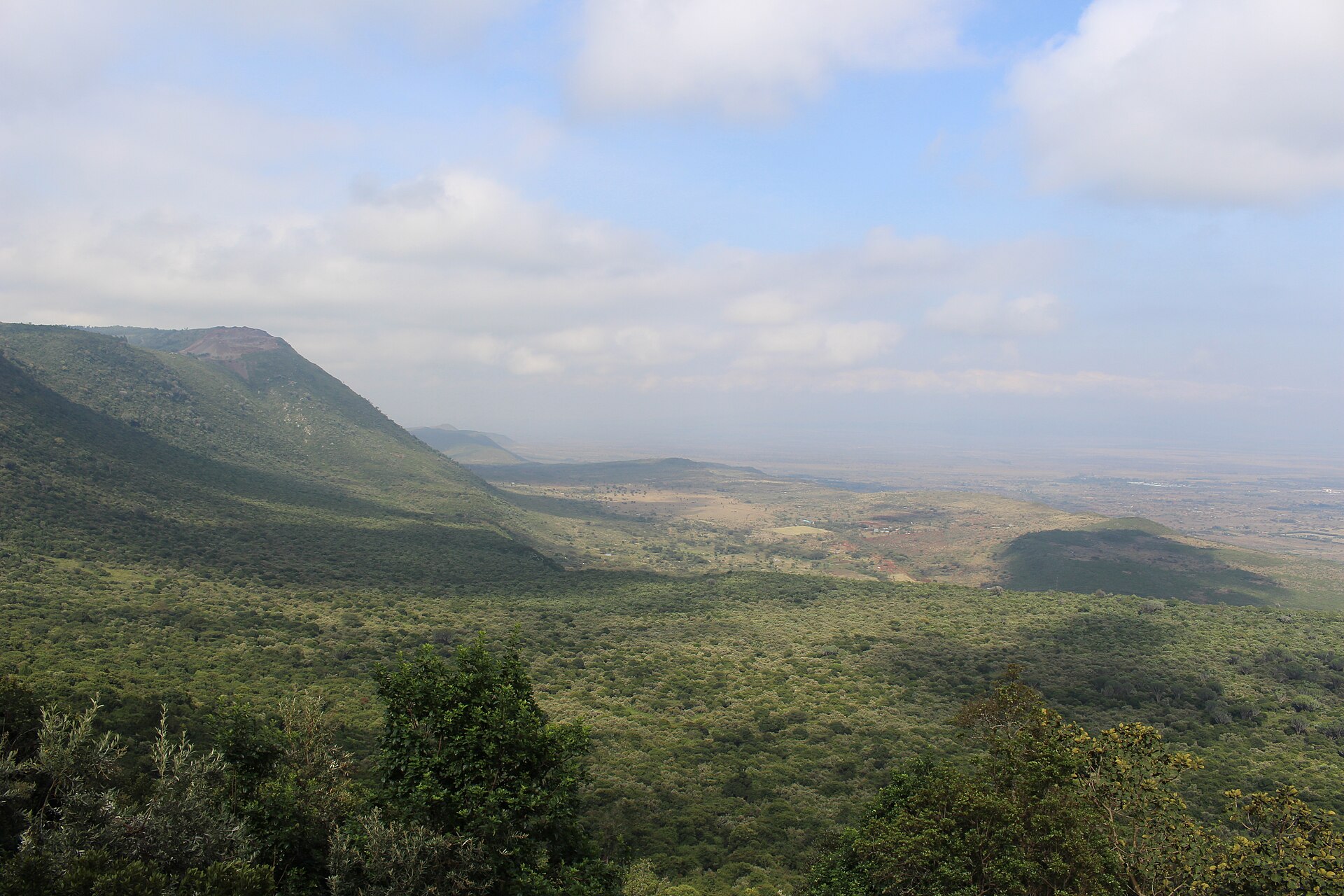
Nairobi to the Sekenani gate is roughly 270 km and takes five to six hours. The first two-thirds — the A104 across the Rift Valley escarpment and on to Narok — is proper tarmac and genuinely spectacular. The last stretch from Narok is where the road quality collapses, and where a low-clearance car would have ended the trip.
Two hard rules for driving in Kenya generally. Do not drive between towns after dark: unlit vehicles, livestock on the carriageway and unmarked speed bumps combine badly. And treat matatus — the minibuses — as unpredictable by default; they stop without warning and overtake into gaps that do not exist.
Download offline maps before you leave Nairobi. Mobile coverage in the reserve is patchy, and the tracks inside the Mara are not reliably mapped by consumer navigation apps in any case.
A route that works in ten days
Days 1–2. Nairobi. Collect the vehicle, check the spares yourself, and spend a morning in Nairobi National Park — rhino and lion against a skyline of office towers, which is a genuinely strange sight and a cheap way to test the car and your own nerve before committing.
Days 3–5. Maasai Mara. Drive out early, enter in the afternoon to make the 24-hour ticket work, and give it two full days. If you are there between July and October the migration river crossings are the reason the fee doubled.
Days 6–7. Lake Naivasha and Hell’s Gate. Back east and north. Hell’s Gate is one of the few Kenyan parks you can cycle or walk in, because there are no elephants and few predators. It is also cheap.
Days 8–10. Amboseli. South towards the Tanzanian border for elephants against Kilimanjaro. The road in is rough and the reward is the single most photographed backdrop in East Africa.
That routing keeps you off night roads, puts the expensive reserve in the middle when you have learned the vehicle, and ends near enough to Nairobi for a morning return.
Where to sleep
Self-drivers have three tiers. Public campsites inside and at the edge of the reserve are the cheapest and are basic — long-drop, water, and the noises outside the tent are the point. Tented camps in the conservancies just outside the reserve boundary cost a fraction of the inside-the-Mara lodges and often give you better game viewing, because conservancy rules cap vehicle numbers. Lodges inside the reserve are the expensive option and mostly sell convenience.
A practical note that saves money: staying in a conservancy or just outside the gate means you are not paying the reserve fee on the days you do not enter. Two nights out, two days in, is a much cheaper shape than four nights in.
Getting to the car
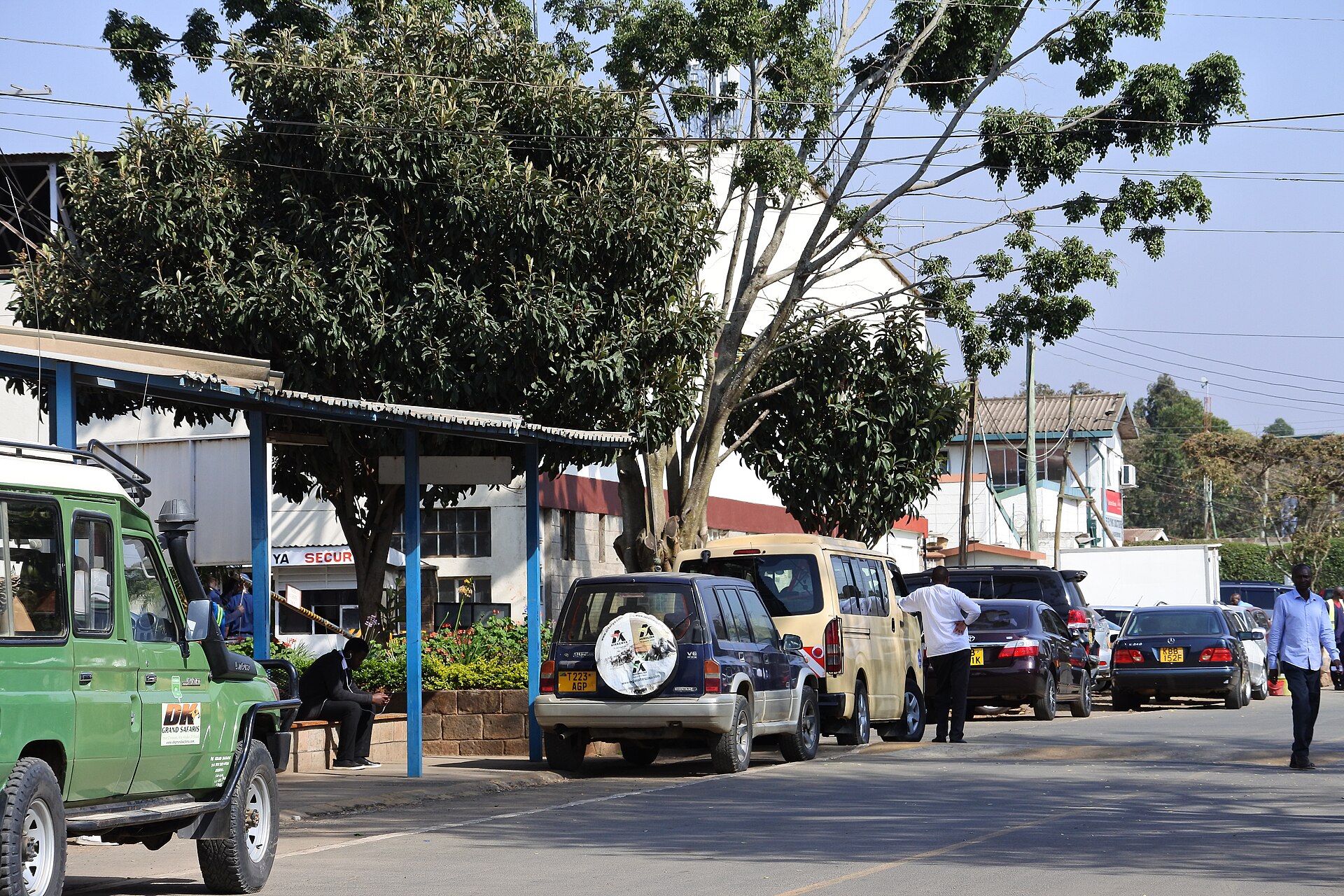
Most self-drive trips start at Jomo Kenyatta International, and most rental companies will deliver the vehicle to your Nairobi hotel rather than to the terminal. That is usually the better arrangement: you sleep off the flight, inspect the car in daylight, and drive out of Nairobi on the second morning rather than into Nairobi traffic on the first evening.
Which leaves the airport-to-hotel leg. Nairobi traffic is severe and the taxi rank at JKIA at 22:00 is not where you want to start negotiating, so a fixed-price transfer booked before you land is the low-friction option.
When to go
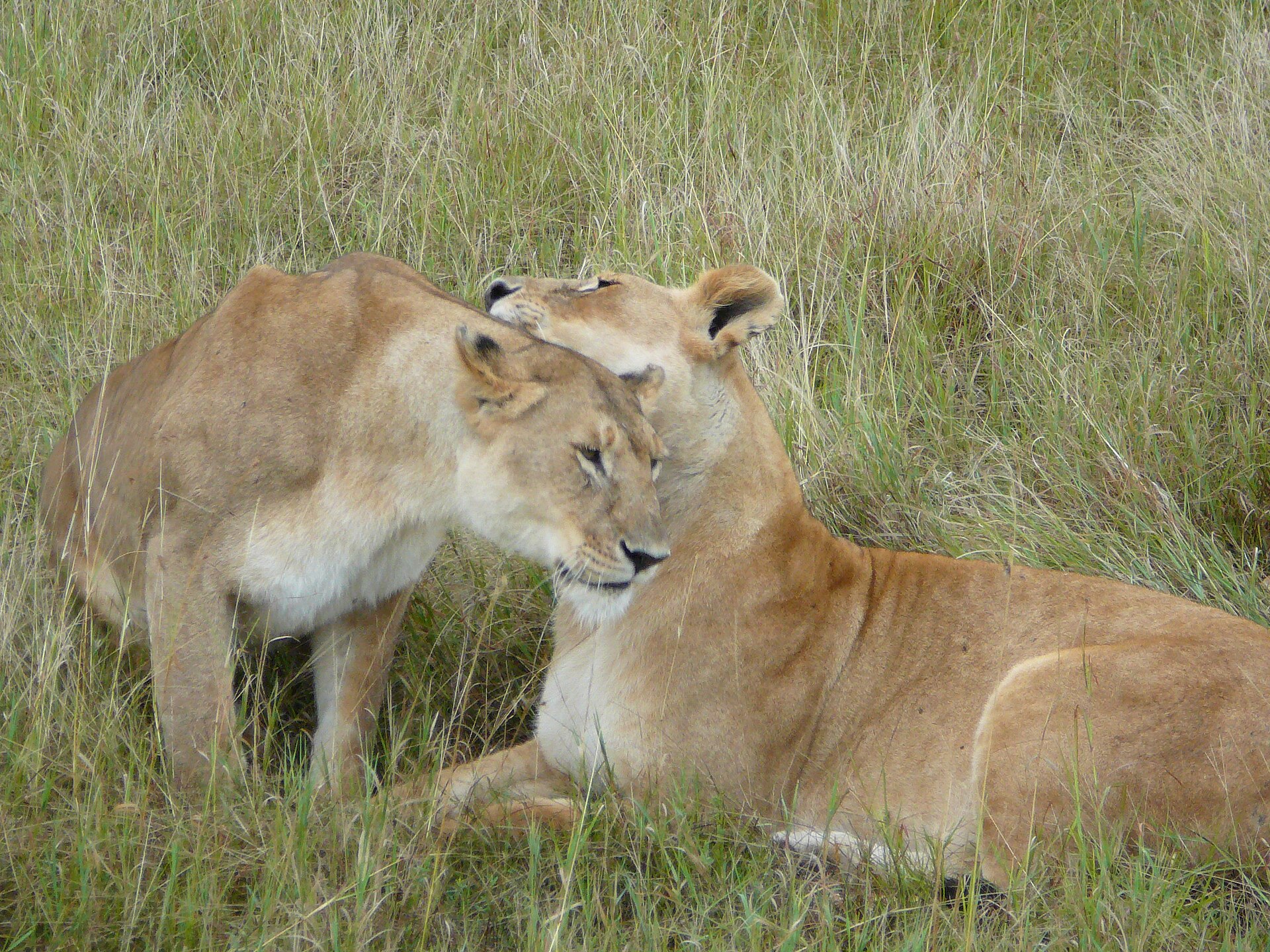
January to March is hot, dry, quiet and — critically — inside the USD 100 gate fee window. Big cat viewing is excellent because the grass is short. This is the value season and it is badly underrated.
July to October is the wildebeest migration and the river crossings, at USD 200 per person per day and with the tracks busy. It is the best wildlife spectacle on the continent and you pay for it twice, in fees and in company.
The long rains from late March through May are the season to avoid for a self-drive specifically. Black cotton soil plus an inexperienced driver plus no recovery vehicle is how rental deposits disappear. November’s short rains are milder and manageable.
When not to self-drive
Be honest about the trade. A guide finds animals that you will drive straight past, knows which track is passable today, and handles the gate paperwork. If you have four days total, fly into the Mara from Wilson Airport and take the guided vehicle — you will see more.
Self-driving wins on trips of a week or more, for travellers who want to move between parks on their own schedule, who are comfortable with rough roads, and who would rather spend the difference on more days than on more service. That is a real preference, and Kenya accommodates it better than almost anywhere in Africa.
Further reading
- Things to do in Nairobi — the two days before you collect the car.
- Nairobi to the Maasai Mara — every way of covering that 270 km.
- Nairobi airport transfers — getting in from JKIA.
- 4×4 rental in Namibia — the other great African self-drive, with very different rules.
- Things to do in Cape Town — if the trip continues south.