San Diego has a reputation for being easy, and it is — right up to the moment you look at the bill. Four adults doing the zoo, the aircraft carrier, a bay cruise and an aquarium on separate tickets will spend more than four hundred dollars before lunch. Meanwhile the single most photographed building in the city, the one everyone assumes is a 17th-century Spanish cathedral, is free to walk past and was originally built out of plaster and glue with no foundations, on the assumption that it would be bulldozed within two years.
That gap — between what costs a fortune and what costs nothing — is the whole story of visiting San Diego well. This guide is organised around it.
Why San Diego looks the way it does
Two things shaped the tourist map here, and neither was tourism.
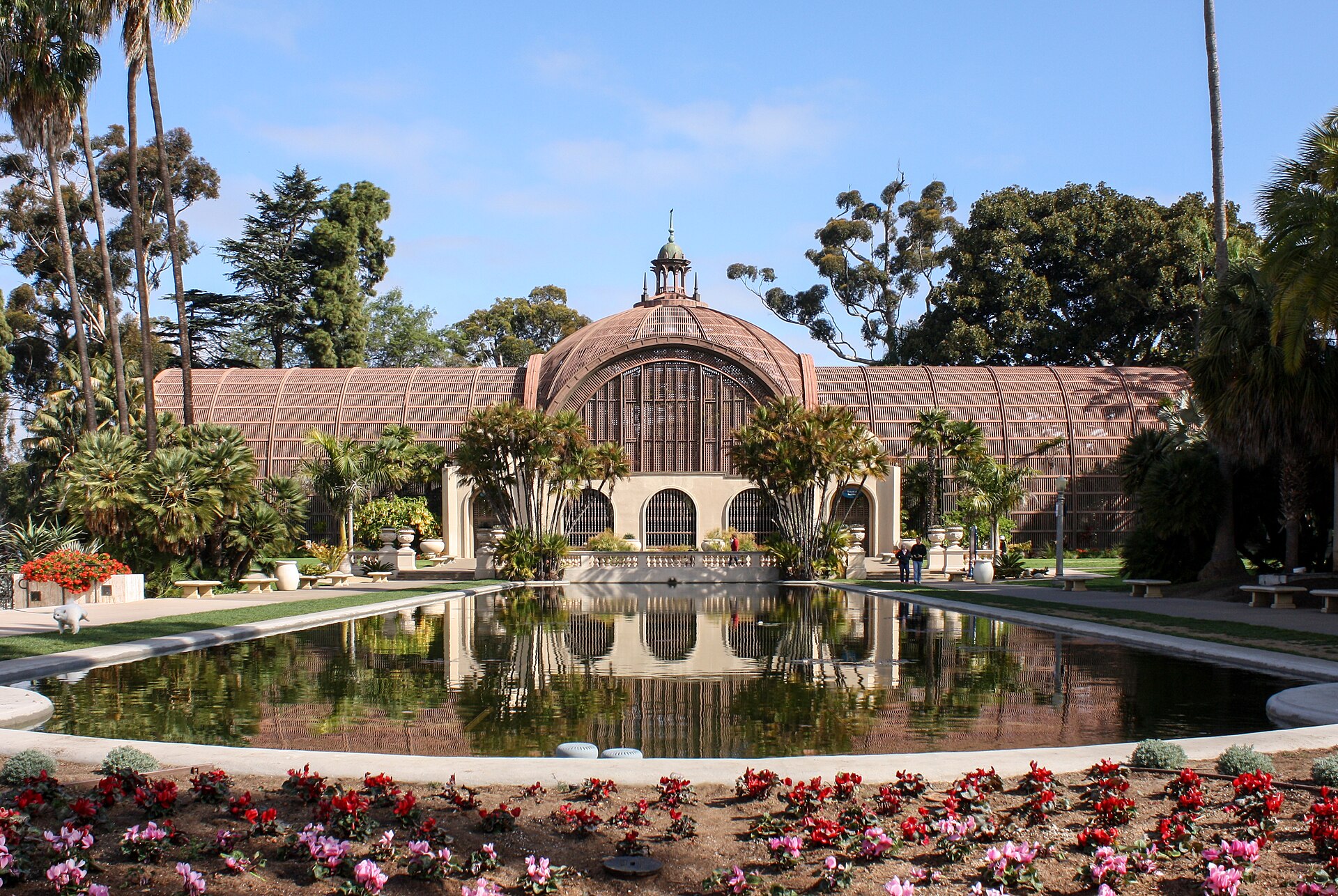
The first was the Panama–California Exposition of 1915. San Diego was a town of about 40,000 people that decided to throw a world’s fair to announce itself to ships coming through the newly opened Panama Canal. The fairground was Balboa Park, and the buildings along El Prado were put up in “staff” — gypsum plaster bound with hide glue and reinforced with coconut fibre — without foundations, because they were temporary. Almost all of them were scheduled for demolition.
They were never knocked down. The city kept using them, patching the plaster as it crumbled, and over the following decades rebuilt several of them in concrete on the same footprint. The Casa del Prado you photograph today is a reconstruction; the ornamentation was cast from the originals before demolition and reapplied. So the “historic Spanish colonial quarter” of San Diego is a rebuilt copy of a temporary movie set. Knowing that does not make it less beautiful. It does explain why the detailing is so theatrical.
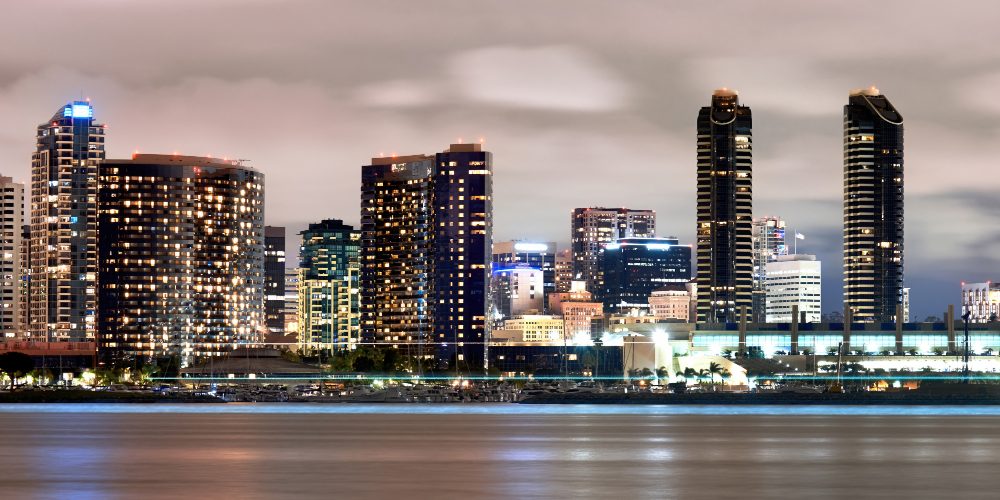
The second force was the U.S. Navy. The bay is one of the best natural deep-water harbours on the Pacific coast, and the Navy has effectively owned its working edge for over a century. That is why a decommissioned aircraft carrier is a downtown attraction, why Coronado is reached by a bridge that soars 61 metres so warships can pass beneath it, and why so much waterfront that would be condos anywhere else in California is still fenced grey steel.
Add the canyons — San Diego is cut by deep brush-filled ravines that roads have to go around — and you get the city’s defining practical problem. Neighbourhoods that look adjacent on a map are separated by a canyon, a freeway, or both. Nothing here is walkable to anything else.
Getting in from the airport
San Diego International (SAN) is unusually close to downtown — about 5 km, which is close enough that arriving flights pass low over the Bankers Hill rooftops. The airport opened the first phase of a new Terminal 1 in September 2025, with 19 gates, a new ticketing hall and a rebuilt roadway; further gates are being added through 2028, so the terminal you flew out of last time may not be the terminal you arrive at.
From the terminal, MTS route 992 runs to downtown for the standard adult fare of $2.50 and connects to the Trolley. A taxi or rideshare to downtown is a short hop. If you are heading straight to La Jolla, Coronado or North County, a pre-booked private transfer is worth pricing against a rideshare surge, because the drive is 30–45 minutes and the meter is what moves.
What you have to book, and what it actually costs
San Diego’s paid attractions are expensive individually and the prices move, so treat every figure below as a checkpoint rather than a quote. As of late August 2026, published gate prices look roughly like this:
- San Diego Zoo — 1-Day Pass $78 adult, $68 child (3–11) on standard days; $73 / $63 on designated Value Days. Parking is extra.
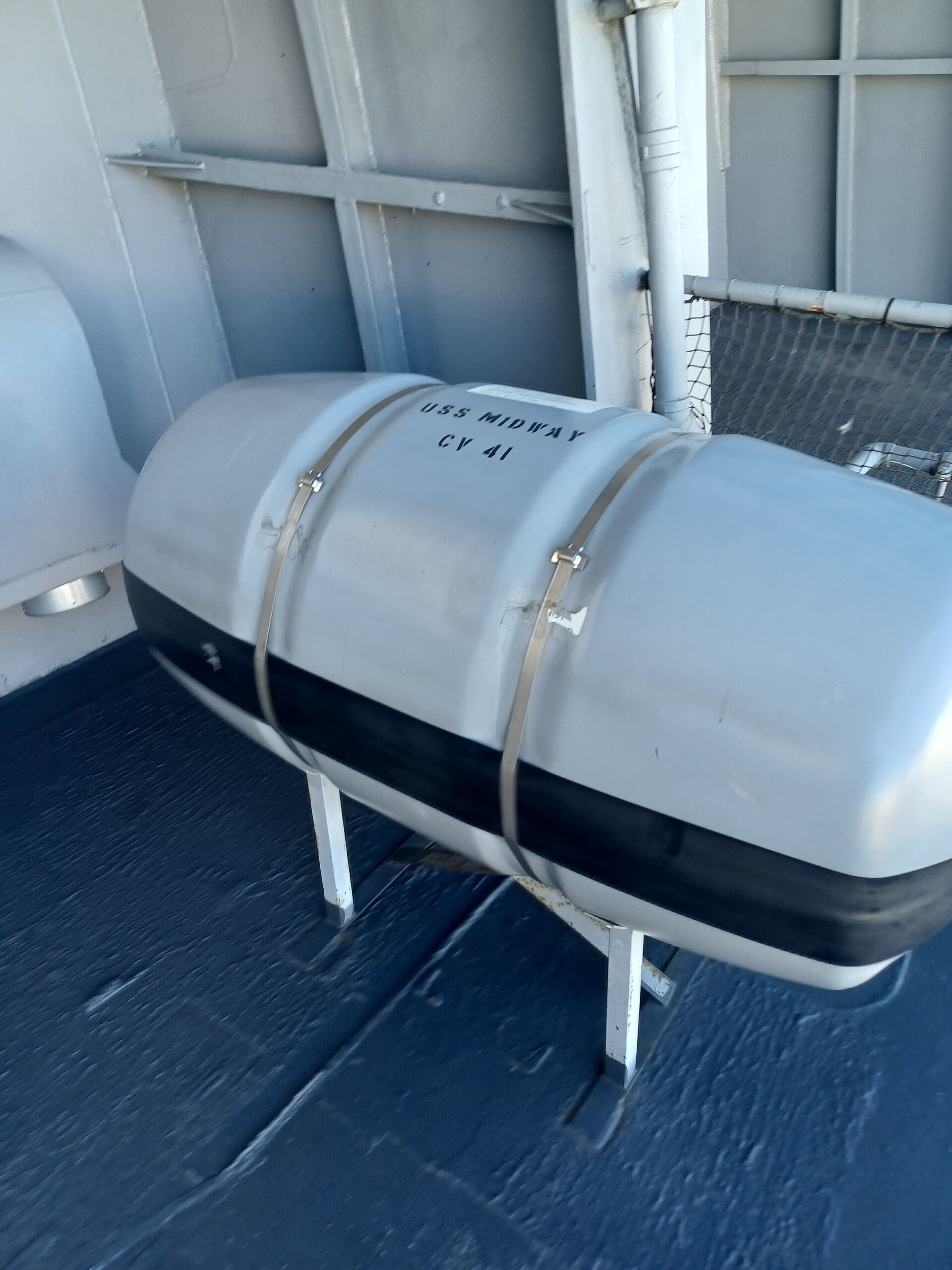
- USS Midway Museum — around $41 adult, $31 child at the gate, including the audio tour in six languages.
- Birch Aquarium at Scripps — about $39.95 adult, $34.95 child.
- Maritime Museum of San Diego — about $28 adult, $15 for ages 6–17.
- City Cruises “Best of the Bay” — roughly $25–$46 adult depending on date and time.
- Cabrillo National Monument — $20 per private vehicle, $15 per motorcycle, $10 per person walking or cycling, capped at $20 for a walk-in group of four. Valid seven days. Under 16 free.
- SeaWorld San Diego — about $126.99 at the gate. LEGOLAND California — about $139.
Two of those need reservations rather than just tickets, and one of them — the zoo — is worth arriving at before opening rather than at 11am, when the car park fills and the animals go and lie down.
Attractions that sell out — the zoo on a summer weekend, harbour cruises, timed museum entries — are worth locking in before you fly:
The honest arithmetic on a city pass
San Diego CityPASS is built around a theme park. Every version of it includes either SeaWorld, LEGOLAND, or both, plus your choice of three from the zoo or Safari Park, the USS Midway, City Cruises, Birch Aquarium, Old Town Trolley Tours and the Maritime Museum. Tickets are valid nine consecutive days from your first visit, and you have a year from purchase to start.
As of 25 August 2026 the SeaWorld version is $169 adult and $149 child, LEGOLAND is $186 / $166, and both parks together are $239 / $219, each plus a $2 processing fee per ticket.
Here is where it turns on you. If you want the theme park anyway, the maths is excellent: SeaWorld alone is about $127 at the gate, so the three bonus attractions cost you roughly $42 for things that list at $28 to $68 each. But if you have no interest in SeaWorld or LEGOLAND — a completely reasonable position for adults — then you are paying $169 for a park you will not use plus three attractions you would have bought for about $110 anyway. The pass is not a general San Diego discount card. It is a theme-park ticket with extras attached.
One more wrinkle worth knowing: the pass’s own comparison table values the zoo component at $65 adult (what the pass credits the zoo day at), while the zoo’s website lists its 1-Day Pass at $78. Different bases, same direction, but it means the headline saving percentage and your actual saving are not the same number. Run your own totals against the day you are going before you commit.
Prices move: check the current San Diego CityPASS price against the gate totals for your own dates before deciding.
What is free, and genuinely good
An unusual amount of the best of San Diego costs nothing.
Balboa Park itself is free and open around the clock. The 1,200 acres, the El Prado promenade, the Botanical Building and lily pond, the Spanish Village Art Center courtyard, the Spreckels Organ Pavilion, the rose and cactus gardens — all free. Only the seventeen museums inside charge. You can spend an excellent half-day there without buying a ticket to anything.
The Sunday organ concert at Spreckels is free and has run, more or less without interruption, since 1917. It is one of the largest outdoor pipe organs in the world and the programme swings from Bach to film scores.
La Jolla Cove and the coast walk. The sea lions and harbour seals are free, loud and closer than you expect. The path along the bluffs from the Cove to the Children’s Pool is short, flat and one of the best twenty minutes on the California coast. It also smells strongly of sea lion, which nobody warns you about.
Sunset Cliffs Natural Park in Point Loma costs nothing and delivers the west-facing sunset that everyone associates with San Diego. Park early on a summer evening; the pull-outs fill.
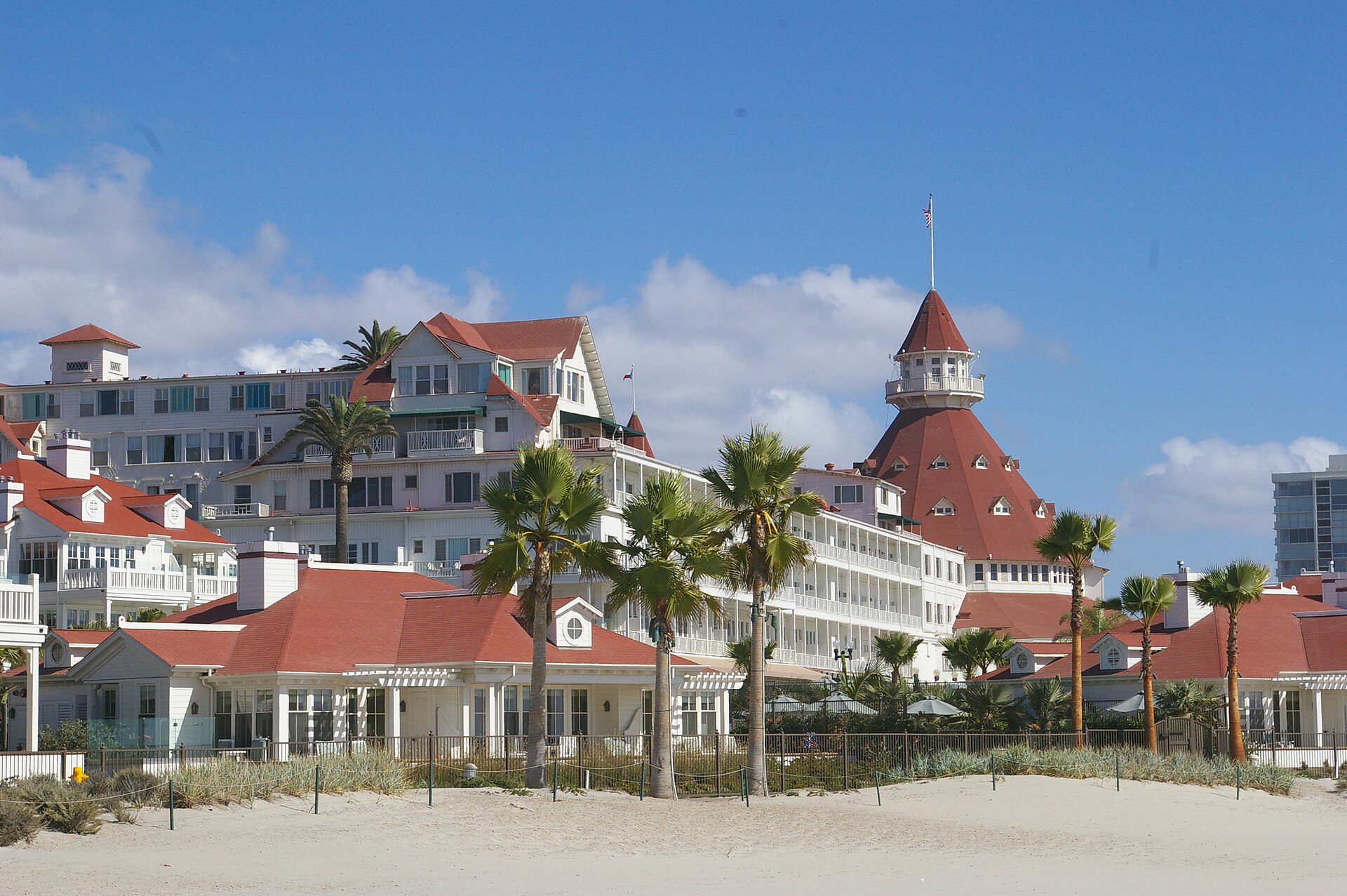
Coronado Beach is free, wide, and its sand contains mica, which makes it glitter in low sun. Walking the beach past the Hotel del Coronado is better value than the hotel’s parking fee.
Old Town — the state historic park portion — is free to enter and walk. The commercial strip around it is a souvenir operation; the park itself is not.
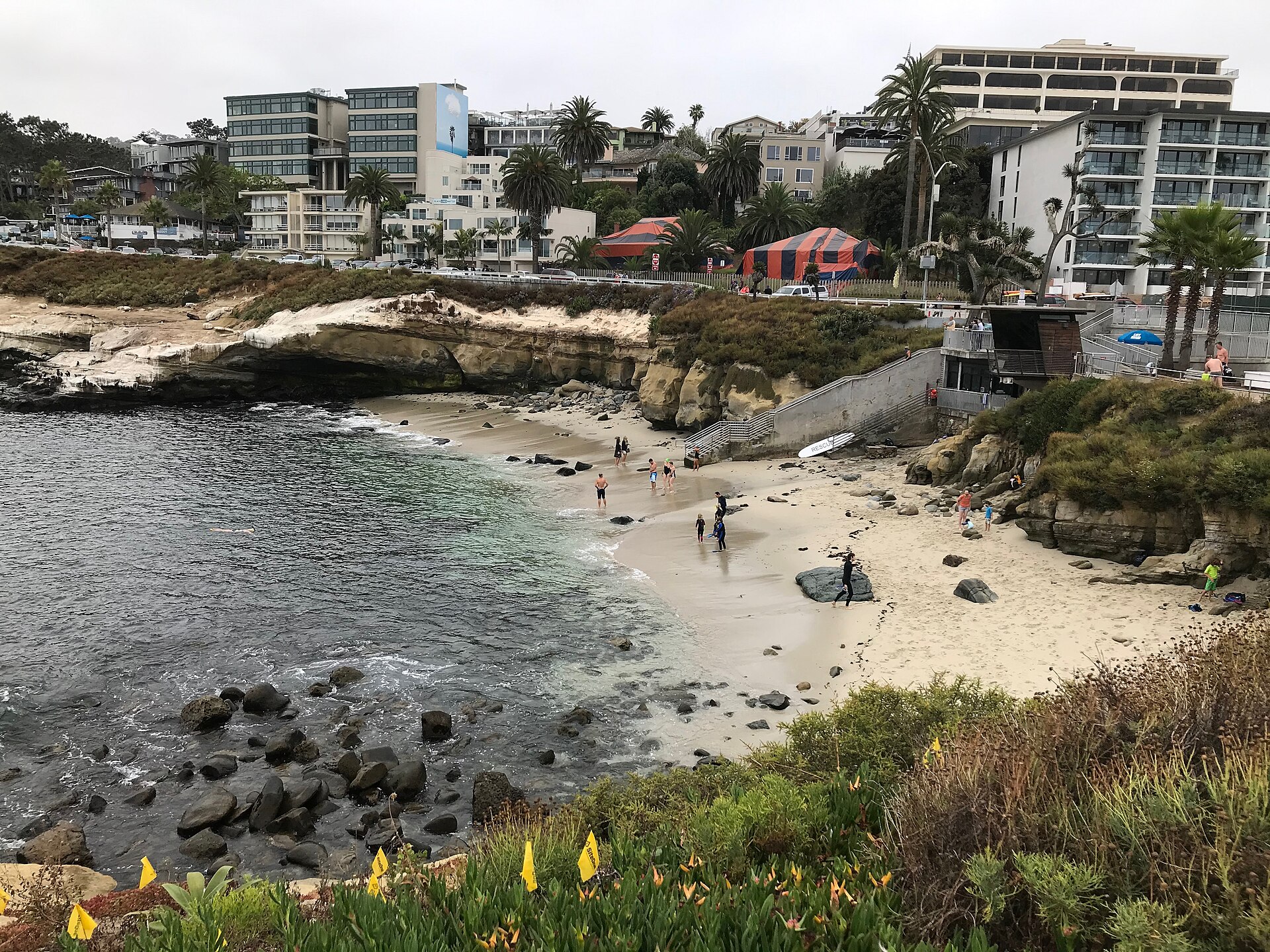
The neighbourhoods, and what each is for
Downtown / Gaslamp Quarter — Victorian-era brick, restaurants, bars, Petco Park, and the closest thing the city has to a walkable centre. Loud at night on weekends. Convenient for the Midway, the Maritime Museum and the Trolley.
Little Italy — a ten-minute walk north of the Gaslamp and where a lot of locals actually eat. The Saturday Mercato is one of the better farmers’ markets in the state.
Balboa Park / Bankers Hill / North Park — the museum and craft-beer belt. North Park and South Park are where the independent restaurants and breweries cluster.
La Jolla — cliffs, coves, expensive shops, the Birch Aquarium and Torrey Pines just north. Beautiful, and the parking is a blood sport.
Point Loma / Ocean Beach — Cabrillo National Monument and the tidepools at the tip; Ocean Beach is the scruffier, more countercultural of the beach towns and better for it.
Coronado — technically a peninsula, reached by the bridge or the ferry. Quiet, naval, immaculate, and a real change of pace.
Pacific Beach and Mission Beach — the party beaches, with the boardwalk and Belmont Park’s 1925 wooden roller coaster. Fun if that is what you want; a poor base if it is not.
A workable four days
Day one — Balboa Park and downtown. Arrive at the park early, walk El Prado, pick one museum rather than four, and let the buildings and gardens do the rest. Trolley or a short ride down to the Embarcadero in the afternoon for the Midway or the Maritime Museum, then dinner in Little Italy.
Day two — the zoo, properly. Be at the gate at opening. Ride the Skyfari one way and the guided bus tour early, then walk downhill. Leave by mid-afternoon; you will be finished and so will the animals. Evening in North Park.
Day three — the coast. La Jolla Cove and the coast walk in the morning, Birch Aquarium or Torrey Pines State Natural Reserve after, then Sunset Cliffs for the evening. This is the day that most justifies having a car.
Day four — Coronado and Point Loma. Take the ferry from the Broadway Pier rather than driving the bridge, walk the beach, then cross to Point Loma for Cabrillo, the tidepools at low tide and the view back across the bay.
If you only have three days, drop day four and take the ferry to Coronado on the afternoon of day one.
Eating, and the burrito question
San Diego’s food identity is Mexican, and specifically Baja Californian. The California burrito — carne asada, cheese, guacamole and french fries inside the tortilla — was invented here, and arguing about which shop makes the best one is a legitimate local pastime. Taco shops open late and are cheap; a good one will cost you less than a museum ticket for two people.
Beyond that: fish tacos, which arrived from Ensenada; a genuinely deep craft beer scene concentrated in North Park, Miramar and Ocean Beach; and, in Convoy Street, one of the best Asian food corridors in Southern California, which most visitors never see because it is nowhere near the coast.
What is not worth it: waterfront tourist restaurants in the Gaslamp with laminated menus in four languages. You are paying for the address.
Getting around without wasting money
The MTS system — bus, Trolley and Rapid — charges a flat $2.50 adult one-way, and if you pay with a PRONTO card or the app that fare includes unlimited transfers for two hours. There is fare capping: pay as you go and you will never be charged more than a $6 day pass in a single day, or more than a month pass in a calendar month. Cash fares do not get the transfers or the capping, so get PRONTO on arrival.
Two extras worth knowing. Riders aged 18 and under travel free on MTS with a Youth PRONTO account. And on Saturdays and Sundays, up to two children aged 12 and under ride free with a fare-paying adult.
The Trolley’s Blue and Green lines cover downtown, Old Town, Mission Valley and the border at San Ysidro perfectly well. What they do not cover is La Jolla, Point Loma, Sunset Cliffs or Torrey Pines, which is precisely where you will want to be on your best day. That is the honest case for a rental car here: not for the city, for the coast.
Where to stay
Base choice matters more here than in a compact city, because moving between districts eats 30–45 minutes each way.
Downtown / Gaslamp if you want to walk to dinner and use transit. Little Italy for the same access with better food and less noise. Coronado if the trip is about slowing down. La Jolla if the coast is the point and you have a car. Mission Valley is the cheap compromise — plenty of chain hotels on the Trolley line, no atmosphere whatsoever, but it is genuinely well connected and often half the downtown rate.
Summer weekends, Comic-Con week in July and any weekend with a Padres home stand tighten the market noticeably. Check dates before you assume there is availability.
Day trips worth the drive
Torrey Pines State Natural Reserve — 20 minutes north, rare pines on eroding sandstone cliffs, and a beach at the bottom. Arrive early; the lot is small and the overflow is a long walk uphill.
Julian — an hour inland and 1,200 metres up, an old gold-mining town that now sells apple pie and is genuinely cold in winter. It occasionally snows, which San Diegans find remarkable.
Anza-Borrego Desert State Park — two hours east, California’s largest state park, and in a good wildflower spring one of the best displays in the state. Check bloom reports rather than hoping.
Carlsbad and North County beaches — Encinitas, Cardiff and Carlsbad are a string of low-key surf towns 45 minutes up the coast, and the COASTER commuter train serves several of them if you do not want to drive.
Tijuana — the border is at San Ysidro, at the end of the Trolley’s Blue Line, and walking across is straightforward. Re-entry to the United States is the part that takes time and requires the right documents; check current wait times and your own visa or ESTA position before you go, because getting back in is a different process from going out.
Three of those five need a car, and San Diego is one of the few US cities where renting for two days out of four genuinely makes sense:
When to go
San Diego’s climate is famously mild and famously misrepresented. The thing nobody tells you is May Gray and June Gloom: a marine layer that sits over the coast for much of late spring, keeping beaches overcast until early afternoon while inland areas are sunny. It is not rain, and it burns off, but if you have booked a beach week in early June expect grey mornings.
September and October are the reliable secret — warm ocean, clear skies, thinner crowds and lower hotel rates than July. Winter is mild, quiet and cheap, with occasional real rain. Whale-watching season for grey whales runs roughly mid-December to April.
Practical notes
- Sunscreen and the marine layer. Overcast does not mean safe. The UV here burns through the grey.
- Parking. Balboa Park is free but fills by mid-morning. La Jolla street parking is time-limited and enforced. Hotel parking downtown routinely runs $40–$50 a night on top of the room.
- Tidepools. Cabrillo’s tidepools only work at low tide, and the tide table does not care about your itinerary. Check it before you drive out.
- Rip currents. These are real beaches on an open ocean. Swim near a lifeguard tower and read the flags.
- The airport is close and loud. Flights stop overnight, but if you are light-sleeping in Bankers Hill or Little Italy you will hear the first departures.
Further reading
If San Diego is one stop on a wider California or US trip, these may help:
- Things to do in San Francisco — the other end of the state, and a very different city pass calculation.
- Things to do in Chicago
- Motorcycle rental in San Diego — for the coast road, if that is your thing.
- How to compare cheap US domestic flights
- Car hire in Las Vegas — the obvious next hop east.