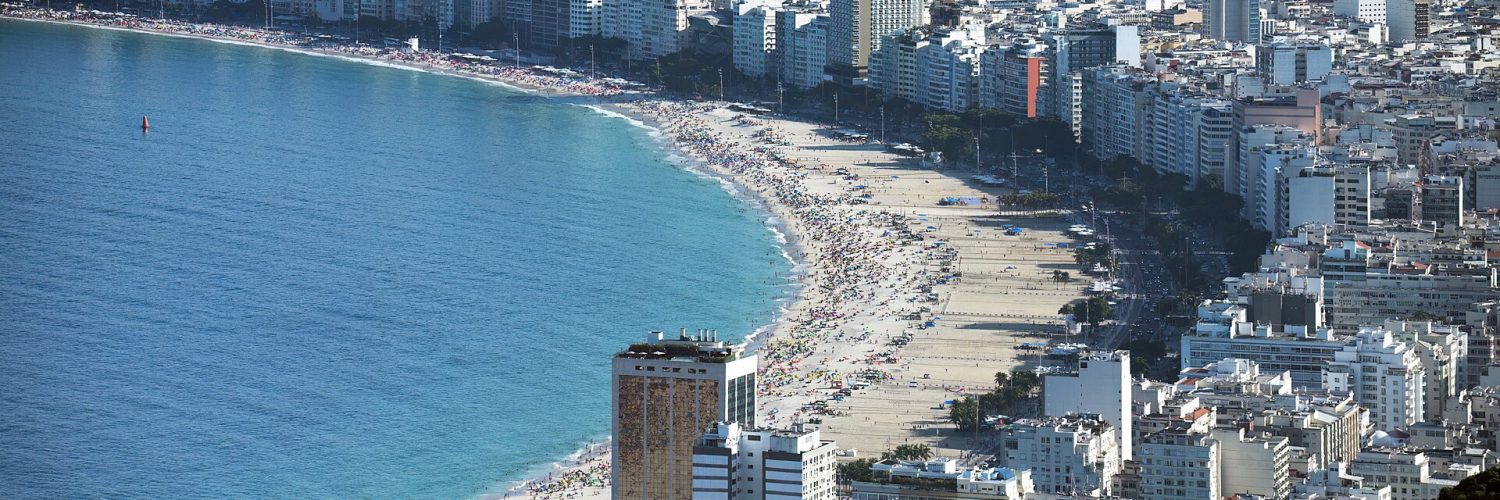
Almost every guide to Rio de Janeiro frames the accommodation question as a beauty contest between Copacabana and Ipanema. That is the wrong question. Both beaches are magnificent, both are on the same stretch of coast, and the sand is not what will shape your week.
The decision that actually matters is how far your front door is from a metro station — because that single fact determines whether your evenings are spontaneous or logistical. In a city where most visitors stop walking after dark and start ordering cars, a hotel two minutes from General Osório is a fundamentally different holiday from one twelve minutes uphill in Santa Teresa, no matter how much prettier the Santa Teresa street is in daylight.
This guide sorts Rio’s neighbourhoods by that criterion first and by charm second, with the airport transfer arithmetic that goes with each one.
The one piece of geography you need
Rio’s metro is small, and that is the point. Line 1 runs from the northern suburbs down through Centro and Botafogo to Copacabana and Ipanema. Line 4 continues west from Ipanema’s General Osório through Jardim de Alah, Antero de Quental in Leblon, São Conrado and out to Jardim Oceânico in Barra da Tijuca. Line 2 shares track into the centre from the north.
What that means in practice is a single spine running along the Zona Sul coast. If your hotel is on it, you can reach the beaches, the centre and the airport bus interchange cheaply and safely at almost any hour the system is running. If it is not, you are dependent on taxis and ride-hailing every time you leave, and that cost compounds fast over a week.
The fare is around R$8 — it was R$7.90 and was raised to R$8.20 in April 2026, adjusted annually against Brazil’s IPCA inflation index under the concession contract. Trains generally run from about 5am to midnight Monday to Saturday and shorter hours on Sunday, with 24-hour operation during Carnival. There is no meaningful difference in price between a short hop and the full length of the line.
Getting in: which airport, and what the ride costs
Rio has two airports and they are not interchangeable.
Galeão (GIG) handles international and most long-haul domestic flights. It sits roughly 20 kilometres from the Zona Sul on the Ilha do Governador, and the run into Copacabana or Ipanema takes 40 to 70 minutes depending on traffic on the Linha Vermelha. Expect roughly R$150 to R$200 for a metered yellow taxi once the tolls are added, R$80 to R$150 on Uber or 99 on a normal day, and R$180 to R$250 for a car booked in advance with a driver waiting in arrivals. Surge pricing on the apps is aggressive during evening peaks and rain, and it is common for a R$90 estimate to become R$180 by the time you have collected your bags.
Santos Dumont (SDU) is the one people forget to check. It sits directly on the bay in Centro, handles the São Paulo shuttle and a handful of other domestic routes, and puts you 15 to 25 minutes from Copacabana. If you are connecting through São Paulo anyway, flying into SDU rather than GIG can save you an hour and half the transfer cost. Our guide to domestic flights in Brazil covers which carriers use which.
The cheap option from Galeão is the BRT Transcarioca at around R$4.30, but it requires a change at Alvorada and takes 60 to 90 minutes, which is a poor trade after a long-haul flight with luggage. It makes far more sense on the way out, in daylight, without bags.
If you would rather have the price fixed and a driver holding a sign rather than negotiating surge on the kerb at 11pm, this is the comparison worth running before you fly:
Copacabana — the most choice, and the widest quality range
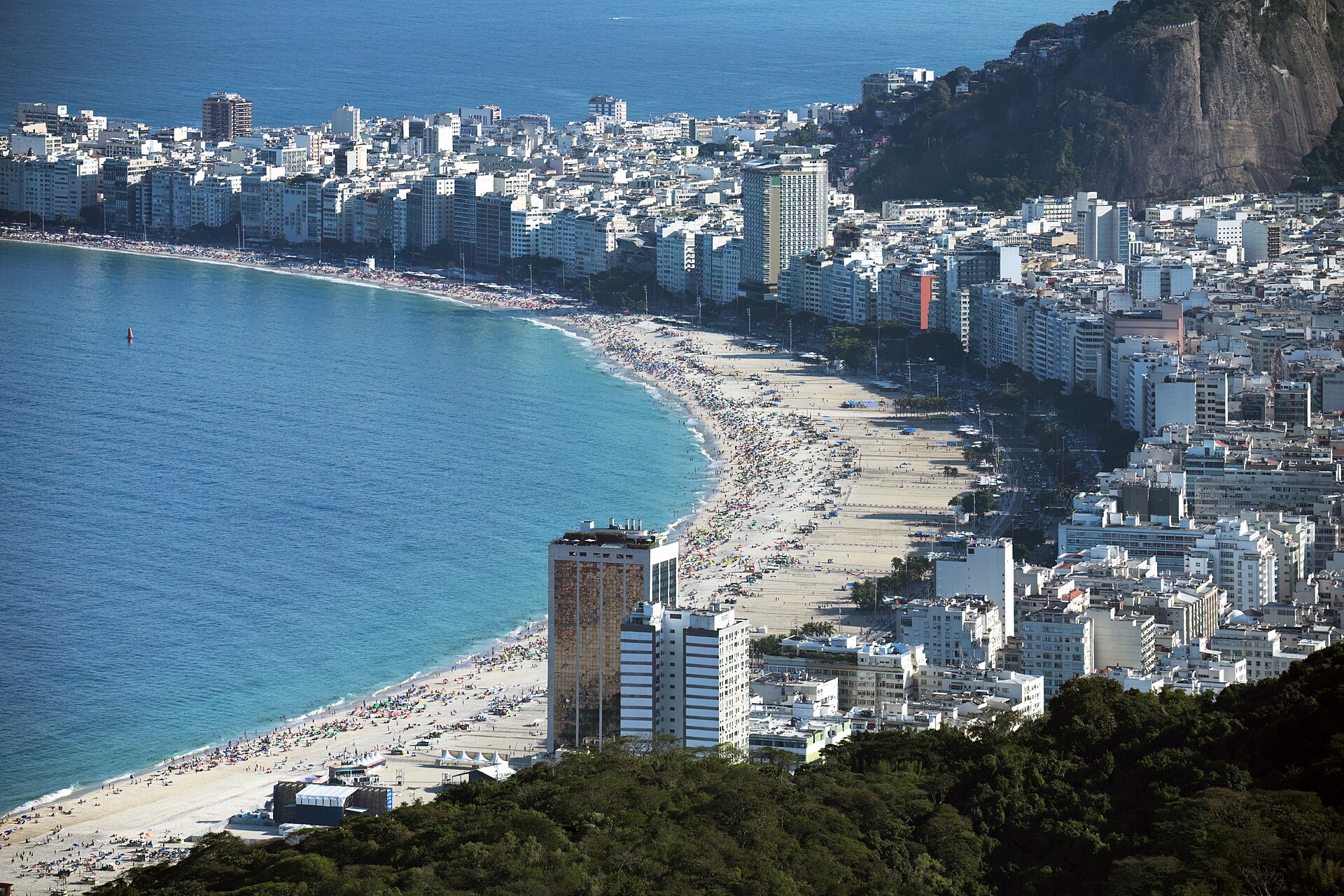
Copacabana has more hotel rooms than anywhere else in Rio and three metro stations along its length: Cardeal Arcoverde, Siqueira Campos and Cantagalo. That density is its real advantage. Whatever your budget, something on or near Avenida Nossa Senhora de Copacabana will fit it, and you will never be more than a few minutes from a train.
The trade-off is variance. The beachfront on Avenida Atlântica is a genuine spectacle and the Copacabana Palace is a landmark in its own right, but the blocks behind it range from perfectly pleasant to tired, and some of the cheaper hotels are trading purely on the postcode. Read recent reviews rather than star ratings.
Two internal distinctions are worth knowing. The Leme end, at the far northeast, is quieter, more residential and slightly cheaper, with the same beach and a shorter walk to Botafogo. The stretch around Posto 4 and 5, in the middle, is the busiest and noisiest and is where most of the aggressive street commerce concentrates.
Copacabana is also the epicentre of Réveillon, Rio’s New Year’s Eve, when roughly two million people fill the beach in white. Hotels in this strip charge accordingly and frequently impose minimum stays of up to four nights over that period. If you are coming for it, book many months out and accept the arithmetic. If you are not, avoid the last week of December here entirely.
Ipanema — the best all-round base, at a price
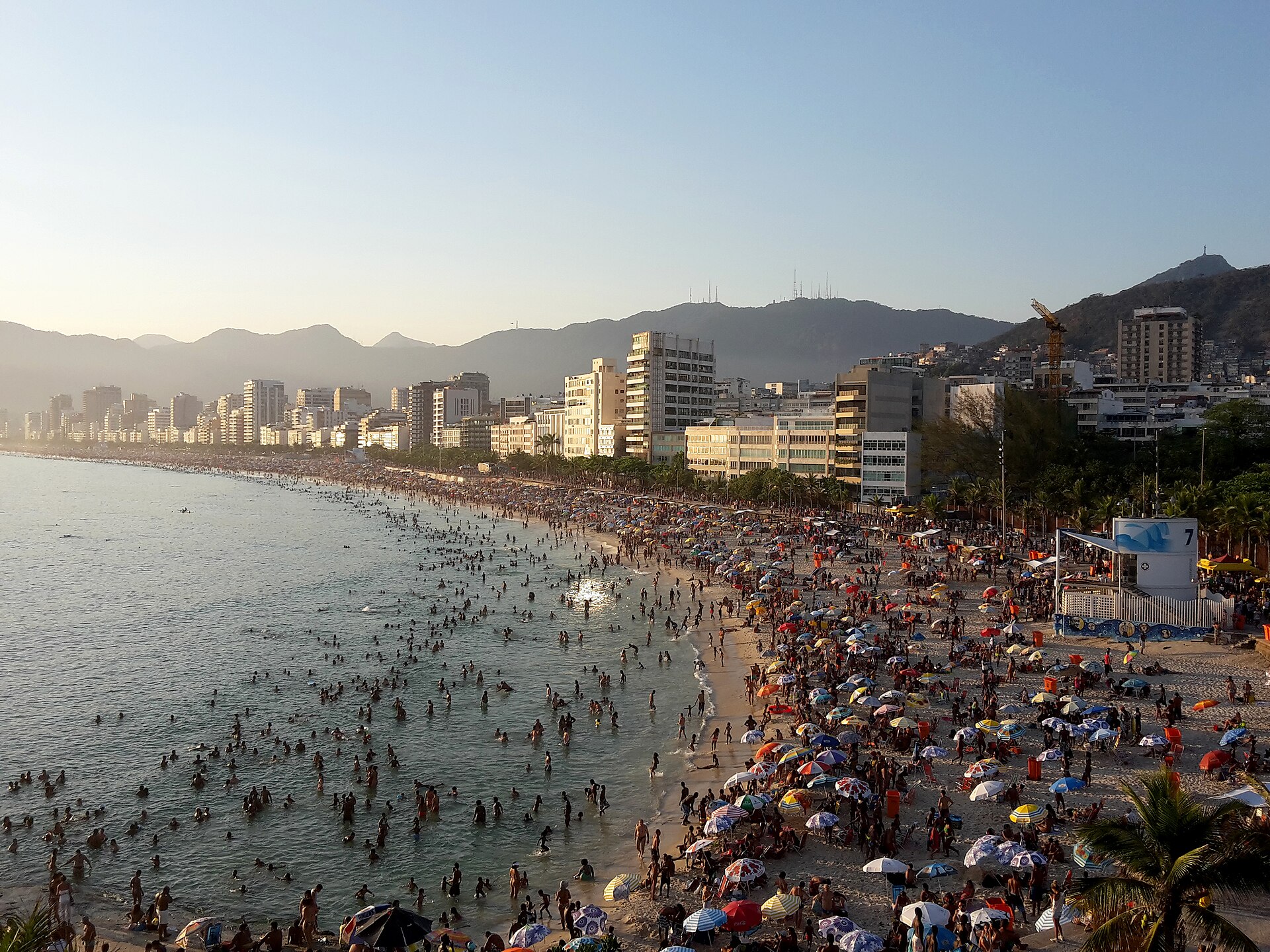
If someone gave you one recommendation and no further information, Ipanema would be the safe answer. It has a metro station at each end of the neighbourhood (General Osório and Nossa Senhora da Paz), the beach is cleaner and calmer than Copacabana’s, the restaurants are better, the streets are more comfortable to walk in the evening, and it is within walking distance of the Lagoa.
Rio’s beaches are organised by posto — numbered lifeguard towers that function as social addresses. Postos 1 to 6 are Copacabana; 7 to 12 run through Ipanema and Leblon. Posto 9 in Ipanema is the famous one, young and loud and crowded on any sunny weekend. Posto 8 is calmer. If you want to know what a stretch of sand will be like before you commit to a hotel behind it, ask which posto it faces.
The cost is real: Ipanema is 30 to 50 percent more expensive than equivalent quality in Copacabana, and materially more than Botafogo. What you buy is the ability to do everything on foot.
Leblon — quiet, expensive, and the family answer
Leblon is Ipanema with the volume turned down and the prices turned up. It is the wealthiest part of the Zona Sul, the least chaotic, and the most comfortable place to be with children or with anyone who wants to walk to dinner at 10pm without thinking about it. Antero de Quental on Line 4 puts it on the metro spine, which was not true a decade ago and changes the calculation considerably.
It has fewer hotels than Ipanema and they are not cheap. If your priority is a calm base and you are not counting reais, this is it.
Botafogo — the value pick, if you can live without a beach
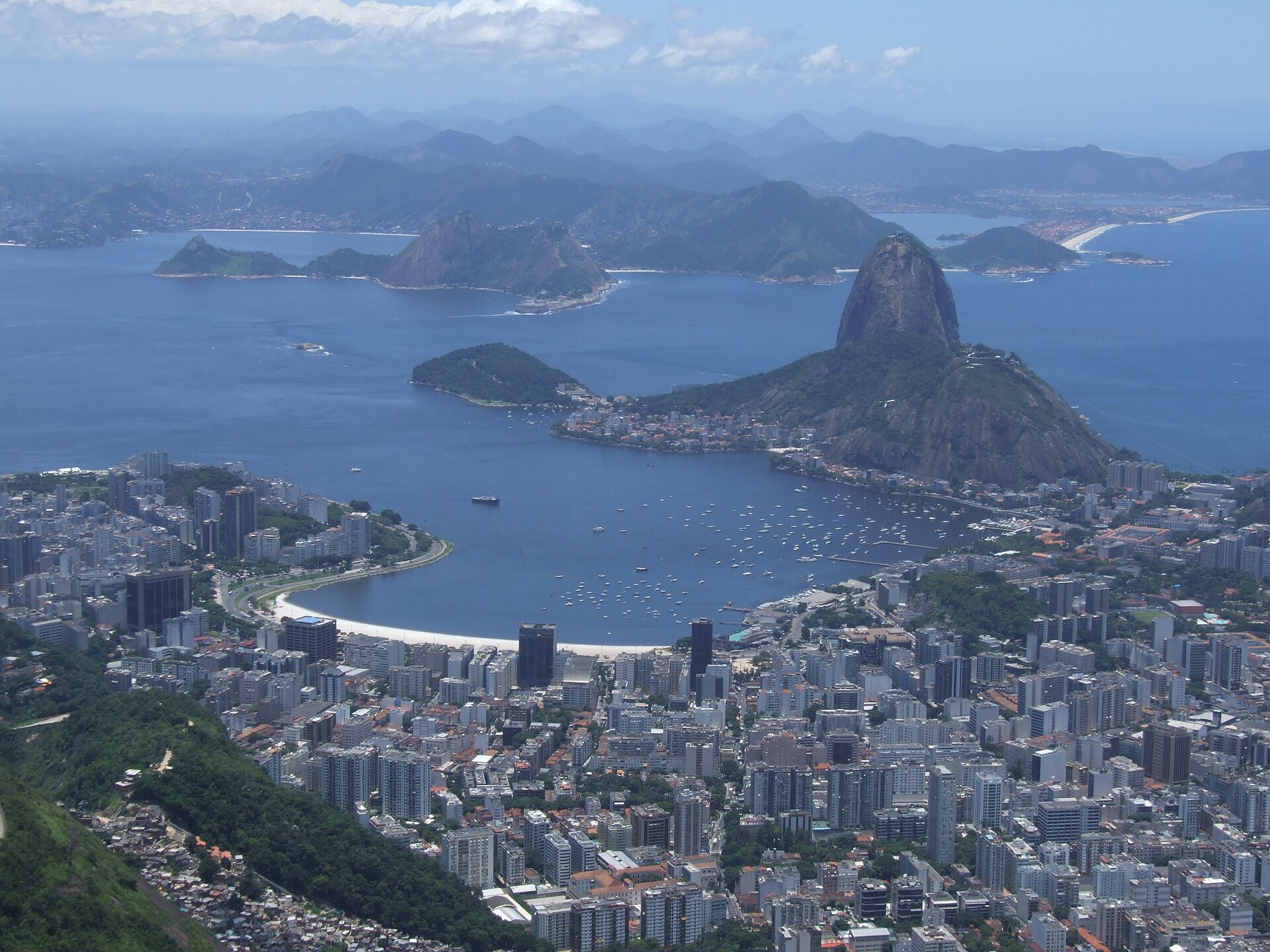
Botafogo is where the argument gets interesting. It has two metro stations (Botafogo and Flamengo is next door), the best concentration of independent restaurants and bars in the city, a genuine residential neighbourhood feel, and rates well below Ipanema for comparable quality. It is also fifteen minutes by train from Ipanema’s sand.
The honest drawback: Botafogo’s own beach faces the bay, not the ocean, and the water quality there does not support swimming. If your image of Rio involves stepping out of the lobby onto the sand, this is not that. If you would rather eat well, pay less and take a short train to the beach, this is the best value in the city and it is not close.
Neighbouring Flamengo and Catete are cheaper again, still on Line 1, and back onto the Aterro do Flamengo, a large waterfront park that is genuinely pleasant in daylight and best avoided late at night.
Santa Teresa — beautiful, and the one that costs you every evening
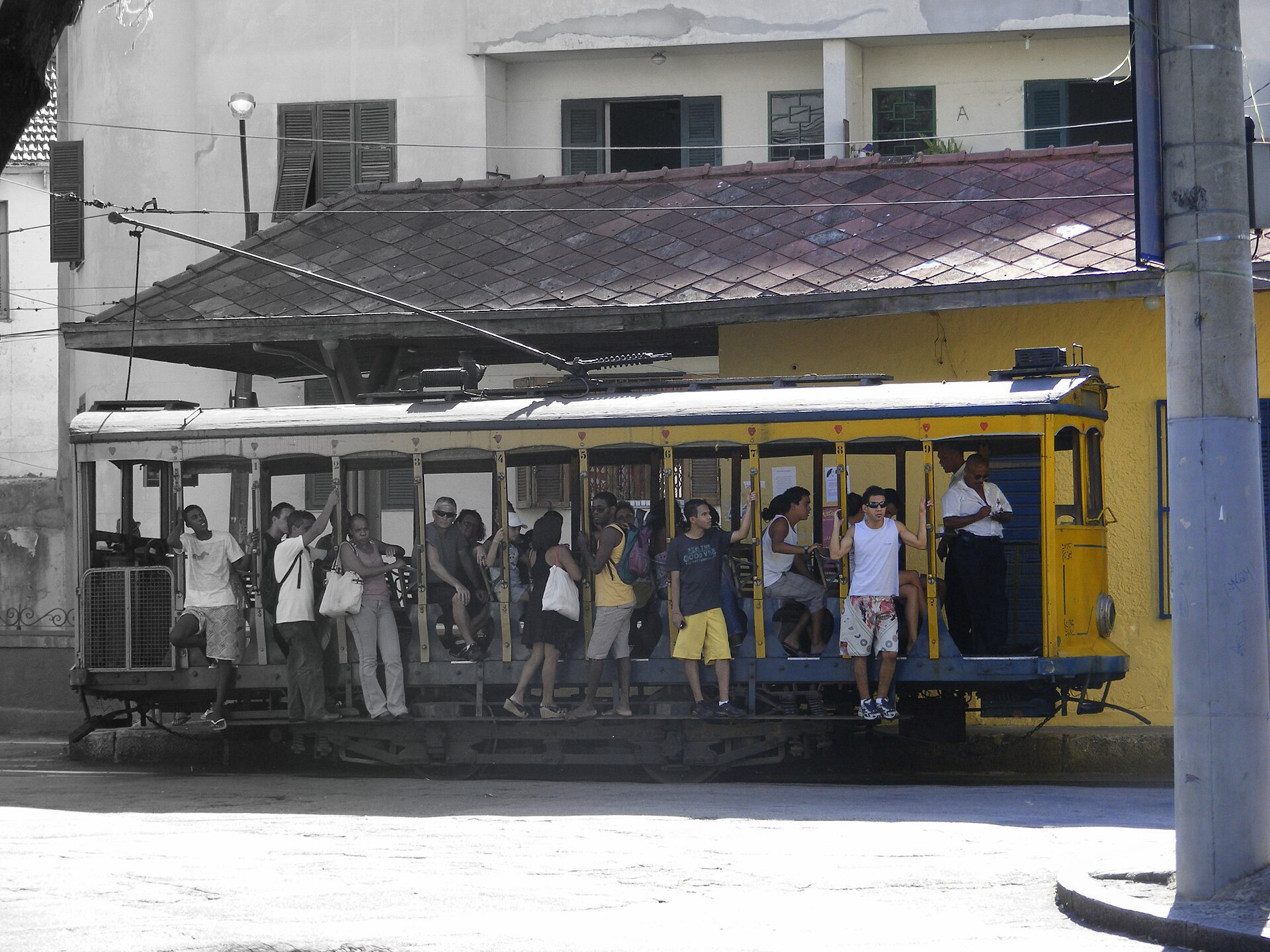
Santa Teresa is the most photogenic place to stay in Rio: cobbled lanes, colonial houses, artists’ studios, the yellow bonde tram climbing up from Centro, and views back over the whole bay. Several of the city’s most characterful small hotels are here.
It also has no metro, sits on a steep hill, and adjoins areas that are not comfortable to walk through after dark. Every evening out ends with a car, and drivers are sometimes reluctant to climb certain streets late. Budget for that honestly: if you are staying five nights and taking two cars a day, the transport line on your budget will exceed what you saved on the room.
Stay in Santa Teresa if the character is the point of the trip and you are comfortable with the logistics. Do not stay there because it looked lovely in a photograph and you assumed you would walk.
The ones to think twice about
Centro is the business district. It is busy and interesting on a weekday afternoon — the Theatro Municipal, the Real Gabinete Português de Leitura, the Museu do Amanhã at the redeveloped port — and it empties out almost completely in the evening and at weekends. Hotel rates look tempting for exactly that reason. It is not a leisure base.
Lapa, just south of Centro, is the nightlife district: the Arcos da Lapa aqueduct, the Escadaria Selarón, and samba bars that fill on Friday and Saturday. It is a place to go, not a place to sleep, unless the noise is the attraction.
Barra da Tijuca is thirty kilometres west, built around highways and shopping centres, and now connected by Line 4 to Jardim Oceânico. It works for families who want a modern apartment and a wide empty beach, and for anyone attending an event at the Olympic legacy venues. For a first visit centred on the classic city, it puts you a long way from everything you came to see.
Urca, the small peninsula beneath Sugarloaf, is one of the calmest and most pleasant corners of Rio, with almost no hotel inventory. If you find something there, it is a lovely and slightly impractical choice.
Comparing actual rooms
Once you have chosen a neighbourhood, the useful move is to filter by that neighbourhood rather than by city, because Rio’s citywide averages are distorted by Barra’s resort inventory and Centro’s business hotels. Set the dates first — the swing between low season and Carnival is larger here than in almost any city in the Americas — and then compare within your chosen strip:
When you go changes the price more than where you stay
June to August is Rio’s winter: mild, drier, around 25°C, with the fewest crowds and the lowest rates of the year. The sea is cooler and there are more overcast days, but for anyone whose priority is the city rather than a tan, this is the best value window by a wide margin.
December to March is hot and humid, often into the mid-30s, with afternoon downpours. It is also when the beach culture is at full volume, which is a legitimate reason to accept the weather and the prices.
Carnival in 2027 falls over 6 to 10 February, with the official run from Friday 5 February to Ash Wednesday 10 February, and the Special Group parades at the Sambadrome on the Sunday and Monday. Zona Sul hotel rates typically run three to five times normal — a room at R$400 becoming R$1,200 to R$2,000 — with minimum-stay requirements attached, and the good inventory is gone a year ahead. If Carnival is the trip, book by the middle of 2026. If it is not, February is the month to avoid.
Réveillon, New Year’s Eve, is the second spike, concentrated on Copacabana, with minimum stays of up to four nights common along the beachfront.
What you will actually be doing from there
Worth knowing when you weigh up locations: the Corcovado cog train to Christ the Redeemer runs around R$134 for adults, with reduced rates for children and Brazilian residents, and prices are adjusted seasonally by the Paineiras–Corcovado consortium. The Sugarloaf cable car leaves from Urca. Both are timed-entry in high season and both sell out on clear days in January, so book them before you arrive rather than deciding over breakfast.
Practical notes, including the uncomfortable ones
Safety. Rio rewards ordinary caution and punishes carelessness more than most cities. The working rules that residents actually follow: do not walk along the beach promenade after dark, do not carry a phone visibly on the sand, leave your passport and spare cards in the hotel safe and carry a small amount of cash, and take a car rather than walk between neighbourhoods at night. Zona Sul in daylight is comfortable and busy. Centro and Lapa after midnight need more attention. None of this should stop you coming; all of it should shape which hotel you pick, which is exactly the argument this guide is built on.
Money. Cards are accepted almost everywhere and Pix dominates local payments, but small beach vendors and the bonde want cash. ATMs inside bank branches and shopping centres are the sensible ones to use.
Noise. Beachfront rooms on Avenida Atlântica look wonderful and sit above a six-lane road. If you are a light sleeper, a room on a side street one block back is usually quieter and cheaper for the same hotel.
Air conditioning. Not universal in older Zona Sul buildings, and in January it is not optional. Check the listing rather than assuming.
The short version
- First visit, want it simple: Ipanema, between the two metro stations.
- Best value without giving up the ocean: Copacabana, Leme end.
- Best value overall, if a short train to the beach is fine: Botafogo.
- Travelling with children or want quiet: Leblon.
- Tight budget, still on the metro: Flamengo or Catete.
- Character above convenience, and you have budgeted for cars: Santa Teresa.
Further reading
- Where to stay in Buenos Aires — the same question, a very different answer
- Domestic flights in Brazil
- Medellín airport transfers
- Motorcycle rental in São Paulo
- Where to stay in Cape Town