
There is a question you have to answer about Buenos Aires before you answer any of the neighbourhood questions, and almost no accommodation guide puts it first: how are you going to pay? Because in Argentina, a foreign passport plus a foreign card takes 21% off your hotel bill, automatically, at the moment you are charged. Pay the same hotel in cash and you pay the full amount. That single rule moves more money than the difference between Palermo and Recoleta ever will.
This guide covers both halves: the payment mechanics that decide what a room actually costs, and the neighbourhood-by-neighbourhood picture of what you get for it. Prices and rules below reflect the situation as of August 2026, and Argentina’s money rules have changed often enough that it is worth reconfirming at the point of booking.
The 21% rule, precisely
Foreign visitors are exempt from IVA — Argentina’s 21% value added tax — on accommodation, provided the conditions are met. The conditions are specific:
- You present a foreign passport or foreign ID.
- You pay with a foreign-issued credit card, foreign-issued debit card, or an international bank transfer.
- The stay does not exceed three months.
It is not a rebate you claim later at the airport. There is no form. The discount is applied directly when the hotel bills you, which is why it is sometimes described as an exemption rather than a refund. It covers the lodging itself, and it covers breakfast when breakfast is included in the room rate. Other hotel services — the restaurant, the spa, the minibar — are excluded and must be billed separately.
What breaks it: paying cash. Paying with an Argentine-issued card. Paying in pesos through a domestic payment rail. If you pay in cash you pay the 21%, full stop — which inverts the old traveller instinct that cash is always king in Argentina.
The practical consequence for booking: a prepaid, pay-now rate booked abroad and a pay-at-the-property rate are not equivalent here. Check which one actually triggers the exemption before you assume the cheaper headline is the cheaper total. When in doubt, email the property and ask directly — Buenos Aires hotels field this question daily and answer it clearly.
The other money question: cash, cards, and the end of the blue dollar
For roughly a decade, the answer to “how do I pay in Argentina” was: bring US dollars in cash and change them on the parallel market, because the gap between the official rate and the blue rate was enormous. That era is over.
Currency controls — the cepo cambiario — were lifted in April 2025. The official rate, the MEP rate and the blue rate have since converged to within a few percent of each other. As of mid-2026 all three sit in broadly the same band. Carrying a brick of hundred-dollar bills no longer buys you meaningfully more pesos, and it now actively costs you the 21% hotel exemption.
The sensible 2026 setup is: a foreign Visa or Mastercard for accommodation and most restaurant and shop spending, and a modest amount of US dollar cash — a couple of hundred dollars for a two-week trip — for taxi drivers, tips, market stalls and the occasional place that still prefers it. When you pay by foreign card in pesos, the favourable tourist exchange rate is applied at the network level, so you are not being punished for using plastic.
The airport problem, and why it shapes your neighbourhood choice
Buenos Aires has two airports and they are not interchangeable. Ezeiza (EZE) handles almost all long-haul international flights and sits about 35 km south-west of the centre — realistically 45 to 75 minutes depending on traffic, and traffic here is not a formality. Aeroparque (AEP) is on the river inside the city, ten to twenty minutes from Palermo or Recoleta, and handles domestic flights and some regional ones.
If you are landing at Ezeiza at 6am after an overnight flight — which is what most flights from Europe and North America do — a pre-booked transfer is worth more than it costs. The alternative is negotiating a ride at the arrivals hall in a state where you are least equipped to do it, and airport taxi overcharging is one of the few genuine scams that persists in Buenos Aires. Agree the price or book it in advance.
This also feeds the neighbourhood decision. If your trip involves domestic flights to Patagonia, Iguazú or Mendoza, you will be using Aeroparque repeatedly, and staying in Palermo or Recoleta rather than the microcentre will save you an hour of city traffic each time. Our breakdown of domestic flights within Argentina covers which routes actually justify flying over the long-distance buses.
The neighbourhoods, ranked by who they are actually for
Palermo — the default, and usually right
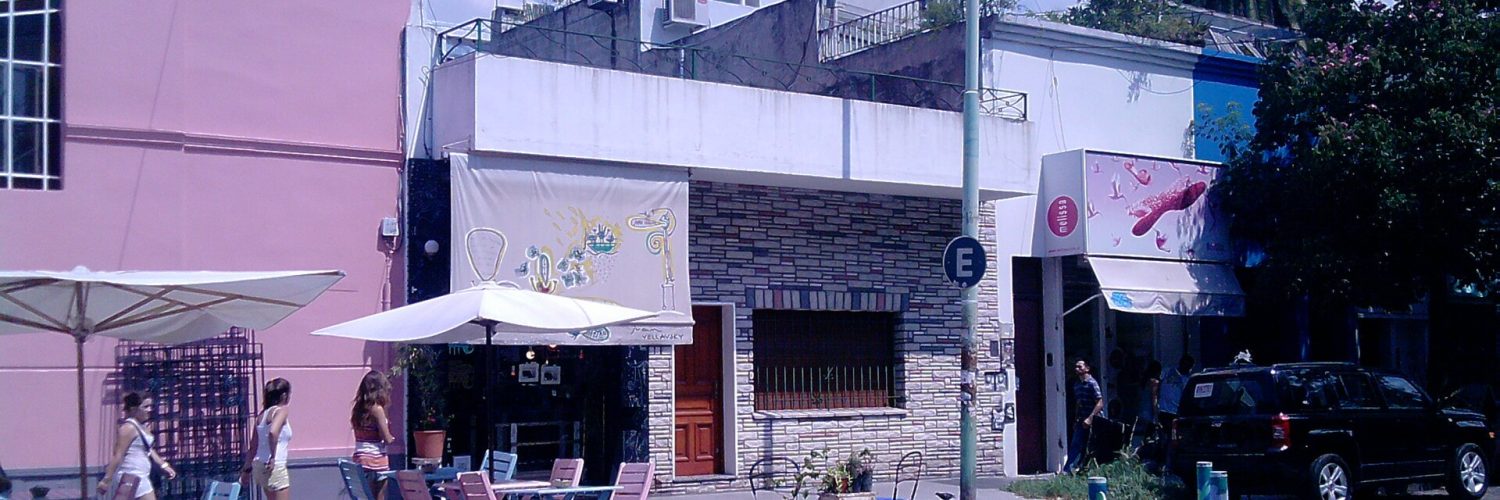
Palermo is enormous, and the name alone tells you almost nothing, so it gets sub-divided. Palermo Soho is low-rise, leafy, and dense with restaurants, bars, boutiques and boutique hotels — the highest concentration of things you would actually walk to. Palermo Hollywood, across the railway, is slightly less polished and slightly cheaper, with the same restaurant culture. Palermo Chico and Botánico are quieter and greener, near the parks and MALBA.
Who it is for: first-time visitors, anyone travelling for the food, anyone who wants to walk home at midnight without thinking about it. Who it is not for: anyone whose priority is the historic centre, which is a 20-minute taxi away.
Recoleta — grander, calmer, older
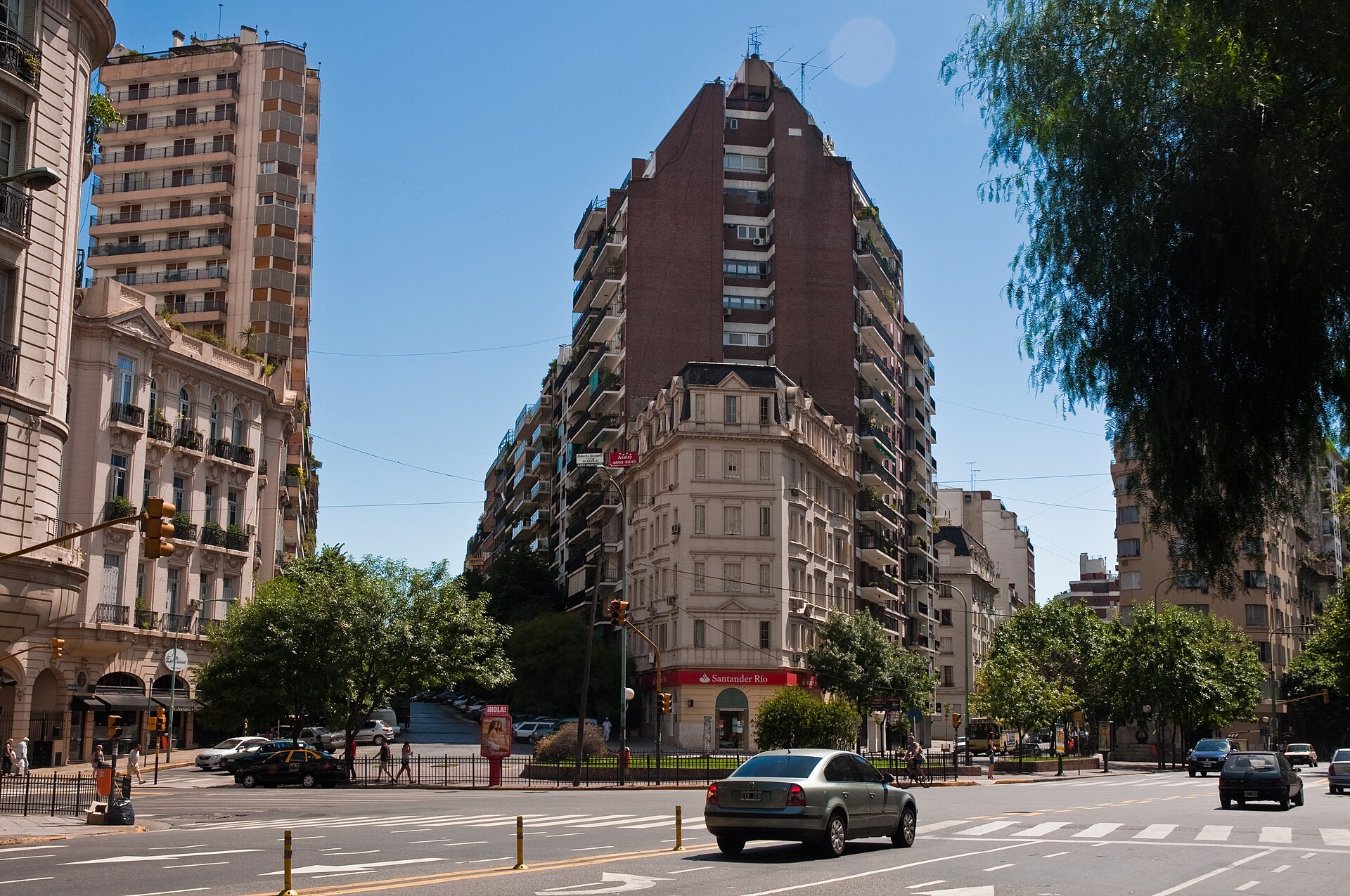
Wide avenues, Belle Époque apartment blocks, the famous cemetery, the Fine Arts Museum, and the city’s most established luxury hotels. It is more formal than Palermo and considerably quieter at night. Distances are walkable to the centre in a way Palermo’s are not.
Who it is for: travellers who want a calm base, older visitors, anyone here for museums and architecture rather than nightlife.
San Telmo — the atmospheric gamble
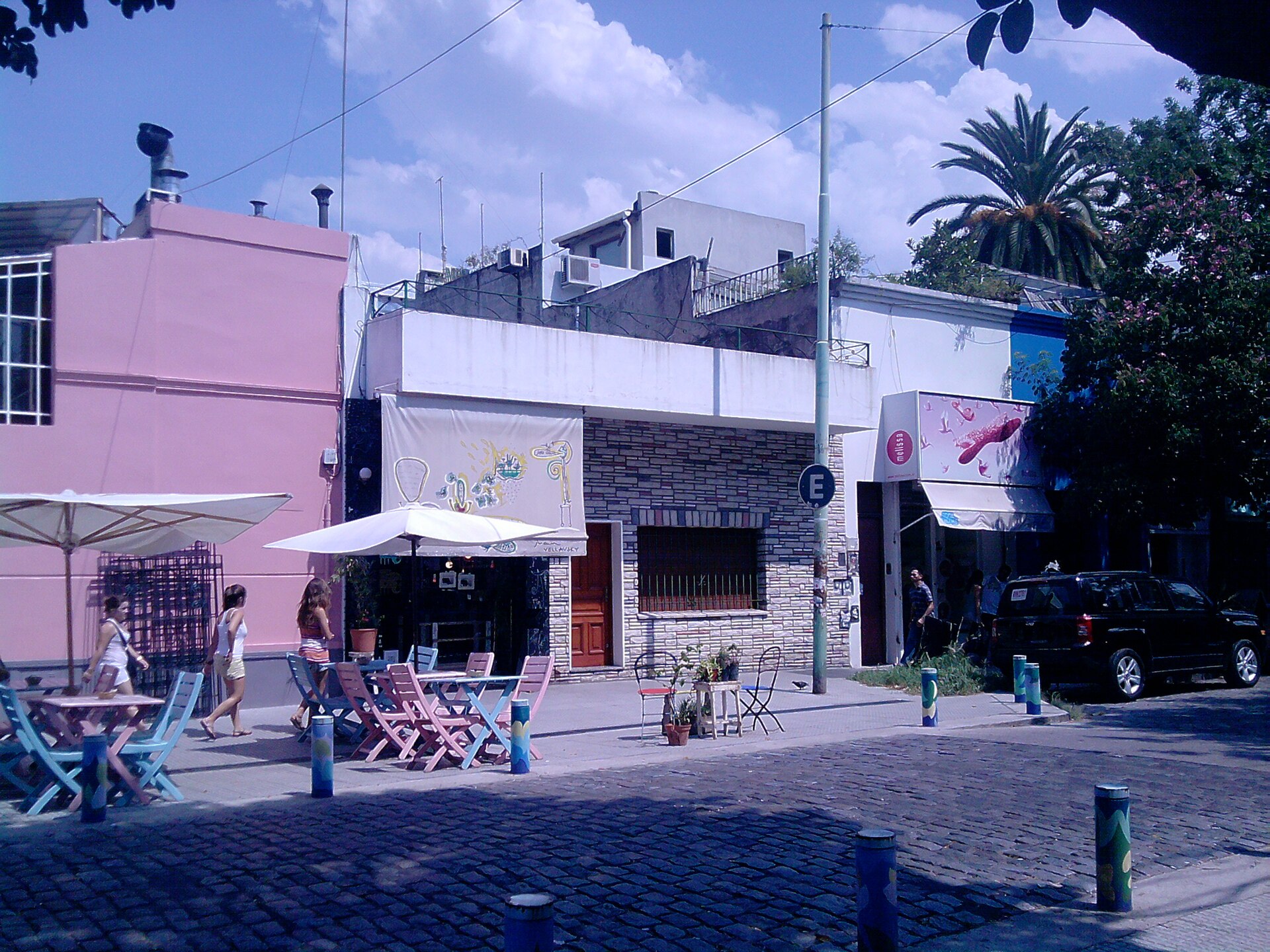
The oldest barrio: cobbles, colonial and early-republican buildings, antique shops, the Sunday fair on Defensa, and the covered market. It has real texture and the best-value characterful accommodation in the city.
It is also the neighbourhood where the honest caveat belongs. San Telmo is fine by day and busy on Sundays, but it empties at night and the blocks towards the south and towards Constitución are ones where local advice is to take a taxi rather than walk after dark. That is not a reason to avoid staying here. It is a reason to check exactly which block your accommodation is on.
Puerto Madero — polished and slightly hollow
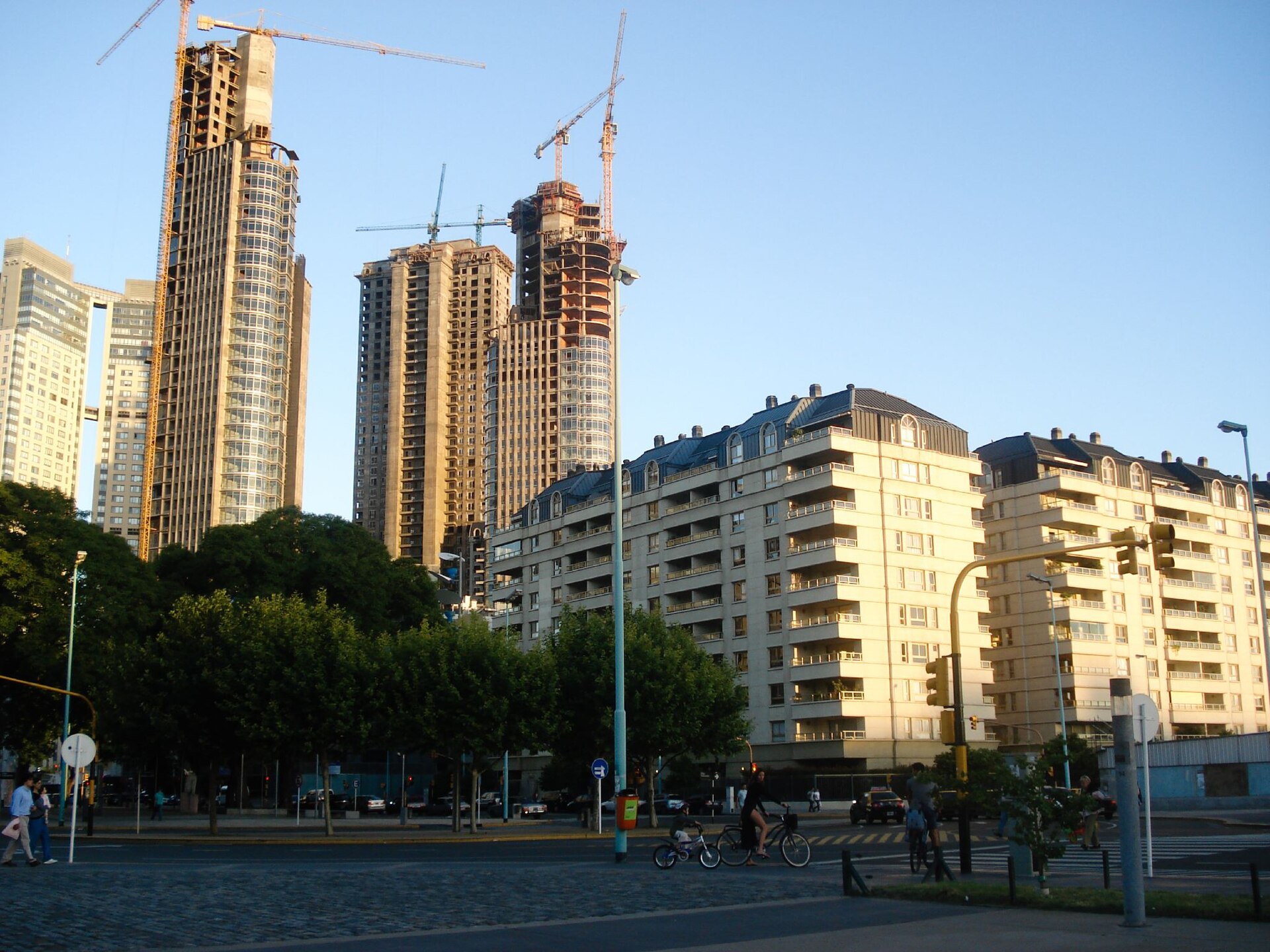
The redeveloped docklands: converted brick warehouses on one side of the water, glass towers on the other, the Puente de la Mujer in between. It is the safest-feeling part of the city and the most obviously modern.
The honest assessment is that it is also the least Argentine part of Buenos Aires. Restaurants are priced for expense accounts, there is no neighbourhood life, and you will taxi out of it for everything. Who it is for: business travellers, families who prioritise a sense of security over character, and anyone with an early Ezeiza departure who wants a straightforward run to the motorway.
Microcentro, Monserrat and San Nicolás — cheap for a reason
This is the historic and financial core: Plaza de Mayo, the Casa Rosada, Teatro Colón, Avenida Corrientes and its bookshops. Rates are noticeably lower than Palermo or Recoleta, and everything central is on your doorstep.
The trade-off is that the microcentro is an office district. It is busy and interesting Monday to Friday during working hours and unnervingly empty on Sunday evening. Petty theft and phone-snatching are the realistic risk, not violence. If you are a repeat visitor who wants to be near Corrientes and does not mind the deadness, it is good value. For a first trip, the savings rarely justify it.
Belgrano, Colegiales and Villa Crespo — where the value is
North and west of Palermo, these are residential barrios with subte access, ordinary prices, good local food and almost no tourists. Villa Crespo in particular has become the overflow for Palermo’s restaurant scene at lower rents. Belgrano has the Chinatown and a genuinely pleasant residential feel.
Who it is for: anyone staying two weeks or more, anyone travelling on a budget who does not want to compromise on safety, and returning visitors.
La Boca — visit, do not sleep
Caminito is worth an afternoon and the Bombonera is worth a pilgrimage if you follow football. Staying overnight in La Boca is not advised, and local opinion on this is unusually unanimous: the tourist strip is a few blocks and the surrounding area is not one to wander at night. Go, enjoy it, leave before dark.
What things actually cost
Argentine prices in dollar terms have moved a great deal since 2023 — upward. Buenos Aires is no longer the bargain it was in the depths of the currency gap, though it remains cheaper than comparable European or North American capitals. Rather than quote figures that will be stale within months, the more useful guidance is structural:
- The 21% exemption is the single largest lever you control. It is worth more than moving down a category of hotel.
- Palermo and Recoleta carry a premium of roughly a third over Villa Crespo or Belgrano for equivalent quality.
- Apartment rentals price better than hotels for stays over five nights, but check whether the platform’s payment flow preserves the IVA exemption — some do not, and that quietly erases the saving.
- January and February are low season, because it is high summer, humid, and half the city is at the coast. Rates drop.
Search live rates rather than trusting any published number, including ours:
What is worth booking before you arrive
Most of Buenos Aires does not require advance tickets. Three things do, and they are the three most often missed.
Teatro Colón runs guided tours of the auditorium and they sell out, particularly the English-language slots. If you can get a cheap upper-tier seat for an actual performance instead, take it — you see the same room, hear what it was built for, and often pay less than the tour.
Recoleta Cemetery now charges non-resident admission and the guided walks are limited in size. It is worth doing with a guide, because unguided it is a very large maze of very similar marble.
A tango show, if you want one, splits into two categories: the large dinner-and-show productions aimed squarely at visitors, and the smaller milongas where people actually dance socially. The second is cheaper, more interesting, and requires no booking — just a willingness to sit at the edge and watch for an hour before anyone talks to you.
Live availability and current prices for the ticketed ones:
Getting around from wherever you land up
The Subte is cheap, fast, and closes early — roughly 10pm on weekdays and earlier on Sundays. You need a SUBE card, sold at station kiosks and many corner shops, and it also works on buses. Buy one on day one; a single SUBE can be shared across a couple travelling together on the subte, though not on every line configuration, so buy two if in doubt.
The colectivo bus network is dense, runs all night, and is how the city actually moves. It requires a SUBE card — drivers do not take cash.
Ride-hailing apps operate and are widely used. Street taxis are legitimate and metered; the airport is the exception where you should book ahead.
Buenos Aires is also flat, gridded and surprisingly walkable, with an extensive protected bike lane network. Distances are longer than they look on a map because the blocks are uniform and the city is large — Palermo to Plaza de Mayo is around 8 km.
Practical notes on safety, without the melodrama
Buenos Aires is a large Latin American capital with a petty-crime problem and not a violent-crime problem, as far as visitors are concerned. The realistic risks are phone snatching, bag theft in cafés, and distraction scams. The realistic mitigations are equally ordinary: do not use your phone standing still on the street, keep your bag on your lap and not on the back of the chair, and take a taxi rather than walk after dark in San Telmo south, La Boca, Constitución and Retiro around the bus terminal.
One local specific: counterfeit banknotes still circulate, and the 1,000 and 2,000 peso notes are the ones to look at. Change money at a bank or a licensed casa de cambio, not from someone shouting “cambio” on Florida Street.
When to go
Seasons are inverted. March to May and September to November are the best months: mild, dry-ish, and the jacarandas flower in late October and early November, which is the single prettiest thing the city does. December to February is hot and humid, the city partially empties, and rates soften. June to August is cool rather than cold, grey, and the cheapest — and the tango and theatre seasons are in full swing indoors.
A short checklist before you book
- Confirm the rate you are booking allows payment by foreign card at the property, so the 21% exemption applies.
- Check which airport your flights use — EZE and AEP are an hour apart across the city.
- Check the specific block, not just the barrio, especially in San Telmo and near Retiro.
- If you are staying five nights or more, compare apartments against hotels — but verify the payment flow.
- Buy a SUBE card on arrival day.
Further reading
- Things to do in Buenos Aires — the companion guide to this one, covering what to actually do once you have a bed.
- Domestic flights in Argentina — which internal routes are worth flying and which are better by bus.
- Getting a data connection in Argentina — useful before you rely on ride-hailing apps from the airport.
- Things to do in Lima — the other South American capital most often paired with Buenos Aires on a longer trip.
Add comment