The most consequential accommodation decision you will make in Cusco is whether to sleep in Cusco at all on your first night. The city sits at 3,399 m (11,152 ft). Most visitors arrive by air from Lima, which is at sea level, which means they gain more than three vertical kilometres in ninety minutes and then try to walk uphill to a hotel in San Blas with a suitcase. A meaningful share of the “I lost two days of my trip” stories come from that single hour.
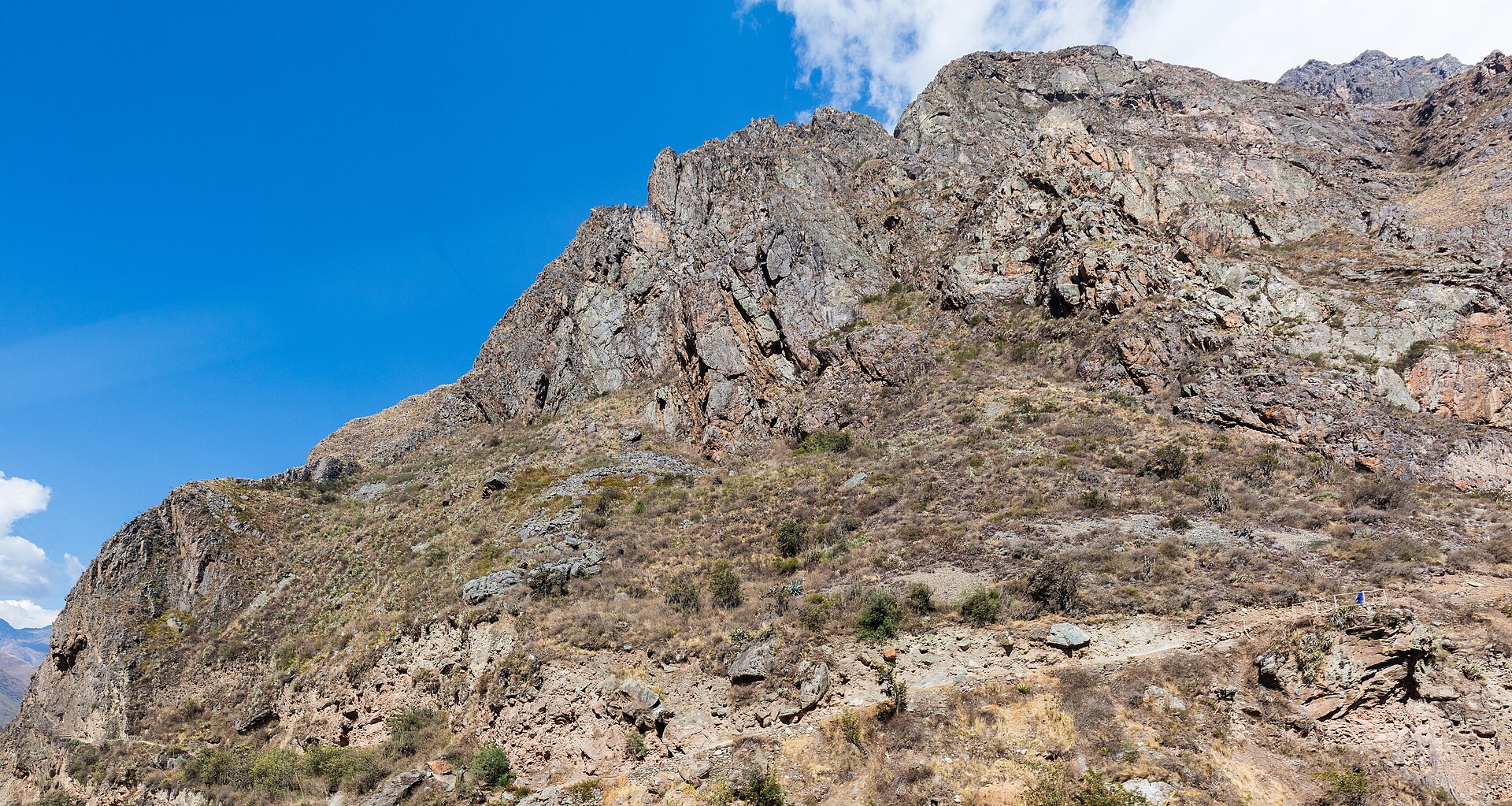
The Sacred Valley — Urubamba, Ollantaytambo, Yucay — sits between roughly 2,800 and 2,900 m. That is 500 to 600 m lower than Cusco. Sleeping there for the first night or two, then coming up to Cusco already partly adapted, is the standard advice from Peruvian guides and mountain medicine alike, and it also happens to put you closer to Machu Picchu. It is the rare travel tip that is both healthier and more convenient.
So this guide covers two questions at once: which Cusco neighbourhood suits which kind of trip, and when the right answer is “not Cusco yet”.
The altitude, in plain numbers
- Cusco — 3,399 m / 11,152 ft
- Urubamba — 2,871 m / 9,419 ft
- Ollantaytambo — 2,792 m / 9,160 ft
- Machu Picchu — 2,430 m / 7,972 ft, which is lower than all of the above
- Aguas Calientes — 2,040 m / 6,693 ft
Two things follow. First, Machu Picchu is not the altitude problem; Cusco is. Second, if you feel genuinely bad in Cusco, the fastest fix is not a pill, it is a taxi down to Urubamba — the drop of roughly 600 m usually clears a headache inside an hour or two. Keep that in your back pocket.
The standard precautions are dull and they work: no alcohol and no heavy meals the first evening, more water than feels necessary, nothing strenuous for 48 hours, and an afternoon nap on arrival day rather than a walking tour. Coca tea is culturally universal and mildly helpful; acetazolamide is a real drug with real side effects and is a conversation with your doctor before you fly, not a decision made in a pharmacy on Avenida El Sol.
The neighbourhoods, and who each one is for
Centro Historico — around the Plaza de Armas
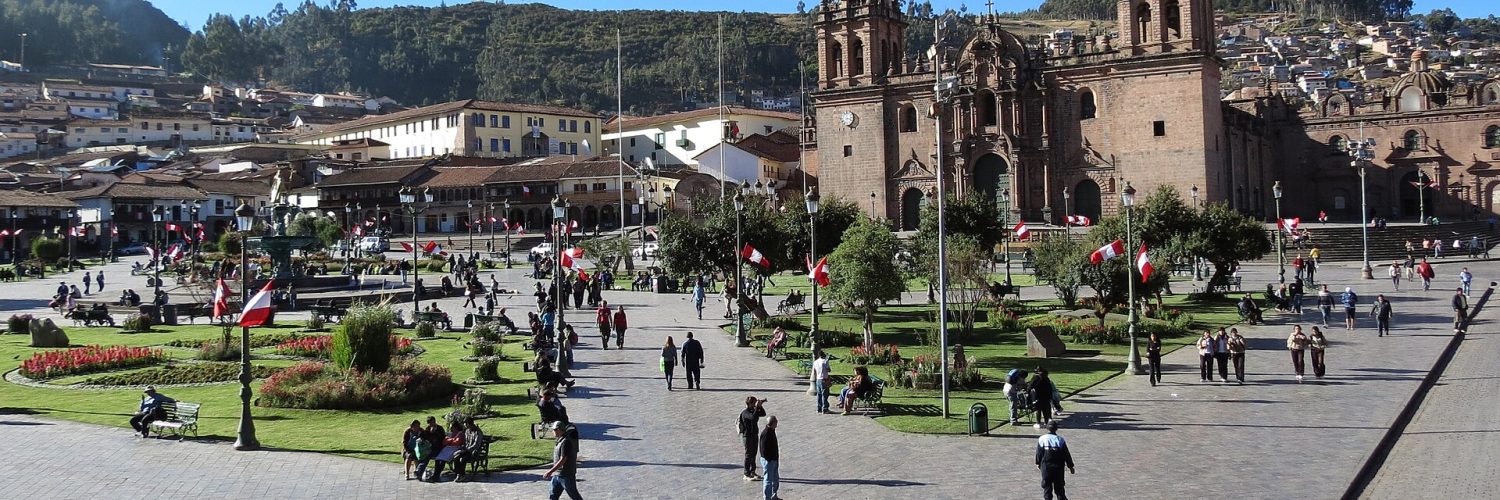
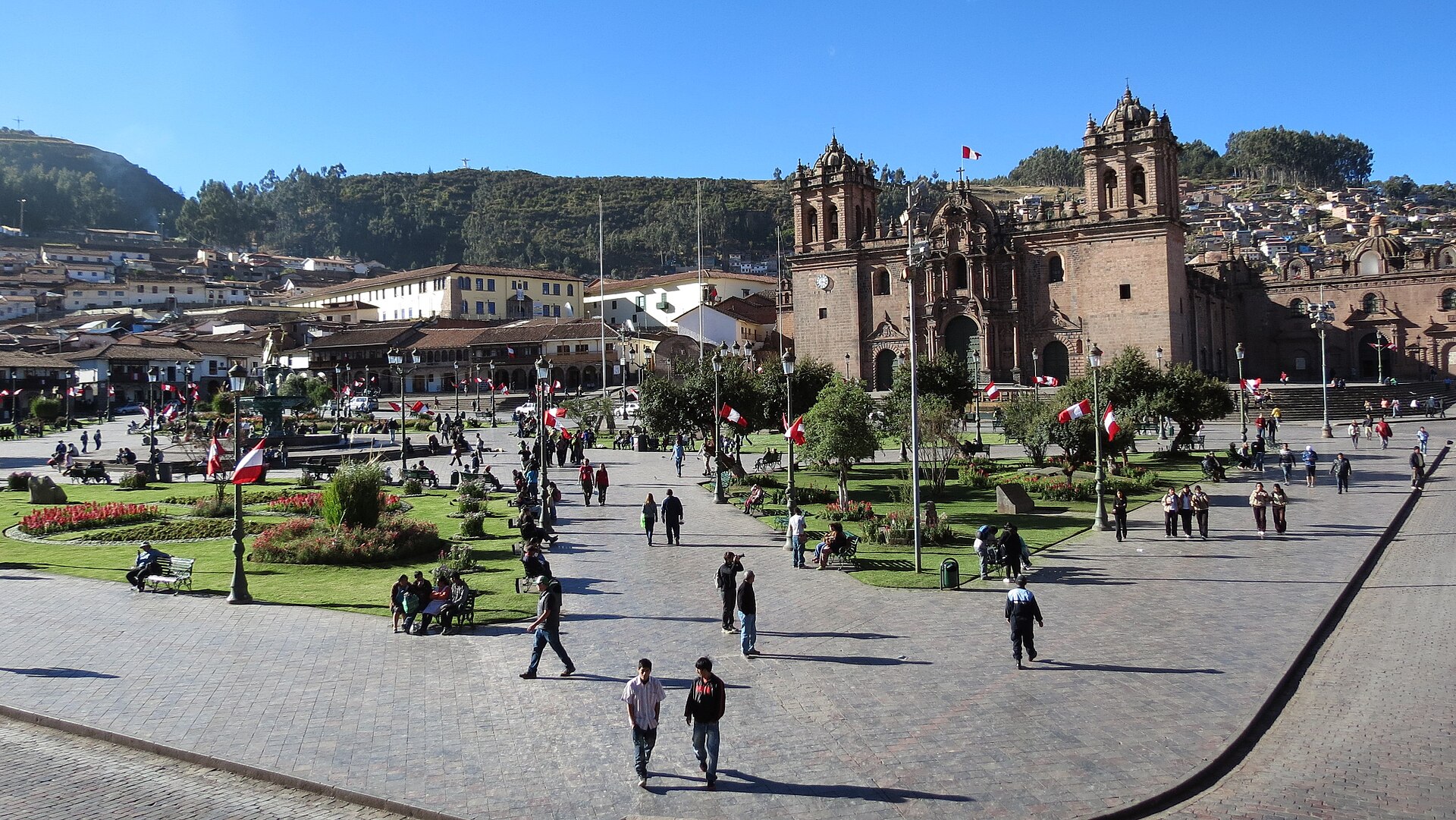
The default, and for a first visit usually the right one. You are inside a five-minute walk of the cathedral, Qorikancha, the tour agencies, the ATMs and about two hundred restaurants. It is also the flattest part of the historic city, which matters more than it sounds at 3,400 m. This is where the international four- and five-star hotels sit, several of them in genuine colonial convents, and it is the most expensive square kilometre in the region.
The cost: noise. The plaza has bars, and Cusco’s nightlife runs late and loud. Ask for an interior-facing room, and treat any listing that describes itself as “in the heart of the action” as a warning.
San Blas — the hillside
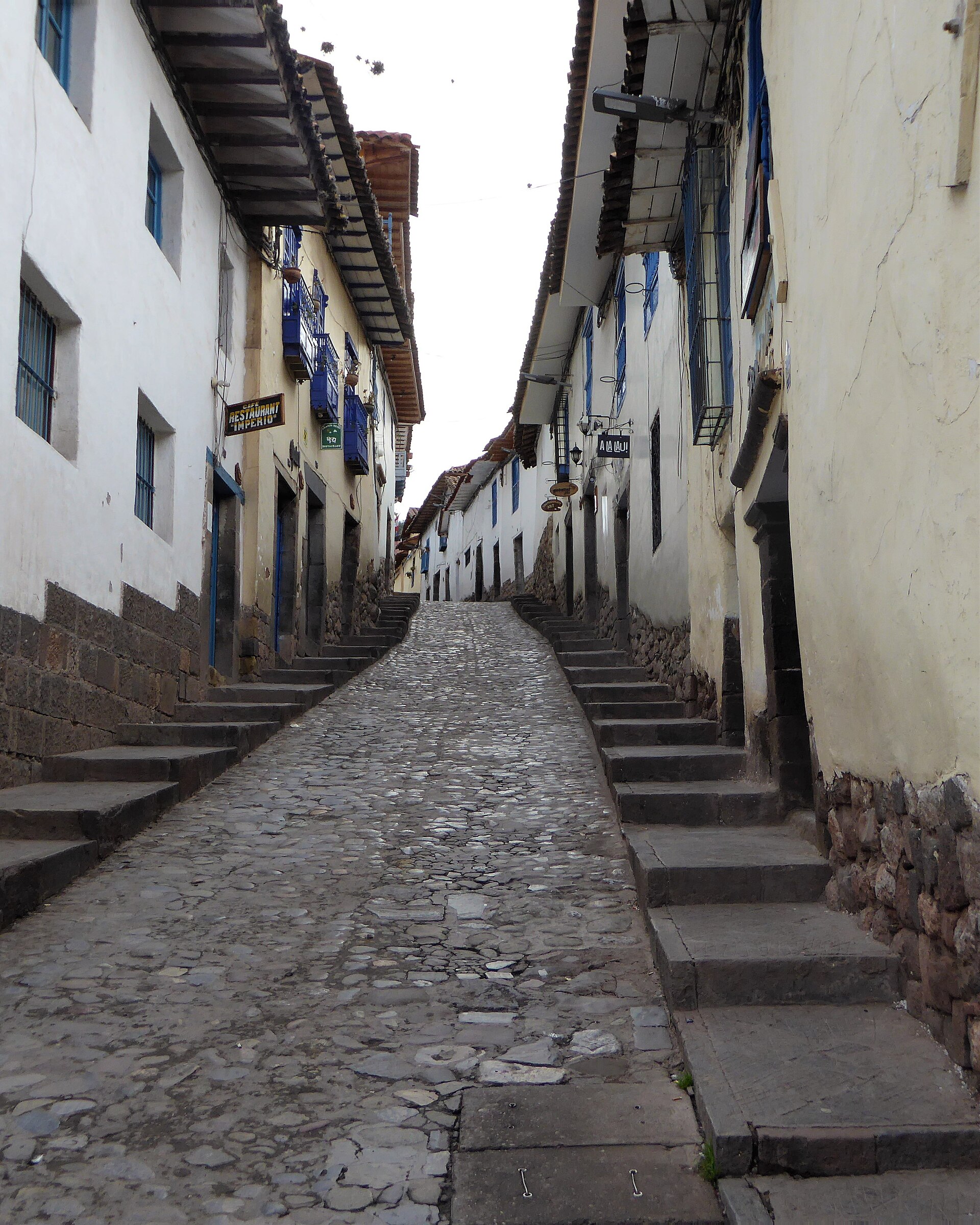
The postcard neighbourhood: whitewashed walls, artisan workshops, the small viewpoints everyone photographs, and the best concentration of small owner-run hotels in the city. It is no more than about fifteen minutes on foot from anywhere else in the historic centre.
The cost, and it is a real one: those fifteen minutes are uphill on cobbles, at altitude, and the Cuesta de San Blas is steep enough that taxis will not always take you to the door. On day one that climb is genuinely hard. If you are arriving straight from sea level, staying in San Blas is a choice to make for nights three and four, not night one.
San Pedro and the market side
West of the centre, around the San Pedro market and the station. This is where the hostels and the cheapest guesthouses are, and where you get the best food per sol in the city. It is livelier and rougher, with more pickpocketing around the market itself. Good for budget travellers and people who intend to eat where locals eat; poor for anyone wanting quiet.
Wanchaq and Avenida El Sol
Modern, residential, on the flat, close to the airport and to the bus terminals. Nobody comes to Cusco for Wanchaq, but it is the practical choice if you have an early flight, a lot of luggage, or a family that will not enjoy cobblestones — and it is noticeably cheaper for the same standard of room.
The Sacred Valley — Urubamba, Yucay, Ollantaytambo
An hour to ninety minutes from Cusco by road. Lower, warmer during the day, much quieter, and home to the region’s best resort hotels. Ollantaytambo has the additional advantage of being the departure station for most Machu Picchu trains, which removes a 05:00 transfer from your itinerary. The trade-off is that you are not in a city: fewer restaurants, fewer agencies, and everything requires a taxi.
A booking pattern that works
For a typical seven-night trip arriving from Lima:
- Nights 1–2: Sacred Valley (Urubamba or Ollantaytambo). Gentle acclimatisation, Pisac and Ollantaytambo ruins, Moray and the Maras salt pans.
- Night 3: Ollantaytambo or Aguas Calientes, positioned for Machu Picchu.
- Nights 4–7: Cusco itself, now adapted, with San Blas or the Centro Historico both comfortable.
If you only have four nights, invert it: one night in the valley, three in Cusco. If you are arriving overland from Puno or Arequipa you are already acclimatised and none of this applies — book Cusco directly.
Rooms in the historic centre and the valley resorts sell out for the June-to-August dry season and for the days around Inti Raymi (24 June) months in advance. Shoulder months are far easier and, in Cusco’s case, often better weather than the reputation suggests.
What your hotel will not sell you: the Boleto Turistico
Almost every site you will want to see around Cusco is bundled into the Boleto Turistico, the city tourist ticket. It is worth understanding before you arrive, because your hotel cannot book it for you and neither can anyone online.
- Full ticket (Integral) — S/130 for foreign adults, valid 10 days, covers 16 sites.
- Partial circuits — S/70 each. Circuit I is the city sites, Circuit II the city plus the South Valley, Circuit III the Sacred Valley (Pisac, Ollantaytambo, Moray, Chinchero).
Two warnings that matter. First, there is no legitimate online sales channel: it is bought in person, with ID, at the COSITUC office or at the first site you enter. Any website selling it in advance is a reseller adding a margin. Second, counterfeits circulate around the COSITUC building and site entrances — a genuine ticket carries a holographic strip and your passport number. If someone offers you a discount on it in the street, it is fake.
Note also what the Boleto does not include: Machu Picchu, Qorikancha’s interior, the cathedral, and the Rainbow Mountain sites. Those are all separate.
Getting from the airport to your bed
Alejandro Velasco Astete airport (CUZ) is inside the city, about 6 km from the Plaza de Armas — one of the shortest airport runs of any major destination. A taxi takes 15 to 25 minutes depending on traffic. Official airport taxis queue inside the terminal at a fixed rate; the cheaper street taxis outside the perimeter require haggling and are best skipped on the day you land at altitude with luggage.
If your plan is the one recommended above — straight down to the Sacred Valley on arrival — that is a 60 to 90 minute road transfer, and it is worth pre-booking rather than negotiating it in the arrivals hall while short of breath. The same applies in reverse for early Machu Picchu train departures.
Should you rent a car?
For Cusco itself, no. The historic centre is a grid of one-way cobbled lanes with restricted access, parking is scarce and expensive, and taxis across town cost a few soles. A car sitting in a hotel garage for four days is money burned.
For the Sacred Valley, it is a genuine question. The Pisac–Urubamba–Ollantaytambo road is paved and straightforward, and the Moray and Maras salt pans are the classic case where a car beats a tour: you arrive before or after the coach groups and stay as long as you want. The arguments against are honest ones — Peruvian mountain driving at night is not for the inexperienced, fuel stations thin out fast, and a driver-plus-vehicle for a day is often close in price to a rental once you count insurance. Take a car if you want the valley on your own schedule for two or three days; skip it if you are doing standard day tours.
Eating, and the first-night rule
Cusco’s restaurant scene is unusually good for a city of its size, with a serious high end (Chicha, Cicciolina, MAP Cafe) and a floor of excellent cheap food in the markets. Things worth trying: chiri uchu, the cold ceremonial dish eaten at Corpus Christi; rocoto relleno; alpaca, which is genuinely good and much leaner than beef; and the enormous choclo con queso that appears at every roadside in the valley.
The first-night exception stands. Whatever you eat on the evening you arrive, keep it small and skip the pisco sour. Altitude, alcohol and a heavy meal is the combination that produces the classic miserable first night, and Cusco’s restaurants will still be there on Tuesday.
Money, water and small practicalities
ATMs are plentiful around the Plaza de Armas and on Avenida El Sol; many charge a fee and dispense both soles and dollars — take soles. Cards are accepted in mid-range and up, cash is essential in markets, on buses, and for the Boleto Turistico. Tap water is not drinkable; every hotel provides boiled or bottled water, and a filter bottle saves a surprising amount of plastic over a week.
Cusco is between 10 and 20°C by day for most of the year and can drop close to freezing on clear winter nights (June–August), when many older buildings have no heating at all. Ask about heating specifically — “fireplace in the lobby” is not heating. The rainy season runs roughly November to March, with January and February the wettest; the Inca Trail closes for maintenance every February.
Quick answers
- Best area for a first visit: Centro Historico, interior-facing room.
- Best area for looks and small hotels: San Blas, from night three onwards.
- Best area on a budget: San Pedro.
- Best area with an early flight or heavy bags: Wanchaq.
- Best first night off a Lima flight: not Cusco — Urubamba or Ollantaytambo.
- Nights needed: five minimum to include Machu Picchu without rushing; seven is comfortable.
Further reading
- Domestic flights in Peru — including why the Lima–Cusco routing deserves more thought than it usually gets.
- Landing in Lima — most Cusco trips begin with a night at sea level, and Lima’s airport run is its own problem.
- Things to do in Lima — what to do with the day or two before you fly up.
Cusco is one of the few places where the accommodation decision is partly a medical one. Book the altitude first, the neighbourhood second, and the view last.