
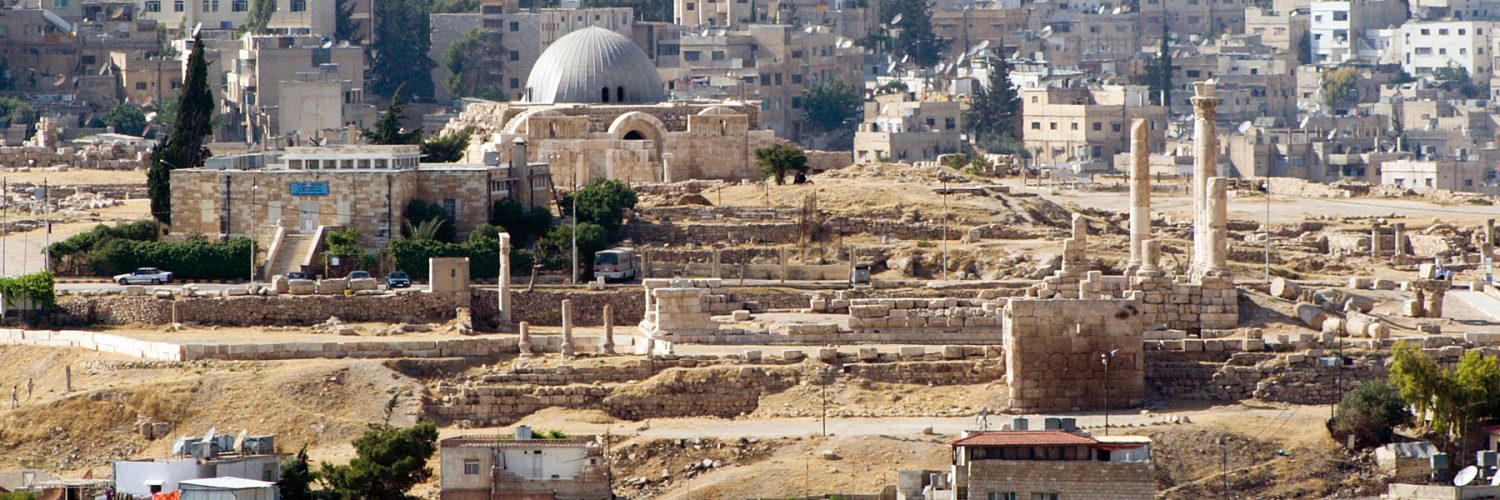
Amman doesn’t have a single old town to anchor it. There’s no central square every hotel claims to be “steps from,” no one historic core the way Rome has its centro storico or Prague has Staré Město. Instead the city sprawls across nineteen numbered hills (jabals), each with its own character, its own steep one-way streets, and its own commute into everywhere else. Where you book here changes your trip more than in almost any other capital — not because any one area is unsafe or bad, but because the “wrong” one for your trip can mean twenty minutes of taxi time to reach everything you actually came for.
Why Amman looks the way it does
Amman was a small Circassian and Ottoman-era town of a few thousand people when it was picked, almost by circumstance, as the capital of the newly created Emirate of Transjordan in 1921 — it had a railway stop, water, and not much else competing for the job. What follows is a story of repeated, sudden population surges rather than steady organic growth: Palestinian refugees in 1948 and again in 1967, Iraqis after the Gulf War and the 2003 invasion, and Syrians after 2011 each arrived in waves that the city absorbed by building outward and upward across whichever hill had room, rather than infilling a historic center that never really existed at this scale. The result is a capital that reads less like a single city and more like a federation of hill-villages that happen to share a flag — which is exactly why “where to stay” matters more here than in cities with one obvious downtown.
Getting in from Queen Alia
Queen Alia International Airport sits about 32 km south of the city center. The official fixed-rate airport taxi costs roughly JOD 22 (about $31) by day and JOD 24 ($34) at night, with vouchers issued at arrivals kiosks, and takes 30–45 minutes depending on traffic and your exact destination. The Sariyah airport bus runs 24 hours, every 30 minutes, for about $5, but it terminates at Tabarbour station in central Amman — workable if your hotel is nearby, an extra taxi hop if it isn’t. Careem and Uber both operate and typically land in the $21–28 range for the same ride.
Jabal Amman and Rainbow Street — first-timers
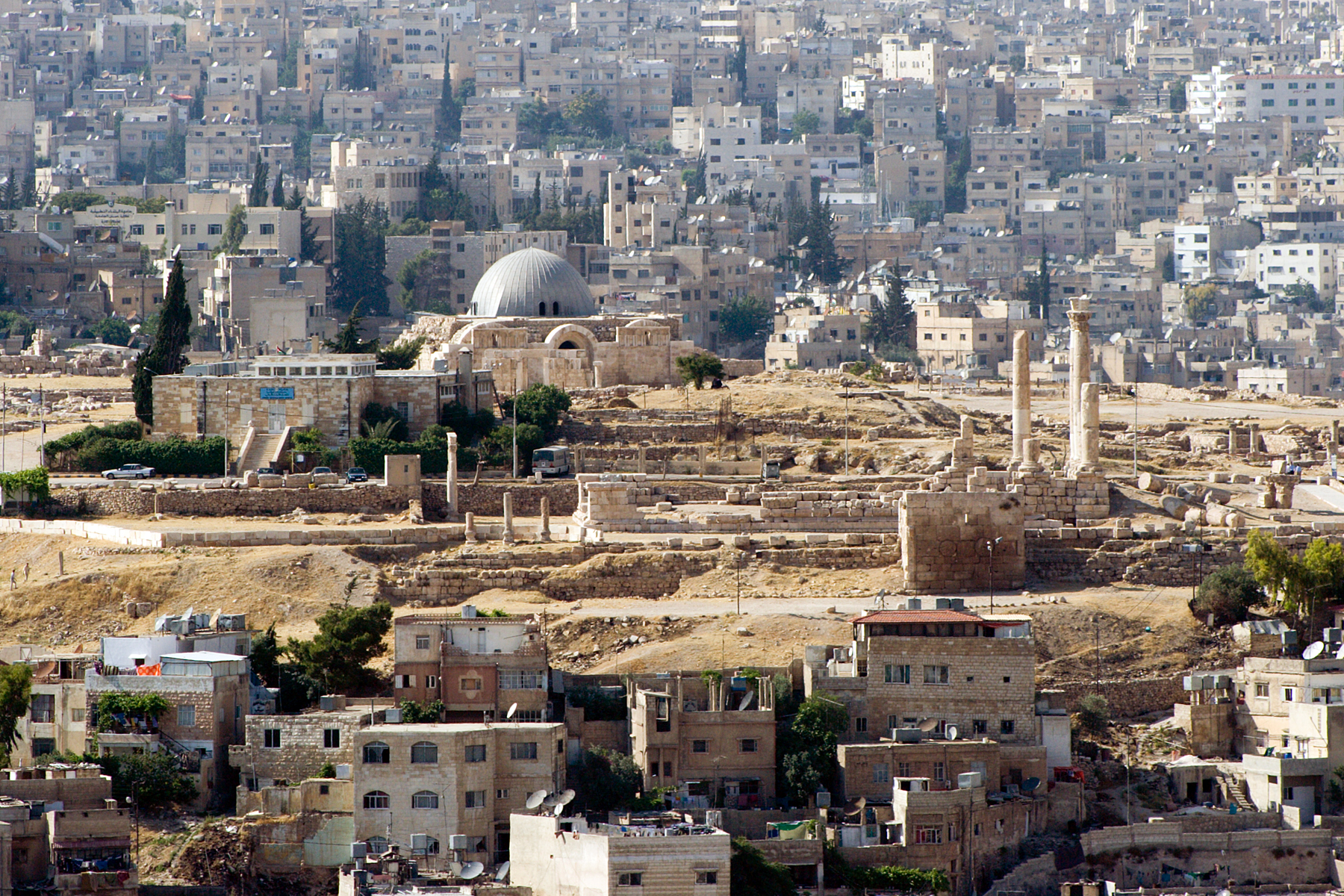
If you only stay in one area, this is probably it. Rainbow Street is the walkable spine of cafes, bookshops, and small galleries, and you’re a short taxi or a committed uphill walk from the Citadel and the Roman Theatre. It’s also genuinely hilly — expect stairs, steep sidewalks, and taxis for the return leg of most evenings out. Noise carries on weekend nights when the street fills up, which is a selling point or a drawback depending on what you want.
Abdali — the modern alternative
Abdali is Amman’s deliberately built contemporary district: flatter, easier to navigate, centered on a pedestrian boulevard with international hotel chains, shopping, and dining. You trade the old-stone atmosphere of Jabal Amman for predictability and easier logistics, and you’ll still need a taxi to reach the Citadel, the Roman Theatre, or downtown’s souks — Abdali isn’t really walkable to any of the historic sights, just to its own restaurants and malls.
Jabal Al-Lweibdeh and West Amman
Lweibdeh is one of Amman’s oldest residential neighborhoods, leafier and quieter, with independent cafes and small galleries around the Jordan National Gallery of Fine Arts — a good pick if you want a lived-in feel over a tourist strip, with the same steep-hill caveat as Jabal Amman. Further west, Swaifiyeh and Zahran hold most of the city’s five-star hotels and high-end shopping; comfortable and modern, but built around cars rather than feet, so plan on taxis for anything historic.
What to see regardless of where you sleep
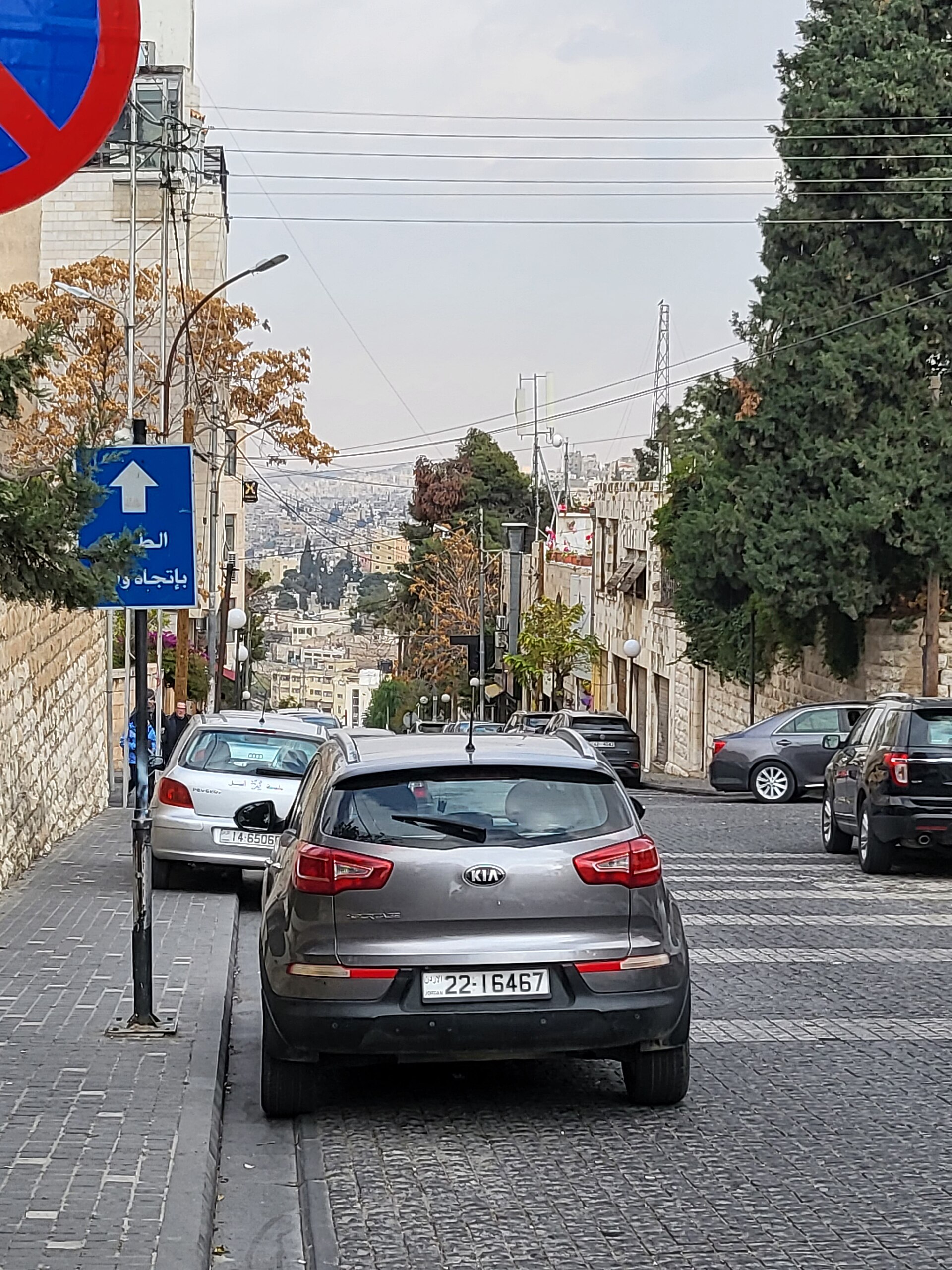
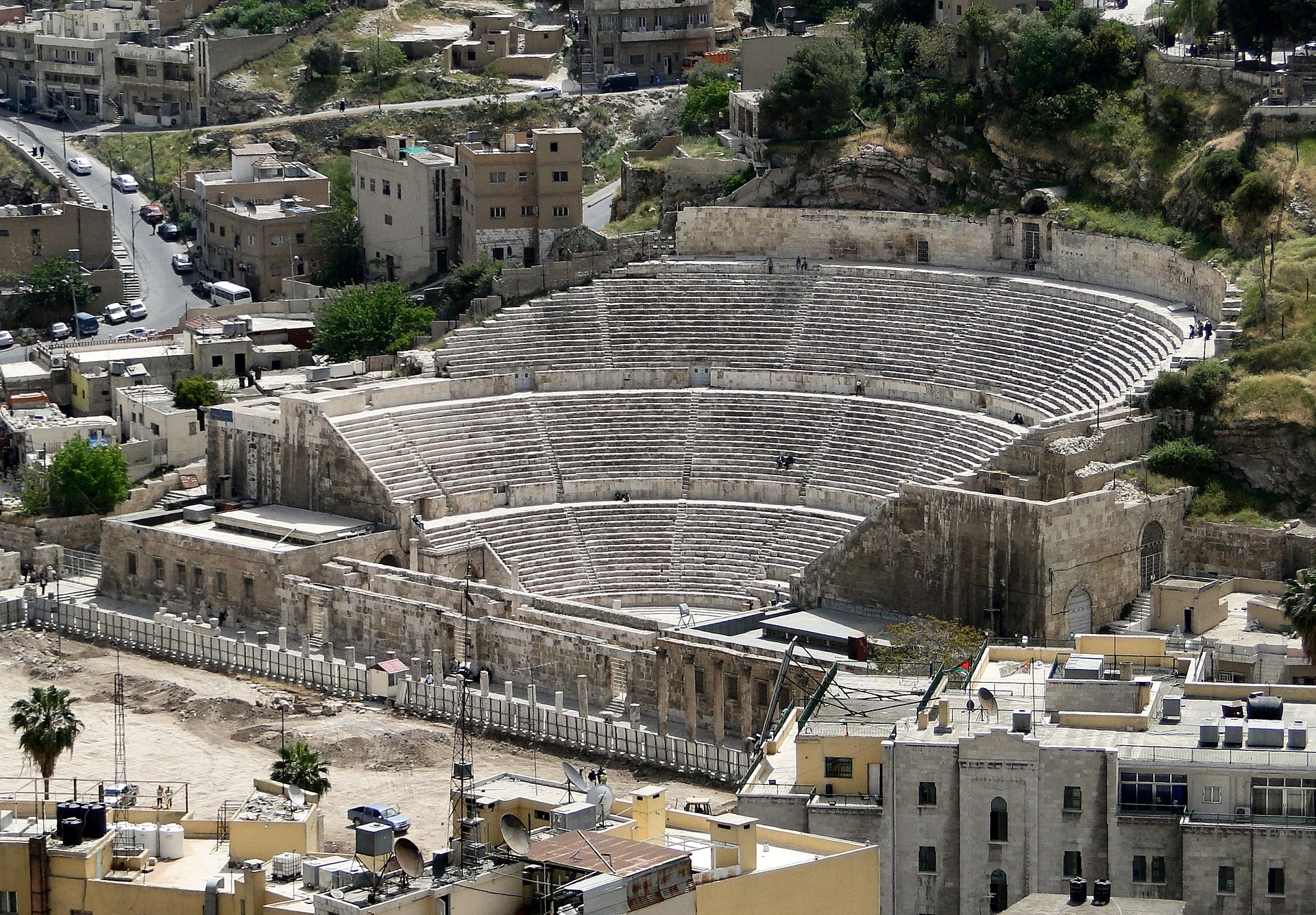
The Citadel hill (Jabal al-Qal’a) has been occupied since the Bronze Age, and what’s visible today layers Roman, Byzantine, and early Islamic Umayyad ruins on the same hilltop, including the striking columns of the Temple of Hercules. Below it, the restored Roman Theatre — carved directly into the hillside and still used for performances — anchors downtown, along with the gold-domed King Abdullah I Mosque and the older souks and gold markets nearby. None of these are more than a short taxi ride from any neighborhood above; it’s getting between your hotel and dinner each night that the hills complicate, not day-to-day sightseeing.
Day trips that make Amman worth basing in
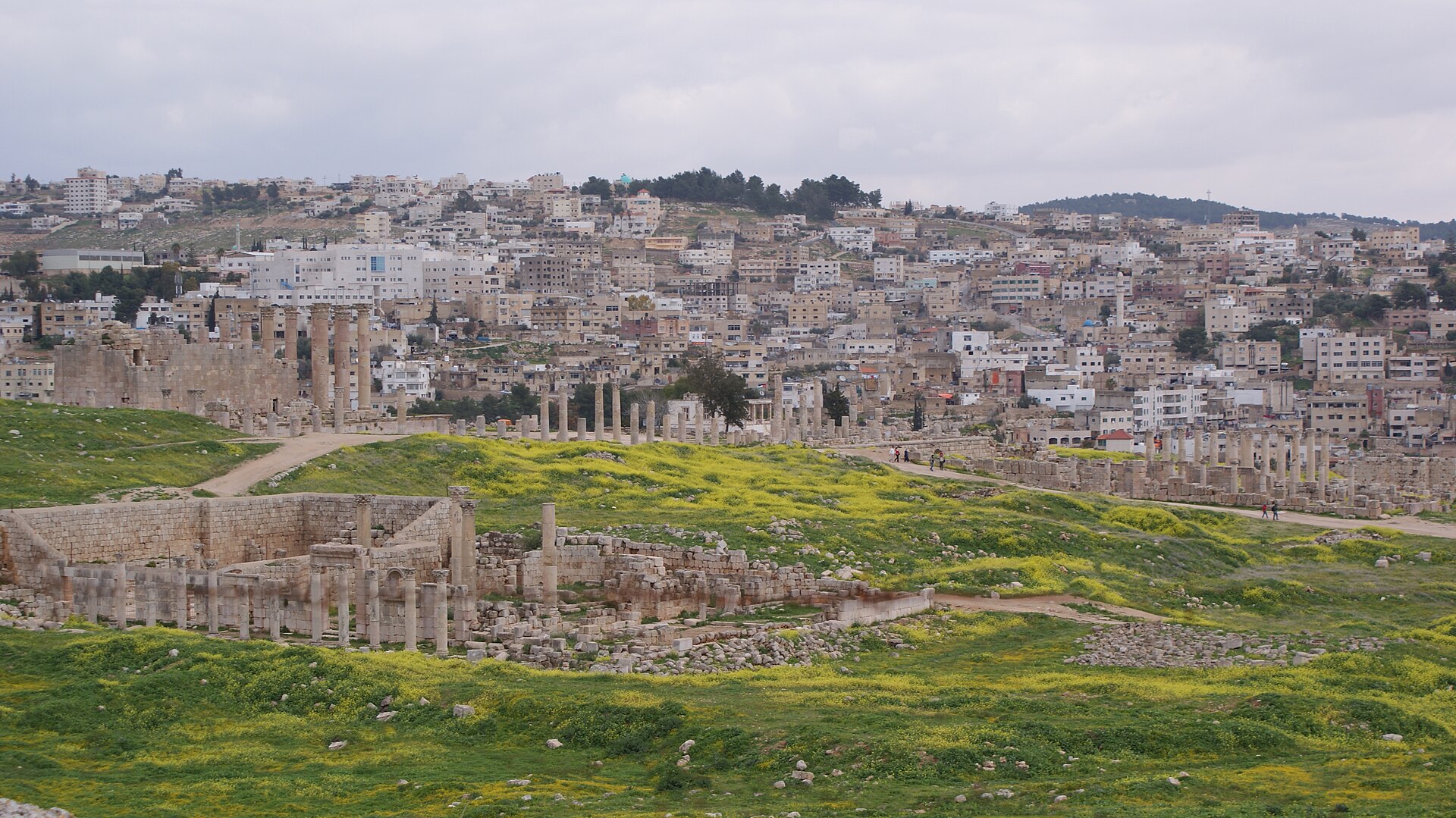
Most visitors use Amman as a base rather than a single destination, and the geography supports it. Jerash, one of the best-preserved Roman provincial cities anywhere, is about 48 km north — figure 45 minutes to an hour by car, with its colonnaded cardo and hippodrome easily filling half a day. The Dead Sea is roughly 65 km southwest, about an hour’s drive down Route 65, close enough for a half-day float-and-back. Petra is the big one: about 235 km via the Desert Highway (roughly 3 hours) or 274 km via the scenic King’s Highway (4–4.5 hours), which makes it a long day trip or, better, an overnight rather than a rushed there-and-back.
Food and practical notes
Amman’s food scene runs from plastic-chair falafel-and-hummus counters that still outclass sit-down restaurants, to a genuinely good fine-dining scene in Abdali and West Amman built around modern takes on Levantine cooking. Mansaf — lamb cooked in fermented dried yogurt (jameed) over rice — is the dish to seek out if you want something specifically Jordanian rather than broadly Levantine. Friday is the main weekly prayer day and the quietest morning in the city; many smaller shops open late or stay closed. The city is considered one of the safer capitals in the region for visitors, but as in any large city, keep the usual precautions around bags and belongings in crowded souk areas.
When to visit and what it costs
Spring (March–May) and autumn (September–November) bring the most comfortable temperatures for walking the hills between neighborhoods; summer regularly climbs past 35°C in the afternoon, and winter can bring genuinely cold nights and the occasional snow, since Amman sits at around 750–1,100 meters elevation depending on which hill you’re on. Hotel rates in Abdali and West Amman swing noticeably with conference and business travel — a slow week can undercut a busy one by 30% or more at the same property, so flexible dates are worth more here than a specific neighborhood choice if budget is the main constraint. Ramadan changes the daytime rhythm citywide: many cafes and restaurants stay closed until sunset, while the evening iftar and late-night scene more than makes up for it if you don’t mind adjusting your schedule around it.
Further reading
For nearby regional guides, see our articles on things to do in Amman, things to do in Dubai, and things to do in Istanbul.