Amman is the city people schedule 24 hours for on the way to Petra. That is a mistake, but not for the reason travel writers usually give. It is a mistake because Amman is the one place in Jordan where you can see how the country was actually assembled — and once you have seen that, Petra and Wadi Rum make a great deal more sense.
Here is the central fact. In 1921, when it was chosen as the capital of the new Emirate of Transjordan, Amman had roughly 2,000 to 3,000 residents. It was a village built around a spring and some Roman ruins. Today the metropolitan area holds around four million people. Almost nothing you see is more than a century old, except the parts that are two thousand years old, and there is very little in between.
Why the city looks like this
Amman grew in waves, and each wave was a displacement. Circassians fleeing the Russian conquest of the Caucasus were settled here by the Ottomans in the 1870s — they are the reason the village existed at all when the British went looking for a capital. Then Palestinian refugees in 1948 and again in 1967. Then Lebanese during their civil war, Kuwaitis and Palestinians after 1991, Iraqis after 2003, and Syrians after 2011.
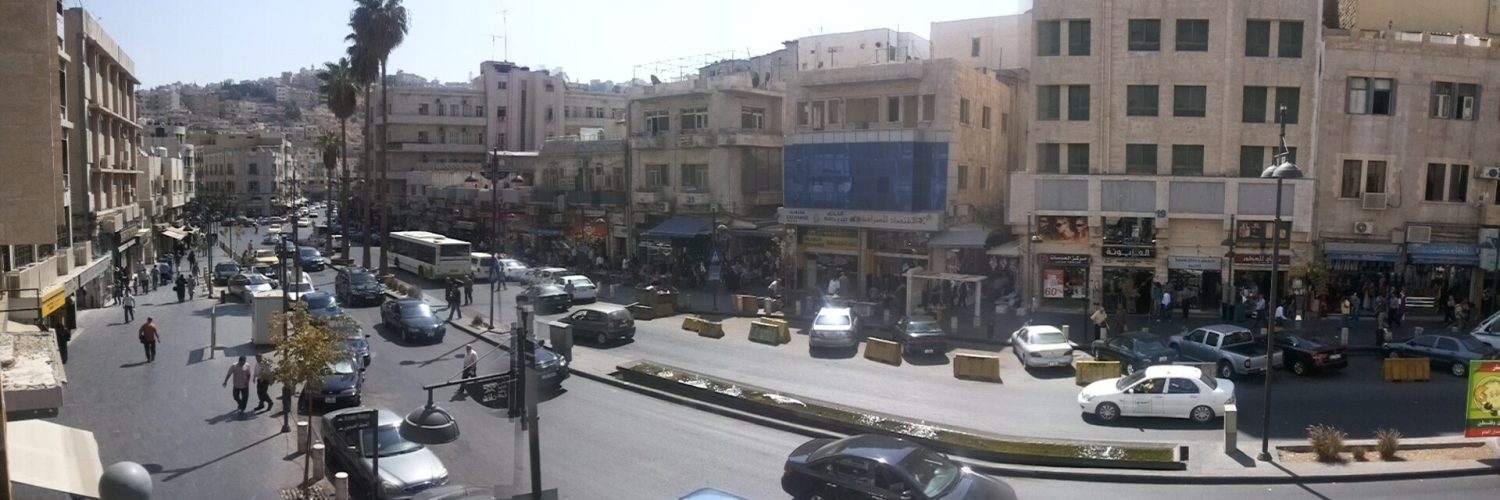
This produces a specific urban form. The city is built across a series of steep hills — jabals — with the original downtown, Al-Balad, sitting in the valley between them. Each wave of arrivals built on the next hill out. There is no single centre, no grand plan, and no coherent street grid; there is a valley floor and then houses climbing every slope around it in pale limestone, because a municipal code requires facades to be faced in local stone. That code is why the whole city is the same colour, which is the first thing anyone notices from a plane.
Getting in from the airport
Queen Alia International (AMM) is about 35 km south of the city, 30 to 45 minutes in normal traffic.
- Airport Express Bus (Sariyah). Runs roughly every 30–60 minutes between the airport and Tabarbour / North Bus Station, and takes around 45 minutes. The cheapest option by a wide margin at a few JOD.
- Airport taxi. Fixed-rate yellow taxis from the official rank, typically in the region of 20–25 JOD to central Amman. There is a posted tariff — ask to see it.
- Careem. The regional ride-hailing app works at AMM and is usually cheaper than the taxi rank. Download it before you land, because you will want it for the whole trip.
- Pre-booked transfer. Sensible if you are arriving late, travelling as a group, or heading straight south rather than into the city.
The Jordan Pass, and why it is not optional
This is the single most important piece of planning advice for Jordan, and it has nothing to do with Amman specifically. The Jordan Pass bundles entry to Petra and 40-plus other sites — including the Amman Citadel, the Roman Theatre and Jerash — and waives the 40 JOD tourist visa fee, provided you buy it before you arrive and stay a minimum of three nights.
Tiers are priced by how many consecutive days at Petra you want, starting around USD 99 for one day. Given that the visa alone is 40 JOD and a single Petra day ticket is 50 JOD, the pass pays for itself before you have visited anything else. Buy it online before your flight. There is no version of this trip where not buying it is correct.
Individual entry, if you somehow are not using the pass: the Citadel is around 3 JOD, and the Roman Theatre around 2 JOD, which also covers the two small folklore museums built into the wings of the stage.
What to see, honestly ranked
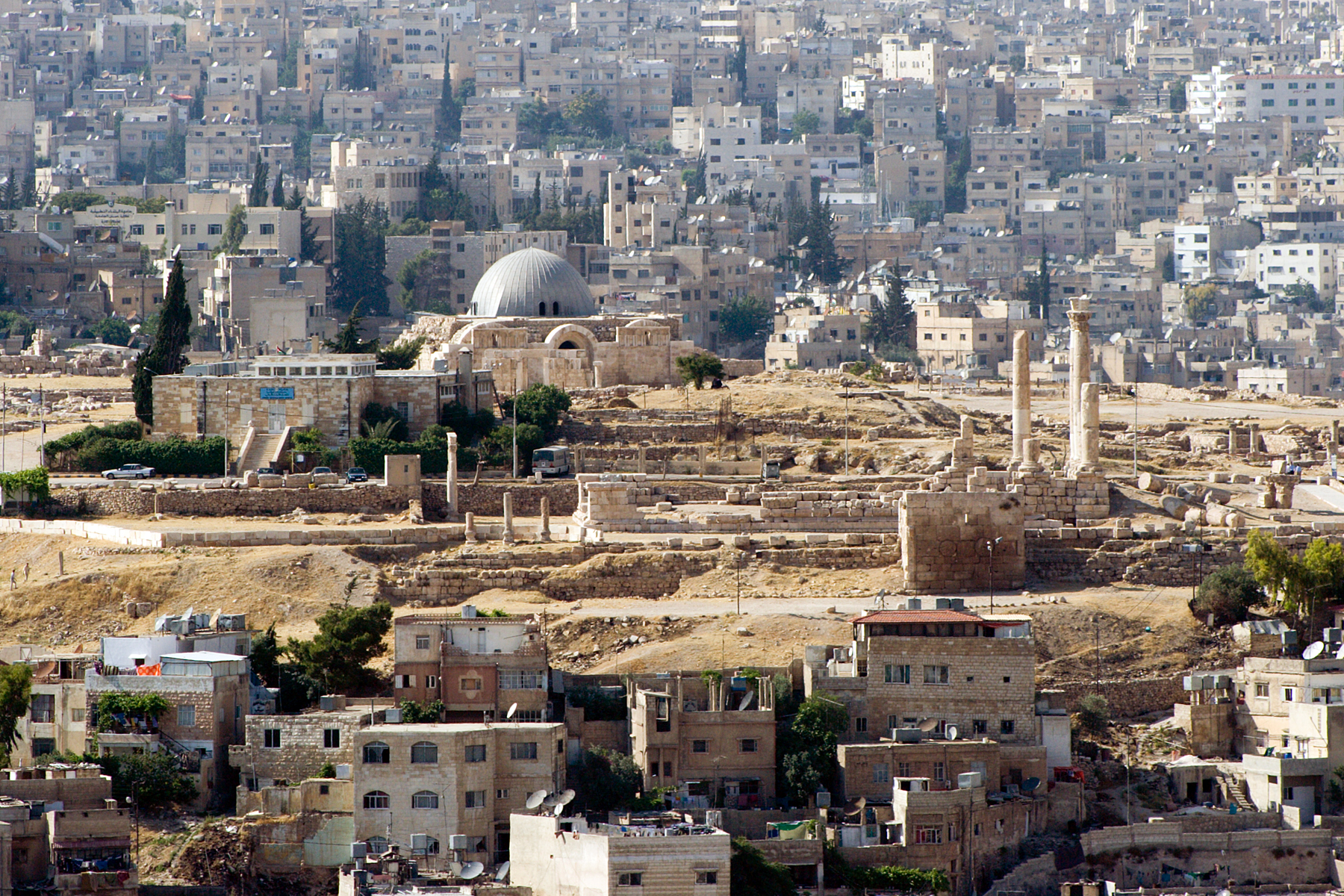
The Citadel (Jabal al-Qal’a). The best thing in the city, and it is not close. A hilltop with continuous occupation going back to the Neolithic, holding the columns of a Roman Temple of Hercules, a Byzantine church, and the domed Umayyad Palace complex from the 8th century — three empires stacked on one plateau, with the whole bowl of the city visible below. Go late afternoon. Two hours.
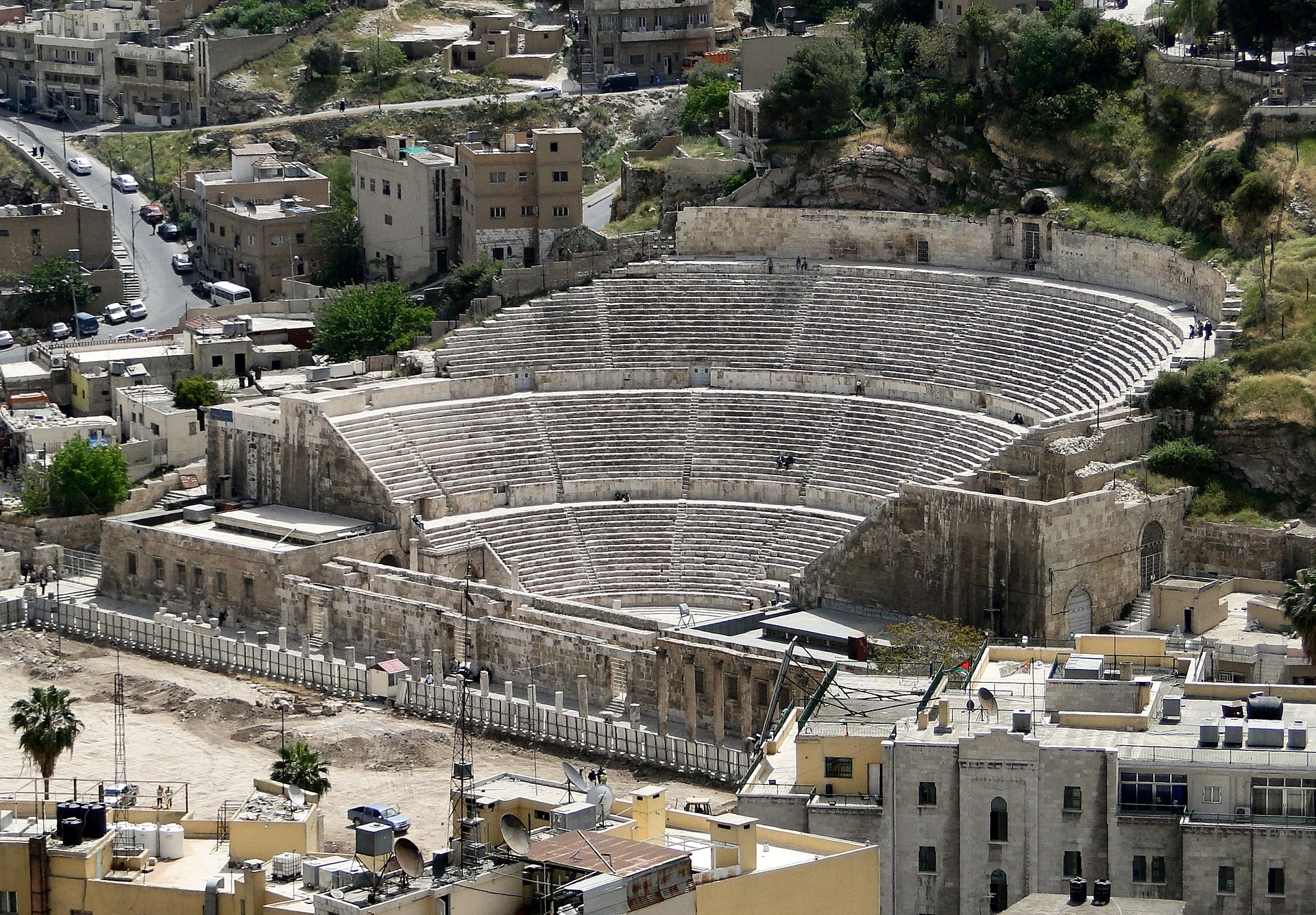
The Roman Theatre. Cut into the hillside in the 2nd century AD, seating 6,000, and still structurally sound enough to be used for concerts. It is right in Al-Balad, so it pairs with a downtown walk. Climb to the top row; the acoustics genuinely work.
The Jordan Museum. Underrated and worth two hours. It holds the Ain Ghazal statues — plaster human figures from around 7500 BC, among the oldest large-scale representations of the human form anywhere — and some of the Dead Sea Scrolls, including the Copper Scroll. If you only do one museum in Jordan, this is it.
Rainbow Street and Jabal Amman. The restored 1920s–1940s district, now cafes, galleries and small shops. Pleasant rather than essential, but it is where you will want to eat and it has the best views back across the valley.
Darat al Funun. A contemporary art foundation in a set of 1920s houses on a hillside, with a 6th-century Byzantine church in the garden. Free. Almost always empty. One of the nicest hours in the city.
Skippable: the Royal Automobile Museum unless you specifically like cars, and the King Abdullah I Mosque, which is only worth the detour if you have not seen a large modern mosque before.
What costs nothing
Al-Balad itself — the gold souk, the vegetable market, the spice sellers on Quraysh Street, and the Grand Husseini Mosque at the centre of it — is free to walk. So is Rainbow Street, so is Darat al Funun, and so is the view from the Citadel car park if you genuinely will not pay 3 JOD. Friday morning there is a flea market at Souk Jara in season.
Neighbourhoods
- Al-Balad (Downtown) — the valley floor. Markets, the Roman Theatre, cheap food, the loudest and most interesting part of the city. Budget hotels.
- Jabal Amman — the hill immediately above downtown, containing Rainbow Street and the numbered traffic circles. The best base for most visitors.
- Jabal al-Weibdeh — quieter, older, more artistic. Galleries and independent cafes. Where you would live.
- Abdali — the new downtown, a boulevard of towers and a mall. Modern Jordan, if you want to see it.
- Sweifieh and Abdoun — affluent west Amman. Malls, embassies, expensive restaurants. Convenient, not atmospheric.
Three days
Day 1. Citadel in the late afternoon, walk down to the Roman Theatre, dinner in Al-Balad. Get the geography into your head before anything else.
Day 2. Jordan Museum in the morning, Darat al Funun and Jabal al-Weibdeh at midday, Rainbow Street in the evening.
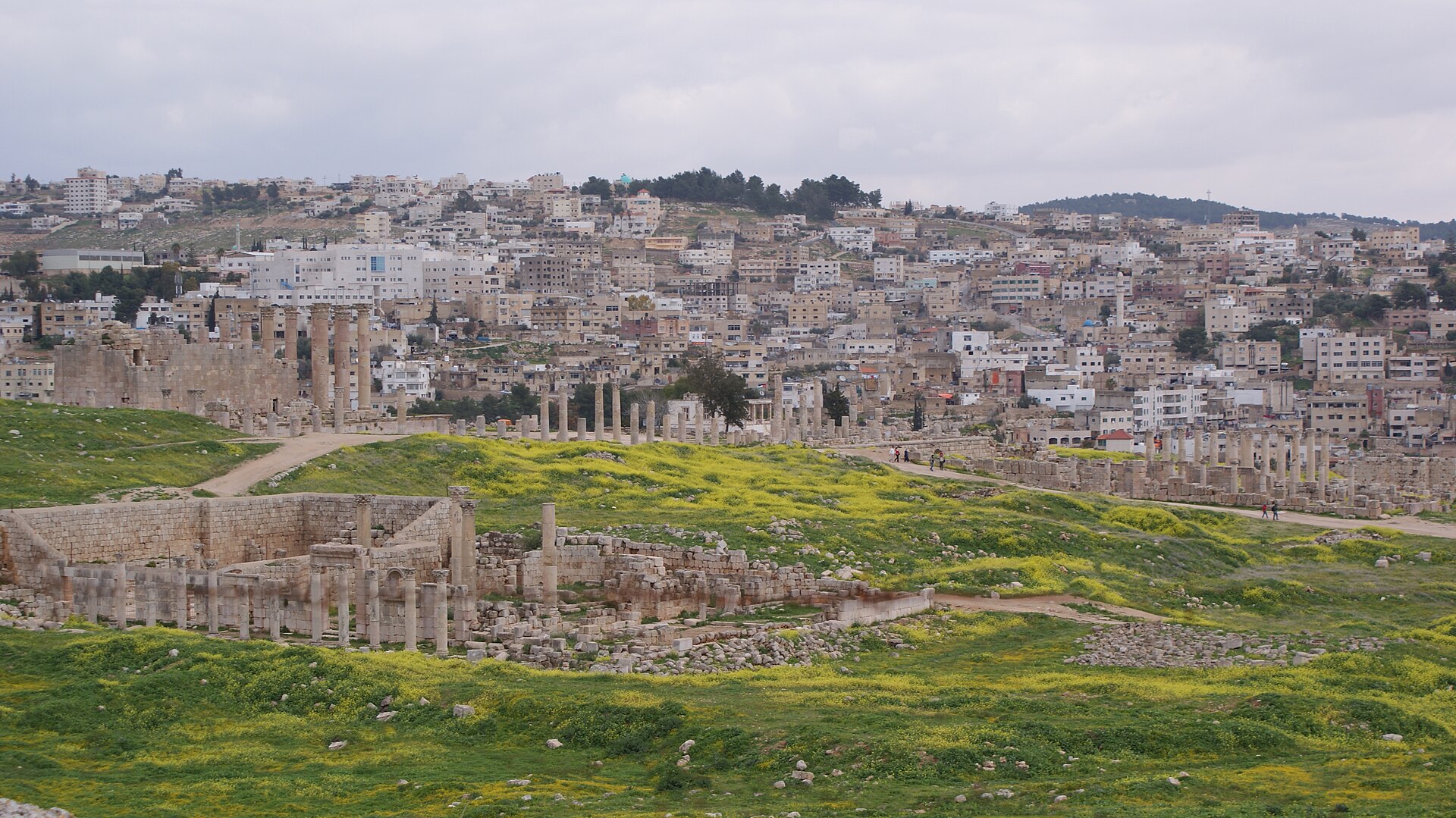
Day 3 — leave the city. Jerash is 50 km north and is one of the best-preserved Roman provincial cities in the world: a full oval forum, two theatres, a colonnaded cardo with the chariot ruts still in the paving. It is a half-day and it is included in the Jordan Pass. Combine it with Ajloun Castle, a 12th-century Muslim fortress built against the Crusaders, if you have a car.
Alternatively: the Dead Sea is an hour west and around 400 metres below sea level, and the Baptism Site at Bethany Beyond the Jordan is on the way.
Eating
Two dishes matter. Mansaf is the national dish — lamb cooked in fermented dried yoghurt (jameed) over rice and flatbread, eaten communally, and it is a genuine event rather than a meal. Order it for a group, at lunch, and expect to be full for a day.
The other is knafeh — shredded pastry over melted cheese, soaked in syrup, served hot in slabs. Habibah in Al-Balad is the institution; you queue at a hole-in-the-wall and eat it standing up for under a dinar. Do this.
Beyond that: falafel and hummus for breakfast, shawarma for a quick dinner, and fresh lemon-mint juice constantly. Jordan is not an expensive country to eat in if you eat where Jordanians eat, though restaurant prices in west Amman approach European levels.
Getting around
Careem and Uber both operate and are the simplest option. Street taxis are metered and cheap, but insist on the meter — refusing to run it is the standard tourist markup. There is a Bus Rapid Transit system now running on several corridors, which is useful if your route happens to match it.
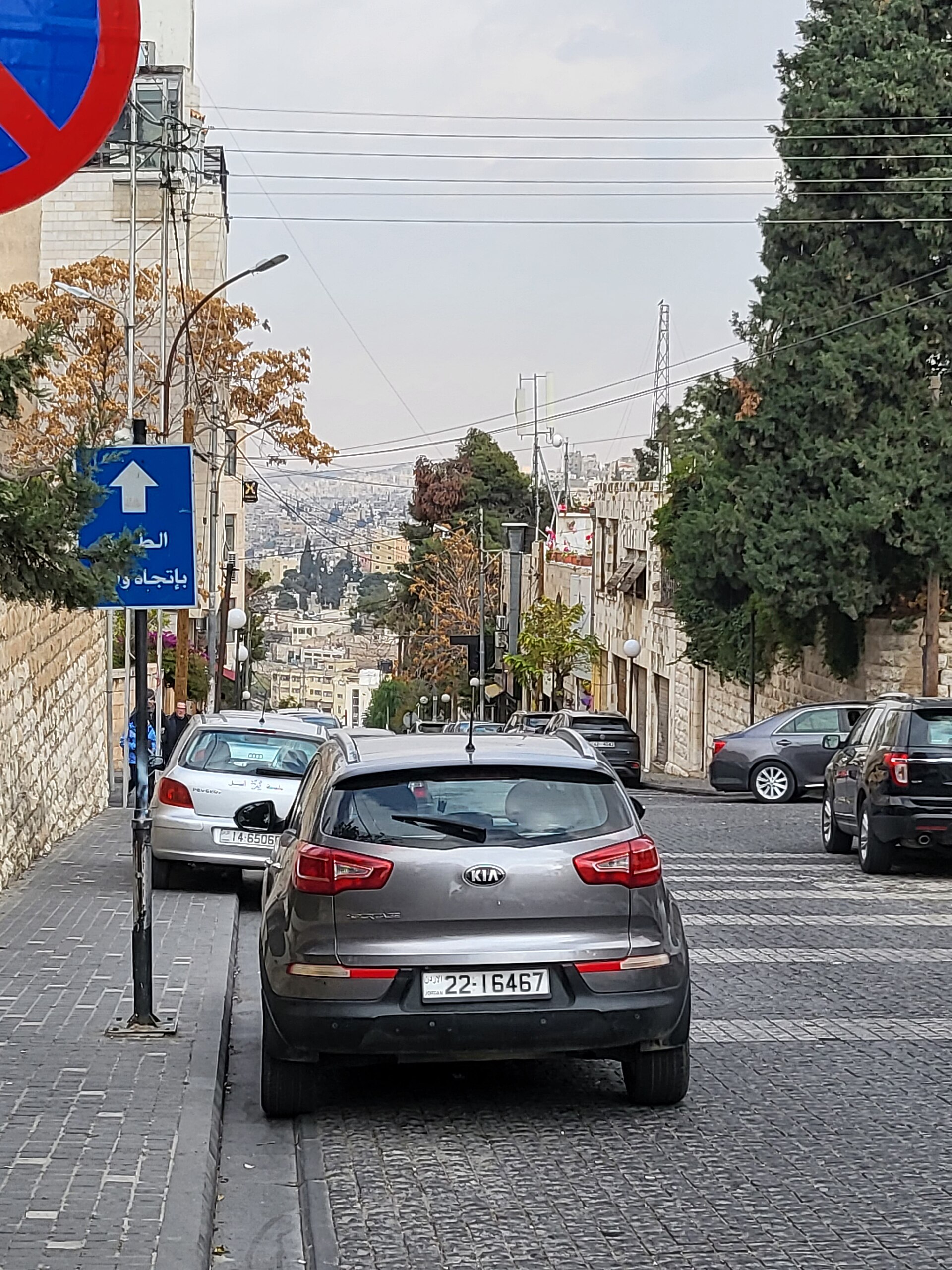
Amman is steep. Distances that look walkable on a map involve serious climbs and long staircases, and in summer heat that is not trivial. Take the taxi.
For day trips beyond Jerash — the Dead Sea, the King’s Highway, Wadi Rum, Petra — a car is transformative. Jordanian road signage is bilingual, the main highways are good, and the King’s Highway between Madaba and Petra is one of the better drives in the Middle East. Our guides to the regional rental market, including SUV rental in Dubai and long-term car rental in Qatar, cover how the Gulf and Levant rental market works in practice.
Where to stay
Jabal Amman is the right answer for most people: walkable to Rainbow Street, a taxi ride from everything, and full of restored houses converted into small hotels. Jabal al-Weibdeh is the same idea, quieter. Al-Balad is cheapest and noisiest. West Amman (Abdoun, Sweifieh) is where the international chains are, and where you should stay if you want a pool and do not mind a car-dependent location.
Rates in Amman are moderate by regional standards, and considerably lower than the Petra hotels. Booking ahead matters most in spring and autumn.
When to go
March to May and September to November. Amman sits at around 800–1,000 metres, so it is cooler than you expect — summer days reach the high 30s but nights drop sharply, and winter genuinely gets cold, with occasional snow closing the city for a day or two. July and August are hot and dry; January is grey and wet. Ramadan changes opening hours substantially and daytime eating in public is restricted, so check the dates.
Practical notes, including the awkward ones
- Buy the Jordan Pass before you fly. Bought after arrival it does not waive the visa fee. This catches people out constantly.
- Three-night minimum. The visa waiver only applies if you stay at least three nights in Jordan. A two-night stopover forfeits it.
- Taxi meters. Non-metered rides are the main way visitors overpay. Use an app if you would rather not argue.
- Amman is not a beautiful city in the way Petra is a beautiful ruin. It is interesting, and those are different things. If you want postcards, go to Wadi Rum. If you want to understand Jordan, stay here two nights.
- Water. Jordan is among the most water-scarce countries on earth. Short showers are not a quaint request here.
- Dress. Amman is relaxed by regional standards and west Amman is very relaxed, but downtown and around mosques, covered shoulders and knees will save you attention you do not want.
- Book directly where you can. For the Citadel, the Theatre and Jerash there is no advance booking — you show the Jordan Pass at the gate. Save pre-booking for transfers, Petra guides and any Wadi Rum camp.
Further reading
If Amman is part of a wider Middle East trip, our guide to things to do in Dubai covers the other end of the regional spectrum, and airport transfers in Qatar is useful if you are routing through Doha, which most European itineraries now do.
Read next: Amman Is Built Across 19 Hills With No Center — Here’s Where to Actually Stay