Seoul to Busan is 325 kilometres in a straight line and roughly 400 by road — the single busiest domestic corridor in South Korea, and the one route almost every visitor ends up doing. There are five realistic ways to make the trip and the pricing gap between the cheapest and the most expensive is nearly fivefold. Here is what each one actually costs in 2026, what it actually takes door to door, and which one is right for your specific situation.
The short answer
| Option | One-way fare | Time (station to station) | Door to door |
|---|---|---|---|
| KTX (standard) | ₩59,800 – ₩78,700 | 2h15 – 2h50 | ~3h |
| SRT (from Suseo) | ~₩52,600 | 2h30 | ~3h15 |
| ITX-Saemaeul | ~₩42,600 | ~4h30 | ~5h |
| Mugunghwa | ~₩28,600 | ~5h30 | ~6h |
| Express bus | ₩25,000 – ₩38,000 | 4h – 4h30 | ~5h |
| Flight (GMP–PUS) | ₩30,000 – ₩90,000 | 55 min in the air | 3h30 – 4h30 |
For most people, most of the time, the KTX wins. It is not the cheapest, but it is the only option that is simultaneously fast, central at both ends, and requires no transfers. The interesting cases are the exceptions.
The KTX in detail
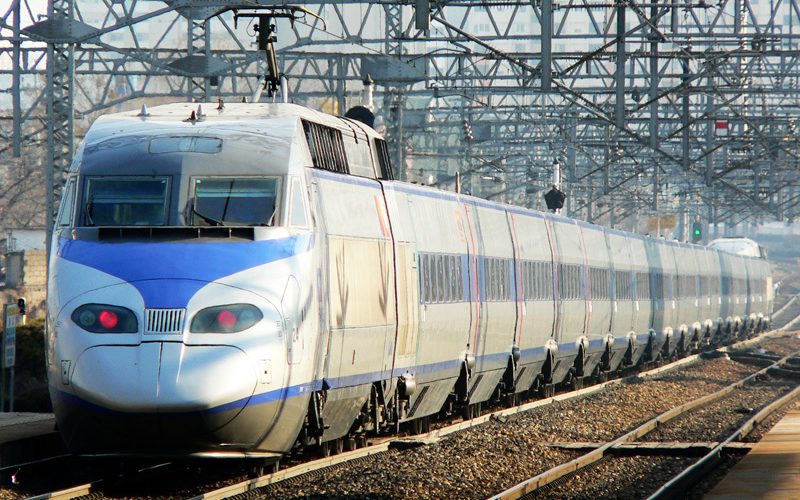
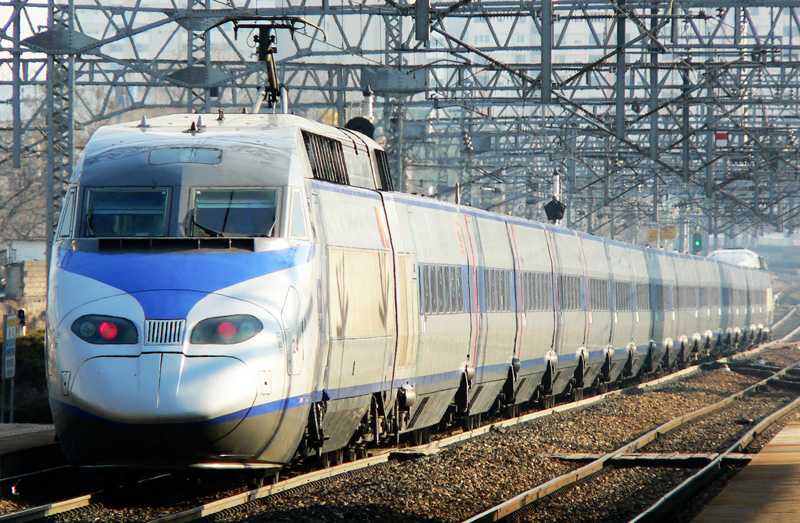
Korail’s KTX runs from Seoul Station roughly every 15 to 30 minutes through the day, from around 05:15 to 22:50. The fastest services stop only at Daejeon and Dongdaegu and take 2 hours 15 minutes. Services with more stops (Gwangmyeong, Cheonan-Asan, Gimcheon-Gumi, Ulsan) take up to 2 hours 50.
Standard class fares run ₩59,800 to ₩78,700 depending on train type and departure time. First class runs roughly ₩82,000 to ₩107,300 and buys you 2+1 seating, more legroom and a quieter carriage — a reasonable upgrade if you are tall, a poor one if you are not.
Booking: the Korail Talk app and the English Korail website both work with foreign cards, though card rejections happen and are usually solved by trying a different card rather than a different site. Reserve at least a day ahead for weekend travel and a week ahead for the Chuseok and Lunar New Year holiday periods, when the whole country moves at once and every seat sells out.
Standing tickets exist and are sold at a discount when seats are gone. Two and a half hours standing in a vestibule is survivable but not pleasant with luggage.
The SRT: cheaper, faster than you think, wrong station
SRT is the competing high-speed operator. Fares to Busan run around ₩52,600 — roughly 12 percent below KTX — and journey times are comparable at about 2 hours 30.
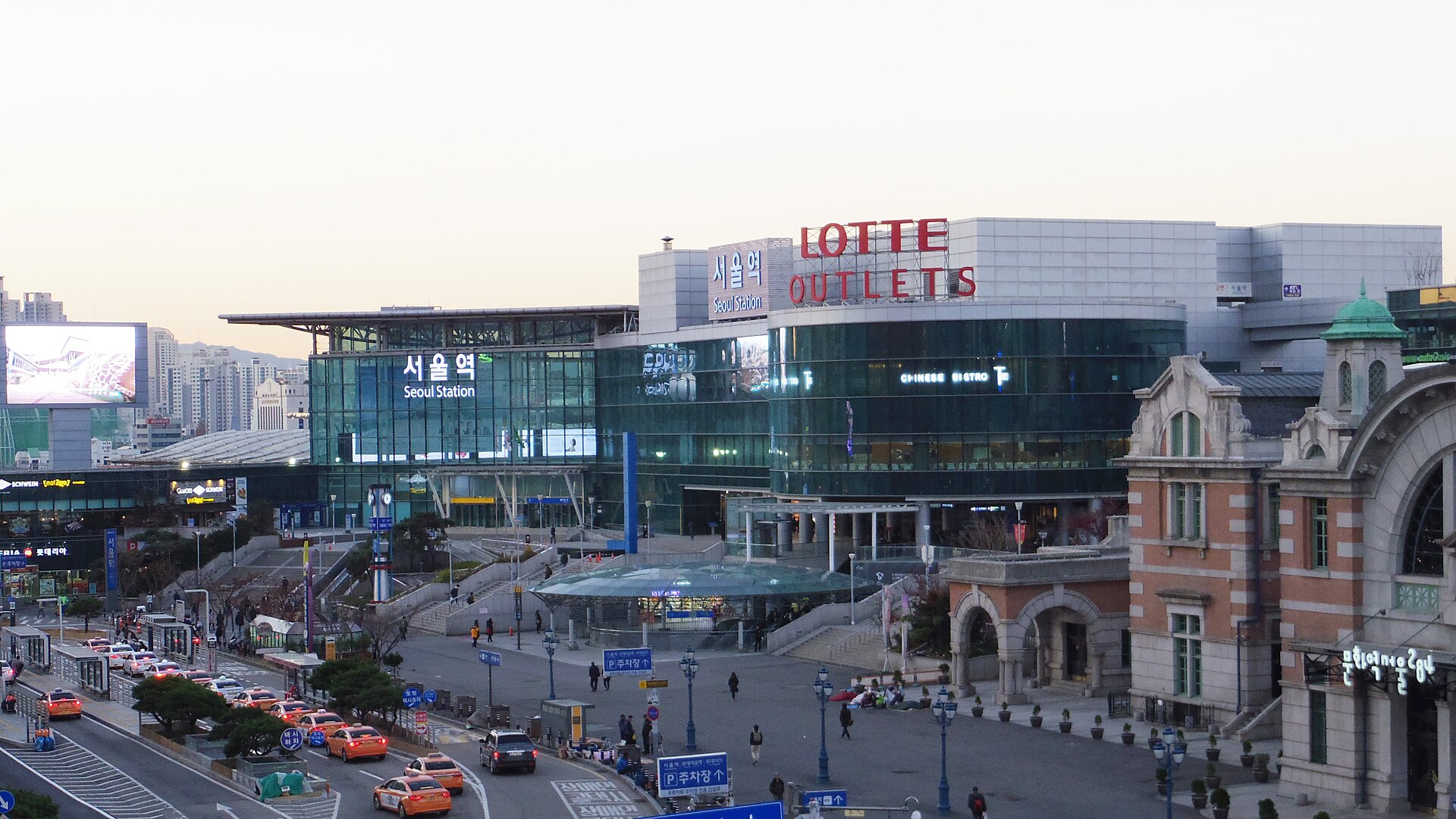
The catch is departure: SRT leaves from Suseo Station in the southeast of Seoul, not Seoul Station. If you are staying in Gangnam, Jamsil or anywhere on metro line 3 south of the river, Suseo is closer and SRT is straightforwardly the better deal. If you are in Myeongdong, Hongdae or Insadong, add 35 to 50 minutes of metro to reach Suseo and the saving evaporates.
Rule of thumb: staying south of the Han River, book SRT. Staying north of it, book KTX.
The express bus: for the genuinely price-sensitive
Buses leave from Seoul Express Bus Terminal (Gangnam) and Dong Seoul Bus Terminal, running to Busan’s Nopo Bus Terminal in the far north of the city. Journey time is 4 to 4.5 hours depending on traffic on the Gyeongbu Expressway, which on a Friday evening or a Sunday afternoon can be considerably worse.
Three classes exist. Standard runs around ₩25,000 to ₩28,000. Udeung (deluxe, 3-across seating) runs around ₩35,000 to ₩38,000. Premium buses have 21 fully reclining seats with individual screens and cost roughly the same as udeung — they are genuinely comfortable and worth the small premium.
The hidden cost: Nopo Terminal is 40 minutes by metro from Busan Station and close to an hour from Haeundae. Add that to your journey time. The bus saves you ₩30,000 and costs you 2 hours 30. Whether that is a good trade depends entirely on your budget.
Flying Gimpo to Gimhae: the option that rarely wins
Korean Air, Asiana, Jeju Air, Jin Air and Air Busan all run the route. The flight itself is 55 minutes. The problem is everything around it.
From central Seoul to Gimpo Airport is 40 to 50 minutes on metro line 9 or the Airport Railroad. Domestic check-in and security want you there an hour before departure. On landing at Gimhae, the Busan-Gimhae Light Rail plus a metro transfer takes about 45 minutes to Seomyeon or Busan Station. That is 3 hours 30 at best, 4 hours 30 realistically.
Flying makes sense in exactly three cases: the fare is genuinely below ₩40,000, you are already near Gimpo, or you are connecting from an international arrival at Incheon and can route straight through. Otherwise the KTX is faster and less hassle.
Somewhere to sleep is the other half of the booking — compare accommodation for these dates:
If you are pricing the flight option or planning a wider Korea itinerary, run the dates through the search above — domestic fares on this corridor move a lot and the low-cost carriers occasionally undercut the bus.
Does the Korea Rail Pass make sense?
The KR Pass is available to foreign passport holders and covers unlimited Korail travel including KTX, in 2, 3, 4 or 5 consecutive-day or flexible formats. It does not cover SRT.
The maths is simple: a return Seoul–Busan on KTX is roughly ₩120,000 to ₩155,000. A 3-day pass costs meaningfully more than that. The pass only pays off if you are chaining multiple long journeys — Seoul to Busan to Gyeongju to Jeonju to Seoul in a compressed window, for example. For a single out-and-back, buy point-to-point tickets.
Arriving in Busan: where the train actually puts you
Busan Station sits in the old port district, walking distance from Chinatown and a short metro ride from Jagalchi Fish Market, Gamcheon Culture Village and Nampo-dong. It is line 1 on the metro.
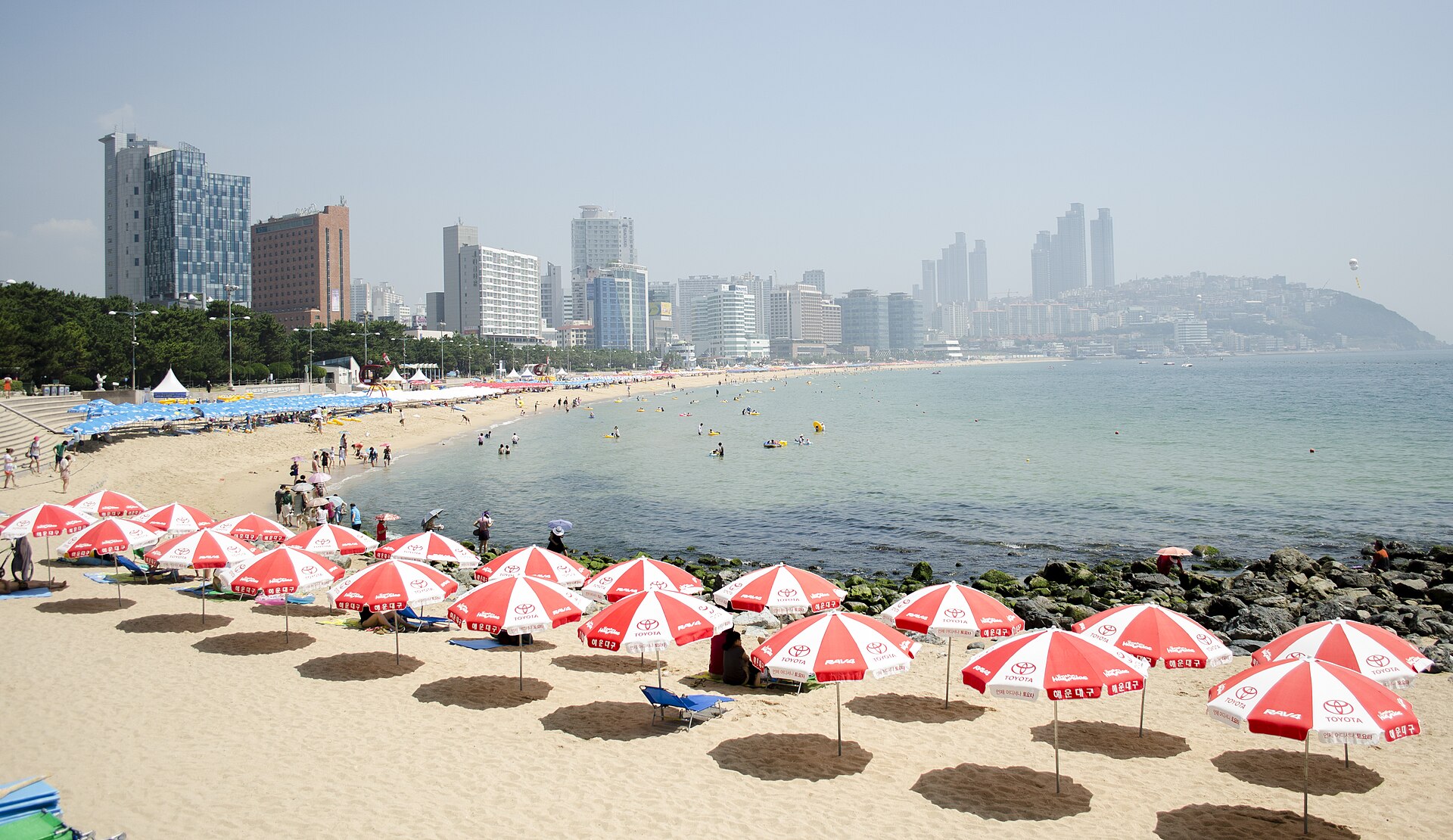
Haeundae — the beach district most visitors picture when they think of Busan — is 30 to 35 minutes away via line 1 to Seomyeon then line 2 east. If Haeundae is your base, factor that in. If you are choosing where to stay, the trade is real: Nampo and Seomyeon are better for food and transport connections, Haeundae is better for the beach and the newer hotels. Haeundae hotels and central Busan options price quite differently by season — summer is peak, and the Busan International Film Festival in early October fills the city.
What about driving?
The Gyeongbu Expressway covers the distance in about 4 hours 30 without traffic, and tolls run roughly ₩21,000 to ₩23,000 each way plus fuel. On paper it is competitive with the bus for two or more people.
In practice, driving between two Korean cities of this size is a poor use of a rental. Parking in central Seoul and central Busan is expensive and scarce, both cities have excellent metro systems, and holiday-weekend traffic on the Gyeongbu can stretch the drive past six hours. Where a car genuinely earns its place is a regional loop — Busan to Gyeongju to the Namhae coast to Tongyeong — which is poorly served by rail. Rent from Busan at the end of the train journey rather than driving the corridor itself. Note that an International Driving Permit is mandatory and must be obtained before you arrive.
Practical notes
- Luggage: KTX has overhead racks and end-of-carriage storage. There is no separate baggage system, so oversized cases can be awkward. Reserve carriage-end seats if you have big bags.
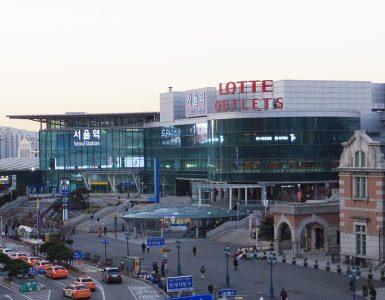
- Food: no dining car on KTX. Seoul Station and Suseo both have extensive food halls; buy before you board.
- Payment: a T-money card covers metro and buses in both cities and is sold at any convenience store. It does not cover KTX.
- Timing: avoid Friday evenings and Sunday afternoons in both directions. Fares are the same but availability is not.
- Connectivity: Korea has near-universal high-speed coverage and free wifi on KTX and in most stations. For anything more reliable, a Korean eSIM installs in minutes — South Korea eSIM plans are cheap enough that carrier roaming rarely makes sense.
Coming from Incheon Airport instead
If Busan is your first stop after an international arrival, you have two decent options. Take the AREX all-stop or express train from Incheon to Seoul Station (43 to 60 minutes) and connect to a KTX — total roughly 4 hours. Or fly the domestic leg from Gimpo, which requires a transfer between Incheon and Gimpo of about 40 minutes on the AREX.
A third option is flying directly into Gimhae, which several airlines serve from within Asia. Gimhae to central Busan by pre-booked transfer takes about 30 minutes and is worth it after a long-haul with luggage.
The verdict
Book the KTX if you are staying north of the Han. Book the SRT if you are staying south of it and want to save ₩7,000 to ₩26,000. Take a premium express bus if you are travelling on a tight budget and 2 hours 30 of extra time is worth ₩30,000 to you. Fly only if you find a fare under ₩40,000 or you are already at the airport. Do not drive the corridor — rent at the far end instead.
Related reading
Fares are indicative for 2026 and change with season, train type and demand. Some links on this page are affiliate links; using them costs you nothing and helps keep this site running.