

The bullet train is the icon, so most first-time visitors assume it is always the answer. It often is — but Japan also has one of the densest domestic flight networks on earth, and on the longer legs a plane is not just faster, it is dramatically cheaper. The trick is knowing which routes flip the math.
The Routes Where Flying Wins Outright
- Tokyo → Sapporo: there is no shinkansen all the way; rail takes 8+ hours with a transfer. Flights take 95 minutes and LCC fares start around ¥6,000–10,000.
- Tokyo → Okinawa (Naha): no rail option at all. This is a flight, full stop — about 2.5 hours.
- Tokyo → Fukuoka: the shinkansen takes about 5 hours and costs roughly ¥23,000; flights take 2 hours and are frequently half that price.
Below roughly 3 hours of train time — Tokyo to Osaka, Kyoto, Hiroshima — the train wins on almost every measure once you count airport transfers and check-in.
The Foreigner-Only Fares Nobody Tells You About
Both full-service carriers sell heavily discounted domestic fares that are only bookable with a foreign passport and an inbound international ticket:
- JAL Japan Explorer Pass: flat-rate domestic sectors, typically ¥5,500–11,000 depending on distance — including Tokyo–Okinawa.
- ANA Discover Japan Fare: the equivalent program on ANA, similar pricing.
These often beat the LCCs once you add a checked bag, because they include baggage and seat selection. Book them on the airlines’ English sites before you arrive.
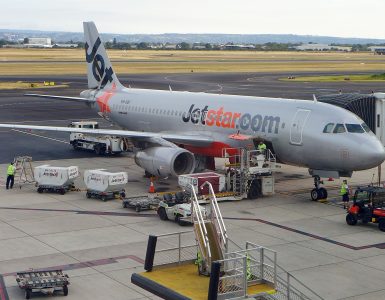
LCCs: Peach, Jetstar Japan, and Skymark
Japan’s low-cost carriers are punctual and safe, but they play the same fee games as LCCs everywhere: strict cabin-bag weight limits (usually 7 kg), paid seat selection, and painful change fees. Skymark sits in between — slightly higher fares, friendlier baggage rules, and it flies from convenient Haneda rather than distant Narita for several routes. Compare the true total across carriers on Aviasales before assuming the LCC sticker price wins.
Haneda vs. Narita: It Changes the Answer
A ¥5,000 flight from Narita is not cheaper than a ¥8,000 flight from Haneda if you are staying in central Tokyo: Narita is 60–90 minutes and ¥1,300–3,000 away, while Haneda is 30 minutes and a few hundred yen by monorail. Always check which airport your fare uses — for domestic hops, Haneda is almost always worth a small premium.
What About the JR Pass?
Since the big 2023 price hike (¥50,000 for 7 days), the nationwide JR Pass only pays off on genuinely train-heavy itineraries. A common modern pattern: fly the one long leg (say Tokyo–Sapporo or Tokyo–Fukuoka) on an Explorer-type fare, and buy individual shinkansen tickets or a regional pass for the rest. Run your own numbers before defaulting to the pass.
Booking Tips
- Domestic fares in Japan are cheapest 1–2 months out; last-minute walk-up fares are brutal.
- Avoid flying during Golden Week (late April–early May), Obon (mid-August), and New Year — prices double and seats vanish.
- Airport data is expensive; sort your connectivity first with our guide to the best eSIM for Japan.
Bottom line: train for the Golden Route, plane for the long hauls — and check the foreigner-only fares before you touch an LCC.
Baggage: Where Full-Service Japan Shames Everyone
ANA and JAL include a 20kg checked allowance free on every domestic fare, plus 10kg of cabin baggage — a policy so generous by world standards that travelers coming from Europe or the US routinely double-check it. The LCCs play the usual game: Peach and Jetstar Japan cap free cabin baggage at 7kg across bags and sell checked luggage in tiers, so a ¥6,000 Peach fare with a 20kg suitcase becomes a ¥9,000–10,000 all-in fare — still cheap, but compare like for like against a JAL Experience fare before assuming the LCC wins. Ski gear and golf bags fly surprisingly cheaply on the majors; oversized-luggage culture is well developed, and the Yamato luggage-forwarding alternative (send the suitcase ahead to your next hotel for about ¥2,000–3,000) sometimes beats flying with it entirely.
Booking Domestic Flights in Japan
Price ANA, JAL and the low-cost carriers separately on your route, and look at the foreigner-only fares before anything else. On the long domestic sectors they frequently beat every alternative, including the rail pass, but they are generally only bookable from outside Japan and only alongside an international ticket, so they have to be sorted before you land.
Getting from the airport to your accommodation is the one leg worth arranging before you arrive — compare fixed-price transfers here:
Timing, Typhoons and the Seasonal Calendar
Domestic fares peak brutally three times a year: Golden Week (late April–early May), Obon (mid-August) and New Year — when the entire country travels and “discount” disappears as a concept; book those months ahead or route around them. September and early October bring typhoon season: Okinawa and Kyushu flights get cancelled with a day or two of warning, airlines rebook free when a storm is named, and morning departures dodge most disruption. The reward for shoulder-season flexibility is real: January–February midweek fares to Sapporo’s snow or Okinawa’s 20°C winter regularly land under ¥10,000 booked a few weeks out.
Quick FAQ
How early to arrive? Japanese domestic airports run terrifyingly efficiently — 30 minutes before departure genuinely suffices at most, and security queues measured in minutes make the 20-minute Haneda connection a real thing. ID? Foreign travelers should carry a passport; residence cards work for residents. Do fares include seat selection? On ANA/JAL yes, free at booking; LCCs charge. Trains or planes for Tokyo–Osaka? Shinkansen, almost always — city-centre to city-centre in 2h30 beats any flight; the plane wins beyond roughly 800km, which is the whole premise of this guide. Connecting from an international arrival? Allow 90+ minutes at Haneda and note some foreigner fares require the international ticket number at booking. For how other countries handle the same problem, see our guides to domestic flying in Brazil and New Zealand — and sort data before you land with our Japan eSIM guide.
Sample Itineraries the Plane Unlocks
Tokyo + Sapporo + Kyoto in ten days: fly Haneda–New Chitose on a morning foreigner fare (about 90 minutes), three nights of Hokkaido food and, in winter, powder snow; fly back to Itami or take the one-hop to Osaka and finish in Kyoto by rail. The two flights cost less than the equivalent rail time is worth. Tokyo + Okinawa beach week: Haneda–Naha runs almost hourly, 2h45, and turns Japan into a two-climate trip — temples in a coat, snorkeling two days later. The far-flung add-ons: Ishigaki and Miyako (from Naha), Yakushima’s cedar forests (via Kagoshima), and the Goto Islands (via Nagasaki) are all one regional hop from a hub — places the rail network cannot reach at any price, which is where domestic flying stops being a convenience and becomes the whole point.

Points, Status and the Long Game
If you will fly domestically in Japan more than twice, join ANA Mileage Club or JAL Mileage Bank before the first booking — both are free, both credit the cheap foreigner fares, and both run frequent domestic award sales where 5,000–6,000 miles covers a one-way that sells for ¥25,000 in cash. Credit-card travelers holding Star Alliance or oneworld status from home get lounge access and priority baggage on the respective Japanese carrier, which at Haneda’s beautiful but busy domestic terminals is worth more than the usual airport-lounge calculus suggests.
The One-Screen Summary
Under 800km or on the Tokaido corridor, take the train. Beyond that — Hokkaido, Okinawa, Kyushu’s far ends, the outer islands — fly, and fly cheap: check the foreigner-only ANA Discover Japan and JAL Japan Explorer fares first (flat ¥5,500–11,000 on most routes with the full 20kg allowance), then the LCCs from their Narita and Kansai bases if your bags are light, then regular advance-purchase fares. Book Golden Week, Obon and New Year like your trip depends on it, keep mornings for typhoon season, and arrive at the airport later than feels responsible — this is the one country where 30 minutes is enough.
Read next: Renting a Car in Japan: Why 15,000 Yen in Tolls Can Cost More Than the Car





Add comment