
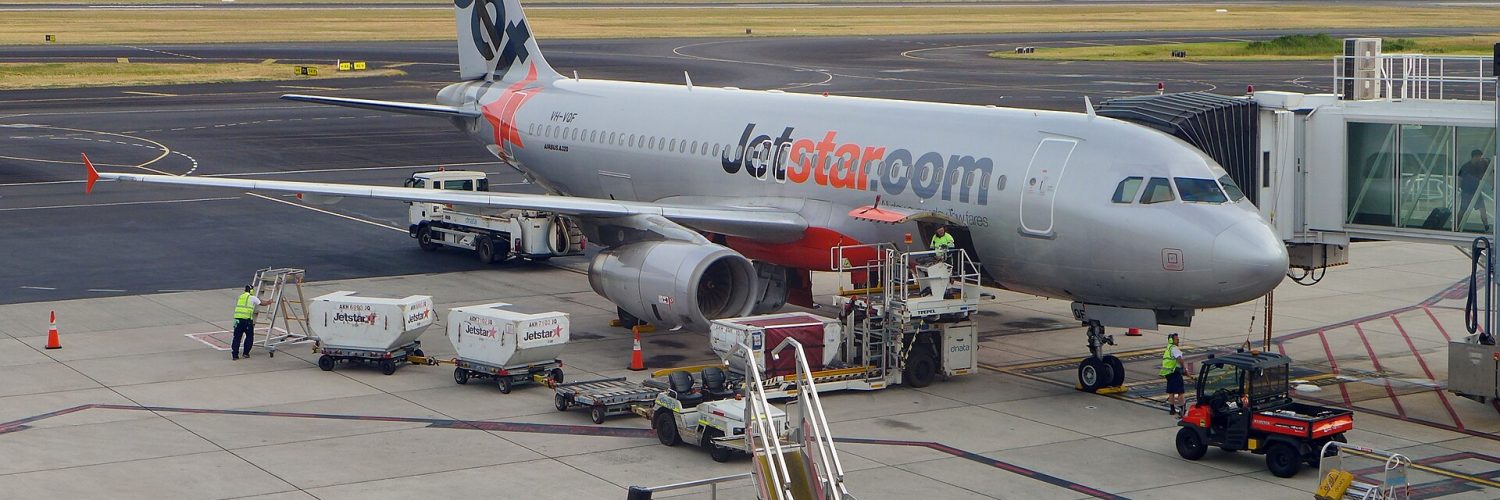
Perth to Sydney is 3,300 km. That is Lisbon to Moscow. Australians deal with this by flying constantly and domestically — the Melbourne–Sydney corridor is one of the busiest air routes on the planet — and the fare structure that results is genuinely favourable to visitors who understand it.
Under A$120 one-way for a major-city hop is normal, not lucky. Here is how the market works in 2026, which airline suits which trip, and the four places where a cheap fare quietly becomes an expensive one.
The four airlines, honestly
- Qantas — full service. Checked bag, snack and entertainment included. Best network, best on-time record, highest fares. Roughly A$150–$350 on the east coast trunk routes.
- Virgin Australia — the middle. Usually includes a carry-on allowance of 7 kg and often a checked bag on the higher fare bundles. Frequently only A$20–$40 above Jetstar once bags are added, which makes it the default sensible choice for most visitors.
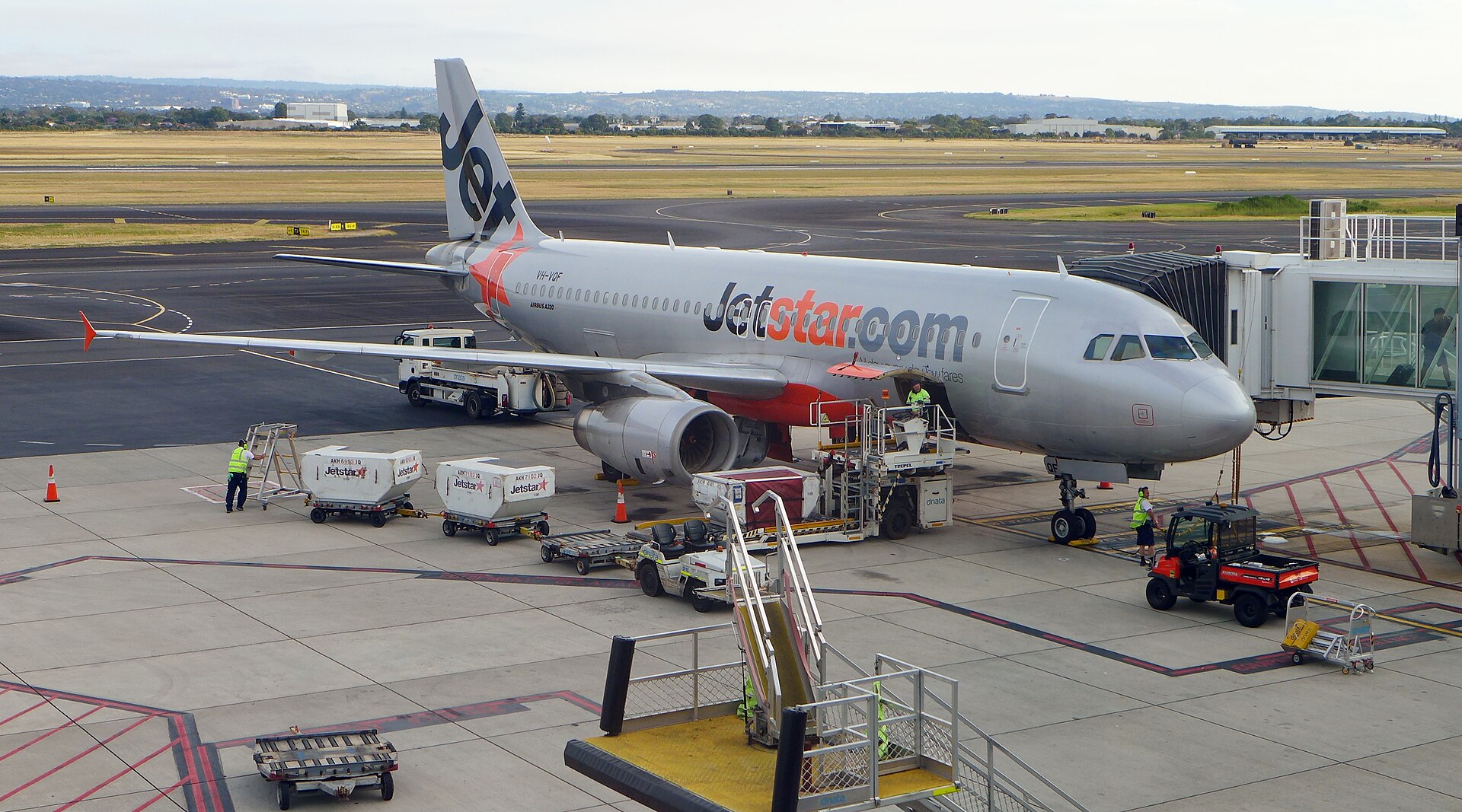
- Jetstar — Qantas’s low-cost arm, and the cheapest headline fares in the country. A$49–$99 sale fares on Melbourne–Sydney are routine. Everything beyond a small bag costs extra.
- Rex (Regional Express) — the regional specialist, serving country towns the others abandoned, plus some capital-city routes. Worth checking for anywhere that is not a capital.
The practical rule: for trunk routes between capitals, check all four and expect Jetstar to win on price and Virgin to win on value. For anywhere regional, Rex and Qantas’s QantasLink are often the only options and price accordingly.
Search live fares across all carriers
Getting from the airport to your accommodation is the one leg worth arranging before you arrive — compare fixed-price transfers here:
What routes actually cost
Typical 2026 one-way economy fares booked 4–8 weeks out, low-cost carrier, excluding checked baggage:
- Melbourne ↔ Sydney (1h 30m): A$60–$130. Sale fares dip to A$45.
- Sydney ↔ Brisbane (1h 30m): A$70–$150.
- Melbourne ↔ Brisbane (2h 15m): A$80–$170.
- Sydney ↔ Cairns (3h): A$120–$250.
- Sydney ↔ Perth (5h): A$200–$450. This is a genuine long-haul flight and prices like one.
- Sydney ↔ Hobart (2h): A$100–$200.
- Sydney/Melbourne ↔ Ayers Rock (Uluru) (3–3.5h): A$200–$400, and rarely discounted.
Note the geography: everything on the east coast is cheap and frequent; anything crossing to the west or into the centre costs real money. Build the itinerary accordingly rather than assuming all Australian flights are cheap.
The four ways a cheap fare gets expensive
1. Checked baggage
Jetstar’s base fare includes 7 kg of carry-on and nothing else. Adding 20 kg checked costs about A$35–$55 if bought online in advance, and A$80–$160 at the airport. That is not a typo — the airport penalty is severe and strictly applied. Buy bags when you buy the ticket, or genuinely travel with 7 kg.
2. Carry-on weight enforcement
Australian low-cost carriers weigh cabin bags at the gate, routinely, and Jetstar is the strictest. The 7 kg limit includes your camera bag and laptop. Being 3 kg over at the gate costs more than the flight did.
3. Seat selection
A$8–$30 per seat per leg. Skip it unless you are travelling as a group with children, in which case the airline will not seat you together for free.
4. Airport transfers at both ends
This is the one people forget entirely. Sydney Airport’s train station levies a “station access fee” of roughly A$17 on top of the fare, making a 13-minute ride to the city about A$22 per person. Melbourne’s SkyBus is around A$24. A domestic flight that cost A$60 can carry A$45 of ground transport on top. For two or more people, a pre-booked car is often cheaper than the train — compare fixed-price airport transfers before defaulting to rail.
When to book
The sweet spot on Australian domestic routes is 4 to 10 weeks out. Inside two weeks, fares on the trunk routes climb steeply because the business market carries them. Jetstar runs frequent sales — including a well-known Friday sale cycle — that are genuinely cheaper than normal pricing rather than theatrical.
Avoid, if you can: Australian school holiday periods (roughly late December to late January, plus two-week blocks in April, July and September/October), Easter, and the Friday before any long weekend. Fares on those dates can double.
Airport quirks worth knowing
- Sydney has a curfew — no jet movements between 23:00 and 06:00. This constrains schedules nationwide and is why the last flight out is earlier than you expect.
- Melbourne uses Tullamarine (MEL) and Avalon (AVV). Avalon is 55 km from the city and served by some Jetstar flights. Check which one your ticket says before booking accommodation.
- No ID is required for domestic security screening in Australia in most cases, but airlines do require photo ID at check-in for the name on the booking. Bring your passport.
- Domestic and international terminals at Sydney are separated by a bus or train ride of 10–15 minutes and a fee. Allow 90 minutes minimum for a self-transfer connection, more with bags.
- Liquids rules do not apply to Australian domestic flights. You can carry water through security.

When flying is wrong
Two cases. First, Melbourne–Sydney if you actually want to see the coast — the drive along the Princes Highway is a genuine trip rather than a transfer. Second, anywhere you plan to explore on arrival, where the flight plus a rental car at destination may cost more than driving your own vehicle the whole way. We ran that comparison in detail in our campervan vs. car-and-motels breakdown, and the answer depends almost entirely on trip length.
For the classic east-coast run — Sydney, Byron, Brisbane, the Whitsundays, Cairns — flying the long legs and renting locally at each stop is usually both faster and cheaper than driving 2,500 km. Compare local car rental rates in Australian cities to price that version of the trip.
Accommodation and the airport-proximity trap
Australian city hotels are expensive, and the near-airport options that look like a bargain rarely are once you add two transfers. Staying in the city and taking the train is usually the better arithmetic. Compare Australian city hotel rates across your dates.
Connectivity
Coverage is excellent in cities and along the coast, and genuinely absent across large parts of the interior — including stretches of highway between capitals. Do not rely on live navigation in the outback; download offline maps. An Australia eSIM handles the connected parts without a SIM queue at arrivals.
Baggage allowances side by side
This is where the four airlines genuinely diverge, and it is worth committing to memory before you compare fares:
- Qantas: 7 kg carry-on plus one 23 kg checked bag included on almost every domestic fare. The headline price is the real price.
- Virgin Australia: 7 kg carry-on on all fares; checked baggage included on the mid and upper bundles, extra on the cheapest “Lite” fare. Read which bundle you are buying.
- Jetstar: 7 kg carry-on only. Everything else is an add-on, and the gate price is punitive.
- Rex: generally more generous than Jetstar, often including checked baggage on regional routes where passengers reliably travel with luggage.
Run the comparison with bags included, not on the headline fare. A Jetstar ticket at A$69 plus A$45 of baggage is a A$114 ticket, and Virgin’s A$119 fare with a bag in it is the better product at that point.
Frequent flyer points are worth checking even for one trip
Both major programmes — Qantas Frequent Flyer and Virgin Velocity — allow free sign-up and partner with airline alliances that visitors are often already in. Qantas partners with oneworld (British Airways, American, Cathay, Qatar); Virgin partners with Delta, United, Singapore and Etihad. If you flew into Australia on any of those, crediting your domestic sectors to the same account is free money for thirty seconds of effort at check-in.
Delays, weather and what actually disrupts flights
Australian domestic reliability is generally good, with two seasonal caveats. Tropical cyclone season (roughly November to April) affects Cairns, Darwin and the Queensland coast, and can close airports for a day or more. Fog in Melbourne and Canberra during winter mornings causes regular diversions and cancellations on the first flights of the day. If either is on your route in season, avoid booking the tightest possible connection to an international departure.
Under Australian Consumer Law, airlines must provide a remedy for cancellations within their control, but the specifics vary by carrier and the low-cost airlines interpret their obligations narrowly. Travel insurance covers the gap more reliably than arguing at a service desk.
Bottom line
Book 4–10 weeks out, fly Jetstar on the east coast and add bags online, take Virgin when the gap is under A$40, and budget A$20–$25 per person for ground transport at each end. Do that and Australia’s distances stop being the constraint they look like on a map.
Comparing the region? Our guides to flying across New Zealand and island-hopping Indonesia cover the neighbouring markets.



Add comment