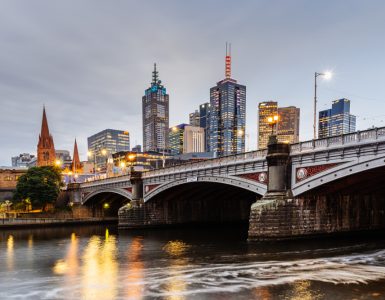
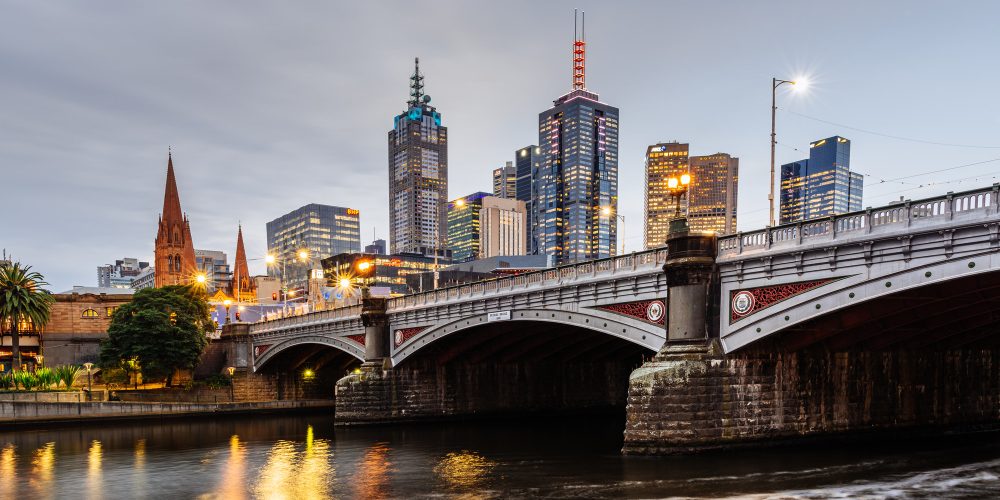
Melbourne is a city that runs on public transport. It has the largest tram network in the world, a suburban rail system that fans out in every direction, and a smartcard that works on all of it. And its main airport, 23 kilometres northwest in Tullamarine, has no train.
That single gap explains everything about ground transport at MEL. Every option you are choosing between — the express coach, the local bus, the taxi rank, the rideshare kerb, the hire car — exists because the rail link that would have made them mostly unnecessary has still not been built.
In 2026 that gap got longer. Melbourne Airport Rail, originally targeted at 2029, has slipped by roughly four years; current federal project documentation lists completion from late 2033, on a project now costed around A$12 billion. If you are reading this planning a trip, you are planning it for a no-train airport, and you will be for the rest of the decade.
Know your terminal before you land
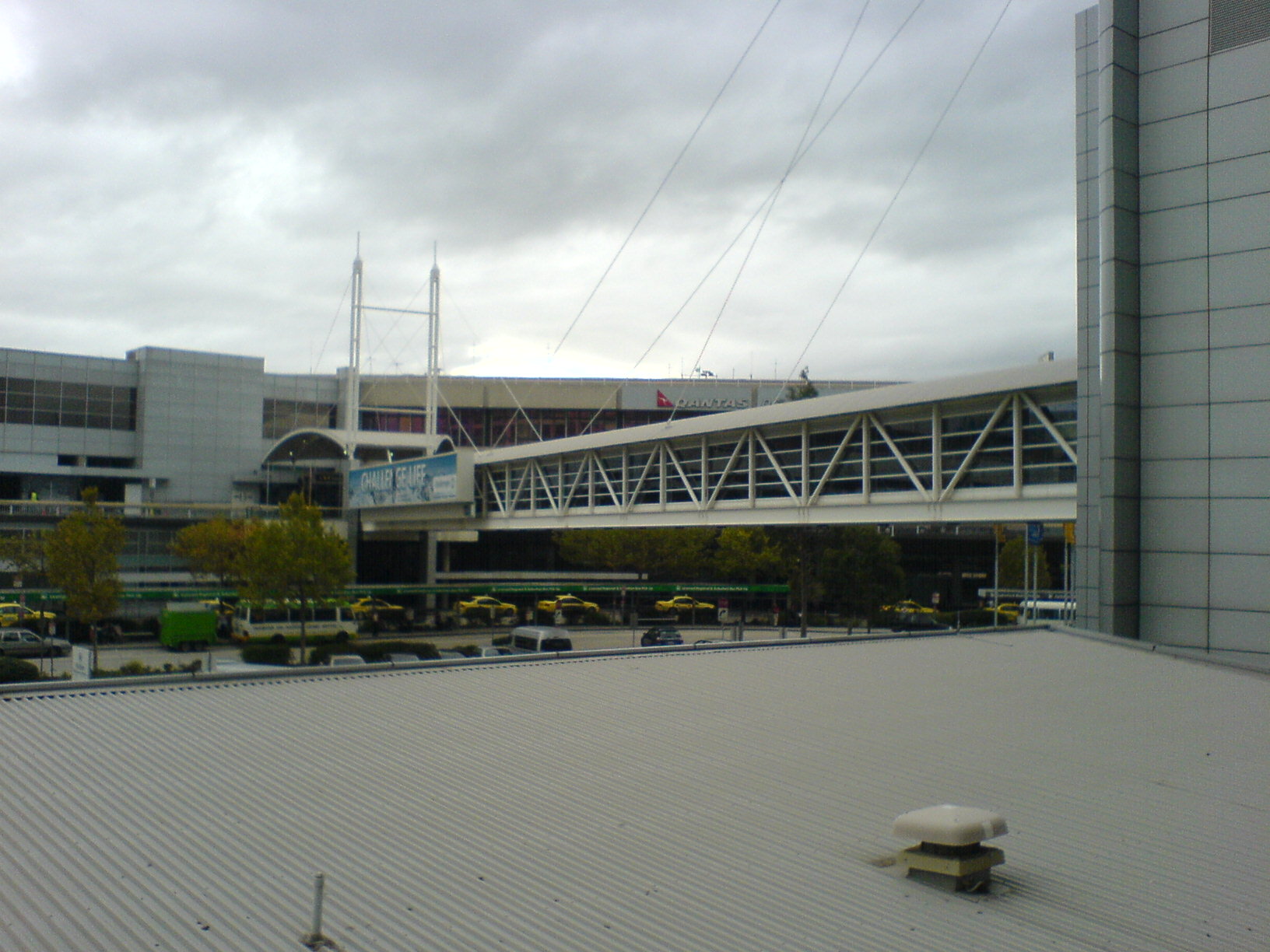
MEL has four terminals in one connected complex, and which one you arrive at changes where you walk.
- T1 — Qantas domestic
- T2 — all international arrivals and departures
- T3 — Virgin Australia domestic
- T4 — Jetstar, Rex, Link Airways and other low-cost domestic carriers, plus the Ground Transport Hub
That last point is the one that catches people. T4 is not just a terminal; it is where the bus network lives. Regional, direct, group and charter coaches all depart from the T4 Transport Hub, and SkyBus is located outside the main entrance of T4. If you land at T2 on a long-haul flight at 6am, you have a walk ahead of you before you reach any bus.
Option 1: SkyBus, the default
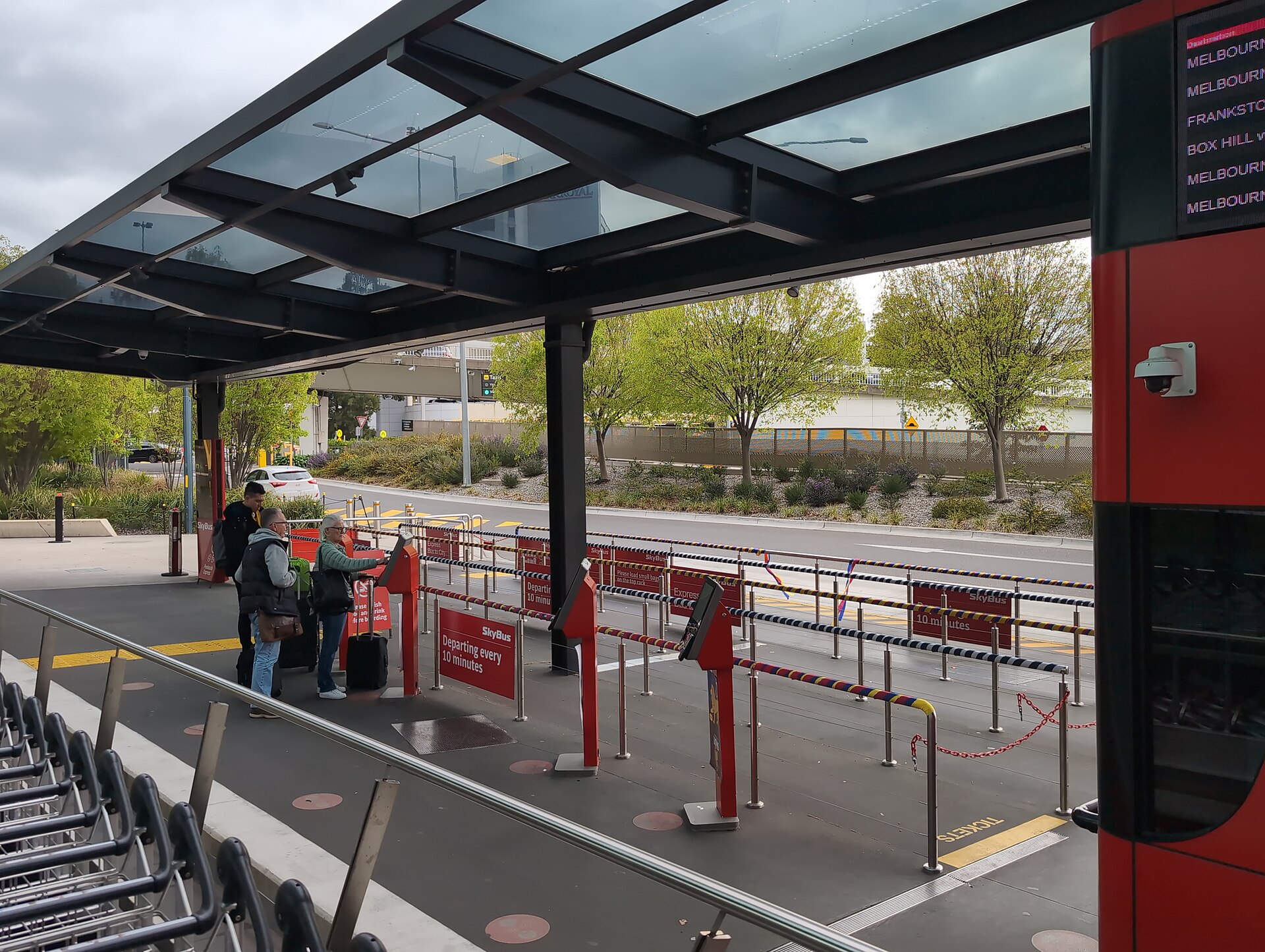
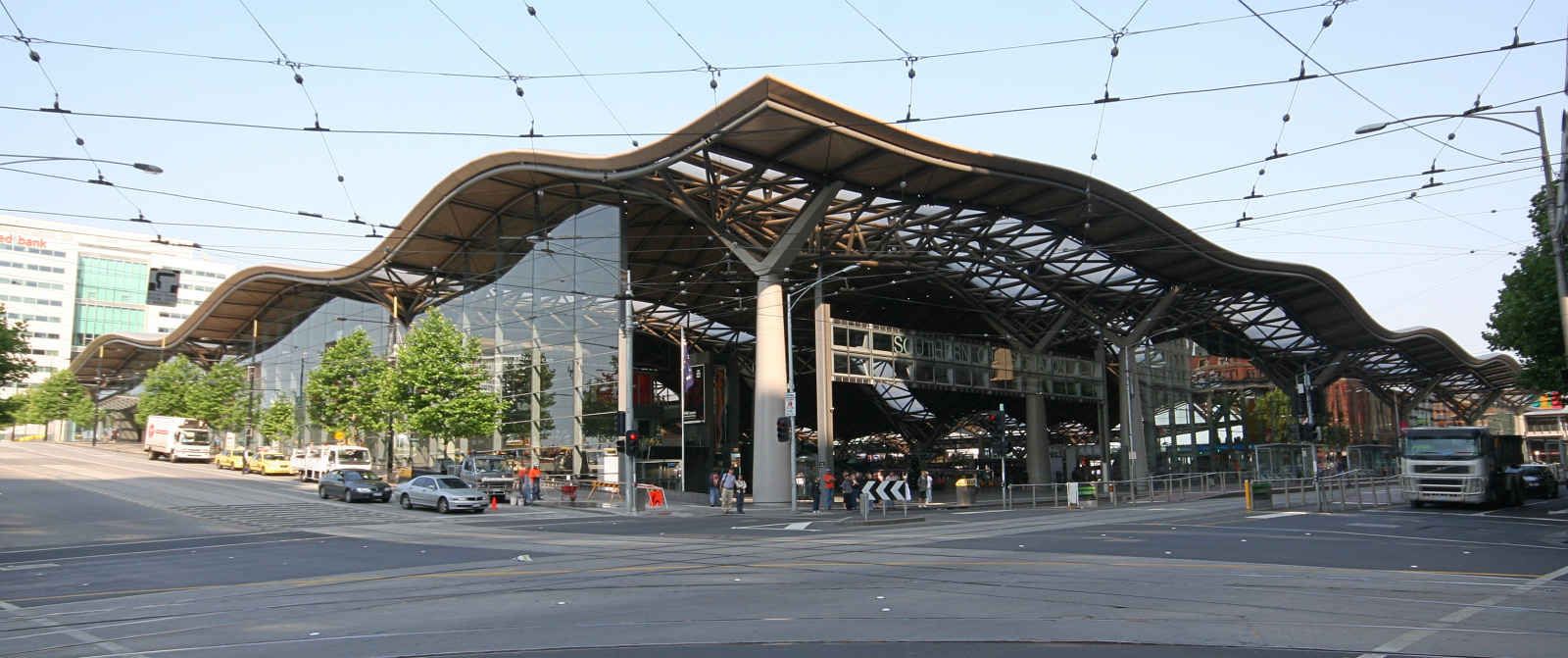
SkyBus Melbourne City Express is the option the airport signposts, and for most first-time arrivals it is the right one. It runs between the airport and Southern Cross Station in the CBD, with luggage handling and no changes.
Current published fares:
- Adult one way — $24.90
- Adult return — $41.70, which works out at $20.85 each way
- Child (4–16) — $6.60 one way
- Senior — $19.90 one way, on presentation of a valid Australian state-issued Seniors card
- 10-trip pass — $180, available in the app only
Two things worth planning around. First, the return fare is a genuine saving rather than a marketing one — if you know you are flying out of Melbourne, buy the return on arrival and you have cut roughly $8 off the round trip. Tickets are valid for twelve months. Second, the child fare is unusually low relative to the adult fare, which quietly makes SkyBus the cheapest sensible option for a family of four with luggage: two adults and two children on returns comes in well under a single taxi each way.
Services are frequent through the day and thin out overnight. Check the live timetable for your actual arrival time rather than assuming a bus is waiting — a delayed 1am landing is exactly when the assumption fails.
One important caveat that has become more important in 2026: SkyBus is not part of the Victorian public transport fare system, and it is explicitly excluded from the statewide fare discount described below. It is a private coach service with its own ticketing.
Option 2: the $2.85 route almost nobody uses
This is the section that will save you the most money in 2026, and it is time-limited.
From 1 June 2026 until 1 January 2027, public transport across Victoria is half price for everyone, every day. The full-fare daily cap fell from $11.40 to $5.70, and the concession cap from $5.70 to $2.85. It applies to metropolitan trains, trams and buses and to regional trains, coaches and town buses. It does not apply to SkyBus or ferries.
The route it makes cheap is SmartBus route 901. It picks up at the T4 Ground Transport Hub and runs to Broadmeadows railway station in roughly a quarter of an hour. From Broadmeadows, a Craigieburn line train reaches the city in about half an hour. Tap on with Myki once and both legs are covered by the same daily cap.
So during the discount period, airport to CBD by public transport costs you a maximum of $5.70 full fare for the entire day of travel — and in practice a single two-zone journey caps well under that, with concession holders paying half again. Against a $24.90 SkyBus ticket, that is a difference of roughly twenty dollars a head.
The honest downsides. It takes about an hour and a quarter door to door instead of roughly half an hour. The 901 is a standard suburban bus with no luggage racks, so two large cases and a stroller is genuinely unpleasant. Broadmeadows requires a platform change with your bags. And after the discount ends on 1 January 2027 the same trip returns to around $11.40 in full fare — still less than half the SkyBus price, but the gap narrows.
Take the 901 if you are travelling light, are not exhausted, and have time. Take SkyBus if you have luggage, children, or have just come off a fourteen-hour flight.
Getting a Myki
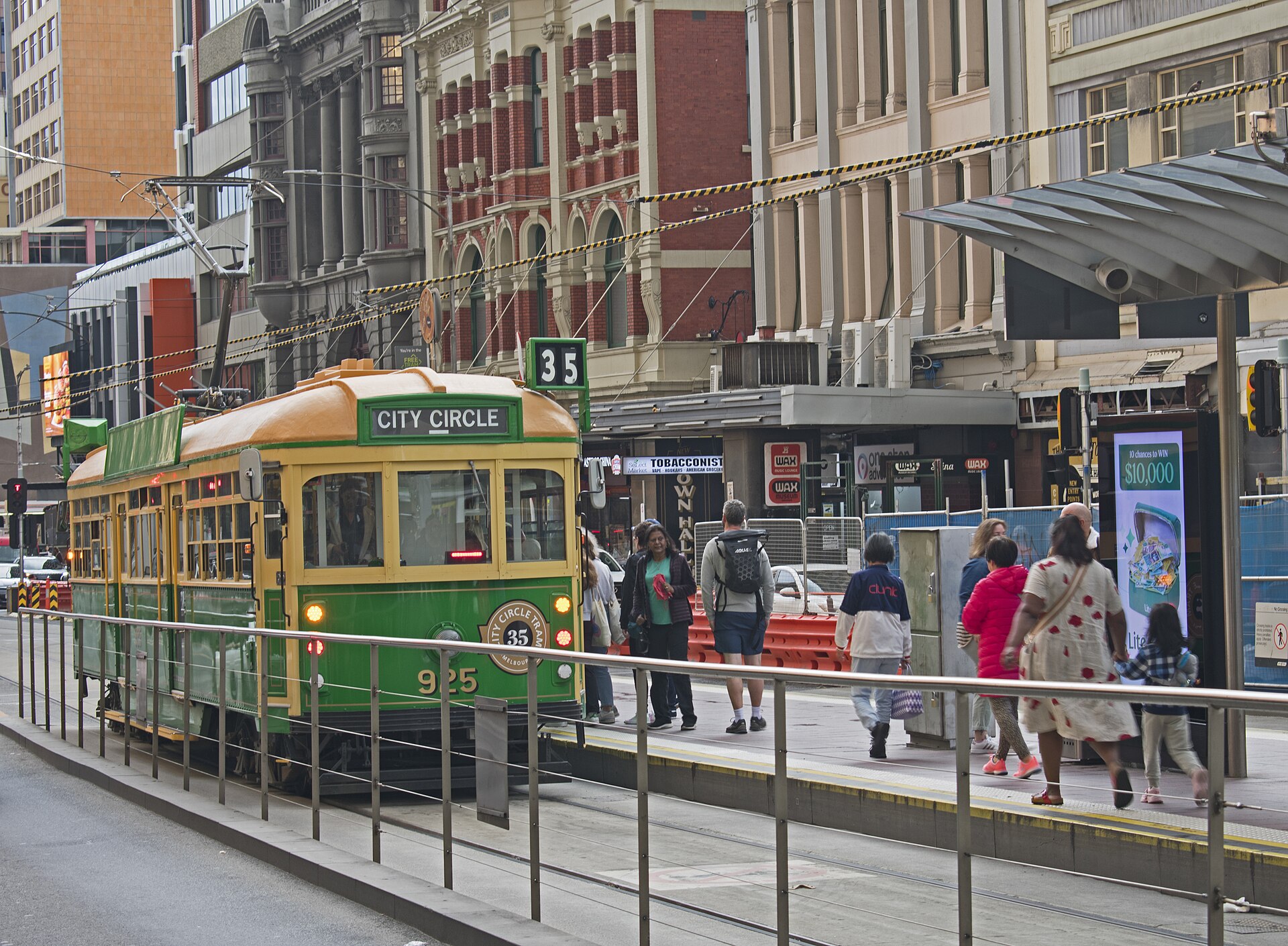
You need a Myki to use trains, trams and buses. Buy and top up at the airport before you board the 901 rather than assuming you can pay on the bus. Once you are in the CBD, note that Melbourne has a Free Tram Zone covering the central grid and Docklands — trams inside it cost nothing and you do not tap on at all. Southern Cross Station sits inside that zone, which means that once you have reached the city centre by any method, short hops around it are free.
Option 3: taxi
Taxi ranks are on the ground floor outside T1 and T2, and inside the T4 Transport Hub. The airport is explicit about this and it is worth repeating: do not accept an offer of a taxi from anyone approaching you away from a designated rank. Touting happens at MEL as it does everywhere, and the fare will not be a metered one.
A metered run to the CBD typically lands in the A$65–90 range depending on traffic and time of day, plus an airport pickup fee and the CityLink toll on the Tullamarine Freeway. That toll is not optional in practice — the freeway is the route — so budget a few dollars for it on top of whatever the meter says.
Taxis make sense late at night, with a lot of luggage, or when you are going somewhere that is not the CBD. For a straight run to a hotel near Southern Cross with two people, SkyBus returns will usually beat them comfortably.
Option 4: rideshare
uberX, UberBLACK, Ola, DiDi and GoCatch all operate at Melbourne Airport. Three details matter:
- There is an airport charge of $4.48 including GST per trip, which the operator may pass on to you. It will appear on your fare.
- Pickup points differ by airline. Qantas, international and Virgin Australia passengers are collected from lane 1 of the forecourt. Jetstar, Rex and Link Airways passengers are collected from level 2 inside the T4 Ground Transport Hub. Standing in the wrong place with a driver circling is the single most common rideshare mistake here.
- You cannot pre-book a scheduled ride for an airport pickup. Scheduled rides are not available at MEL; you request a standard ride once you have landed. If your flight lands into a surge, you pay the surge.
Drop-offs are more relaxed — anywhere along Departure Drive, or the T4 hub drop-off on level 1.
Option 5: pre-booked private transfer
The case for booking a car in advance is specific rather than general. It is worth it when the surge risk is real (a late international arrival, a public holiday, a major event weekend), when you are going somewhere awkward — the Mornington Peninsula, the Yarra Valley, Geelong — or when you simply want a fixed number rather than a meter and a toll and a variable multiplier.
For a straightforward daytime run into the CBD with light bags, it is usually the most expensive way to do a journey that SkyBus does perfectly well. Price it honestly against the alternatives above rather than booking it by default.
If a fixed price and a driver holding your name is what you want, compare pre-booked transfers before you land rather than after:
Which one, in one paragraph
Travelling light, not in a hurry, arriving between about 6am and 9pm: take the 901 bus and the train while the half-price fares last. Two or more people with luggage, or any arrival where you want to stop thinking: SkyBus return. Family of four: SkyBus return, because the child fare is $6.60. Late-night arrival, or a destination outside the CBD: taxi or a pre-booked car. Going straight to the Great Ocean Road or the Yarra Valley: hire car, collected at the airport, because you will want it anyway.
Avalon is a different airport
Some low-cost flights, particularly on Jetstar, use Avalon Airport rather than Tullamarine. Avalon is roughly 55 km southwest of Melbourne, towards Geelong, and it is a genuinely different journey — a separate coach service, a longer drive, and much thinner late-night options. If you are comparing fares and one is suspiciously cheap, check which airport it lands at before you book. Arriving at Avalon expecting Tullamarine is an expensive surprise.
Once you are in the city
Melbourne rewards staying central more than most Australian cities, because the tram network is dense inside the grid and the Free Tram Zone makes short hops cost nothing. The CBD, Southbank, Carlton and Fitzroy all put you within easy reach of the centre; St Kilda is further out but on good tram links and has its own SkyBus branch.
And once you have solved the airport, the thing most worth booking ahead in Melbourne is anything with a timed entry — the Eureka Skydeck, the MCG tour, day trips to Phillip Island:
Practical notes
- Buy the SkyBus return, not two singles, if you are flying out of Melbourne. Tickets are valid twelve months.
- Get your Myki at the airport if you plan to use the 901. Do not board expecting to pay the driver.
- Check the terminal, then check the transport hub. Buses are at T4 regardless of where you land.
- Rideshare pickup depends on your airline, not your terminal. Read the in-app instruction rather than walking to the nearest kerb.
- The half-price fare window closes on 1 January 2027. If you are reading this after that date, double the public transport figures above.
- Melbourne weather is not a joke. The city genuinely can swing fifteen degrees in an afternoon. A bus stop in October is a different experience from a bus stop in January.
- Only take taxis from marked ranks.
Further reading
- Sydney airport transfers — the comparison is instructive, because Sydney does have an airport train, and charges accordingly.
- Things to do in Sydney
- Domestic flights in Australia
- Car rental in Tasmania — the obvious next hop south from Melbourne.
- Campervan rental in Australia
- Where to stay in Sydney
- Auckland airport transfers
Read next: Melbourne Is Half-Price Until January 2027 — Here Is How to Build a Trip Around It