
Sydney hotel prices have a trick built into them: the postcard. Everyone wants to wake up next to the Opera House, so everyone pays Circular Quay rates — A$400 to A$700 a night for rooms that are often smaller and older than what A$200 buys fifteen minutes away. The truth experienced visitors know is that Sydney is a city of villages connected by fast trains and ferries, and where you sleep matters far less than which line you sleep on. Here’s the neighborhood-by-neighborhood math for 2026.
First, the numbers that frame everything
Average nightly rates in 2026, mid-week, shoulder season: Circular Quay/The Rocks A$400–700; CBD core A$250–400; Darling Harbour A$250–450; Surry Hills A$180–300; Potts Point A$150–250; Newtown and the Inner West A$130–220; Bondi A$250–450; Manly A$220–400. December and January add 30–50% everywhere, and New Year’s Eve with harbour views is its own economy. An Opal transport card caps daily travel at about A$18 and weekly at A$50 — which is exactly why paying a A$200/night premium to be “central” rarely survives contact with a calculator.
Circular Quay & The Rocks: pay for the view, not the location
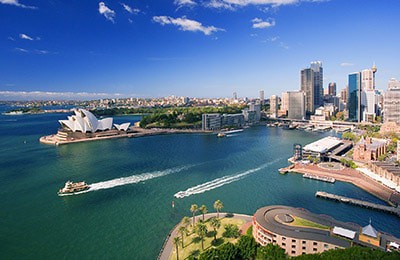
If it’s a honeymoon, an anniversary, or your one shot at Sydney — fine, this is where the magic lives, and hotels like the harbour-facing icons genuinely deliver. But be honest about what you’re buying: you’ll spend your days out exploring, and the neighborhood empties of locals after office hours. If the view is the point, compare The Rocks and quayside hotels here and filter hard for “harbour view” — a view room at A$450 beats a courtyard-facing room at A$380 in the same building every time.
Surry Hills: the smart-money default
Ten minutes’ walk from Central Station, Surry Hills is where Sydney actually eats and drinks — laneway cafés, small bars, and the city’s best mid-range restaurants per square metre. Boutique hotels and converted pubs here run A$180–300. You’re one stop from the CBD, walkable to Oxford Street, and surrounded by breakfast options that make hotel buffets feel like a punishment. For most first-timers who care more about the city than the postcard, this is the answer. See Surry Hills boutique stays here.
Potts Point: boutique on a budget
Sydney’s old bohemian quarter has quietly become its best-value sleep. Art-deco buildings converted into small hotels charge A$150–250, tree-lined streets hide serious restaurants, and the Kings Cross station puts you five minutes from the city loop. The area shed its red-light reputation years ago; what’s left is leafy, walkable and slightly glamorous. Wander downhill and you’re at the Woolloomooloo wharf; uphill and you’re at the gates of the Botanic Garden.
Darling Harbour: the family default, with a caveat
Aquarium, maritime museum, Madame Tussauds, fireworks most Saturdays — kids love it, and the big modern hotels (A$250–450) are built for families. The caveat: it’s a purpose-built precinct, so evenings feel like a convention centre that learned to smile. Great with children under twelve, less so for anyone hunting atmosphere.
Bondi vs. Manly: the beach question
Both are proper beach suburbs where you can build a whole trip around morning swims. Bondi (A$250–450) is the scene — the coastal walk to Coogee, the surf schools, the brunch queues. Manly (A$220–400) trades hype for the best commute in world tourism: a 20-minute ferry across the harbour that doubles as a sightseeing cruise, capped by your Opal card. Staying at a beach adds transit time to museums and the Opera House, so beach-basing works best for stays of five nights or more, or for anyone who’d honestly rather swim than sightsee. If that’s you, check Manly beachfront options here.
Newtown and the Inner West: for the “live like a local” crowd
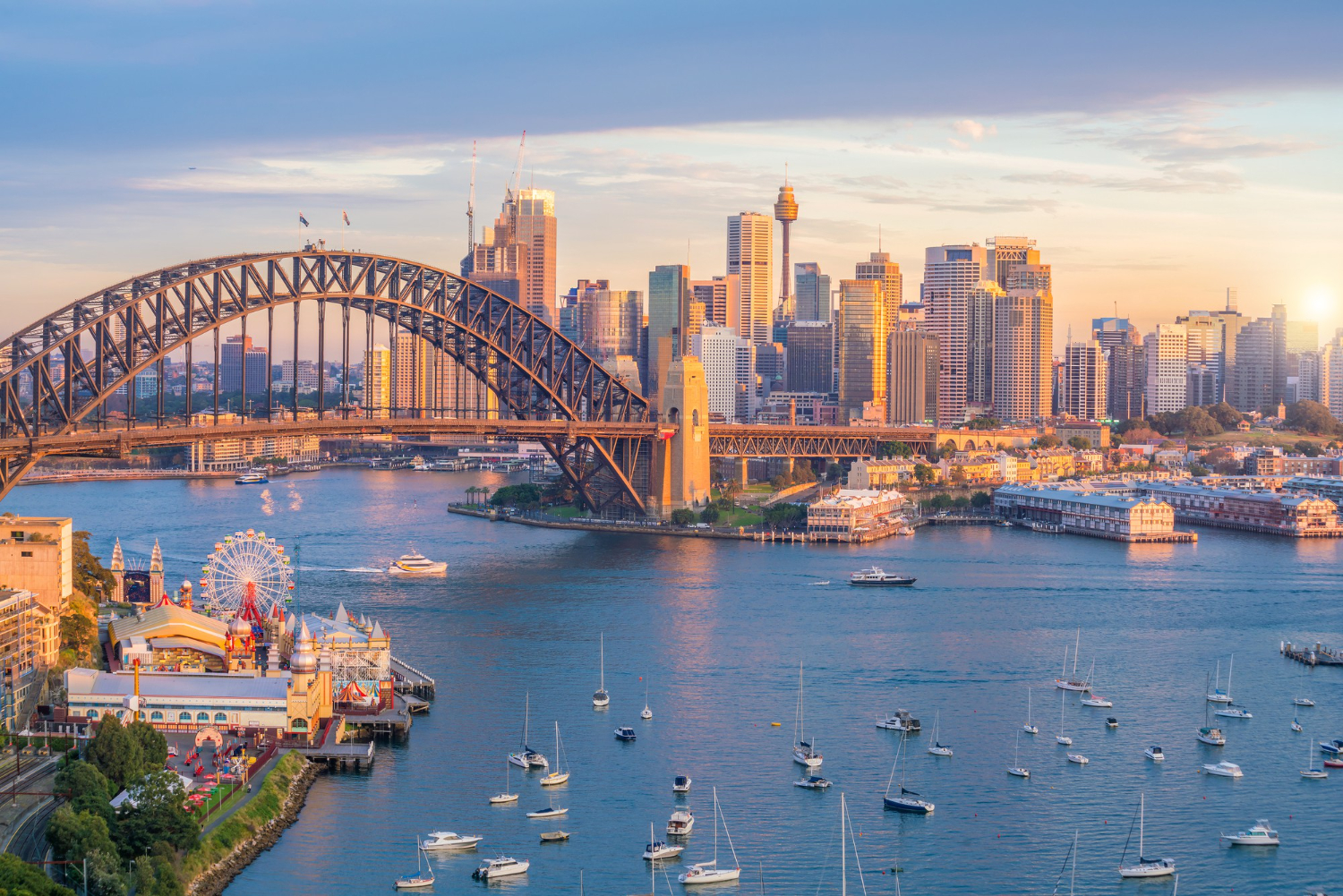
Vintage shops, Thai restaurants by the dozen, live music seven nights a week, and beds from A$130. King Street is the longest continuous café strip in the country, and the train has you at Central in eight minutes. Hotels are thinner on the ground here — much of the stock is guesthouses and apartment stays — but for travelers under thirty or anyone allergic to hotel-land, this is Sydney with its guard down.
The Metro quietly redrew the map of what counts as central
Every neighbourhood guide to Sydney written before 2024 is working from an older transport map, and it shows. The M1 metro line between Chatswood and Sydenham opened on 19 August 2024, running driverless trains under the harbour and through the CBD at turn-up-and-go frequencies. It put Barangaroo, Martin Place, Gadigal and Waterloo on a fast, frequent line for the first time, and it made Crows Nest and North Sydney genuinely convenient rather than technically close.
The second half of that project matters more for where you book. The Sydenham to Bankstown extension converts thirteen kilometres of the old T3 line and upgrades ten stations from Marrickville westward, and it is due to open in the second half of 2026 after a long run of delays. Marrickville, Dulwich Hill and Canterbury sit on it. When it opens, a belt of inner-west suburbs that currently price like “a bit far out” will be a few reliable minutes from the CBD, and the rates will follow within a season or two.
The practical advice for 2026 is to check whether the extension is actually running on your dates before you pay an inner-west premium for it — and, if it is not yet, to treat those suburbs as the bargain they still are. Either way, look at the metro map rather than the suburb’s reputation. Proximity in Sydney is measured in transfers, not kilometres.
Why whole-apartment listings behave so strangely here
Sydney’s short-term rental market runs under rules that most visitors never hear about, and they explain a lot of otherwise baffling pricing. In Greater Sydney, a property let out without the host living on site — the entire-apartment listing you are most likely to book — is capped at 180 nights a year. Every such property has to be listed on the NSW short-term rental register and to meet fire safety requirements. Hosted stays, where the owner is present, have no cap at all.
Two consequences follow, and both cost money. First, a compliant operator with 180 nights to sell will spend them on the dates that pay best, which is why entire-apartment availability thins out in the cheap shoulder weeks and reappears, expensively, over summer and around New Year. Second, bookings of 21 consecutive nights or more do not count against the cap at all — so if you are staying three weeks or longer, you have real negotiating power, and it is worth asking directly for a monthly rate rather than accepting the nightly one multiplied out.
It is also a reason to prefer a listing that shows a registration number. An unregistered property is not merely a paperwork problem; it is the kind that gets removed from the platform mid-booking.
Booking strategy: when and how
Sydney inverts northern-hemisphere logic: peak season is December–February (their summer), and late autumn (May, exactly when Vivid Sydney’s light festival isn’t running) delivers the softest prices. Book 4–6 weeks ahead for normal dates; 4–6 months for Christmas through New Year. Mid-week is reliably 15–25% cheaper than weekends everywhere except the CBD, where the pattern flips — business hotels discount Saturdays. Run your dates through the hotel search below to compare across all the neighborhoods at once.
Getting there and around: the airport train reaches Central in 13 minutes (about A$17 with the station access fee), so pick accommodation near any City Circle station and you’ll never need a taxi. Planning to see more of the country? Domestic flights within Australia make Melbourne and Cairns easy add-ons, a campervan unlocks the coast north or south, and zipping between beaches on a rented scooter is criminally underrated in the Eastern Suburbs.
The short version: view-chasers to The Rocks, food people to Surry Hills, budget aesthetes to Potts Point, families to Darling Harbour, swimmers to Manly, and free spirits to Newtown. Sydney rewards all six choices — just not at the same price.
Fine print that saves money in Sydney

Apartment-hotels are Sydney’s quiet bargain. Chains like the serviced-apartment operators in the CBD and Chatswood give you a kitchen and laundry for the price of a mid-range room. Over a week, cooking four breakfasts and running two loads of washing is worth A$300 against café and laundromat prices — and families fit in one unit instead of two rooms.
Hostels aren’t what you remember. The new-generation places around Central and Bondi charge A$45–65 for a dorm bed and A$150–200 for surprisingly hotel-like private rooms, with rooftop terraces that outclass many four-stars. Under 30 or traveling solo, check them before dismissing them.
The airport fee trick: the train from Sydney Airport is fast but carries a station access surcharge on top of the normal fare, indexed most years and sitting close to A$20 by 2026 — and, importantly, it is charged outside the Opal daily and weekly caps, so it keeps costing you on day five. Family of four? A taxi or rideshare to the CBD (~A$45–60) beats four train fares. Solo? Train, every time. There’s also the 420 bus from the terminals to Mascot station for a few dollars if you’re truly optimising.
Timing quirks worth exploiting: Sydney’s hotel prices dip noticeably in late July and August — their mid-winter, which still means 17°C sunny days, whale-watching season, and the Bondi-to-Coogee walk without the crowds. It’s arguably the city’s best-kept secret season. Conversely, avoid booking blind during Mardi Gras (late Feb–early Mar), Vivid (late May–mid June) and major stadium weekends unless you enjoy paying double.
Ferries as sightseeing: whatever neighborhood you choose, one Opal-capped day spent riding ferries — Manly, Watsons Bay, Parramatta River — delivers more harbour than any A$150 cruise. Locals commute on the best view in world transit; join them.
A final word on safety and logistics: Sydney is among the safest big cities anywhere, but the late-night lockout-era quiet of the CBD means suburbs like Newtown and Surry Hills are actually livelier after 10 pm than the centre. Tap water is excellent, tipping is genuinely optional, and sunscreen is non-negotiable even on cloudy days — the UV index here operates on different physics. Book whichever village suits your trip, grab an Opal card at the airport newsagent, and let the ferries do the rest.





Add comment