
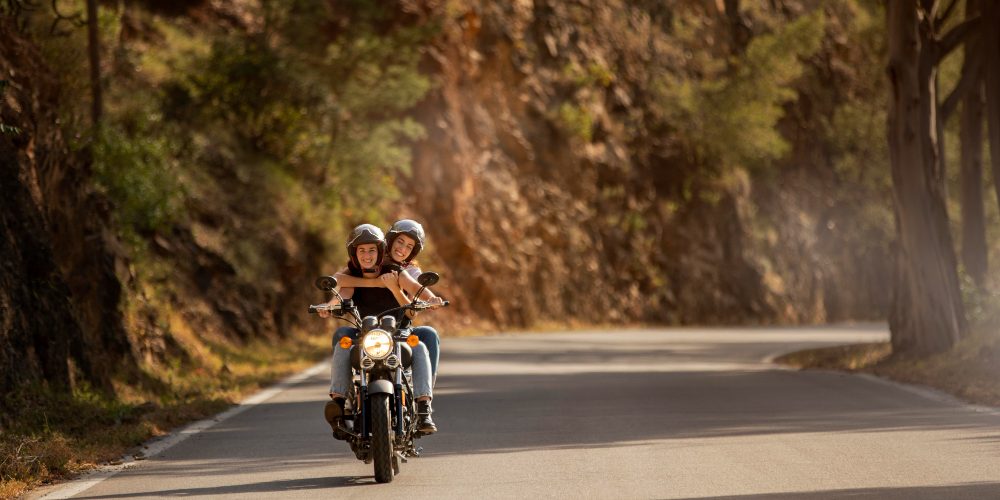
Riders arrive in New Zealand expecting scenery and are surprised by something else: density. The South Island is roughly the size of England with a twentieth of the population, and its road network was laid out by geography rather than planning committees. The result is a place where you can cross three alpine passes, two climate zones and a rainforest in a single day, on empty tarmac, without once repeating a corner. Here is what renting a motorcycle there actually involves.
Where to rent, and what it costs
Christchurch is the main hub, with the largest fleets and the best access to the passes. Queenstown is the second base and suits shorter loops through Central Otago and Fiordland. Auckland works only if you plan to ride south and take the Interislander or Bluebridge ferry from Wellington to Picton — budget roughly NZ$60–100 for the bike plus your own passenger fare, and book ahead in summer.
Typical peak-season daily rates (December to March):
- Small adventure or naked bike (CB500X, MT-07 class): NZ$110–160 per day
- Mid-size (V-Strom 650, F 750 GS, Bonneville): NZ$150–220
- Large adventure (R 1250/1300 GS, Africa Twin, Multistrada): NZ$220–330
- Riding gear hire (jacket, trousers, helmet, gloves): NZ$25–50 per day
- One-way Christchurch to Queenstown drop fee: NZ$150–350
Weekly bookings usually attract a 15–20% discount, and shoulder-season rates in late October or April fall by around a third. The bigger number to plan for is the security bond, commonly NZ$2,500–5,000 held on a credit card. Most operators sell an excess-reduction product at NZ$25–45 per day; on a two-week hire that is a meaningful sum, so check whether your travel insurance already covers motorcycle rental excess — many policies exclude bikes above a certain engine capacity, which is exactly the class you are hiring.
Licence, gear and the legal basics
A full motorcycle licence from your home country is valid in New Zealand for up to twelve months. If it is not in English you need an International Driving Permit or a certified translation, and rental companies check. Learner or restricted licences are not accepted by most operators, and many also impose a minimum age of 21 or 25 for the large adventure bikes.
Helmets are compulsory. Riding on the left is the obvious adjustment; the less obvious one is that New Zealand has an enormous number of single-lane bridges, marked with a give-way arrow showing which direction has priority, and a handful shared with the railway. Take them slowly the first few times. Open-road speed limit is 100 km/h, enforcement is genuine, and tolerances are narrower than most visitors expect.
The three passes worth structuring a trip around
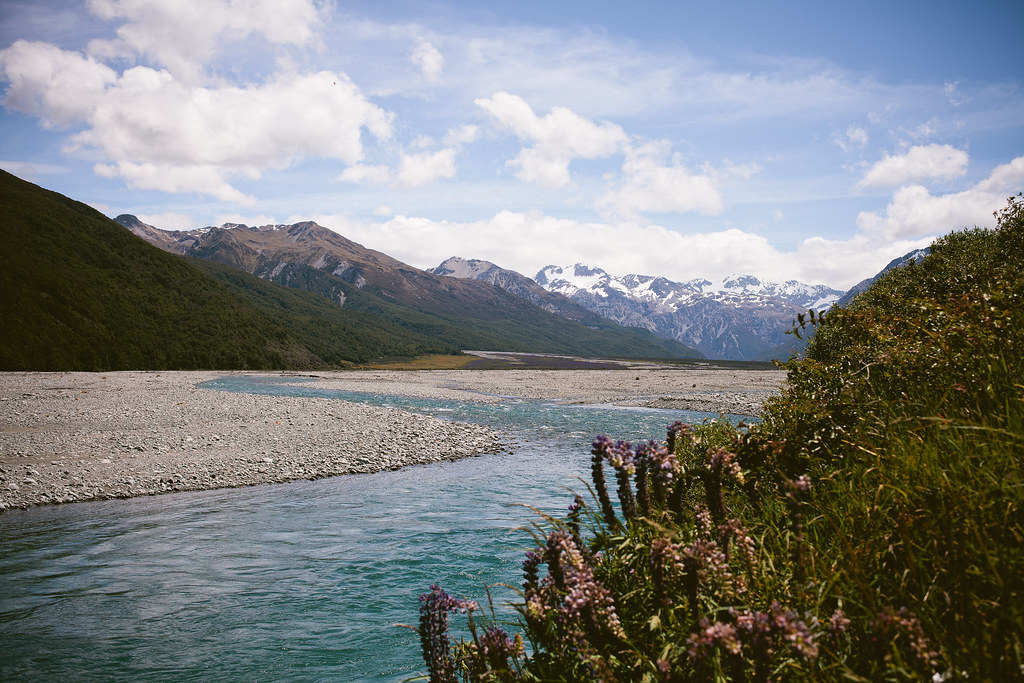
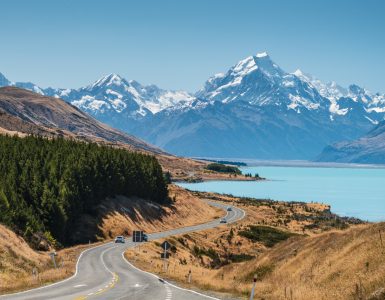
Arthur’s Pass (SH73, 920 m) is the classic Canterbury-to-West-Coast crossing and the most theatrical: braided rivers, beech forest, the Otira Viaduct clinging to the mountainside, and kea parrots that will genuinely dismantle a soft luggage strap while you take photos. Roughly two and a half hours from Christchurch to Greymouth.
Lewis Pass (SH7, 907 m) is the quieter northern option — gentler gradients, long flowing curves through beech forest, and the hot pools at Maruia and Hanmer Springs on either side. Less dramatic than Arthur’s, better riding for many people.
Haast Pass (SH6, 564 m) is the southern link between the glacier coast and Wanaka, low in altitude but running through temperate rainforest with waterfalls beside the road. It is also the wettest: this corner of the country measures rainfall in metres per year, not millimetres.
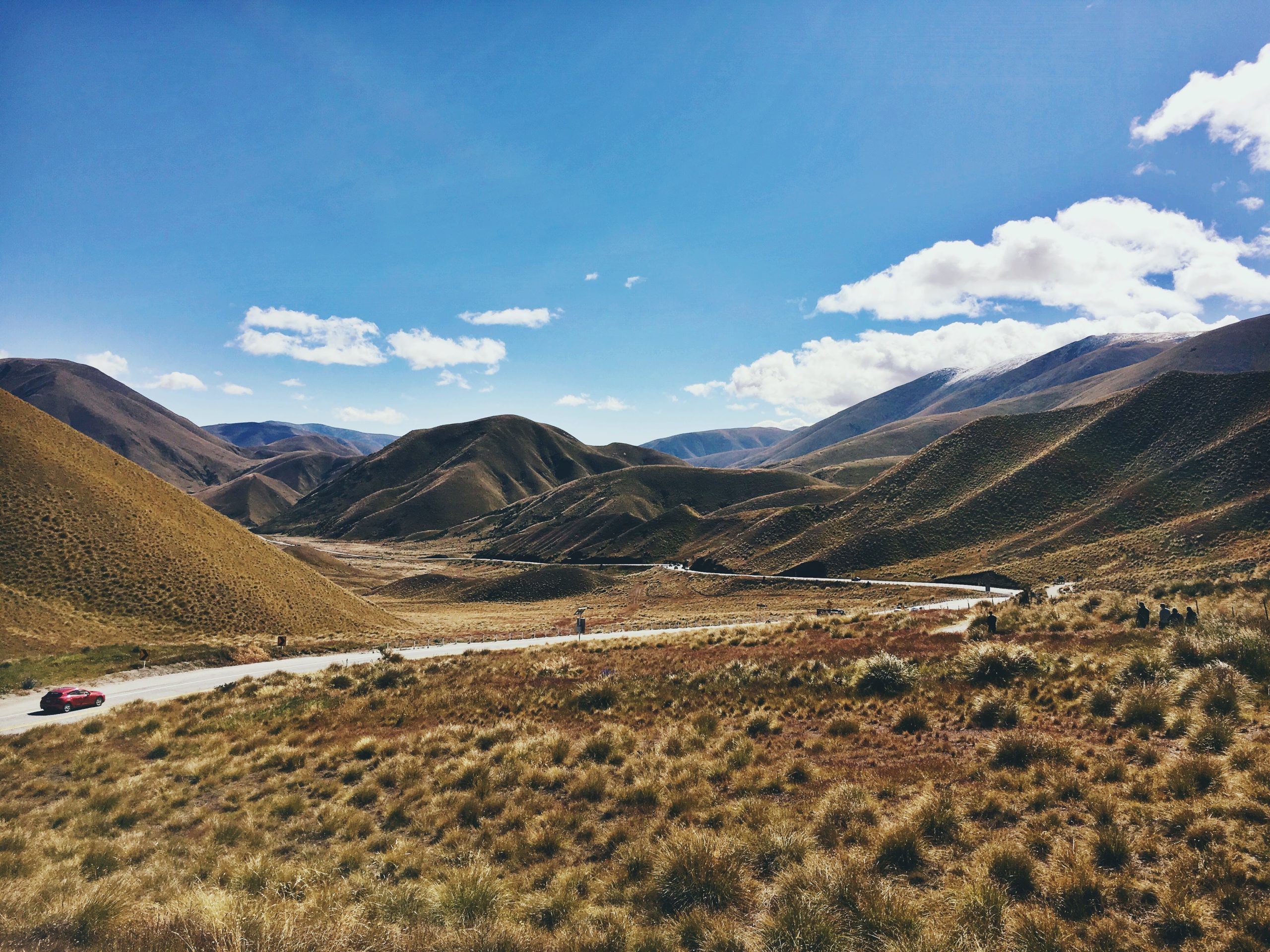
Two more roads belong in any itinerary. The Crown Range Road between Queenstown and Wanaka is the highest sealed road in New Zealand at 1,076 m, with tight switchbacks at the Queenstown end and a superb open run at the top. And the Lindis Pass (SH8, 971 m), linking the Mackenzie Country to Central Otago, is the golden tussock landscape everyone photographs — wide, fast and utterly exposed.
The Milford road deserves its own warning
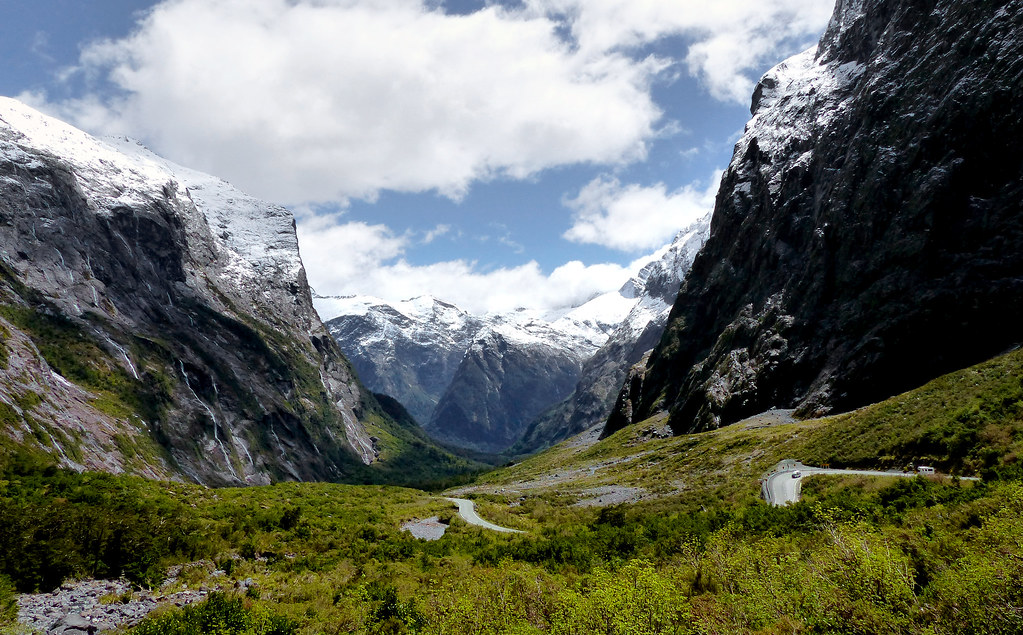
SH94 from Te Anau to Milford Sound is 119 kilometres with no fuel, no shops and long stretches without mobile coverage. Fill up in Te Anau. The road climbs to the Homer Tunnel, a steep, unlit, single-bore tunnel with alternating one-way traffic controlled by lights in season, and a 1-in-10 descent on the Milford side that is slick when wet. In winter the avalanche risk is managed actively and the road closes at short notice; chains can be a legal requirement for vehicles, and bikes are simply a bad idea from June to September. In summer it is one of the great rides on earth, best done leaving Te Anau by 7am to beat the tour coaches.
Weather, timing and fuel gaps
The riding season runs November to April, with February and March offering the most settled weather and the fewest tourists. December and January are busiest and windiest. From June to August the passes ice up, daylight is short and several routes close periodically — a handful of operators still rent, but it is a specialist proposition.
Whatever the month, pack for four seasons in one day, because the phrase is a description rather than a joke: the Southern Alps create a rain shadow so severe that you can leave Fox Glacier in heavy rain and reach Wanaka in full sun ninety minutes later. Pack proper waterproofs, thermal layers and a spare pair of gloves — wet gloves ruin a day faster than anything else.
Fuel costs around NZ$2.50–2.90 per litre and the gaps matter more than the price. Haast to Wanaka is 145 km with nothing in between. Te Anau to Milford is 119 km each way. Fill up whenever you are below half a tank on the West Coast and in Fiordland — small-town stations often close by 6pm and some are card-only after hours.
A ten-day loop that works
Christchurch to Hanmer Springs over the Lewis Pass, down the West Coast to Hokitika and the glaciers, over the Haast Pass to Wanaka, the Crown Range into Queenstown, out to Te Anau and Milford, back north through Central Otago and the Lindis Pass to Lake Tekapo, and home to Christchurch. That is roughly 2,300–2,500 km, comfortable in ten days with rest days at Wanaka and Te Anau. Add Arthur’s Pass as an alternative return leg if you have two weeks.
Book accommodation ahead between December and February — Wanaka, Te Anau and Franz Josef fill completely, and turning up without a bed after 300 km in the rain is miserable. Rates across all of them are easiest to compare on Booking.com. If a rest day in bad weather turns into a car day, DiscoverCars lists local pickups in Queenstown and Christchurch at short notice.
Common questions, quickly
Can I take a rental bike on the ferry? Most operators allow it with prior notice; check the contract, as some restrict travel to one island. Are gravel roads permitted? Usually not on standard contracts — and the good riding is sealed anyway. Sandflies? Ferocious on the West Coast and in Fiordland; repellent is not optional. Is luggage provided? Panniers are normally included on adventure bikes; confirm capacity if you are two-up. Do I need to worry about wildlife? Only kea, and mainly for your luggage.
Watch before you ride
Plan the trip
Flights into Christchurch and Queenstown vary enormously by month — check your dates before fixing the itinerary:
Getting from the airport to your accommodation is the one leg worth arranging before you arrive — compare fixed-price transfers here:
More two-wheel routes: our guides to the Ha Giang Loop in Vietnam, scooter rental in Bali, and for four wheels, campervan rental in Australia and cheap domestic flights in New Zealand.

Add comment