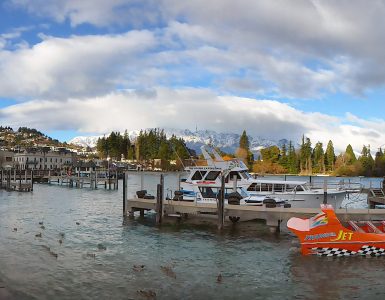
The bus from Queenstown Airport to the town centre costs NZ$2.50 with a Bee Card. A taxi over the same eight kilometres costs NZ$50–85. That is a twenty-fold difference for a twenty-minute journey, and it is one of the widest gaps between public and private transport at any airport in the developed world. Whether the bus is right for you comes down to three things: your luggage, your arrival time, and whether your accommodation is in town or up a hill.
Where the airport actually is
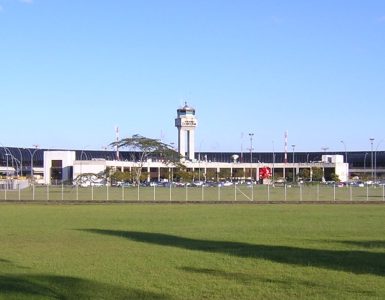
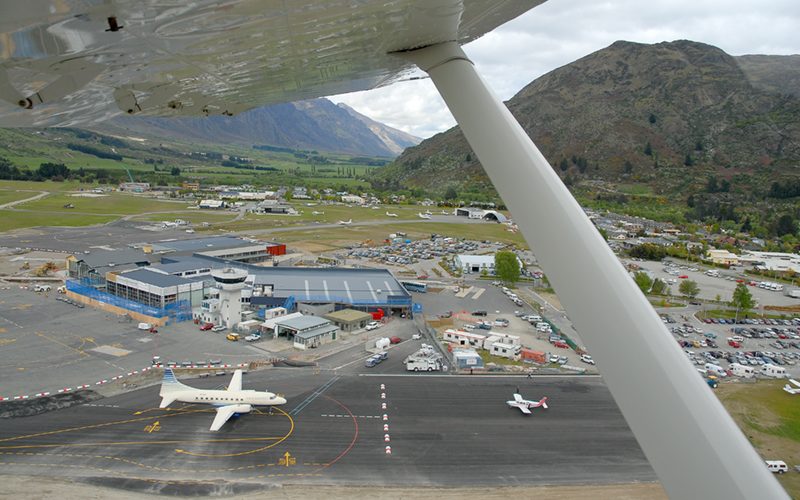
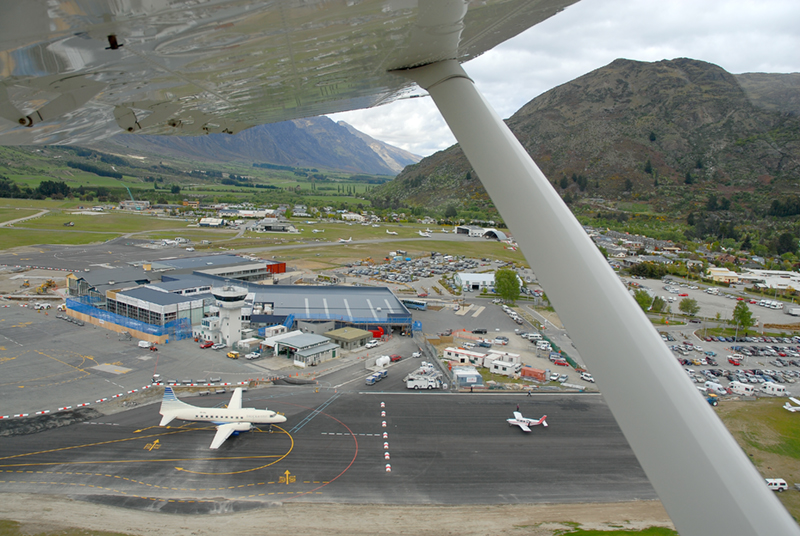
Queenstown Airport (ZQN) is at Frankton, on the flat delta where the Shotover river meets Lake Wakatipu. It is not remote — the town centre is 8 km west along the lake shore, roughly 15 minutes by car in normal traffic. What makes it feel awkward is that Frankton is itself a substantial suburb with supermarkets, retail parks and a growing number of hotels, so “near the airport” and “near town” are two genuinely different places to stay.
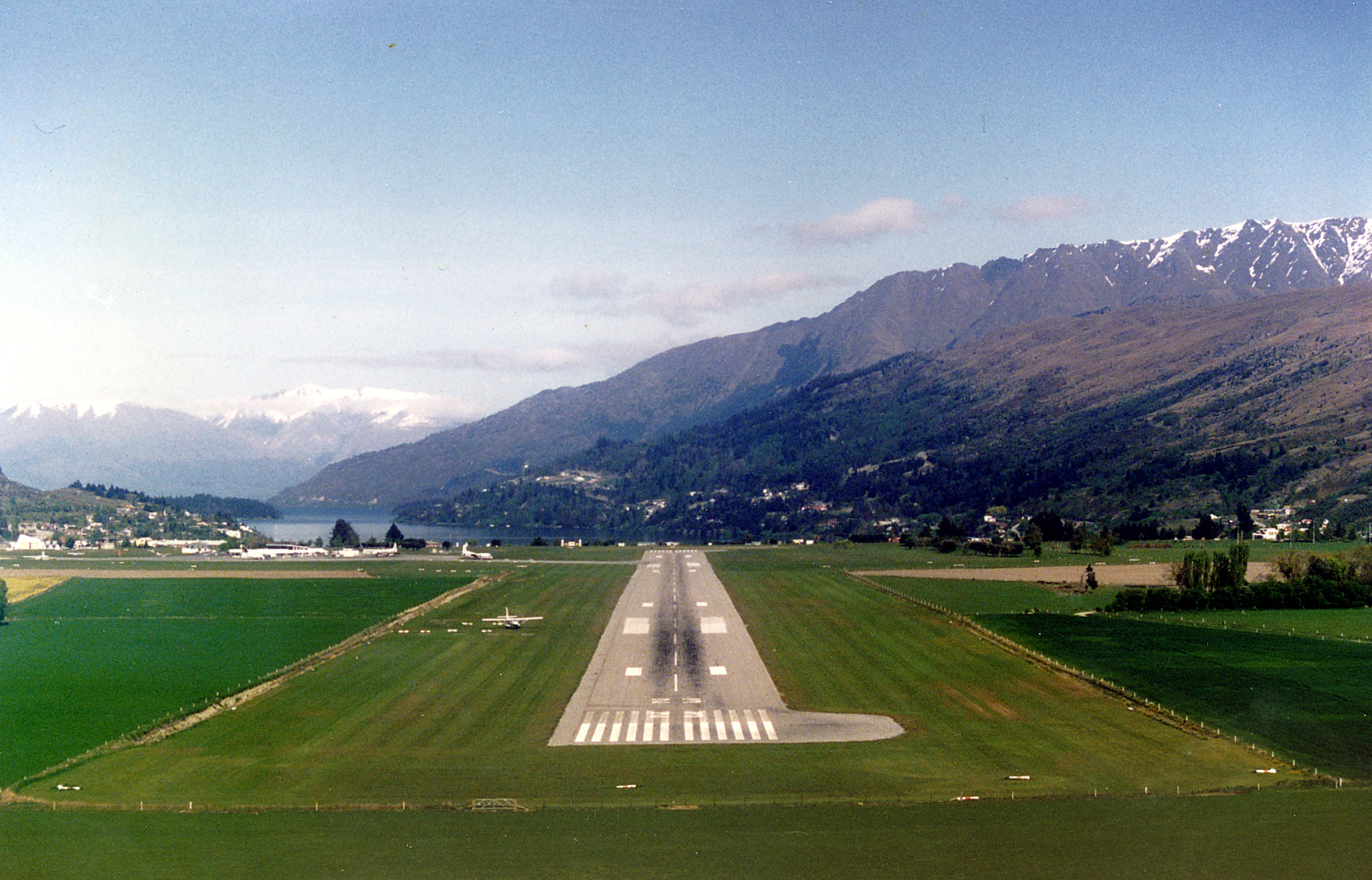
The approach is also famous. Queenstown is a Category C airport requiring specially certified crews, because aircraft descend between mountains rather than over open ground, and the runway has terrain at both ends. There is no night curfew in the conventional sense but the airport’s operating hours are limited, and flights are cancelled or diverted for weather more often than at most New Zealand airports. Build slack into onward plans.
Your four options, with real numbers
1. Orbus public bus — NZ$2.50 with a Bee Card
Route 1 runs between the airport and Queenstown town centre roughly every half hour from early morning until just after midnight, taking about 20 minutes. The fare with a Bee Card is around NZ$2.50 for an adult; paying cash costs NZ$10, so the card pays for itself on the first return trip. Buy the Bee Card at the airport information desk or a Queenstown retailer and load credit before boarding.
Limitations that matter: there is no dedicated luggage area, just the space around your feet and a small rack. With two large suitcases each you will be unpopular and uncomfortable. The route also stops en route through Frankton, so it is not express.
2. Taxi — NZ$50–85
Ten to fifteen minutes door to door. The fare includes an airport pickup surcharge of around NZ$9.10. Ride-hailing operates in Queenstown and is broadly comparable, sometimes cheaper off-peak and considerably more expensive during surge — ski season evenings and the post-flight rush both trigger it.
3. Pre-booked private transfer
A fixed price agreed in advance, a driver waiting with a name board, and a vehicle sized for your luggage. The case for it is specific rather than universal: arriving with skis or snowboards, travelling as a group of five or more, staying somewhere up an unsealed access road in Arthurs Point or Closeburn, or landing after a long-haul flight with children. In those situations the price gap against a taxi narrows or disappears, because a taxi that fits six people with ski bags is not a standard taxi.
4. Rental car
Most rental desks are in the terminal. This is the right choice if Queenstown is the start of a South Island loop rather than the destination — Milford Sound, Wanaka, Glenorchy and the Catlins all reward having your own vehicle, and Queenstown town centre parking is expensive and scarce enough that many visitors staying in town are better off collecting a car on the day they leave rather than on arrival.
Which one is actually right for you
- Solo or couple, carry-on only, staying in town — the bus, without hesitation.
- Couple with two checked bags — the bus is doable but awkward; a taxi is NZ$50–85 and takes the friction away.
- Family of four or more — a pre-booked transfer or two taxis. The bus with four people and four suitcases is a bad idea in a small vehicle.
- Ski or snowboard gear — pre-booked transfer with declared equipment. Do not assume a taxi will take it.
- Staying at Frankton — many hotels there are a 10–15 minute walk from the terminal. Check before booking anything.
- Onward to Wanaka or Te Anau — coach services leave from the airport directly; you do not need to go into Queenstown first.
Frankton or town: the decision most people get wrong
Frankton has quietly become the practical half of Queenstown. It has the supermarkets, the retail parks, the medical centre and an increasing share of the new hotel stock — and it is where the airport is. Rooms there run meaningfully cheaper than the lakefront, and the Frankton Track, a flat 7 km walking and cycling path along the water, connects it to the town centre in about 90 minutes on foot or 25 by bike.
The town centre gives you the bars, the restaurants, the gondola and the lake steamer within a few blocks, and you will not need a vehicle at all. It also gives you noise until late and a price premium of roughly 30–40% for the equivalent room.
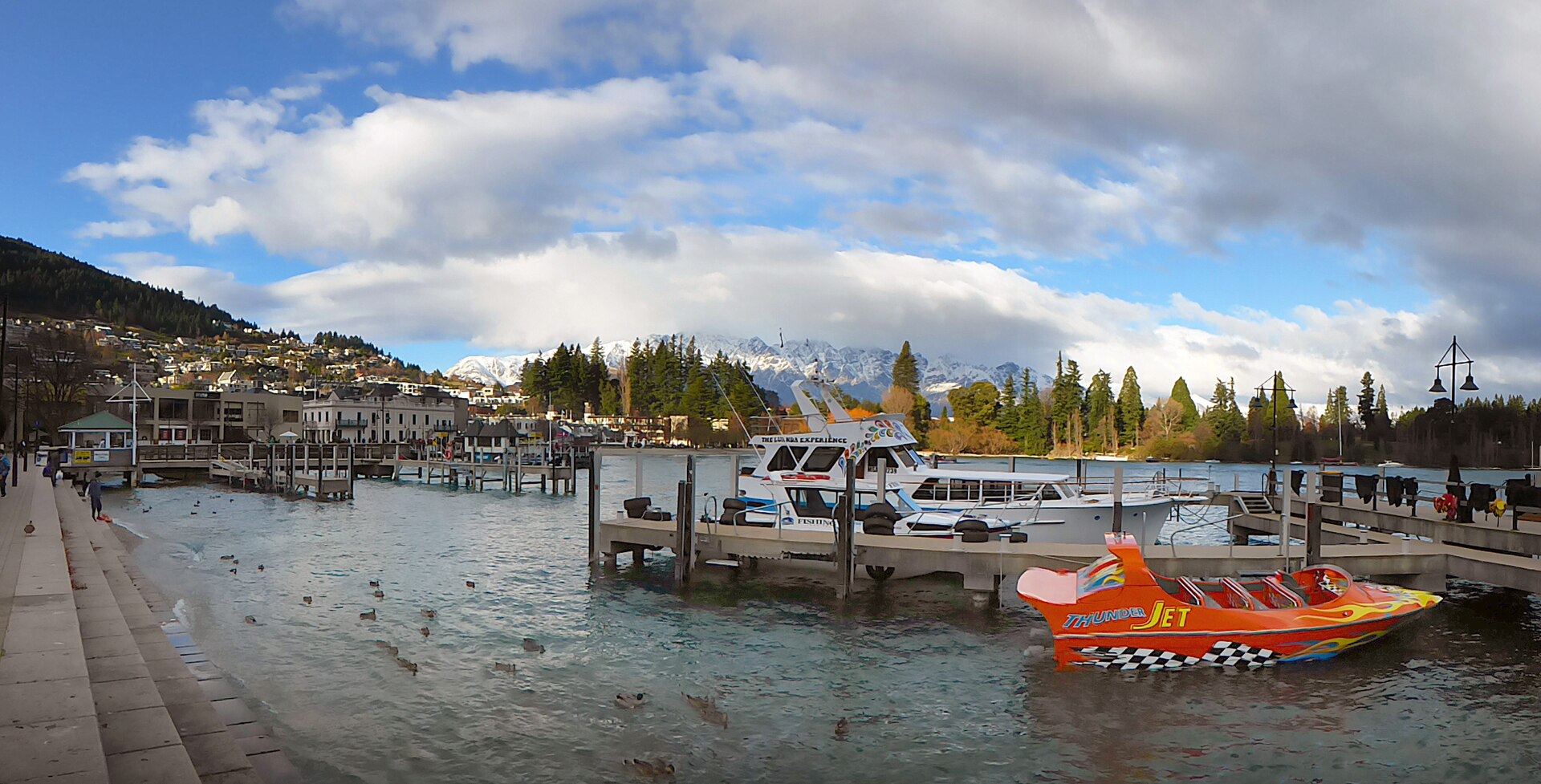
The rule of thumb: if your trip is mostly activities booked with pickup from town — jet boat, bungy, Milford day tours — stay in the centre, because almost all of them collect from the Athol Street area. If your trip is skiing, hiking or driving, Frankton is closer to the mountain access roads and the highway out, and the money saved over a week is real.
Arriving late, arriving early
The last Route 1 departure runs shortly after midnight, so a delayed evening arrival can still catch it — but if your flight is diverted to Christchurch or Invercargill, which happens in poor weather, you will be bussed in overnight and arrive at an hour when nothing is running. A pre-booked transfer with flight tracking is the only option that handles that scenario gracefully.
Going the other way, the airport recommends arriving 90 minutes before domestic departures in peak season. Frankton’s single access road backs up badly on winter mornings, so the 15-minute drive can become 35.
What it costs once you are there
Queenstown is expensive by New Zealand standards. Rough anchors for planning: a Route 1 bus fare anywhere on the network is the same NZ$2.50 with a Bee Card, so the bus into town is also the bus to the Remarkables turnoff and to Frankton’s supermarkets. The Skyline gondola, the Shotover Jet and the bungy operations are all separately ticketed and none of them are cheap. Free alternatives are genuinely good: the Queenstown Gardens loop, the lakefront track to Frankton, and the Tiki Trail walking route up under the gondola, which takes about an hour and saves the fare.
Seasons, and why they matter for transfers
June to September is ski season: flights are full, transfers book out, and equipment changes the vehicle you need. December to February is peak summer with long daylight and heavy demand for hiking and lake activities. March to May and October to November are the shoulders — cheaper, quieter, and the time when the bus is a perfectly pleasant option with luggage because it is half empty.
Practical notes
- The Bee Card works across the Otago region, including Wanaka and Dunedin services. Keep it.
- New Zealand biosecurity is strict. Declare hiking boots, tents and any food; the fine for an undeclared item is NZ$400 on the spot and it is enforced.
- Mobile coverage is good in Queenstown and patchy in the surrounding valleys.
- Queenstown drives on the left, and the roads out toward Glenorchy and the Crown Range are narrow with sharp drops. The Crown Range is the highest sealed road in New Zealand and requires chains in winter.
Further reading
- Car rental in Queenstown
- Campervan rental in New Zealand
- Auckland airport transfers
- Things to do in Auckland
Read next: Where to Stay in Queenstown: The NZ$2.50 Bus and the NZ$10 Ferry