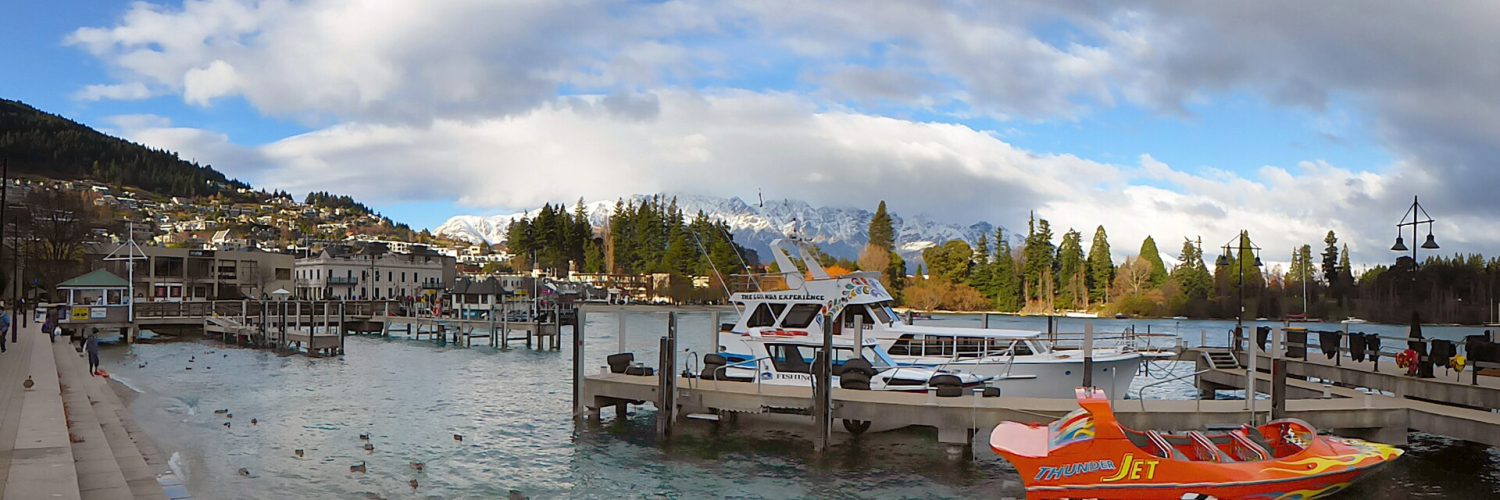
Queenstown’s town centre is about six blocks. That is the whole thing — the lakefront, the Mall, a handful of streets behind it, and then the hill starts. Almost every hotel bed built here in the last decade has gone somewhere else: Frankton, Remarkables Park, Kelvin Heights, Jacks Point. So when a booking site tells you a room is “in Queenstown”, the useful question is not how far it is from the lake. It is which bus route it sits on, and whether your daily trip into town costs NZ$2.50 or NZ$10.
That gap is the single most useful thing to understand before you book. The bus is a flat NZ$2.50 with a Bee Card anywhere in the Queenstown network. The Kelvin Heights ferry across the bay is NZ$10 with a Bee Card and NZ$14 with a bank card, with no concessions for anyone. Same town, same operator, four times the price — and if you are staying on the peninsula for five nights and going into town twice a day, that difference alone is over NZ$150.
Why the town is this shape
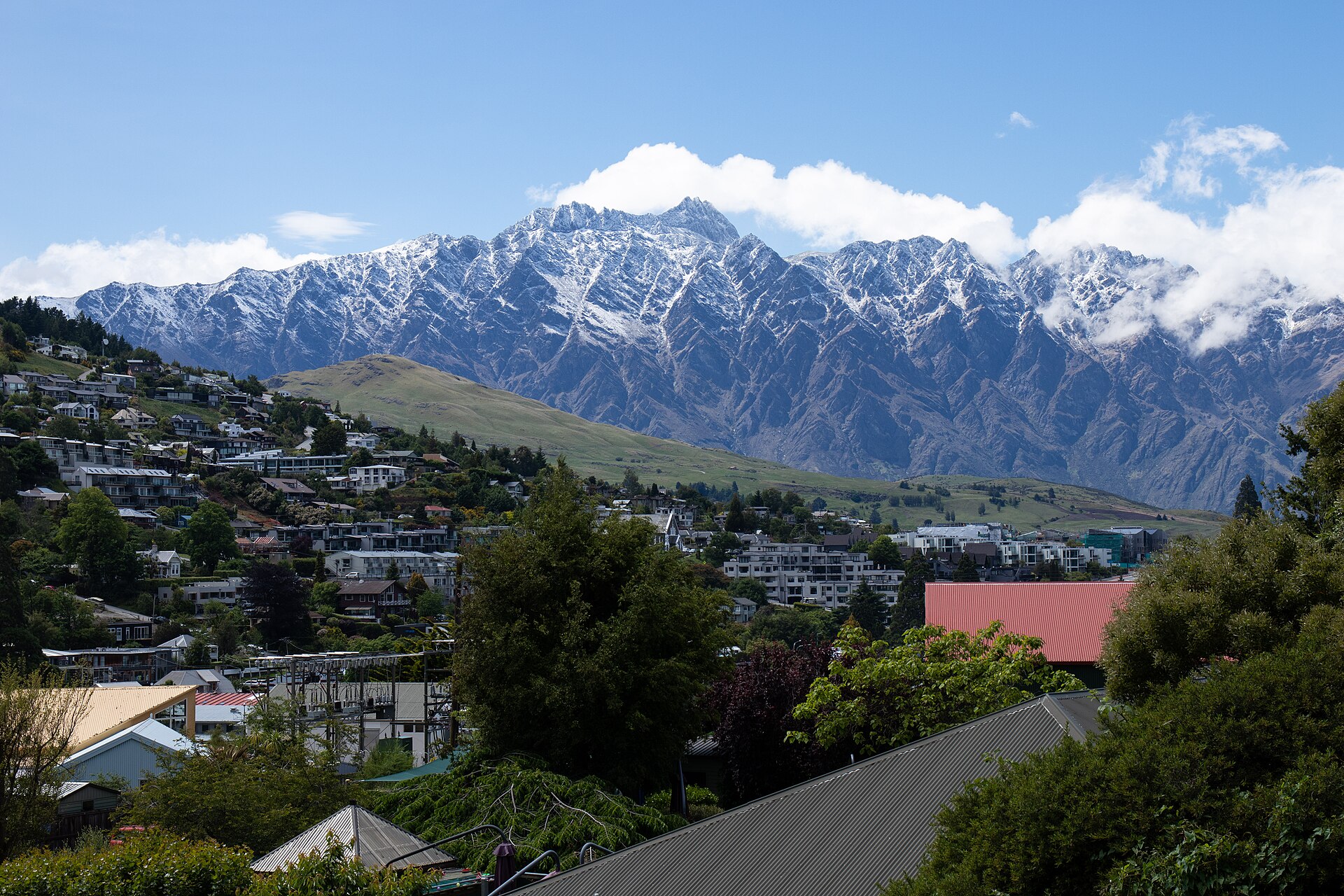
Queenstown sits in a basin gouged by a glacier. Lake Wakatipu is a 291-metre-deep S-shaped trench, the mountains come down to the water on almost every side, and the flat land is confined to a few terraces: the town bench, the Frankton flats where the airport is, and the Kelvin Heights peninsula opposite. There is no room to sprawl in a circle the way a normal town does. Everything is strung out in a line along the shore or perched on a slope.
This is why the geography of your accommodation matters more here than in most places. A hotel that is two kilometres from town as the crow flies can be a twenty-minute drive, because the road goes around a bay or up and over a spur. It is also why “lake view” is close to meaningless as a filter — almost everything has one — while “walk to town” is the genuinely scarce attribute.
Getting from the airport to wherever you are sleeping
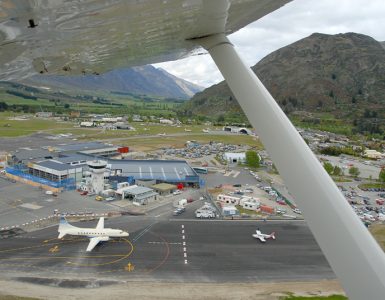
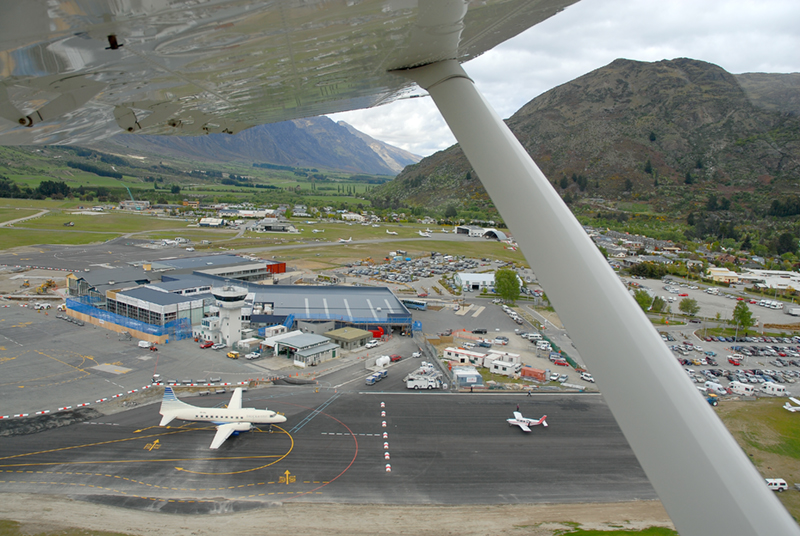
Queenstown Airport (ZQN) sits at Frankton, about eight kilometres from the town centre. The Orbus route 1 stops at the terminal on its way between Sunshine Bay and the Remarkables Park shops, via the Frankton hub, roughly every 15 minutes from 6 a.m. to 1 a.m., seven days a week.
The fare structure at the airport is the one thing that catches people out. Within the network a cash bus fare is NZ$4, but a cash fare that starts or ends at the airport is NZ$10 for an adult and NZ$8 for a child or youth. With a Bee Card it is NZ$2.50 regardless — the same as any other trip. The card costs NZ$5 plus a NZ$5 minimum top-up, so it pays for itself on the airport leg alone if there are two of you. Buses do not take bank or credit cards at all, only cash or a Bee Card. Bee Card holders also get a free transfer if the second bus is tagged within 45 minutes of tagging off the first.
If you are arriving late, with ski gear, or with a group, a pre-booked door-to-door transfer removes the two-bus problem entirely, and it is the only option that puts you at a Kelvin Heights or Arthurs Point address without a change.
The areas, and who each one actually suits
Town centre — pay for the walk
This is the only part of Queenstown where you do not need a plan to get dinner. Everything within about a ten-minute walk: the Mall, the lakefront, the gondola base, the bars, the supermarket, the departure point for almost every tour. You pay a substantial premium for that, rooms are often smaller and older than the equivalent money buys elsewhere, and the bars on Church Street go until 4 a.m. Ask for a room facing away from the street.
Book here if you have no car, you are staying two or three nights, and you want to do the town-based things — the gondola, the Earnslaw, the bar scene — without thinking about timetables.
Frankton — the practical choice
Frankton is where the airport, the hospital, the supermarkets and most of the newer hotels are. It looks like a retail park because it partly is one. What it gives you is space, lower prices than the centre, a serviceable bus every quarter hour, and the Frankton Track — a flat lakeside walking and cycling path that runs all the way into town in about an hour on foot or twenty minutes on a bike.
Book here if you have an early flight, you are travelling as a family and need a second bedroom, or you are self-catering. This is also where a rental car makes the most sense, because parking is free and plentiful in a way it never is in town.
Kelvin Heights — quiet, and the ferry maths
The peninsula directly across the bay from town. It is genuinely lovely, it has the golf course, and the views back across the water are the ones on the postcards. It is roughly a 20-minute drive to the town centre and about 15 minutes from the airport. Orbus route 3 serves it at the normal NZ$2.50 Bee Card fare.
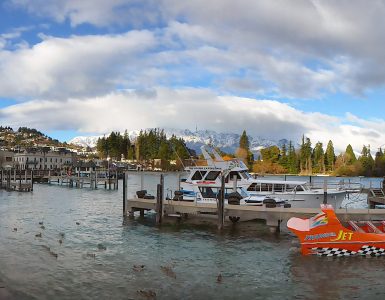
The ferry is the attraction and the trap. Crossing directly by water is quick and scenic, but at NZ$10 a Bee Card single or NZ$14 on a bank card, with no child, senior or Community Connect concession, a family of four doing a return crossing each day is spending NZ$80 a day on the commute. Take it once for the experience; take the bus the rest of the time.
Book here if you have a car, you value quiet over convenience, and you are staying long enough that a slower pace is the point.
Fernhill and Sunshine Bay — the view, and the hill
Fernhill climbs the slope about five minutes’ drive west of town on the Glenorchy road, and Sunshine Bay continues past it — it is the western terminus of route 1. The views down the lake are the best of any accommodation area in Queenstown. The catch is the gradient: the walk down into town takes fifteen or twenty minutes and is pleasant, the walk back up is neither. Dining options up there are thin, so plan to eat in town or self-cater.
Book here if you have a car or you are content to use the bus in both directions and never walk home uphill after dinner.
Arthurs Point — adventure basecamp
Seven minutes’ drive north on the Coronet Peak road, in the Shotover gorge. This is where the Shotover Jet, the Onsen hot pools and Canyon Brewing are, and it is the closest base to Coronet Peak for skiing and to the Queenstown Bike Park trails. It is small, it is beautiful, and there is essentially nothing there except those things.
Book here if your trip is built around the mountain rather than the town, and you have a vehicle.
Lake Hayes, Arrowtown and Jacks Point — the outer ring
Twenty to twenty-five minutes out. Arrowtown is a preserved gold-rush village with genuine character and its own restaurants, and it is far more pleasant in the evening than anywhere in Queenstown proper. Lake Hayes Estate is residential and cheap by local standards. Jacks Point is golf-and-views on the southern shore. All three are served by buses — routes 2, 4 and 5 — but the frequency is lower and the last services are earlier than route 1.
Book here if you are staying a week or more, you have a car, and Queenstown town is somewhere you visit rather than somewhere you live.
Season is the real price lever
Queenstown has two high seasons and they behave differently. Winter, roughly late June to late September, is ski season: Coronet Peak, The Remarkables and Cardrona fill the town, and the demand is concentrated on the weekends and school holidays. Summer, December to February, is hiking, biking, lake and wedding season, and it is more evenly spread across the week.
The shoulder months — late March to May, and October to early November — are when this town is at its best value and, for many people, at its best full stop. The autumn colour around Arrowtown in April is the single most photographed thing in the region, and rooms in early May are a fraction of what the same room costs in July.
One structural warning: Queenstown has a chronic accommodation shortage relative to demand, so lead time matters more here than almost anywhere else in New Zealand. For a winter weekend or the Christmas-to-mid-January stretch, three to six months ahead is normal, not cautious.
Do you need a car where you are staying?
The honest answer depends entirely on the area. In the town centre a car is an expensive liability — parking is metered, limited and constantly patrolled, and every tour picks up from town anyway. In Frankton it is convenient. In Fernhill, Arthurs Point, Kelvin Heights or anywhere in the outer ring it moves from convenient to close to necessary, because the bus frequency drops and the last service is early.
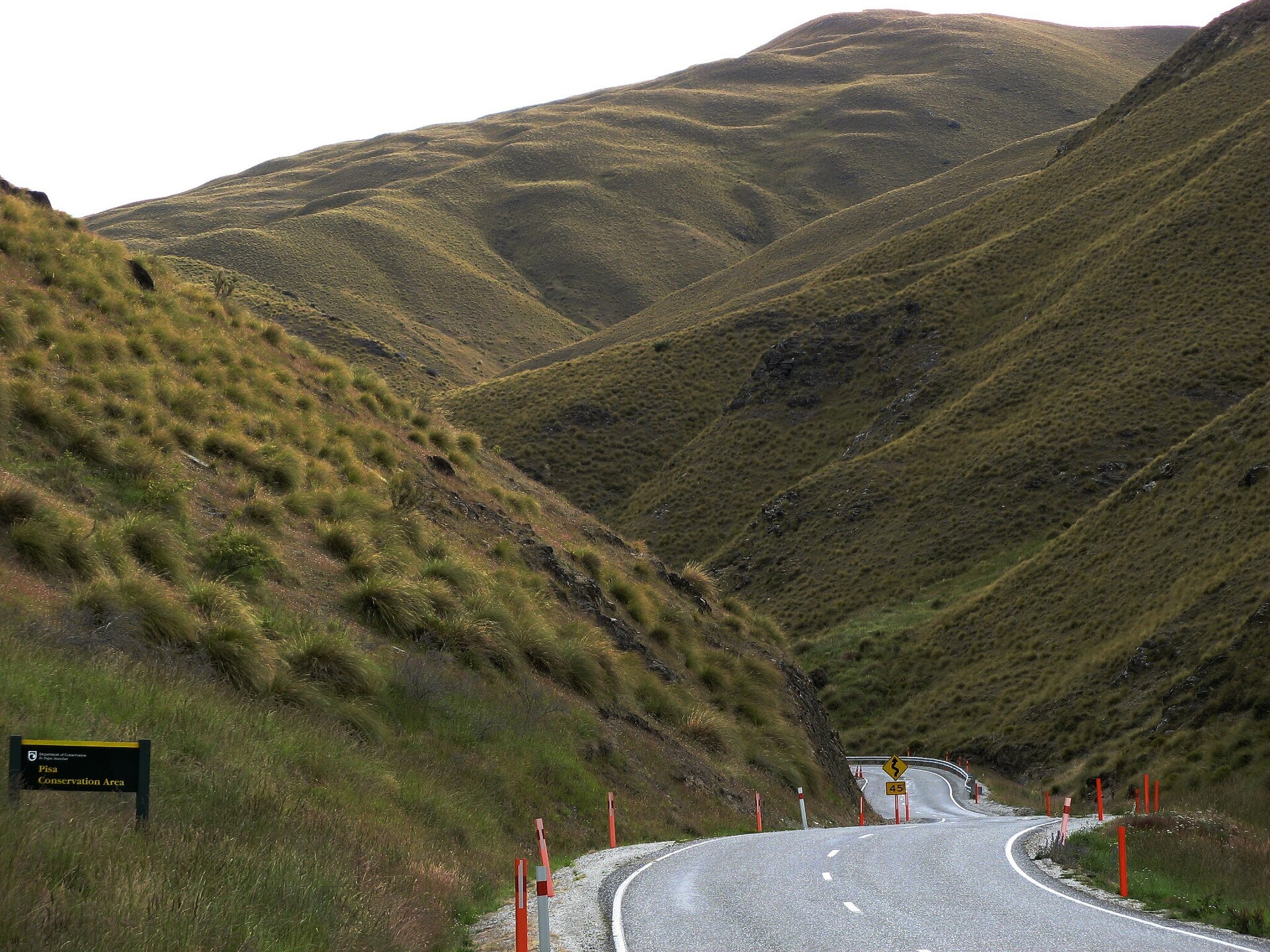
If you do rent, two local conditions are worth knowing before you sign. The Remarkables access road is a 13-kilometre unsealed climb with a series of tight switchbacks, and many rental agreements exclude unsealed roads — this is the road that voids more Queenstown rental insurance policies than any other. The Crown Range Road to Wanaka is the highest sealed road in New Zealand and is genuinely serious in winter, when carrying chains is mandatory at times.
A short decision list
- No car, two or three nights, want the bars and tours — town centre, and accept the price.
- Family, self-catering, early flight — Frankton. The Frankton Track means you still get into town without driving.
- Skiing at Coronet Peak — Arthurs Point, or Frankton if you want supermarkets too.
- Skiing at The Remarkables — Frankton or Remarkables Park, closest to the access road turn-off.
- Week or more, car, want quiet — Arrowtown or Lake Hayes. You will eat better and pay less.
- Views above everything — Fernhill, with the understanding that you will be using the bus or the car every single day.
Practical notes
- Buy the Bee Card at the airport or an ORC office before your first bus. Bank and credit cards are not accepted on Queenstown buses.
- Under-fives travel free; children 5–12 and youth 13–18 pay NZ$1.50 with a registered concession loaded onto a Bee Card.
- The ferry has no concessions at all — everyone over five pays the same NZ$10 or NZ$14.
- Supermarkets are at Frankton and Remarkables Park, not in the town centre. If you are self-catering, factor a shop into your arrival day.
- Queenstown’s weather changes fast and the forecast is unreliable more than 48 hours out. Do not book the one weather-dependent thing you care about on your last day.