Sri Lanka is one of the very few countries where an International Driving Permit is required and still not enough. Since 30 March 2025 the Automobile Association of Ceylon will not issue its recognition permit without an IDP, and since 3 August 2025 there has been a Department of Motor Traffic counter in the arrivals hall at Bandaranaike International Airport that issues a temporary Sri Lankan licence on the spot, 24 hours a day, for LKR 15,000. Almost every rental page still tells you to “bring an IDP”. Bring it, but understand that riding on the IDP alone is riding unlicensed, and an unlicensed rider has no insurance.
This guide is about getting that paperwork right in the least time, what a scooter actually costs in Colombo in 2026, and a frank answer to whether you should ride inside the city at all. For most visitors the honest answer is: collect the bike in Colombo, but ride out of it.
Two documents, not one: how the permit system works
Sri Lanka does not recognise foreign licences or IDPs directly. To ride legally you need a Sri Lankan document issued on top of what you already hold. There are two ways to get one, and they differ a lot in effort.
The airport counter. The Department of Motor Traffic desk sits in the arrivals walkway at Bandaranaike International, near the SPAR supermarket, and runs around the clock. It issues a temporary licence for light vehicles — scooters, motorbikes and cars, but not tuk-tuks — for LKR 15,000 covering one month, or LKR 21,000 for two, with validity available up to five months. You need your passport, your home licence (held for at least a year, in English or with a certified translation) and your IDP. You land, queue for a few minutes, and walk out able to ride.
The AA Ceylon office. The Automobile Association of Ceylon at 40 Sir Mohamed Macan Markar Mawatha, Colombo 03, issues recognition permits on weekdays only; allow three to four hours in the office and a fee in the region of USD 32–40 depending on who is quoting it. Since March 2025 the AAC only accepts applicants holding a valid IDP — a national licence alone is refused. The Department of Motor Traffic head office at 341 Elvitigala Mawatha, Colombo 05, is the third option and charges the same LKR 15,000 as the airport counter, with the same office hours limitation.
Whichever route you take, officials will look at the back page of your IDP, where the vehicle categories are listed. Your entitlement must cover motorcycles. This is the trap for a lot of Europeans and Americans: a car-only licence gets you a car or, with an extra endorsement from the AAC, a tuk-tuk. It does not get you a scooter over 50cc, and virtually every rental scooter in Sri Lanka is 100cc or more. No permit, permit service or rental shop can add a category your home licence does not have.
Because the airport counter is the sensible option and it is at the airport, this is one of the rare trips where your very first decision on arrival is the licensing one. Do it before you leave the terminal.
Is riding inside Colombo worth it at all?
Here is the answer most rental pages will not give you: probably not on day one, and possibly not at all.
Colombo traffic is dense, fast, and governed more by negotiation than by lane discipline. Buses are the apex predator; tuk-tuks fill every gap; and the larger vehicle always has right of way. Sri Lanka drives on the left, which catches out visitors from most of Europe and the Americas, and monsoon rain turns painted road markings into ice.
What a scooter is excellent for is leaving Colombo. The coast road south towards Mount Lavinia, Kalutara, Bentota and Hikkaduwa is flat, scenic and far more forgiving, and the hill-country roads inland are among the best riding in Asia. Most experienced riders pick the bike up in Colombo and are out of the city within the hour.
If your plan is to see Colombo itself, use the city’s tuk-tuks, hailed through the PickMe or Uber apps at fixed fares. That is cheaper than a day’s rental, considerably less stressful, and — to be transparent — earns this site nothing. It is still the right call for a city day.
What a scooter costs in 2026, and the deposit that goes with it
Scooter hire in Sri Lanka is cheap by regional standards, and rates fall steeply for weekly and monthly hire, which is why so many visitors end up riding the whole island rather than doing a day trip. Prices checked against operator listings in September 2026 give this picture:
- 100–125cc automatic scooter: USD 8–15 a day from established operators. Street-corner shops quote LKR 1,000–2,000 for a day or two, but at that price expect thin tyres, no paperwork and no support.
- 125–150cc motorcycle: USD 15–25 a day. One Negombo-based operator lists a Bajaj Avenger 150 from USD 14 a day with a USD 150 deposit — and charges USD 15 extra to hand it over in Colombo rather than at the airport or Negombo, a fee that is worth knowing about before you pick a collection point.
- Royal Enfield Classic 350: USD 35–50 a day. Lovely on the hill roads, pointless on the coast road.
- Security deposit: USD 50–150 is the normal range, sometimes demanded in cash.
- Licence arrangement: some operators will pre-arrange the AAC permit for around USD 40–45. That is roughly what the airport counter charges, so it only makes sense if you are collecting the bike far from the airport.
Helmets, third-party insurance and unlimited mileage are normally included, but confirm the mileage clause: a minority of companies cap kilometres.
Things worth checking before you hand over a deposit, in order of how often they cause problems:
- Insurance and what it excludes. Cover is usually third-party only and void if you were not properly licensed — which brings the paperwork above back to the centre of things.
- Helmets. Legally required for rider and pillion, and enforced. Insist on one that fits; the ones offered are often token.
- Tyres and brakes. Inspect them yourself. Coastal salt and monsoon roads are hard on both.
- Passport retention. Some operators ask to hold your passport as a deposit. Do not agree to this — offer a cash deposit or a photocopy instead.
- Photograph everything before you leave, including the underside of the fairings and the odometer reading.
What is not worth the money
A big-engined bike for the coast. The A2 south of Colombo rarely lets you go above 50 km/h for long, and a 125cc scooter with a step-through floor for a bag is easier to park at every stop. Save the Enfield budget for a hill-country week.
Getting in from the airport
Bandaranaike International is about 35 km north of Colombo, 45 minutes to well over an hour by road. Most flights from Europe and the Gulf land in the small hours, precisely when you least want to be collecting a scooter you have never ridden.
There is a further reason not to ride in from the airport: motorcycles are banned from Sri Lanka’s expressways, including the Colombo–Katunayake airport expressway and the Southern Expressway. A scooter has to take the old Negombo road through Ja-Ela and Wattala, which is slow and unpleasant at any hour. A pre-booked transfer uses the expressway, gets you and your luggage into the city while you are jet-lagged, and lets you pick the scooter up the next morning when you are rested and the traffic makes sense.
Where to base yourself if riding matters
Colombo Fort and Pettah put you in the historic and commercial core, close to the Old Dutch Hospital and the markets. Dense, noisy, and awkward to park in.
Colombo 3, 4 and 7 — Kollupitiya, Bambalapitiya and Cinnamon Gardens — hold most of the mid-range and upper hotels, are greener and quieter, and sit right on the coast road south, which is the direction you will actually ride.
Mount Lavinia, about 12 km south, is where a lot of visitors wish they had stayed: beach, calmer roads, easy parking, and a short ride or train hop into the city when you want it. If riding is central to your trip, base here rather than in the middle of Colombo.
Three rides out of the city
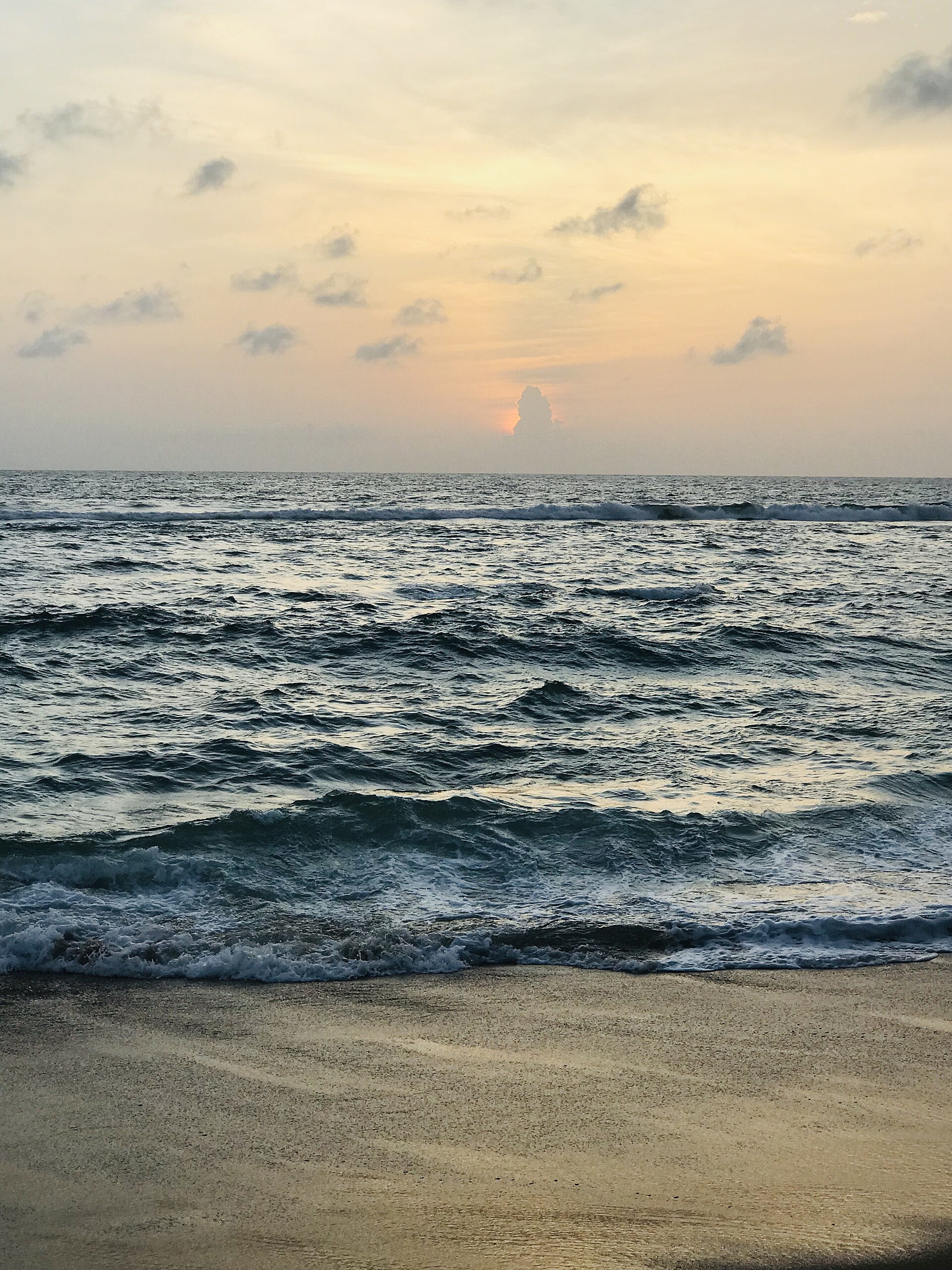
South along the coast. The A2 through Dehiwala, Mount Lavinia, Kalutara and on to Bentota and Hikkaduwa is the classic first ride: flat, close to the sea, with somewhere to stop every few kilometres. It is around 100 km to Hikkaduwa, comfortably a day with stops, and remember the Southern Expressway running parallel is closed to you.
Inland to the hill country. Kandy, Ella and the tea estates are where Sri Lankan riding earns its reputation — cool, green, and endlessly twisty. It is a serious multi-day undertaking rather than a day trip from Colombo: budget 40–50 km/h average, not the 80 km/h a map app assumes. Our guide to the Kandy to Ella route and its alternatives covers the options.
Negombo and the north. Handy if your operator is near the airport, with a lagoon, fishing beaches and far less traffic than the southern corridor.
Colombo on foot, which is the surprise
The city rewards walking in a few concentrated pockets even though it is hostile to it overall: Galle Face Green at sunset, Gangaramaya Temple and the lakeside Seema Malaka, the Old Dutch Hospital precinct in Fort, Pettah market, and the National Museum, which is far better than its reputation. We cover all of these in things to do in Colombo.
Practical notes
- Riding is on the left. Give this real attention for the first day.
- Monsoon timing differs by coast. The south-west, including Colombo, is wettest around May–September; the east and north around October–January. There is no single dry season for the whole island.
- Police checks are routine and polite. Carry your passport, home licence, IDP and Sri Lankan permit together; you will be asked for all four.
- Night riding outside the city is best avoided — unlit roads, stray dogs, and oncoming buses. Plan to be off the road by 18:00.
Prices checked against operator listings in September 2026. Permit fees are those published by the Department of Motor Traffic counter and reported by licensed operators; confirm the current figure at the counter, as the LKR amount has changed once already since the service opened.
Further reading
- Things to do in Colombo — the city itself, in detail.
- Kandy to Ella: the train and its alternatives — the hill-country route.
- Scooter rental in Phuket — the same vertical, a very different licensing regime.
Add comment