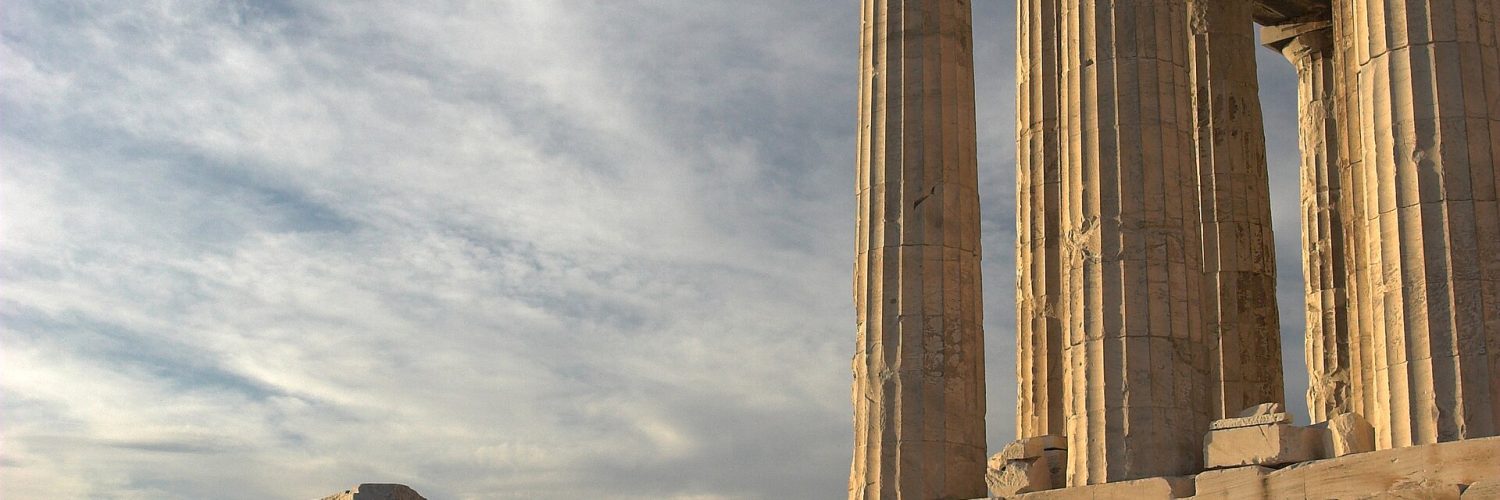
Athens is the only major European capital where the thing you came to see is visible from the pavement outside your hotel. That sounds like a gift. In practice it is a trap, because you keep putting the Acropolis off until the afternoon you finally climb it in 36°C heat with four thousand other people who did the same arithmetic.
The other thing nobody tells you is that the ticket you buy at the gate is the worst-value ticket in the city. There is a better one, it costs six euros more, and almost nobody standing in the queue knows it exists.
Why Athens looks the way it does
When Athens was made the capital of the new Greek state in 1834 it was a town of roughly ten thousand people huddled below the rock. It was chosen for what it had been, not for what it was. Everything you see today was built on top of that village in two violent bursts.
The first came in 1923, when the population exchange with Turkey pushed well over a million refugees into Greece. Whole neighbourhoods — Nea Smyrni, Nea Ionia, Kaisariani — are named after the cities in Asia Minor that their first residents had just been forced to leave. Athens roughly tripled in a decade.
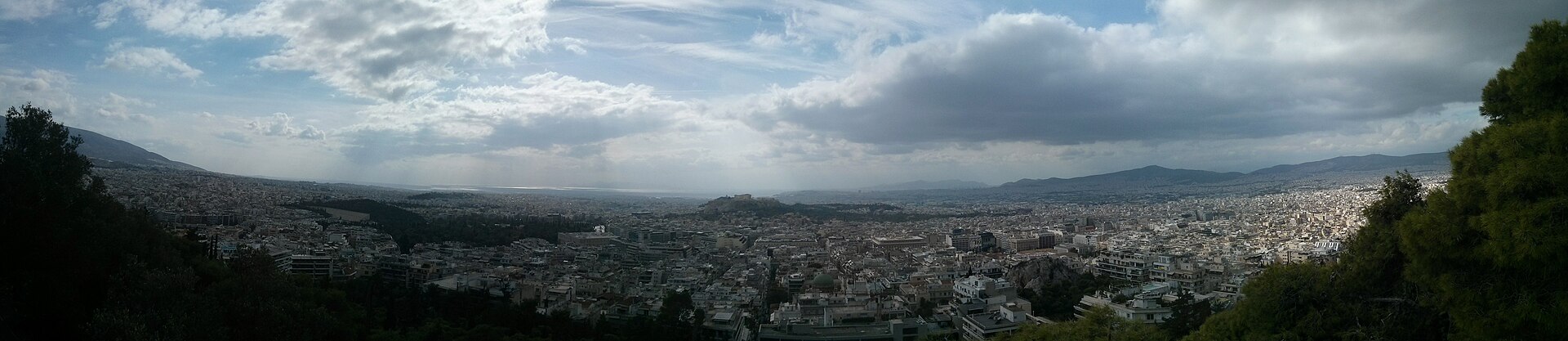
The second burst was the antiparochi system of the 1950s to 1970s. A landowner handed a plot to a developer and was paid not in cash but in apartments in the building that went up on it. No bank, no planning authority, no master plan — just a swap, repeated tens of thousands of times. That is why central Athens is a near-uniform sea of five- and six-storey concrete blocks with balconies and awnings, and why the ancient sites sit inside it like holes punched in a sheet.
Once you can see that, the city reads completely differently. The mess is not neglect. It is a legible record of two emergencies.
Getting in from the airport
Eleftherios Venizelos sits about 33 km east of the centre, and the connection is genuinely good. Metro Line 3 runs from the terminal to Syntagma in roughly 40 minutes for €9 one way, €16 return — note that the airport fare is a special one, not the standard city ticket. Trains run about every 30 minutes and stop overnight, roughly 06:30 to 23:30.
The X95 express bus to Syntagma costs €5.50, runs 24 hours a day, and also goes about every half hour. It takes 45 to 70 minutes depending on traffic on Mesogeion Avenue, which at 18:00 on a weekday is not a theoretical concern. If you land after the metro has stopped, the X95 is the honest answer rather than a fallback.
A pre-booked private transfer makes sense in exactly three situations: a very early departure, more than two suitcases, or an arrival between midnight and 05:00 with a hotel in Koukaki or Plaka where the streets are too narrow for confident late-night navigation. Fixing the price before you land also removes the airport-rank negotiation, which in Athens is fine but not always fast.
If you are continuing to the islands, the ferry ports matter more than the airport. Piraeus is on Metro Line 1 and Rafina is a bus ride from the airport itself — worth checking before you book anything, because the two ports serve different islands.
What to book ahead, and what it actually costs
The Acropolis now runs on timed entry, so a slot is not optional in the high season. The standard ticket is €30 from April to October. From November to March the site drops to a winter rate of €15, with the reduced rate at €8. That seasonal halving is the single largest price swing in Athens and it is worth knowing before you pick your dates.
Here is the part that matters. The combined archaeological ticket costs €36 full price — €18 in winter — and it is valid for five days across seven sites: the Acropolis, the Ancient Agora, the Roman Agora, Hadrian’s Library, Kerameikos, the Temple of Olympian Zeus and Aristotle’s Lyceum. Six euros more than the Acropolis alone, for six extra sites. If you are in Athens for more than 36 hours it is not a close call.
One honest caveat: availability of the combined ticket on the official government portal has been unreliable, and resellers list it at inflated prices. Buy from the official channel if you can see it, and if you cannot, buy the Acropolis slot direct and pay per site elsewhere — the individual sites are cheap. Do not pay €60–70 to a reseller for a €36 ticket.
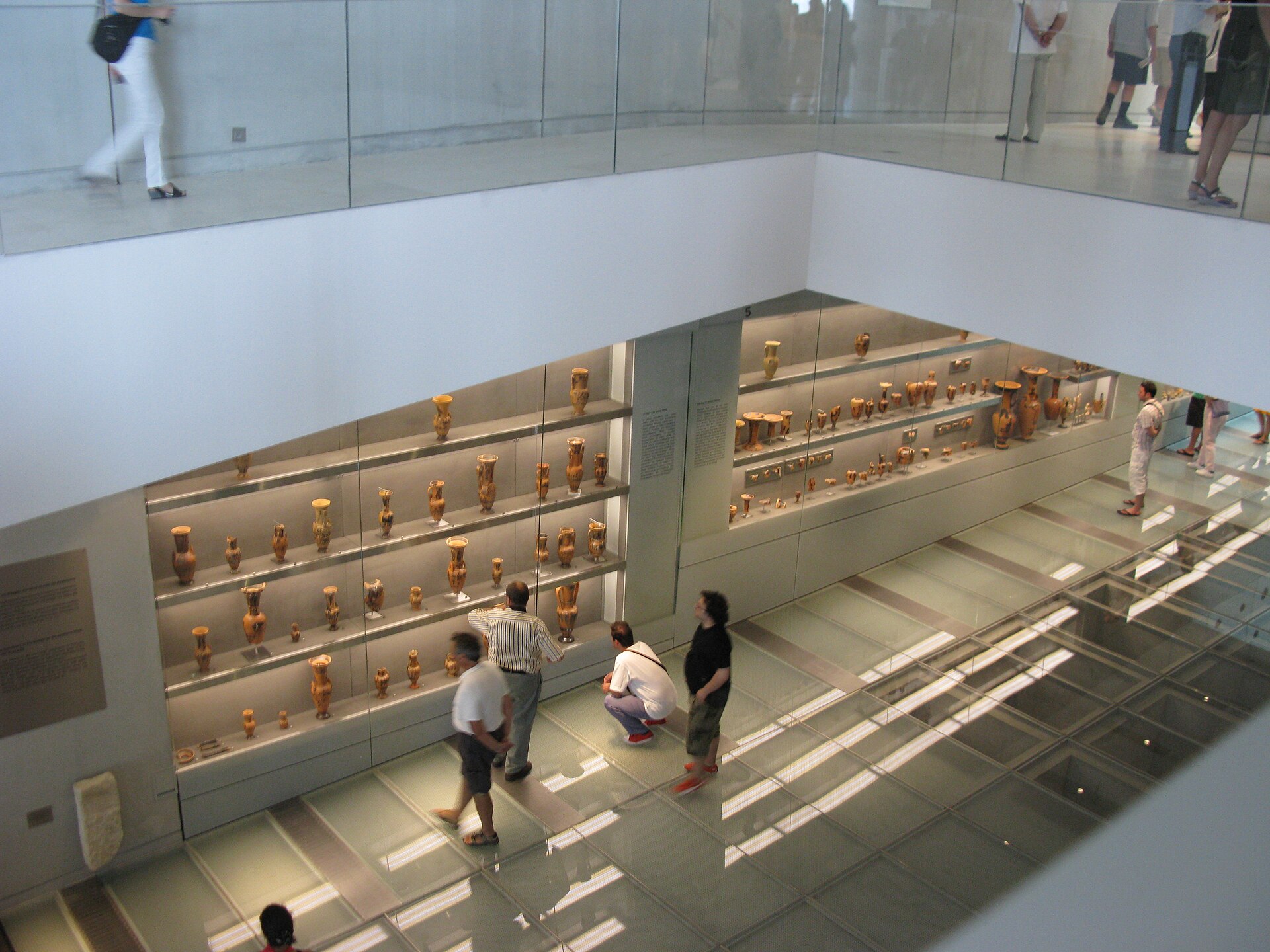
The Acropolis Museum is a separate ticket and a separate building, 300 metres downhill. Go after the rock, not before. The top-floor Parthenon gallery is laid out at the exact orientation and dimensions of the temple itself, which only lands emotionally if you have just been standing in it.
What is free and no worse for it
Athens is unusually generous here. The Areopagus, the rock immediately below the Acropolis entrance, costs nothing and gives you the classic sunset view of the Parthenon lit from the west — with the caveat that the marble is polished glass-slippery and people fall on it every week. Wear something with grip.
Philopappos Hill, across the road, is a pine-shaded public park with the better photograph, fewer people and actual benches. Lycabettus is the highest point in the city and the one place you can see both the Acropolis and the sea in the same frame; the funicular costs a few euros, the walk up is free and takes about 25 minutes.
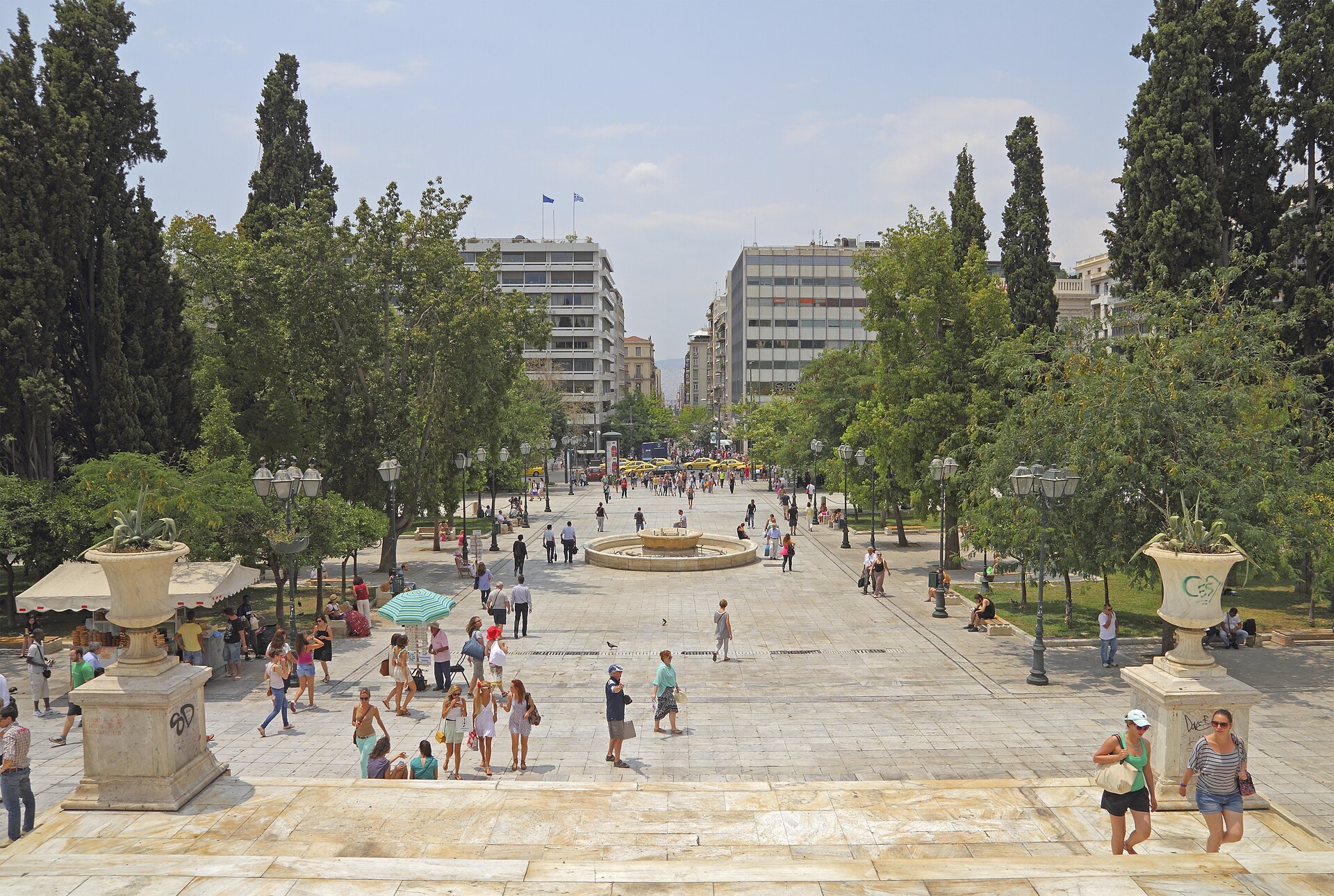
The National Garden behind Parliament is free, shaded and about ten degrees cooler than the pavement outside it. In July that is not a minor detail. And the changing of the guard at the Tomb of the Unknown Soldier happens hourly on the hour; the full ceremonial version with the band is Sunday at 11:00.
The neighbourhoods, and what each one is for
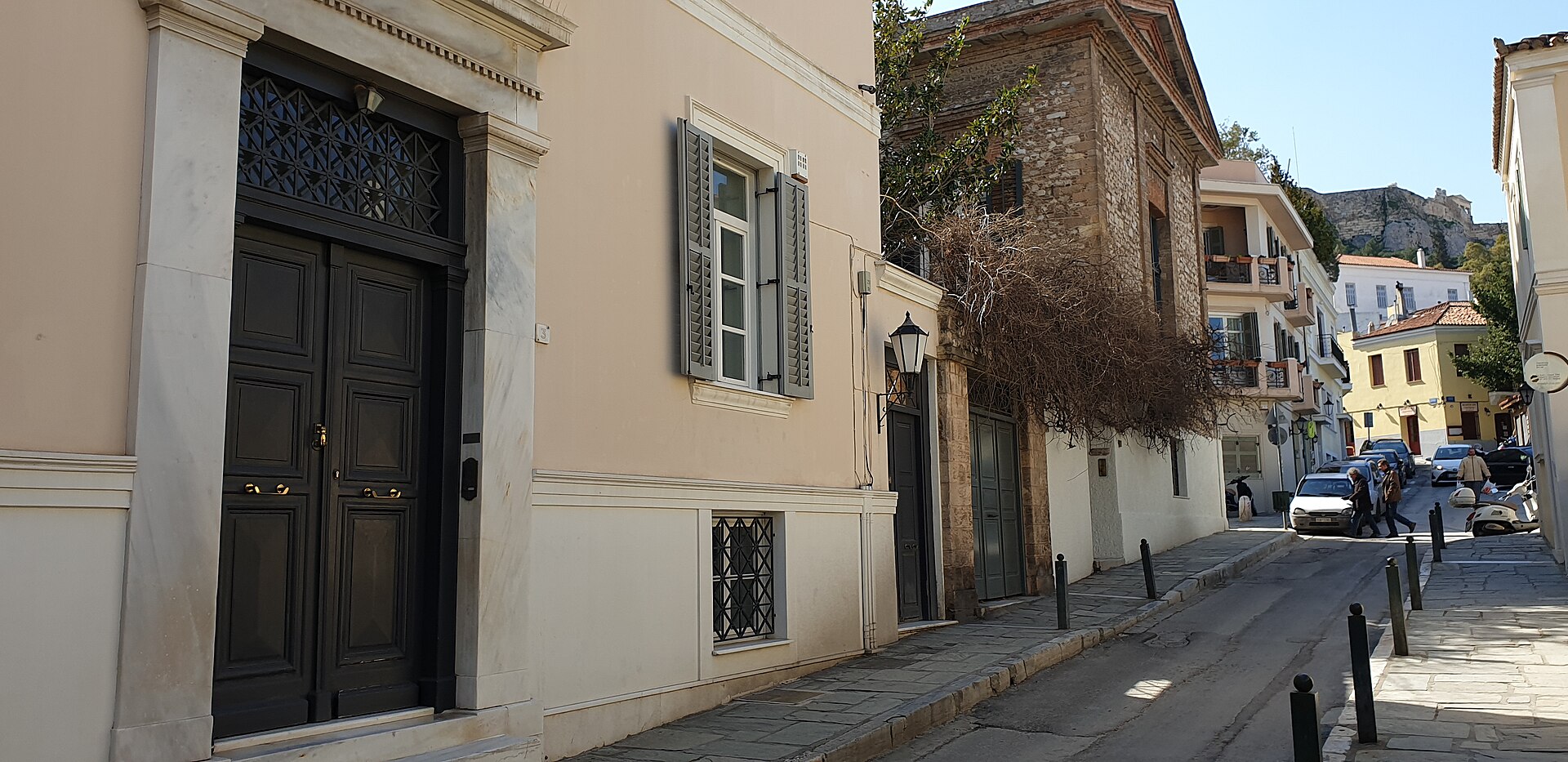
Plaka is the old town under the Acropolis: neoclassical houses, bougainvillea, and restaurants with laminated menus in six languages. It is genuinely beautiful and genuinely touristic. Stay here if the walk to the sites matters more than the dinner.
Anafiotika, a pocket of about 45 whitewashed houses on the north slope, was built in the 1860s by stonemasons from the island of Anafi who came to build the royal palace and reproduced their island village on the hillside. It looks like the Cyclades because it literally is.
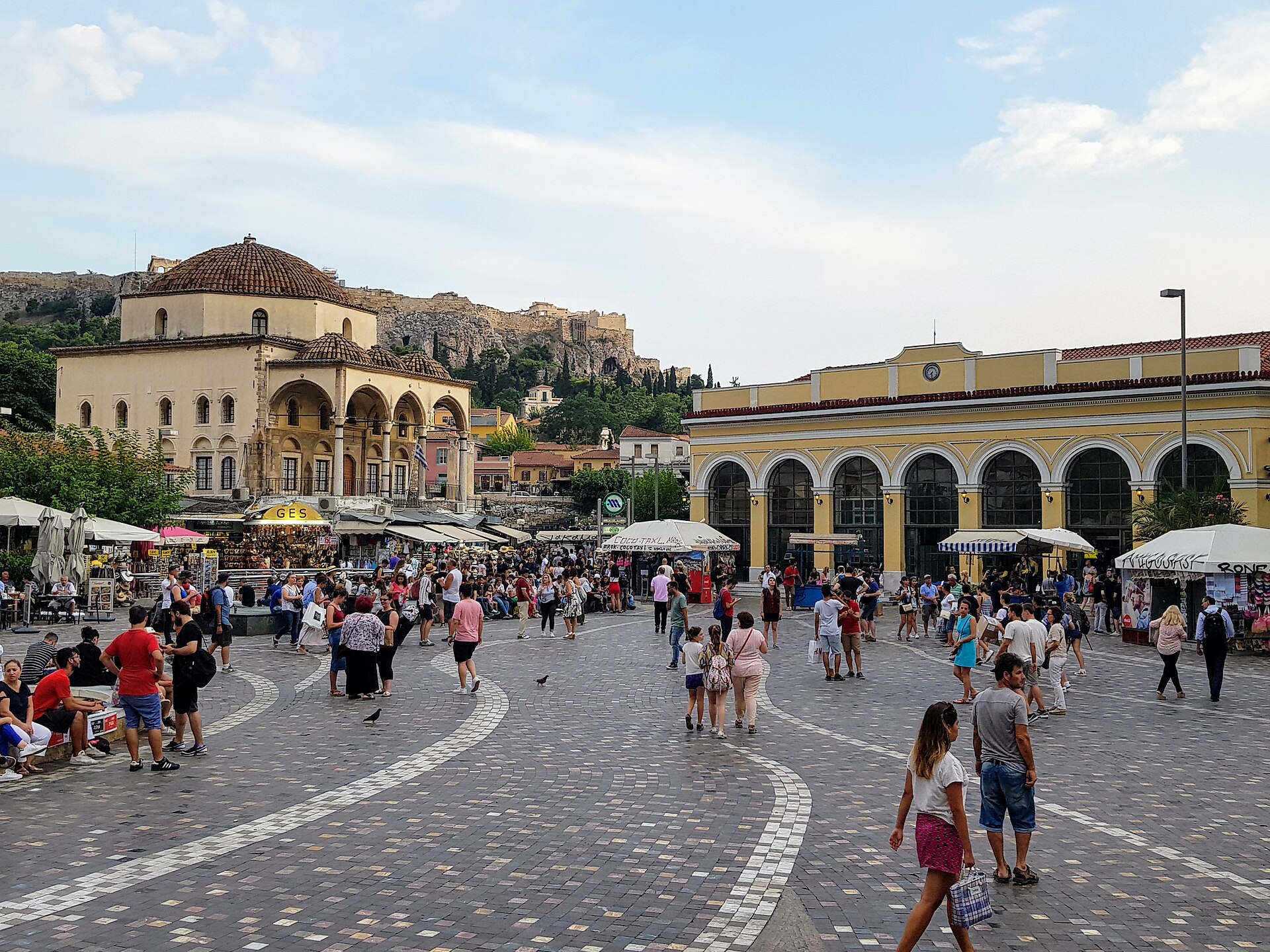
Monastiraki and Psyrri are the flea market and the late-night quarter — bars, street art, and the best rooftop views of the illuminated Acropolis. Loud until 03:00 at weekends.
Koukaki and Makrygianni sit south of the Acropolis Museum and are where most experienced repeat visitors now stay: residential, walkable, five minutes to the site, and priced below Plaka.
Exarcheia is the anarchist and student quarter. It has the best bookshops and cheapest tavernas in central Athens, a genuine political history, and occasional tear gas on anniversaries. Interesting, not a first-night base.
Kolonaki is the expensive one — designer shops, embassies, and the foot of the Lycabettus funicular.
A workable three days
Day one. Acropolis on the first slot of the morning, before the heat and the cruise groups. Down through the Theatre of Dionysus, then the Acropolis Museum for two hours. Lunch in Koukaki. Late afternoon at the Ancient Agora, which is the site people skip and the one where you actually understand how the city worked — the Temple of Hephaestus there is the best-preserved Doric temple anywhere. Sunset from Philopappos.
Day two. The National Archaeological Museum, which is not near anything and is the reason to take the metro to Victoria. Give it three hours; the Mycenaean gold and the Antikythera mechanism are both here. Afternoon in Kerameikos, the ancient cemetery, which is empty and shaded and has a small museum most people walk past. Evening in Psyrri.
Day three. Either the Temple of Olympian Zeus and Hadrian’s Arch (twenty minutes, both on the combined ticket) followed by a day at the coast on the T5 tram to Glyfada, or the day trip to Cape Sounion for the Temple of Poseidon at sunset — about 70 minutes each way along the Athens Riviera.
Eating, honestly
The rule in Athens is the same as in Rome: distance from the site is inversely proportional to quality. Anything with a photograph of the food outside is not for you.
What to actually eat: gyros from a counter, which should cost a few euros and be wrapped in paper; souvlaki on the skewer rather than in bread; grilled octopus at a seafood taverna; horta, the boiled wild greens with lemon and oil that every Greek grandmother makes and that no tourist orders. In a mezedopoleio you order six or seven small plates for the table and keep going until you stop. That is dinner, and it starts at 21:00, not 19:00.
Coffee is a serious business here. A freddo espresso — espresso shaken over ice — is the national drink between May and September, and it costs a third of what the equivalent costs in Rome or Paris.
Getting around
Central Athens is small — Syntagma to the Acropolis is a 15-minute walk — and the metro covers almost everything you will want. Three lines, clean, air-conditioned, and the Syntagma and Acropolis stations double as archaeological displays because of what was dug up building them.
Two practical notes. Validate your ticket at the machine before you go down; inspections are real and the fine is large. And in July and August the pavement genuinely radiates heat into the evening — plan indoor museums for 13:00 to 17:00 and do the outdoor sites early and late.
Where to sleep
Koukaki and Makrygianni give you the best combination of walkability and price. Plaka is prettier and costs 30–40% more. Monastiraki is the compromise, and the rooftop-bar hotels there are where the Acropolis-at-night photographs come from. Anywhere on Metro Line 2 or 3 within four stops of Syntagma is fine; below that, you will spend the trip commuting.
Book earlier than you think for April, May, September and October. July and August are cheaper for hotels and worse for everything else.
Day trips worth the effort
Cape Sounion is the obvious one and it earns it. Delphi is two and a half hours each way and is a full day, not a half — go only if you are prepared to give it one. Aegina and Agistri are an hour by fast ferry from Piraeus and turn Athens into a beach trip for a day. Nafplio, the first capital of independent Greece, is the prettiest small town within reach and the best reason to rent a car for 48 hours.
When to go
April to early June and mid-September to early November are the answer. Temperatures in the low to mid-twenties, sites open on summer hours, and the Acropolis still at the summer price. Late November to March gives you the €15 winter ticket, cold clear light and short opening hours — a real option if you care more about museums than beaches. July and August are hot enough to reorganise your day around, and the city half-empties in mid-August when Athenians leave for the islands.
Practical notes
- Tap water in Athens is safe and good. Refill rather than buying.
- Shoes with grip. Marble, ancient stone and polished pavement everywhere.
- Sites close earlier in winter — check the opening hours for the day rather than assuming.
- Cash is still useful in small tavernas and kiosks, though cards are accepted almost everywhere.
- Strikes affecting the metro and ferries are announced a day or two ahead and are worth checking if your schedule is tight.
Further reading
- Domestic flights in Greece — if Athens is the first stop rather than the whole trip.
- Motorbike rental in Greece — the sensible way to handle an island after Athens.
- Best eSIM for Greece — data before you land.
- Things to do in Istanbul — the obvious pairing, and a direct flight.
- Things to do in Rome — the other city built on top of itself.