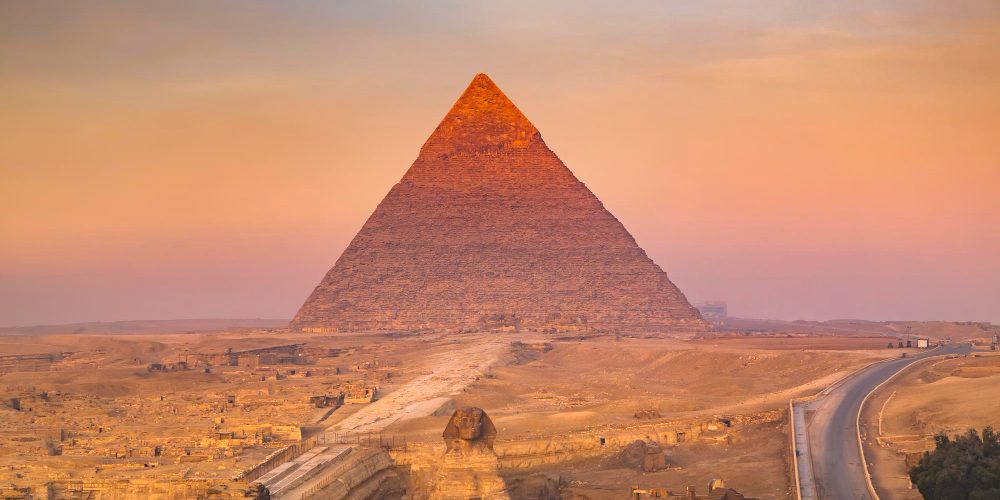
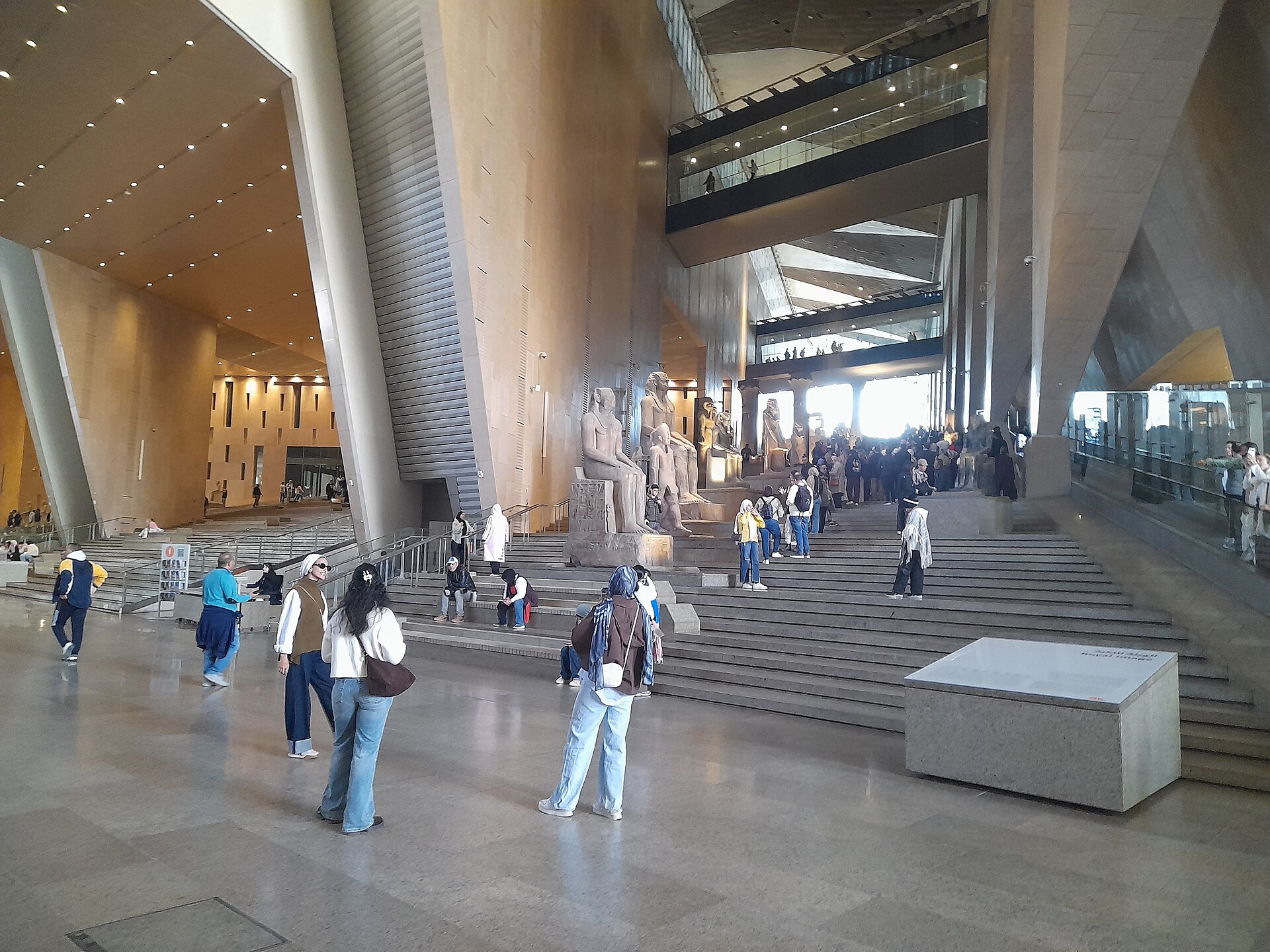
Most Cairo itineraries you will read were written for a city that no longer exists. For fifty years the trip had one shape: base yourself downtown or in Zamalek, spend a morning at the old Egyptian Museum on Tahrir Square, and make a day excursion out to Giza. In 2026 that order is backwards. The opening of the Grand Egyptian Museum moved the single biggest reason to visit Cairo out to the edge of the Giza plateau, roughly 20 kilometres from Tahrir, and the museum now takes a full day on its own. The pyramids are a fifteen-minute drive from its front door. If you plan Cairo the old way, you will spend two days crossing the city to visit things that are next to each other.
This guide is built around the new geography, with real prices checked in August 2026, and it includes the things that are genuinely not worth your money.
Why Cairo is shaped the way it is
Cairo is not one city that grew outward. It is four cities that grew into each other, and you can still see the seams. Fustat, the original Arab settlement of 641, sits in the south near Coptic Cairo. Al-Qahira — the walled Fatimid city founded in 969 that gave Cairo its name — is the medieval core around Al-Muizz Street. Khedive Ismail then bolted a Paris-style downtown onto the western edge in the 1860s, complete with boulevards and Haussmann-ish apartment blocks, funded by a cotton boom that collapsed and bankrupted the country. Finally, the twentieth century filled everything between there and the Nile, then jumped the river.
The practical consequence: Cairo has no single centre, and the tourist sights are strung along a 25-kilometre line rather than clustered. Distance, not opening hours, is what will wreck your schedule. Budget travel time honestly and you will have a good trip; assume European-city walkability and you will spend your holiday in traffic.
Arriving from Cairo International Airport
Cairo International (CAI) sits northeast of the city, and depending on traffic and which terminal you land at, the drive to Giza can take anywhere from 45 minutes to well over two hours. There is no rail link to the terminals. Your options are a pre-booked private transfer, a ride-hailing app, or the airport taxi queue.
Ride-hailing apps work in Cairo and are the cheapest reliable option, but arrivals pickup at CAI is genuinely confusing, drivers frequently cancel on airport runs, and if your flight lands at 3am — as many European and Gulf flights do — you may wait a long time. Pre-booking a transfer costs more but removes the one part of the trip where you are most tired and least able to negotiate. Whatever you do, do not accept an unsolicited offer of a ride inside the terminal building. If you want a broader comparison of how transfer pricing works, our Nairobi airport transfer guide covers the same trade-offs in another African hub.
What you must book ahead, and what it actually costs
Egypt has moved decisively to advance, timed-entry ticketing at its headline sites, and the Grand Egyptian Museum is the clearest example: tickets are no longer sold at the gate at all. You reserve a time slot online in advance or you do not get in. As of August 2026 the foreign adult ticket runs roughly EGP 1,450–1,590 (about USD 28–30), with discounted entry around EGP 730 for foreign students and children aged 6–12, and free entry under 6. A further increase to about USD 35 has been announced, so check the official portal rather than trusting a cached price — including this one.
At Giza the pricing is layered and the layers matter. General plateau entry for non-Egyptian adults is EGP 700 (EGP 350 for students). Going inside the Great Pyramid of Khufu is a separate EGP 1,500. Khafre’s interior is EGP 280 and Menkaure’s is EGP 200.
Here is the honest advice: the EGP 1,500 for Khufu’s interior is the most commonly regretted purchase in Egypt. You climb a steep, low, hot, unventilated shaft in a queue of people to reach a bare granite room with nothing in it. There are no carvings, no treasure, no view. If you are claustrophobic, have knees that complain, or are travelling in summer, skip it without guilt. If you want the experience of being inside a pyramid, Khafre at EGP 280 delivers roughly the same thing for a fifth of the price and with fewer people.
Book skip-the-line and timed-entry tickets in advance where you can, but compare against the official portals too: for the Grand Egyptian Museum specifically, the official site is the primary channel and a reseller adds a margin without adding much convenience. Where third-party booking genuinely helps is bundled tours with transport included, because the transport is the hard part in Cairo.
What is free, and no worse for it
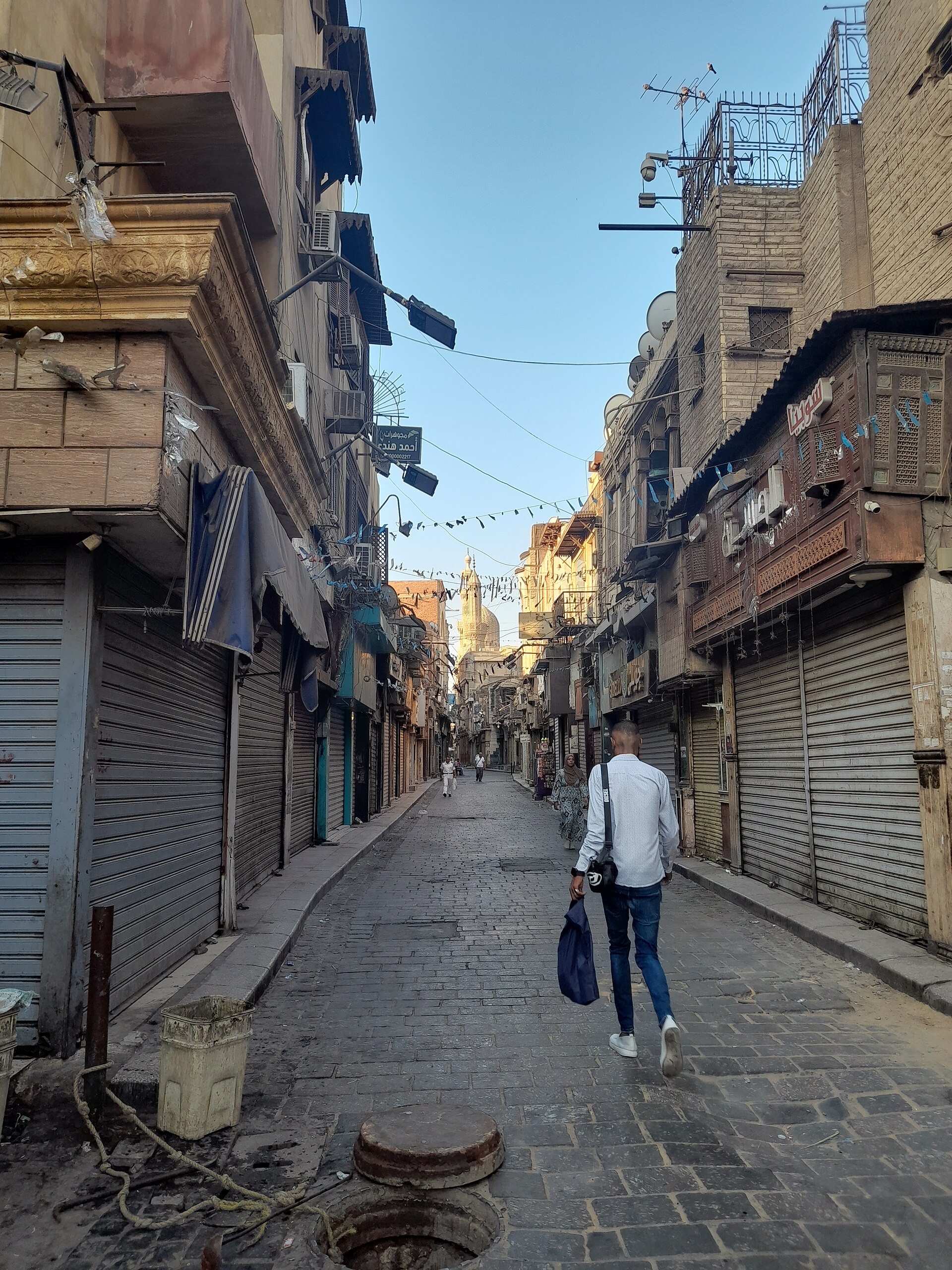
Al-Muizz Street after dark costs nothing and is the best hour in Cairo. The medieval spine of the Fatimid city is pedestrianised along its central stretch and floodlit at night, lined with mosques, madrasas and merchant houses from the tenth century onward. You can walk it end to end in an hour, and most of the exteriors — which are the point — are free.
Also free: Coptic Cairo’s lanes and the exterior of the Hanging Church; the Northern Cemetery, where families live among Mamluk tombs; Al-Azhar Park charges only a small entry fee and gives you the best skyline view in the city; and simply crossing the Qasr al-Nil bridge at sunset with half of Cairo doing the same thing.
Neighbourhoods, and what each is for
Giza is now the practical base for a short trip. It puts you within minutes of both the Grand Egyptian Museum and the pyramids, and it removes the daily cross-city commute. The trade-off is that it is not a great neighbourhood to walk around in the evening.
Zamalek, on the island of Gezira, is the leafy, walkable, embassy-and-gallery district. Best for a longer stay, good restaurants, and the only part of Cairo where wandering aimlessly on foot is genuinely pleasant.
Downtown has the faded Belle Époque architecture, the best coffee houses, and the cheapest hotels. It is noisy and chaotic and some people love it for exactly that.
Islamic Cairo is where you go for the day, not usually where you sleep, though a few restored merchant houses now take guests.
Maadi and New Cairo are the quiet expat suburbs. Comfortable, well-served, and a long way from everything you came to see.
A four-day route that respects the map
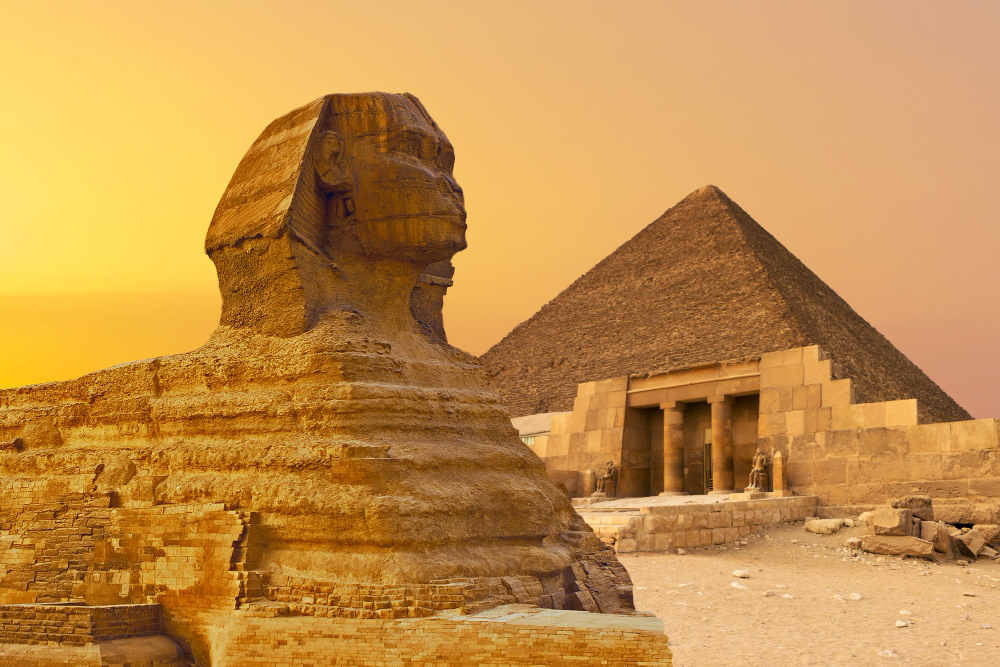
Day 1 — Giza. Grand Egyptian Museum from opening. The galleries run 9am to 6pm, with later hours on Wednesdays and Saturdays. Give it five hours minimum; it is enormous and rushing it is a waste of the ticket. Late afternoon, go to the plateau for the pyramids and Sphinx in softer light and thinner crowds.
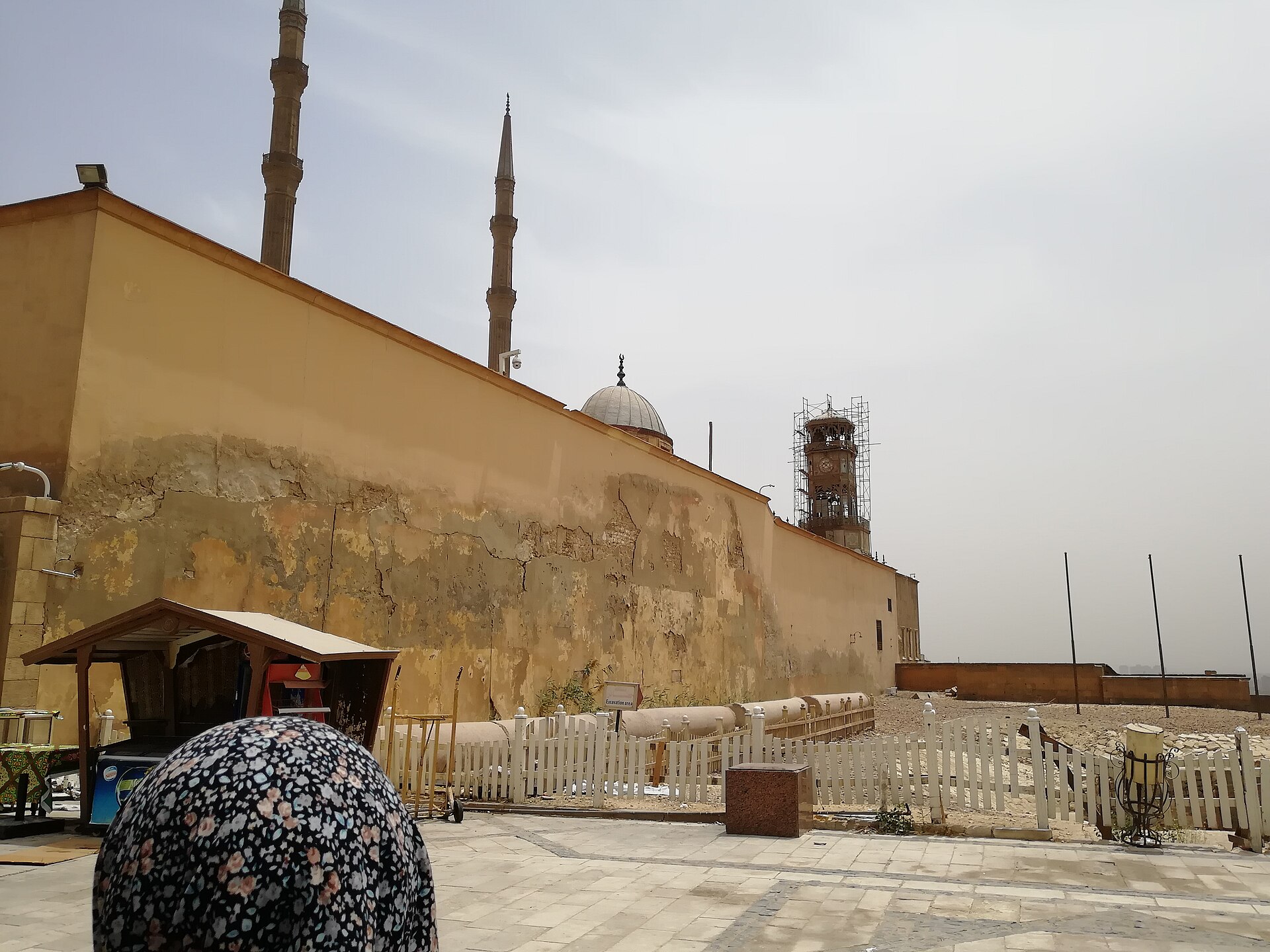
Day 2 — Islamic Cairo. The Citadel and Muhammad Ali Mosque in the morning, then downhill through Sultan Hassan and Al-Rifa’i mosques, then Al-Muizz Street in the late afternoon, staying for the floodlights. Khan el-Khalili for dinner.
Day 3 — Coptic Cairo and the Nile. The churches and the Ben Ezra Synagogue in the morning, the Egyptian Museum on Tahrir in the afternoon — it still holds a vast, gloriously old-fashioned collection even after the headline pieces moved — then a felucca at sunset.
Day 4 — Saqqara and Dahshur. The Step Pyramid of Djoser and the Bent and Red pyramids, all far quieter than Giza and, for many visitors, more moving. This is the day that most justifies having a car.
Eating, and the coffee house habit
Cairo’s essential dish is koshari — rice, lentils, macaroni, chickpeas, fried onions and a sharp tomato sauce, eaten fast and cheaply. Ful medames and taameya (the Egyptian fava-bean falafel) are breakfast. Molokhia is the one that divides visitors. None of this costs much, and the best versions are usually in places with no English menu.
The ahwa, the traditional coffee house, is the real institution: mint tea, Turkish coffee, backgammon, shisha, and no expectation that you will leave. Downtown has the historic ones. Sitting in one for two hours is a legitimate Cairo activity.
Getting around the city
The Cairo Metro is clean, absurdly cheap, air-conditioned and by far the fastest way to move north-south. It has designated women-only carriages. Its weakness is that it does not go to Giza’s pyramids or to the Grand Egyptian Museum, which is precisely where you need to go.
For everything else, use a ride-hailing app. Fares are low, the route and price are fixed in advance, and it removes the entire category of taxi negotiation. Street taxis are metered in theory; in practice the meter is often “broken” for foreigners, so agree the fare before you get in or simply use the app. For the Saqqara and Dahshur day, hiring a car with a driver for the day is the sane option — Egyptian traffic is not somewhere to learn assertive driving.
Where to stay
The main decision is Giza versus the island. If you have three days or fewer, stay in Giza and accept a quieter evening scene; the hours you save not crossing the city are worth more than the restaurants you miss. For five days or more, Zamalek is the more pleasant place to come home to. Book early for the November–February window, when Cairo hotel prices climb sharply.
Day trips worth the drive
Saqqara and Dahshur are the obvious ones and should be a single trip. Alexandria is three hours each way and better as an overnight than a day trip. Fayoum, with Wadi al-Hitan’s fossil whales, is a genuine desert day out. All of these are far easier with a car and driver than by public transport, and if you would rather drive yourself, the pricing dynamics are the same ones we cover in our Morocco SUV rental guide.
When to go
November to February is the comfortable season: daytime highs in the low 20s Celsius, cold evenings, and the highest prices and crowds. March and April are warm and pleasant but bring the khamsin, a sand-laden wind that can grey out the sky for days. May to September is genuinely punishing — 38–42°C on the exposed Giza plateau with no shade — and if you come then, be at the pyramids at opening and indoors by noon. October is the quiet sweet spot.
Practical notes, including the annoying ones
Bring cash in small denominations; card acceptance has improved but tipping culture — baksheesh — runs on small notes, and you will use them constantly.
At Giza, expect persistent camel and horse touts. The standard pattern is a very low quoted price to get you on the animal, then a much higher price to get off, sometimes far from the entrance. If you want a camel photo, agree the total, agree the duration, agree the drop-off point, and pay at the end. Or decline firmly and repeatedly, which works.
Animal welfare at the plateau is a real and visible problem, and a good number of visitors regret the ride afterwards for that reason alone.
Dress modestly at mosques — shoulders and knees covered, headscarf for women, shoes off. Friday midday prayers close most mosques to visitors.
Tap water is chlorinated and not recommended for drinking. Traffic is the genuine safety risk: crossing roads in Cairo is a contact sport, and pedestrian crossings are decorative. Cross alongside locals.
Finally, if you are relying on your phone for maps and ride-hailing — and you should be — sort connectivity before you land. Our guide to the best eSIM for Egypt covers the current options.
Further reading
- Domestic flights in Egypt — for continuing to Luxor, Aswan or the Red Sea
- Best eSIM for Egypt
- Things to do in Marrakech
- Things to do in Amman
Read next: Cairo to Luxor: 1 Hour by Plane or 10 by Train — Which Is Actually Better?