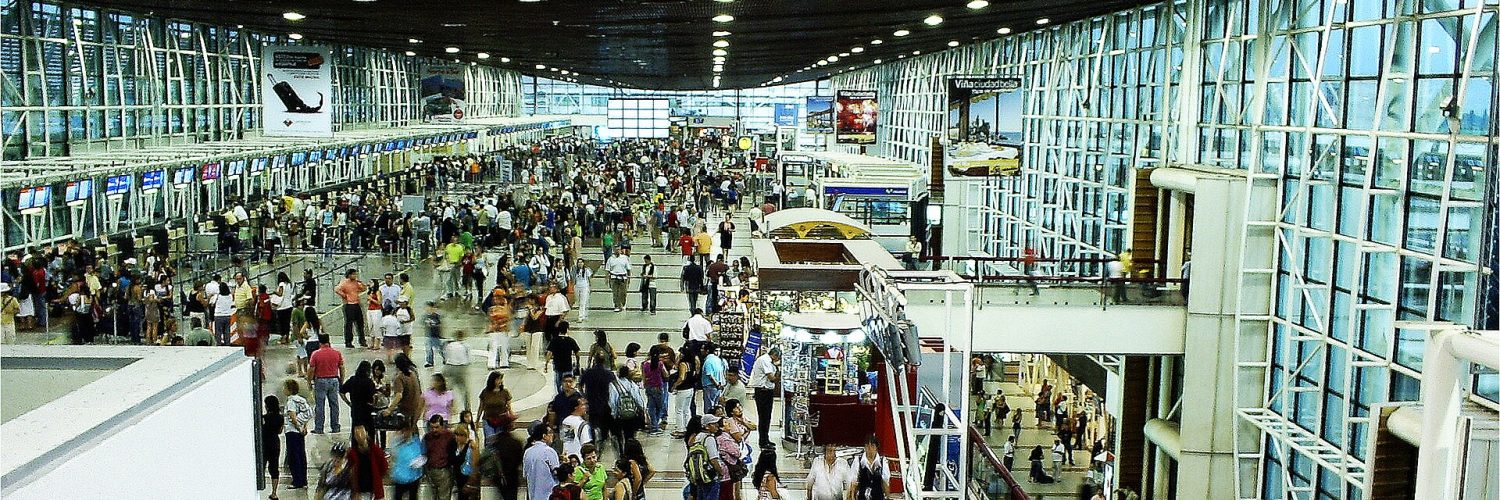
Santiago is the only major South American capital where the metro reaches almost everywhere except the airport. Línea 7 is under construction and will eventually connect Arturo Merino Benítez to the network, but it is years from opening, and until then every arriving passenger has to choose between a bus, a shuttle, a taxi and a rideshare in an arrivals hall full of people who would like to make that choice for you.
The spread between the cheapest and most expensive option is roughly ten to one: about CLP 2,400 on the Centropuerto bus versus CLP 20,000 to 30,000 for an official taxi to Providencia. Both are legitimate. Which one is right depends almost entirely on your arrival time, your luggage and how many people you are.
First: the touts
SCL’s arrivals hall has a well-known problem with unofficial drivers who approach passengers before the exit, quote a price that sounds reasonable, and then either take a long route or add charges at the destination. Every legitimate operator has a counter or a marked stand. The rule is simple and worth following without exception: do not accept a ride from anyone who approaches you. Walk to a counter, a rank or your pre-booked driver holding a sign.
This is not a Chile-specific warning so much as an SCL-specific one. Santiago is among the safest capitals in the region and the city itself requires no unusual caution, but the airport arrivals area is where the one predictable scam lives.
Option 1 — Centropuerto and Turbus: CLP 2,400
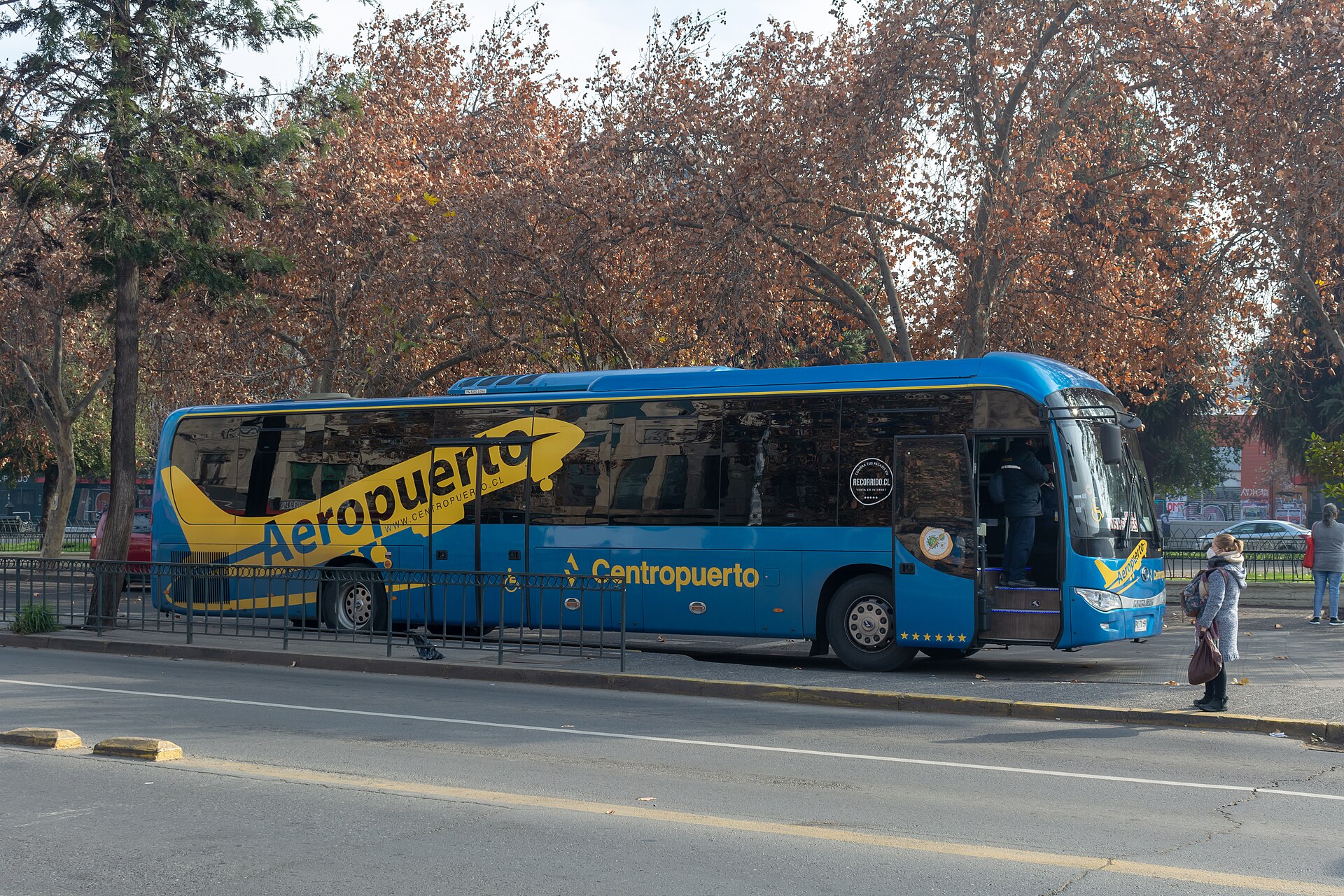
Two bus companies run the airport corridor and both are perfectly good. Centropuerto’s published fare is CLP 2,400 one way and CLP 4,100 return; Turbus charges roughly the same. Centropuerto departs every 5 to 15 minutes from around 06:00 to 23:30 and reaches Pajaritos metro station in 25 to 35 minutes, continuing to Los Héroes in the centre.
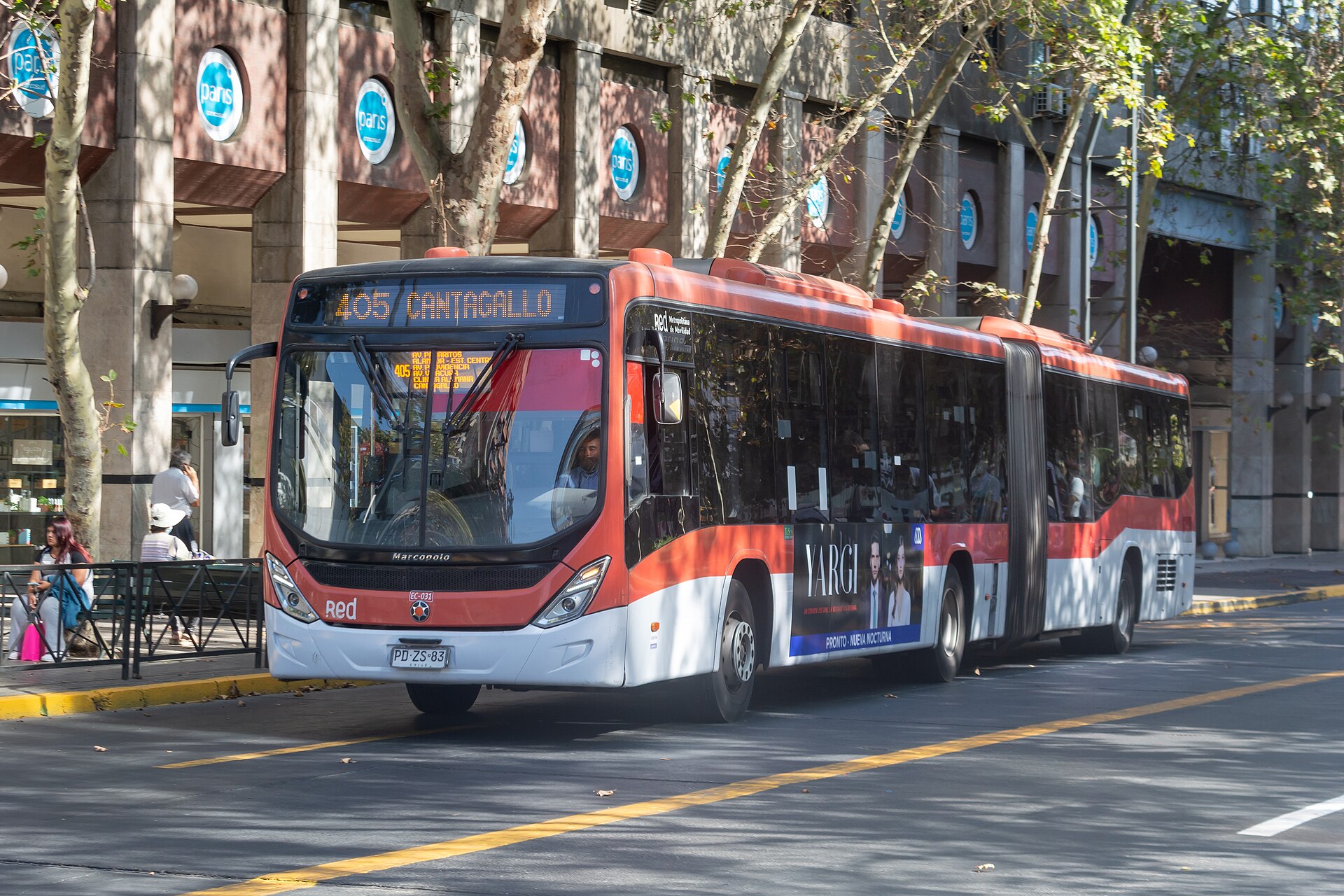
Pajaritos is the key detail. It is a Línea 1 metro station, and Línea 1 runs east through the entire spine of the city — Los Héroes, Universidad de Chile, Baquedano, Manuel Montt, Los Leones, Tobalaba, El Golf. If you are staying in Providencia, Las Condes or the centre, getting off the bus at Pajaritos and switching to the metro is faster than staying on the bus to the terminus.
Metro fares in 2026 run from about CLP 735 off-peak to CLP 895 at peak hour, paid with a bip! card that costs around CLP 1,500 to buy. So the full airport-to-Providencia journey by bus and metro comes to roughly CLP 3,300 plus the card — around US$3.50. Nothing else comes close on price.
The catch is luggage and stairs. Pajaritos has escalators but the transfer involves a walk, and Línea 1 at 8am is genuinely crushed. With two large suitcases this is unpleasant. With hand luggage it is easy.

Option 2 — official taxi: CLP 20,000–30,000
Official airport taxis work on fixed zone pricing, bought at a counter inside the terminal before you exit. To the city centre or Providencia expect roughly CLP 20,000 to 30,000, or around US$20 to 30. You pay at the desk, receive a voucher, and are matched with a driver at the rank.
The advantages are real: no app, no language requirement, no waiting for a driver to find you, and a fixed price agreed before you get in the car. The disadvantages are the price and the fact that “official taxi” companies at SCL are several competing firms with slightly different rates, so it pays to look at two counters rather than the first one.
Option 3 — Uber, Cabify and DiDi
Rideshare operates legally in Santiago and typically runs 20 to 30% below official taxi rates. The one thing to know is the pickup point: drivers do not collect from the terminal kerb but from a designated area in the airport parking structure, and the app will direct you there. Arriving passengers who wait at the arrivals door will watch their driver cancel.
Rideshare is the best value for one or two people who are travelling light and arriving during the day. It is the worst option at 3am, when surge pricing and driver scarcity can push the fare above the fixed taxi rate for a worse experience.
Option 4 — pre-booked private transfer
A private transfer booked before you fly costs more than a bus and usually a little more than rideshare, and it removes every variable at once: a named driver waits inside arrivals with a sign, the price is fixed in advance regardless of traffic, the vehicle is sized for your luggage, and there is no app, no cash and no negotiation.
The arithmetic works best in three situations. Groups of three or more, where the per-person cost drops below the taxi rate. Late-night or early-morning arrivals, when the buses have stopped and rideshare surges. And first visits to South America, where an hour of certainty after a twelve-hour flight is worth paying for.
Chile is also the country where a lot of travellers arrive jetlagged and then immediately connect onward to Patagonia or the Atacama the next morning. If that is your itinerary, see our guide to car rental in Chile and Patagonia, which covers the domestic legs and the one-way fees that apply between Santiago and the south.
Which neighbourhood are you actually going to?
The right transport choice depends on the destination, and Santiago’s districts are further apart than they look.
Centro / Santiago Centro — the historic core around Plaza de Armas and La Moneda. Closest to the airport at 17 to 20 km, 30 to 45 minutes by road. Los Héroes is the bus terminus, so this is the one district where staying on the bus makes sense.
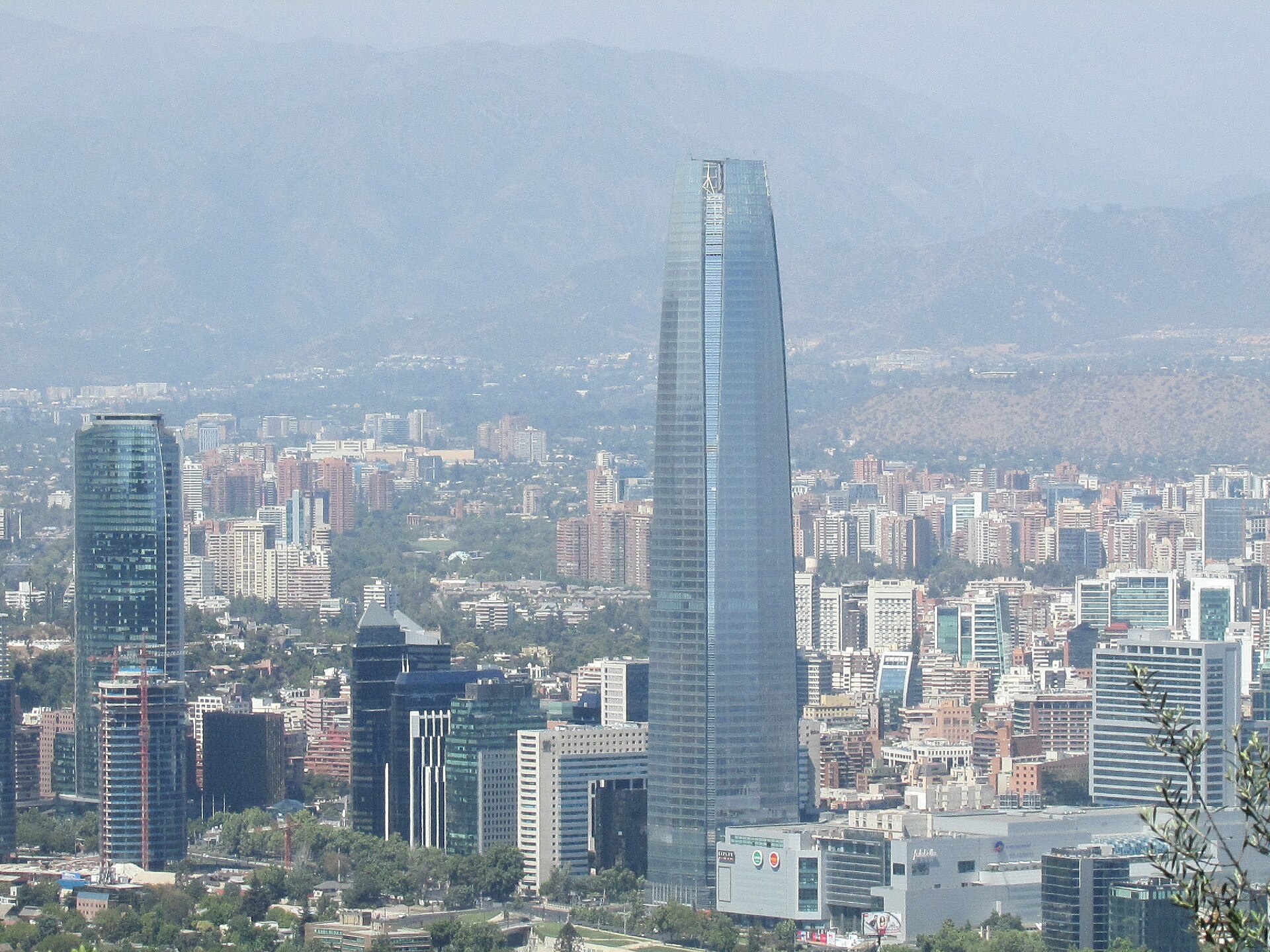
Providencia — leafy, mid-rise, full of restaurants and the most common base for visitors. 25 km, 35 to 50 minutes. Well served by Línea 1.
Bellavista and Barrio Lastarria — the two nightlife and culture districts, at the foot of Cerro San Cristóbal and beside the art museums respectively. Similar distance to Providencia.
Las Condes and Vitacura — the business and luxury districts further east. 30 km-plus, and in the evening peak this can take 70 minutes. This is where a fixed-price transfer most clearly beats a metered ride.
Timing and traffic, which matter more than the option you choose
Santiago’s rush hours are roughly 07:30 to 09:30 and 17:30 to 20:00, and the airport road funnels into the Costanera Norte and the Autopista Central, both of which back up badly. A 35-minute run at midday can be 70 minutes at 6pm. If you are choosing between a metered taxi and a fixed-price transfer, this is the decisive fact: only one of them charges you for the traffic.
Bus service stops overnight. Centropuerto’s last departures are around 23:30 and the first around 06:00, so any flight landing between midnight and 5am leaves you with taxi, rideshare or pre-booked transfer as the only options. Many long-haul flights from Europe and North America land exactly in that window.
Practical arrival notes
Money. ATMs in arrivals dispense Chilean pesos and generally work with foreign cards; withdraw enough for the bus fare and the bip! card if you plan on public transport, since ticket machines are cash-friendly and card acceptance varies.
Reciprocity fees. These were abolished years ago and no longer apply to any nationality arriving at SCL. If a website tells you to budget for one, the website is out of date.
Agricultural declaration. Chile is strict. Fresh fruit, seeds, nuts, honey, meat and dairy are confiscated and undeclared items carry fines starting in the hundreds of dollars. Eat the apple on the plane, and declare anything you are unsure about — declaring costs nothing.
Altitude. Santiago sits at only about 570 m, so there is no adjustment needed here. That changes fast if your onward plan is San Pedro de Atacama at 2,400 m.
The short answer
Travelling light, arriving in daylight, staying anywhere on Línea 1: take Centropuerto to Pajaritos and switch to the metro. Total cost around CLP 3,300.
Two people with suitcases, daytime arrival: Uber or Cabify from the parking structure, comfortably under the official taxi rate.
Three or more people, a night flight, or a first trip to the continent: book a private transfer in advance and walk straight out of the terminal to a driver with your name on a sign.
Whatever you pick, decide before you land. Every bad outcome at SCL starts with an undecided passenger being approached in the arrivals hall.