Most safari countries sell you a package and hide the arithmetic. Botswana does the opposite: it charges you, per person, per day, for the privilege of being inside a national park, and it charges your vehicle separately on top. That transparency is the point — the country deliberately chose high-value, low-volume tourism over the minibus-convoy model — but it produces an awkward situation for anyone planning a self-drive trip in 2026, because the fee schedule has been revised, the revision was postponed, and the numbers you find online genuinely contradict each other.
This guide is about doing it yourself: renting a 4×4, driving into Moremi and Chobe and the salt pans, and camping. It is not a lodge guide. It is honest about the costs, the parts that go wrong, and the fairly narrow set of people this trip actually suits.
First, the uncomfortable truth about park fees
Botswana’s Department of Wildlife and National Parks (DWNP) sets entry fees per person per day and per vehicle per day. A substantial increase was announced to take effect on 1 April 2026 and was then postponed at the end of March 2026 after industry pushback, with no confirmed new date at the time of writing.
The practical result is that published figures for an international adult at Chobe or Moremi currently range from roughly BWP 270 to BWP 500 per person per day depending on which schedule the source is quoting, with the lesser parks — Makgadikgadi, Nxai Pan, the Central Kalahari — sitting lower, in the region of BWP 200–380. Foreign-registered vehicle fees are quoted at roughly BWP 90–140 per day for a vehicle under 3,500 kg, which covers essentially every rental 4×4.
We are not going to pretend to a precision that does not exist. What matters for your planning is the structure, which has not changed:
- Fees are per day, counting the day you leave. Three nights inside a park is four days of fees, not three.
- The person fee and the vehicle fee are separate and both apply.
- Children under 8 are free; 8 to 17 pay roughly half.
- For a couple in one vehicle at the higher end of the quoted range, budget on the order of BWP 1,100–1,150 per day in park fees alone before you have paid for a campsite.
Confirm the current figure with DWNP or your campsite operator when you book, and carry more cash than you think you need. Card facilities at park gates are unreliable and pula or small-denomination US dollars are what actually works.
Campsites are the real bottleneck, not the vehicle
This is the single thing that catches out first-time Botswana self-drivers. You cannot turn up at a park gate and ask where to sleep. You must have a confirmed campsite booking to be allowed in. The gate staff will check it.
Public campsites inside Moremi, Chobe, Nxai Pan, Makgadikgadi and the Central Kalahari are run by private concessionaires rather than by DWNP directly, and each concession takes its own bookings. Sites are limited — some of the famous ones have fewer than a dozen pitches — and the good months sell out roughly a year in advance. That is not an exaggeration for Savuti, Khwai and the Third Bridge area of Moremi in the June-to-September window.
The order of operations for planning a Botswana self-drive is therefore backwards from most trips: book the campsites first, then the vehicle, then the flights. If you start with the flights you will end up with a route that does not exist.
What vehicle you actually need
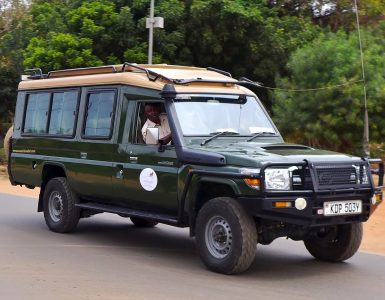
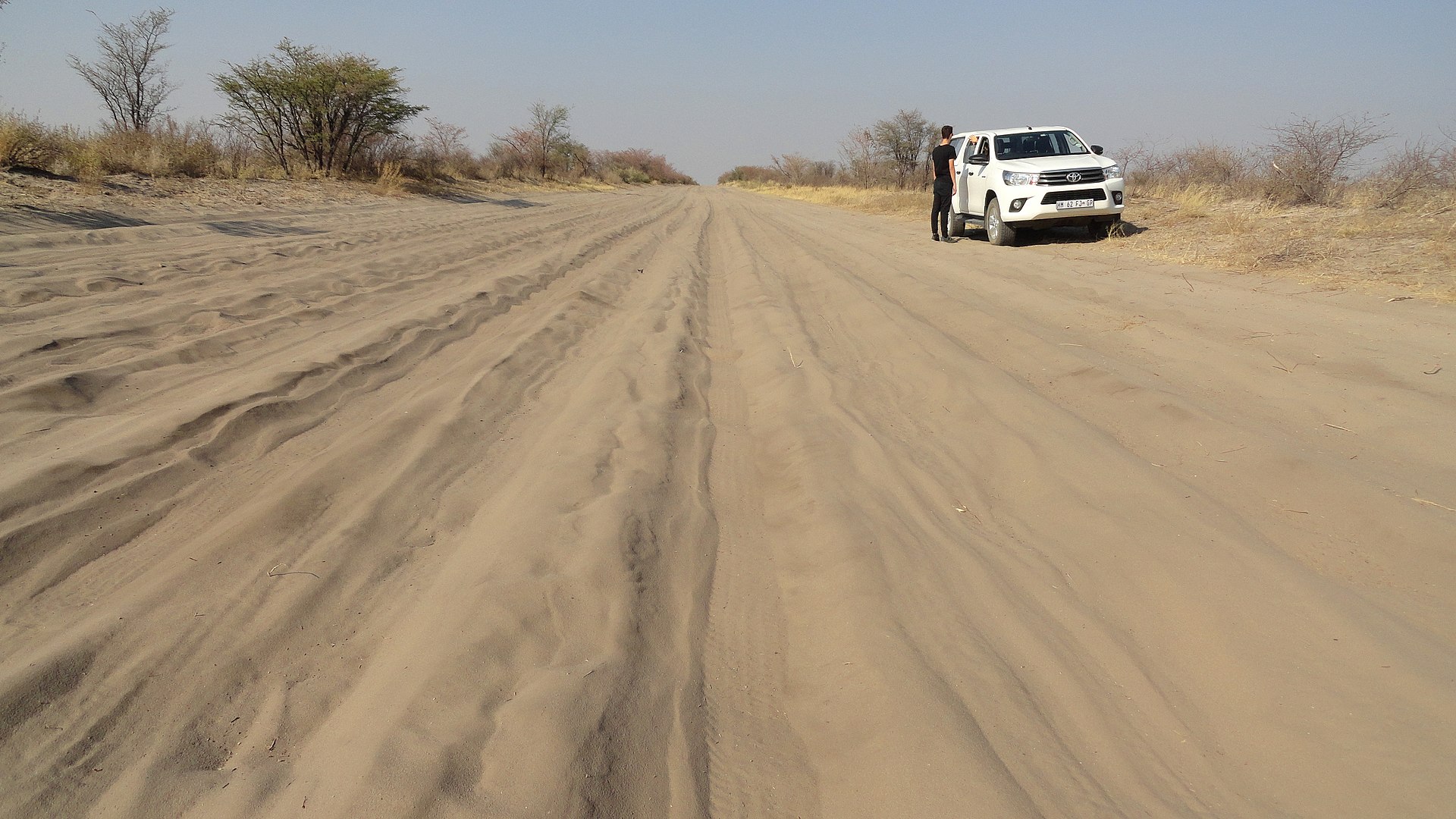
A high-clearance 4×4 with low range is not a preference here, it is a requirement, and the reason is sand rather than mud. The tracks through Savuti and between Moremi’s bridges are deep, dry, powdery sand for kilometres at a stretch. A soft-roader with all-wheel drive and 180 mm of clearance will bury itself.
What a properly equipped Botswana rental should include:
- Twin battery system and a fridge/freezer. There is nowhere to buy ice for days at a time.
- Two spare wheels, a compressor and a tyre repair kit. One spare is not enough on thorn country tracks.
- Long-range fuel or jerry cans. See below.
- Rooftop tents rather than ground tents in most of these parks, for the obvious reason.
- Recovery gear: a shovel, sand tracks, a rated recovery strap and somewhere to attach it.
- Water tank, typically 60–90 litres.
The two-vehicle question comes up a lot. In Moremi and Chobe in the dry season, a competent solo vehicle is normal and fine. For the Central Kalahari, the Makgadikgadi pan surfaces, or anything in the wet season, travelling in a pair stops being cautious and starts being sensible — there is no recovery service and mobile coverage disappears entirely.
Where to actually rent
You have three broad options and they have genuinely different economics.
Rent in Maun or Kasane. Shortest transfer to the parks, no border crossing, and the specialist operators here build their vehicles specifically for this terrain. It is the most expensive per day and the fleet is smaller, so it books out early.
Rent in Johannesburg or Windhoek and drive in. Substantially cheaper daily rates and far more choice, at the cost of two long driving days each way and a border crossing. Johannesburg to Kasane is roughly 1,200 km; Windhoek to Maun is roughly 1,000 km. This is the standard approach for trips of three weeks or more, and it only makes sense if you are going to use those days rather than resent them.
Rent a standard 4×4 from an international agency for the tar-road portions and the Chobe riverfront day trips, and take guided game drives into the deep-sand areas. This is the underrated option for people who want the freedom of a vehicle without committing to full self-sufficiency, and it is much cheaper.
If you are comparing suppliers and dates, it is worth checking live rates for the pick-up cities before you settle on a plan — the gap between Maun, Kasane, Johannesburg and Windhoek pricing is often the deciding factor in how a Botswana itinerary is shaped:
Crossing the border with a rental vehicle
If you rent outside Botswana, the paperwork is not optional and the border post will turn you round without it.
- A Letter of Authorisation from the rental company, naming you and permitting that specific vehicle to leave the country. Ask for it in writing at booking, not at collection.
- Certified copies of the vehicle registration documents.
- Third-party insurance valid in Botswana, bought at the border if not already held.
- A road user permit, payable at entry. Expect something in the region of BWP 180–220 for a standard vehicle.
- Your driving licence, in English or with a certified translation, plus an International Driving Permit if your licence is not in English.
Allow real time at borders. Kazungula, where Botswana, Zambia, Zimbabwe and Namibia converge, now has a bridge rather than the old ferry, but it is still a border and it is still slow. Build a buffer into the day rather than planning a park gate arrival for the same afternoon.
One more thing that surprises people: Botswana takes foot-and-mouth control seriously. There are veterinary cordon fences across the country with checkpoints where you drive through a disinfectant dip, walk over a mat, and may have to surrender raw meat, and sometimes dairy, from your fridge. Plan your shopping around this rather than losing three days of supplies at a fence.
Fuel, distance and the arithmetic that actually bites
Botswana is the size of France with a population smaller than that of Birmingham, and the fuel network reflects that. The reliable stops on a northern circuit are Maun, Kasane, Nata, Gweta, Rakops and Ghanzi. Between them there is very little, and what exists is not guaranteed to have fuel on the day you arrive.
Two numbers worth internalising. The tar route from Maun to Kasane via Nata and Pandamatenga is roughly 600 km and is a comfortable day. The direct route through Chobe via Savuti and Ngoma is roughly half that distance and takes two days, because you will average 20–25 km/h in sand. People routinely plan the second route using the first route’s timings and arrive at the gate after closing.
Sand driving also destroys your fuel consumption. A loaded double-cab that returns 11 l/100 km on tar will drink 18–20 l/100 km in Savuti. Budget fuel on the sand figure, not the tar figure, and fill up whenever you pass a working pump regardless of how much you have left.
Park gates typically operate sunrise to sunset and driving inside parks after dark is prohibited. That is a hard constraint on your daily distances, not a guideline.
The route most people should actually drive
A ten-to-fourteen day northern loop, starting and ending in Maun or Kasane:
- Maun — collect the vehicle, shop, sleep. Do not try to collect and drive into Moremi the same day; the shopping alone takes longer than you expect.
- Moremi Game Reserve (3–4 nights) — South Gate, Third Bridge, Xakanaxa, Khwai. The best general game viewing in the country and the classic delta-edge scenery.
- Khwai Community Area (1–2 nights) — outside the reserve, so night drives are permitted, which changes what you can see entirely.
- Savuti, Chobe (2–3 nights) — the marsh, the predators, and the deepest sand of the trip.
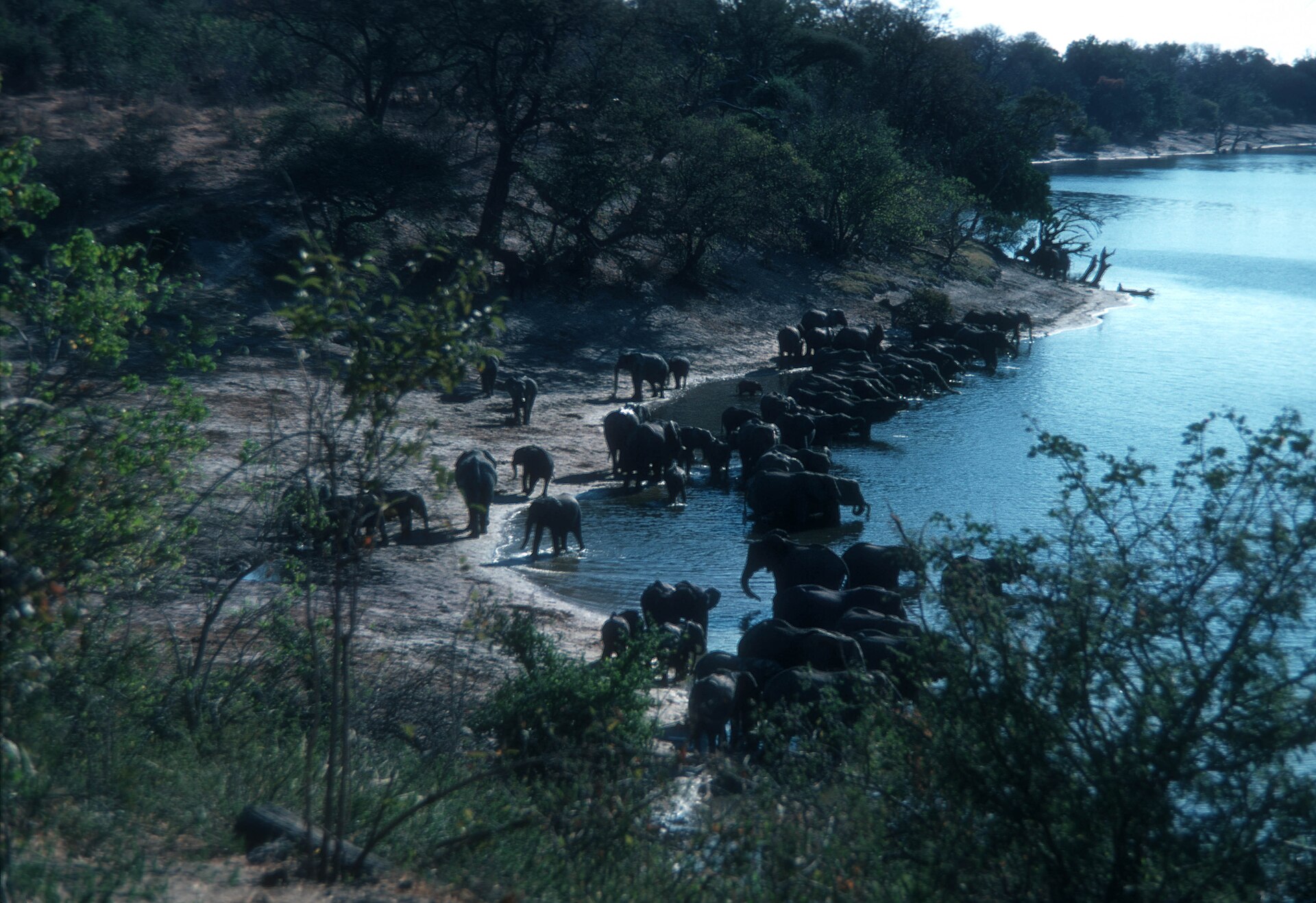
- Chobe riverfront and Kasane (2 nights) — elephants in numbers that are difficult to describe, plus an easy boat cruise, plus a supermarket.
- Optionally Victoria Falls, about 80 km east of the Kazungula border.
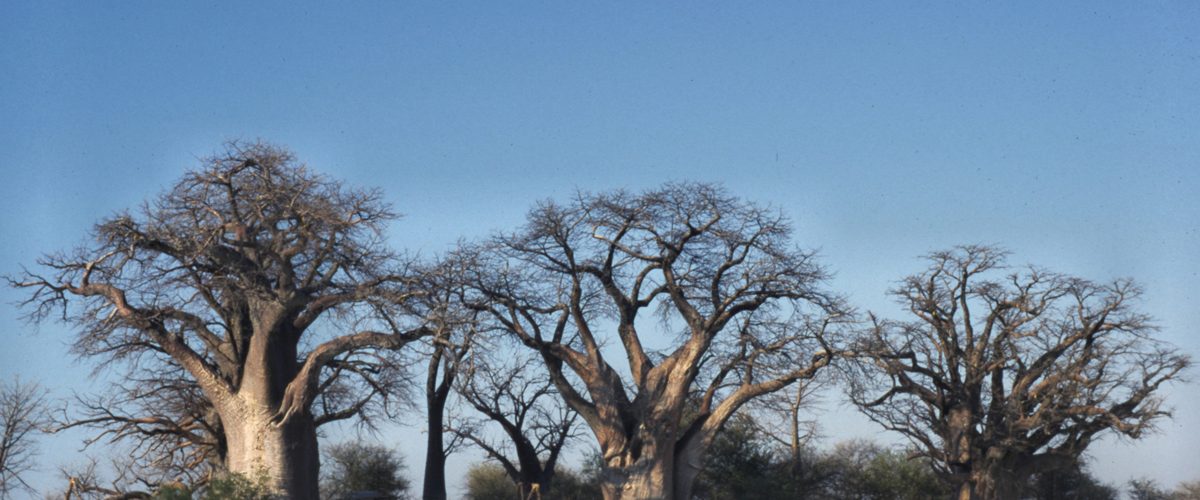
If you have less time, do Moremi and Khwai properly rather than adding Chobe badly. If you have more, add Nxai Pan for Baines’ Baobabs and the Central Kalahari for the emptiness.
When to go, and the honest trade-off
May to October (dry season) is the standard answer. Water sources shrink, animals concentrate on the rivers and pans, the grass is short, the tracks are firm, and there is no rain. It is also when campsites sell out a year ahead and prices peak. July and August are cold at night — genuinely cold, near freezing before dawn in the Kalahari — which nobody mentions in the brochures.
November to April (green season) is cheaper, emptier and far more beautiful in photographs. It is also when the black cotton soil in parts of Moremi becomes impassable, when tracks flood, and when some campsites close. The zebra migration to Nxai Pan happens in this window and is genuinely spectacular. This is the season for a second Botswana trip, not a first one.
The shoulder — late April to May, and again in November — is the sweet spot for a self-drive: roads are drivable, the crowds have not arrived, and campsite availability is realistic at a few months’ notice rather than a year.
What a self-drive cannot give you
Being honest about this matters more than another paragraph of encouragement.
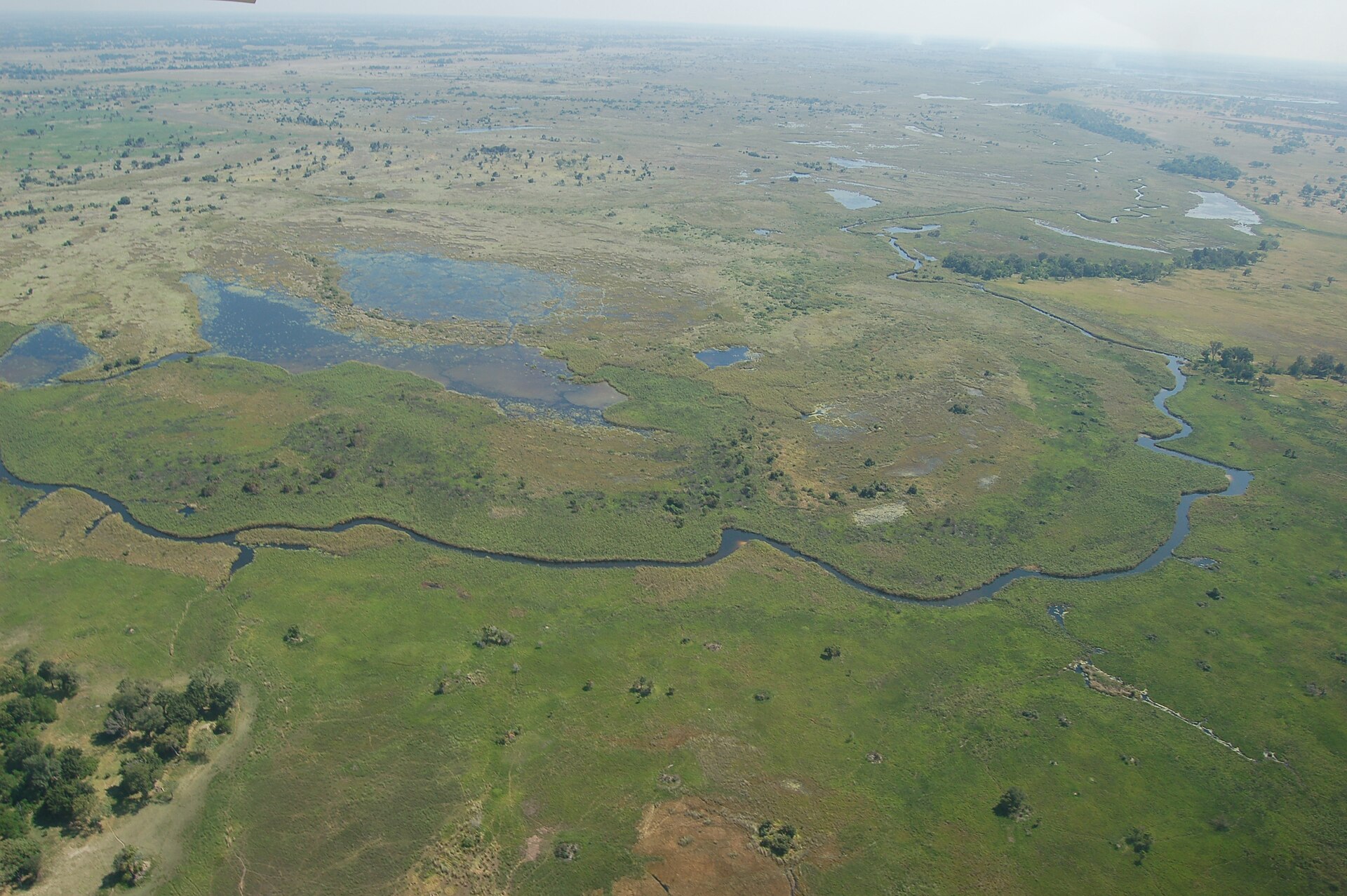
You cannot drive into the Okavango Delta proper. The water-based heart of the delta is accessible only by light aircraft to fly-in camps, or by mokoro from the fringes. From a vehicle you see the edge of it, which is wonderful, but it is the edge. A scenic flight from Maun, typically 45 to 60 minutes, is the single best-value add-on to a self-drive trip and the only way to understand the shape of the place.
You also cannot do night drives inside national parks, and you cannot go off-road. Both are permitted in the community concessions such as Khwai, which is why a night or two there is worth the detour.
And you will see less than a guided guest. A professional guide with a radio network and twenty years of local knowledge finds leopards. You will find elephants, which in Botswana is not a hardship, but manage the expectation.
Where to sleep on either end of the drive
The park campsites are booked separately through the concessionaires, as above. But almost every Botswana self-drive has a hotel or lodge night bolted onto each end — in Maun or Kasane before collection and after drop-off, and often in Johannesburg or Windhoek if you are driving in. Those are the nights worth booking properly, because arriving off a long-haul flight to no plan is how the trip starts badly.
For the airport-to-lodge legs on those bookend nights — particularly a late arrival into Johannesburg or Windhoek before a morning vehicle collection — a pre-booked transfer removes the one part of the trip where you are tired, unfamiliar and carrying everything you own:
Rules, safety and things that are genuinely dangerous
- Stay in the vehicle except at designated points. Botswana’s campsites are unfenced by design.
- Elephants have right of way, always. A bull on a narrow sand track is not a photo opportunity; reverse, wait, and give him the room he is asking for.
- Hippos kill more people in Africa than any large land mammal. Do not camp between a hippo and the water, and do not walk to the river at night.
- Do not leave food in a rooftop tent or unattended. Baboons and hyenas will find it, and a habituated hyena is a problem for everyone who camps there after you.
- Drones are effectively banned in Botswana without permits that are not granted to tourists. Leave it at home.
- Malaria is present in the north, particularly in the wet season. Take prophylaxis advice seriously.
- Speed limits on tar are enforced, and donkeys and cattle on the road at dusk are the most likely cause of a serious accident on the whole trip, not wildlife in the parks.
Is this trip for you?
Botswana self-drive suits people who are comfortable with mechanical self-reliance, who have driven in sand before or are willing to learn quickly, who can plan a year ahead, and who genuinely enjoy camping rather than tolerating it. The reward is a level of solitude and access that guided safaris in busier countries no longer offer.
If any of those do not describe you, the honest recommendation is a fly-in camp or a guided mobile safari. They cost more per day and are worth it for the right traveller. There is no prize for doing it the hard way.
Further reading
- 4×4 rental in Namibia — the natural companion trip, and the most common place to collect a vehicle for a combined Namibia–Botswana route.
- Car rental on South Africa’s Garden Route — if you are flying via Johannesburg or Cape Town anyway.
- SUV rental for a Kenyan safari — how the self-drive maths differs in East Africa.
- Things to do in Cape Town — the usual start or end point of a longer southern Africa trip.
Read next: Zimbabwe or Zambia? The US$30 Difference That Decides Where You Sleep at Victoria Falls