Kraków has spent two decades as the answer to “where in Europe is still cheap?” That reputation is now doing a lot of heavy lifting. Poland’s minimum wage has risen fast, the złoty has held firm against the euro, and the Old Town has quietly repriced itself for a market of weekend visitors who fly in on budget carriers and never look too hard at a receipt.
So is it still good value in 2026? Mostly yes — but not in the way the guidebooks suggest. The free and cheap things in Kraków are genuinely excellent, while the headline attractions everyone books have crept close to Western European prices. This guide puts real 2026 numbers against the things most visitors actually do, so you can see where your money goes further and where it does not.
What a day in Kraków actually costs
A realistic mid-range day — one paid attraction, three meals, local transport, a couple of drinks — lands around 280–350 PLN per person, roughly €65–80. You can do it on 150 PLN if you lean on the free sights and milk-bar lunches. You can also spend 600 PLN without trying, because the two biggest draws outside the city are day trips with entry fees and transport attached.
The single most useful thing to understand: in Kraków the city is cheap and the excursions are not. Budget accordingly.
The Main Market Square and St Mary’s Basilica
Rynek Główny is the largest medieval square in Europe at roughly 200 by 200 metres, and walking onto it costs nothing. That matters, because it is genuinely the best thing in the city and it is free at any hour. Come at 7am and you will have it almost to yourself.
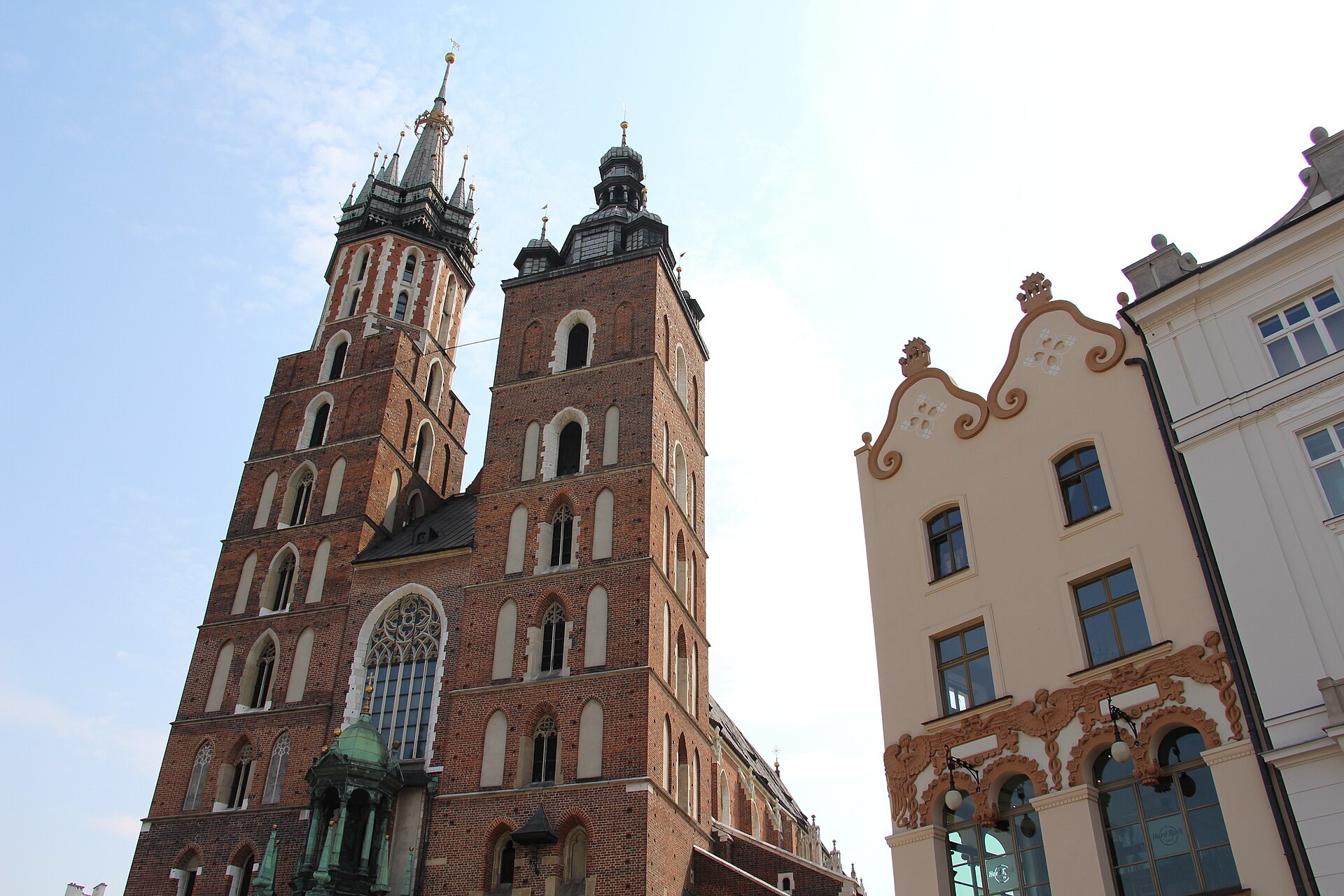
St Mary’s Basilica charges a modest tourist entry to see the Veit Stoss altarpiece — the largest Gothic altarpiece in the world, carved between 1477 and 1489. Worshippers enter free through a separate door, and using that door as a sightseer is poor form; pay the ticket. The hejnał, the trumpet call, sounds from the taller tower on the hour and breaks off mid-note. The legend says a trumpeter was shot in the throat mid-warning during a Mongol raid. That story is almost certainly a nineteenth-century invention, which does not make standing in the square at midday any less worth doing.
Underneath the square sits the Rynek Underground museum, built into the excavated medieval market level. It is the rare archaeology museum that genuinely works for children, and it is reliably the driest option in a city where it rains more than people expect.
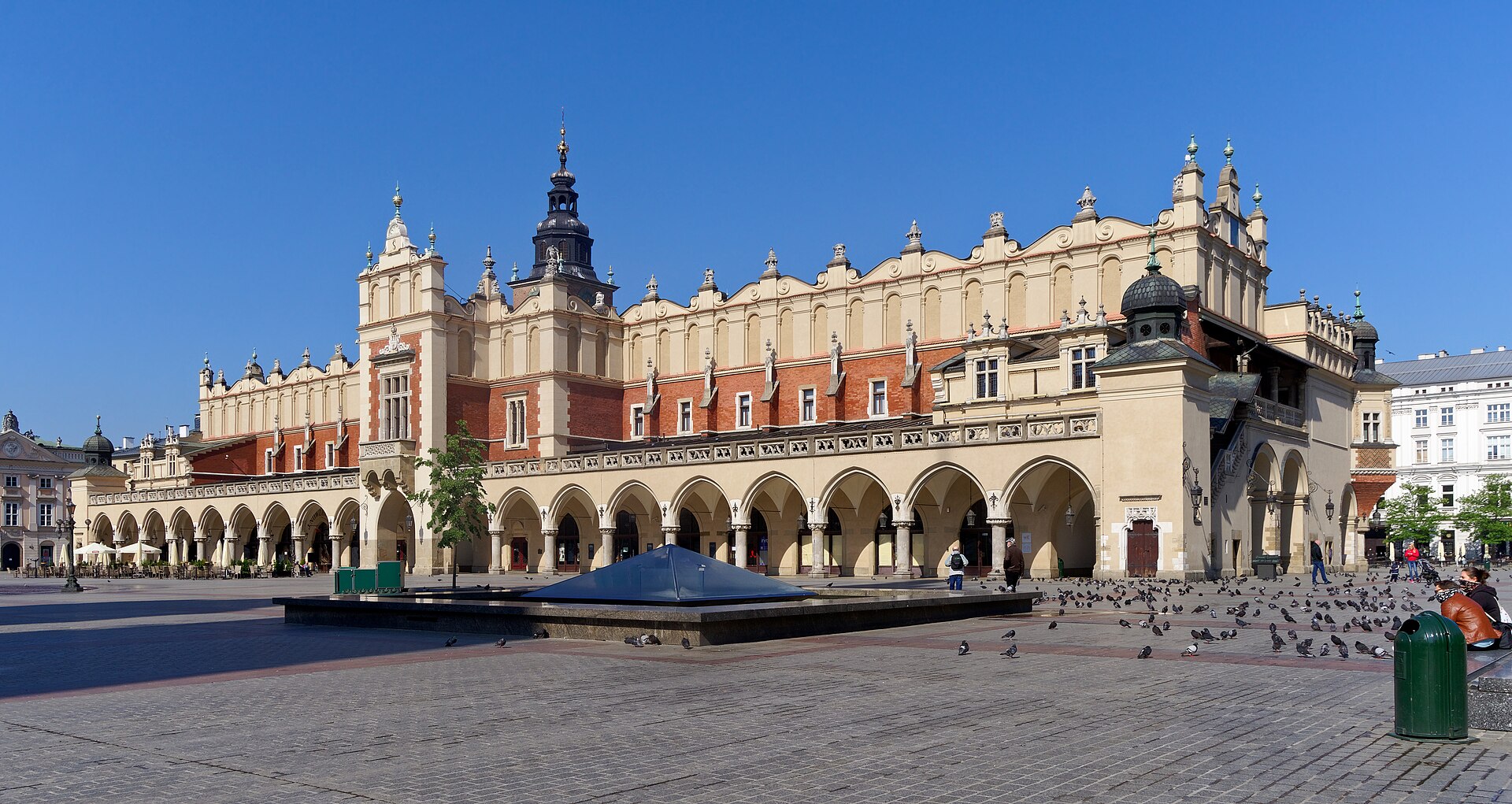
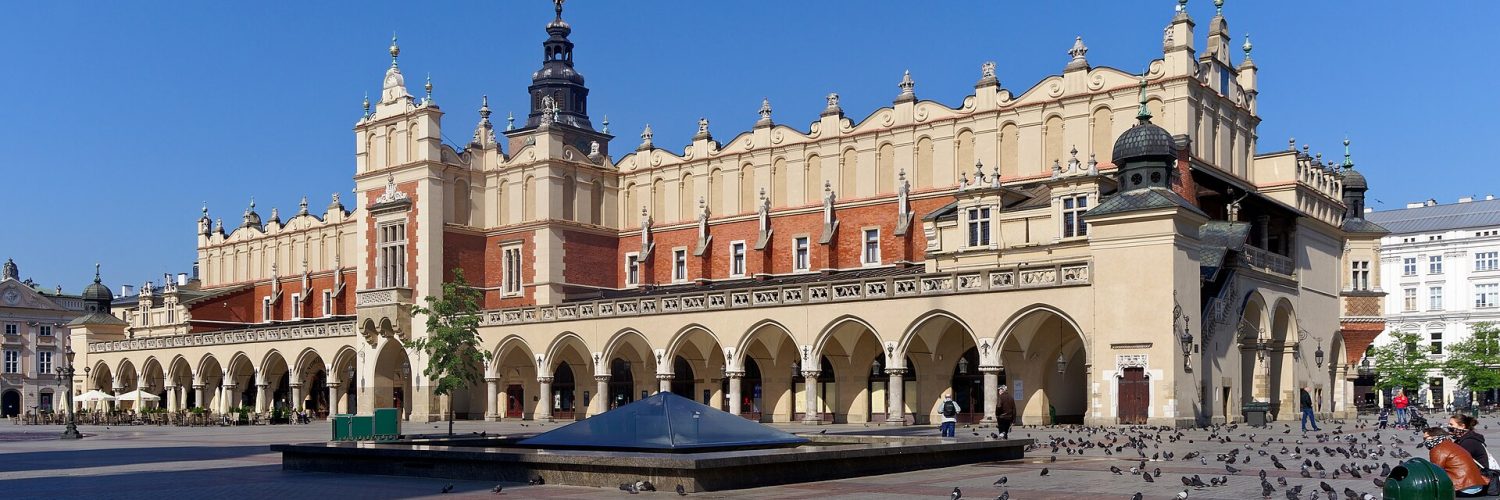
The Cloth Hall (Sukiennice) runs down the middle of the square. The ground floor is a souvenir arcade and you should treat its amber prices with suspicion; the upstairs gallery of nineteenth-century Polish painting is a serious collection and rarely crowded.
Wawel: pick your tickets carefully
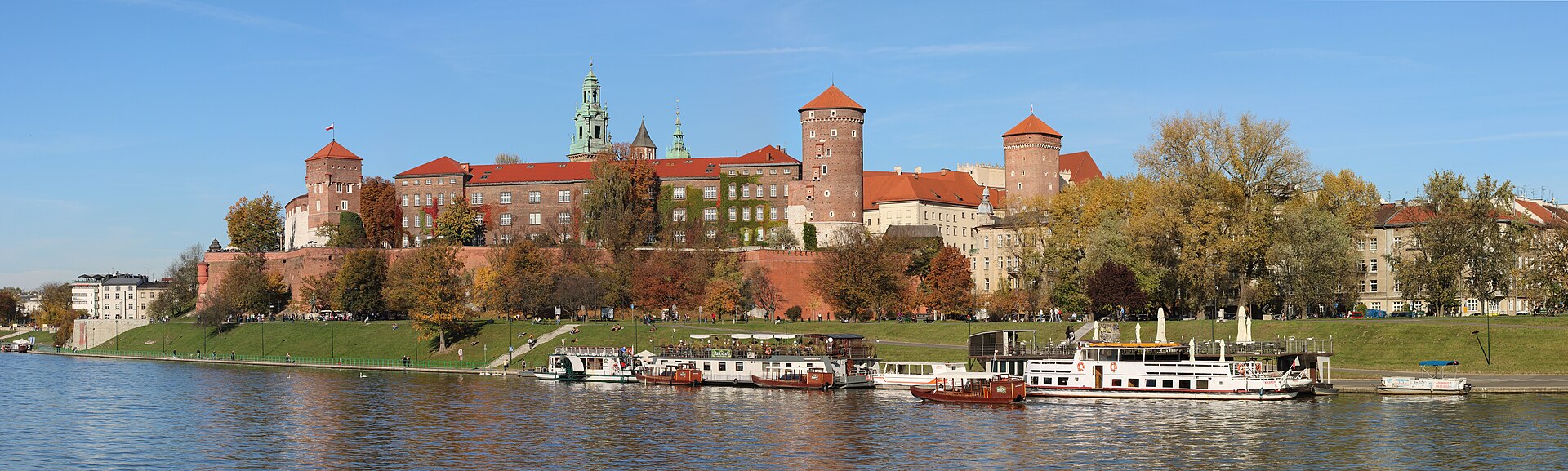
Wawel is the thing tourists most often get wrong. The hill, the courtyards and the grounds are free to enter. What costs money is each individual exhibition inside — the State Rooms, the Royal Private Apartments, the Crown Treasury and Armoury, the Dragon’s Den and the cathedral with its tower and crypts are all separately ticketed.
Buying everything is expensive and exhausting. Most visitors are happiest with one interior plus the cathedral. Ticket numbers per time slot are capped, and in July and August the same-day allocation is routinely gone by late morning. Book online the night before.
Wieliczka Salt Mine: 143 PLN and three hours
The standard adult ticket on the Tourist Route is 143 PLN in 2026 (reduced 112 PLN), and that price includes the obligatory guide — you cannot walk the route alone. The route covers about 3.5 km across three levels and descends to roughly 135 metres. Allow three hours door to door from central Kraków, more if you go by public bus.
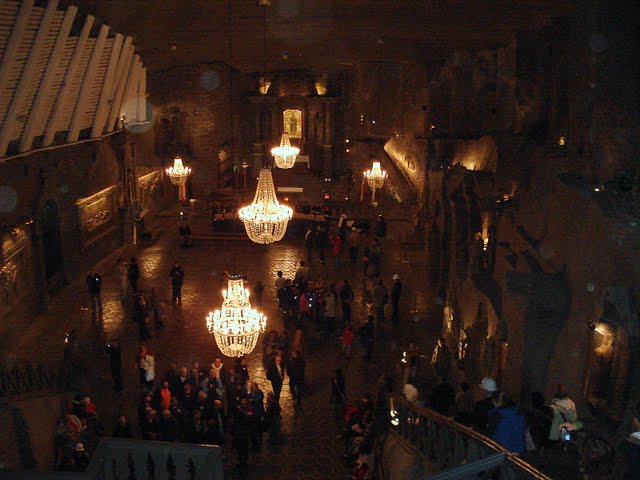
The payoff is the Chapel of St Kinga: a full-sized church carved more than 100 metres underground, where the chandeliers, the altar reliefs and the floor tiles are all worked from rock salt. It is one of the few over-photographed places that is better in person. Take a layer — it sits at about 17°C year-round regardless of the weather above.
One practical warning: the descent is on foot, several hundred steps, with no shortcut. There is a lift for the return.
Auschwitz-Birkenau: free to enter, and you still must book
This is the detail that catches people out every week. Admission to the Auschwitz-Birkenau Memorial grounds is free. What you pay for is the guided tour, currently 150 PLN per person in English, which covers your educator and the audio system.
Both the free entry card and the guided tour must be reserved in advance through the official system at visit.auschwitz.org. Entry cards are not issued at the gate. Guided tours open for booking up to three months ahead; free individual entry cards open a much shorter window before the date. In practice, English-language slots in summer go long before then, so book as soon as your dates are fixed.
Budget around 3.5 hours for the tour itself, plus transfer time between the Auschwitz I and Birkenau sites, and arrive at least 30 minutes early for security screening. Large bags are not permitted inside. Treat it as a full day, and do not schedule anything social for the evening.
Kazimierz, and the difference between the two quarters
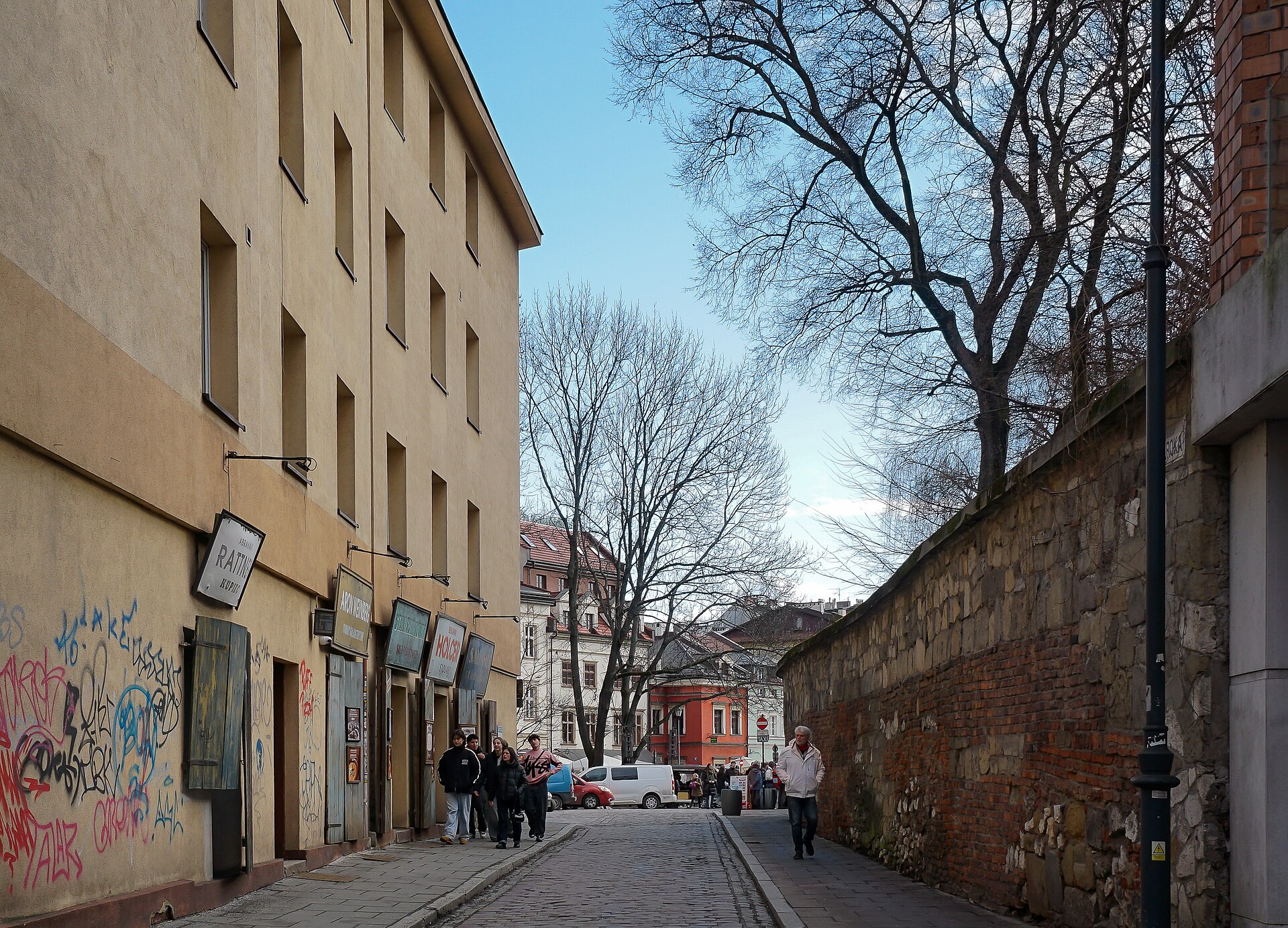
Kazimierz was a separate royal town until the late eighteenth century and was the centre of Jewish life in Kraków for roughly 500 years. Today it holds seven surviving synagogues, two historic cemeteries, and the highest concentration of good bars and small restaurants in the city.
It is worth being precise about the geography, because tours blur it. Kazimierz is the historic Jewish quarter, on the same bank as the Old Town. Podgórze, across the Vistula, is where the ghetto created by the German occupation actually stood in 1941–43, and where you will find the Ghetto Heroes Square memorial and Schindler’s Factory. Conflating the two is common and wrong.
Schindler’s Factory is now a museum about Kraków under occupation rather than a film set, and it is far more substantial than most visitors expect. It also sells out; book ahead.
Getting in from the airport, and getting around
Kraków Airport (KRK) sits about 11 km west of the centre. The airport rail link runs to Kraków Główny in roughly 20 minutes for a single-digit złoty fare — it is the fastest and cheapest option, and hard to justify improving on if you are travelling light and arriving in daylight.
Taxis and pre-booked transfers make more sense with luggage, a late arrival or a family. Pre-booking fixes the price in advance, which removes the one real friction point of landing at KRK near midnight.
Inside the city you will barely need transport. The Old Town is compact and largely pedestrianised, and Kazimierz is a 15-minute walk from the square. Trams are frequent and cheap; buy a ticket from the machine on board and validate it immediately. For day trips, the Wieliczka train and the Oświęcim bus both leave from near the main station.
Where to stay, and what it costs
The Old Town puts you inside the ring of the Planty park with everything on foot, and you pay for it — in rate and in noise, since stag groups still cluster in the streets off the square. Kazimierz is the better bet for most people: 10–15 minutes’ walk, noticeably cheaper, and much better for eating and drinking. Podgórze is cheaper again and genuinely quiet.
Rates swing hard by season. A June weekend and a February weekday in the same hotel can differ by a factor of two and a half.
Fifteen things worth doing, ranked by value
- Free and excellent: Rynek Główny at dawn; the Planty ring walk; Wawel hill and courtyards; Kazimierz’s synagogue exteriors and Plac Nowy; the Vistula embankment; a climb up one of the city’s memorial mounds for the panorama.
- Cheap and worth it: St Mary’s Basilica interior; the Sukiennice upstairs gallery; Rynek Underground; the Ethnographic Museum in Kazimierz.
- Expensive but justified: Wieliczka (143 PLN); the Auschwitz-Birkenau guided tour (150 PLN); Schindler’s Factory; one Wawel interior.
- Skip unless it is your thing: amber shopping in the Cloth Hall; horse-drawn carriage rides on the square; the organised pub-crawl circuit.
When to go
May, June and September are the sweet spot: long days, everything open, and prices below the July–August peak. Winter is genuinely cold — sub-zero for weeks — but the Christmas market on the square is one of the better ones in Central Europe, and hotel rates outside the market weeks are the lowest of the year.
So — still good value?
Yes, with a caveat. If your trip is mostly walking the Old Town, eating well and drinking in Kazimierz, Kraków remains substantially cheaper than Prague, Vienna or Lisbon for the same quality. If your trip is Wieliczka plus Auschwitz plus three Wawel exhibitions, you are paying close to Western European prices for the attractions and saving only on the bed and the beer.
The efficient version of this city is three nights, two paid day trips at most, and a lot of unhurried walking. Planning a wider Central European loop? Our guides to Prague, Budapest and Vienna cover the obvious next stops.
Quick answers
How many days do I need? Three nights is the honest minimum: one day for the Old Town and Wawel, one for Auschwitz, one for Wieliczka and Kazimierz.
Is Kraków walkable? Almost entirely. The Old Town, Kazimierz and Podgórze form a continuous walkable strip of about 3 km.
Do I need cash? Cards work nearly everywhere, including trams and museums. Keep a little złoty for market stalls and the odd milk bar.
Can I see Auschwitz and Wieliczka in one day? Combined tours exist and they are a bad idea. Both deserve a day; compressing them gives you a rushed morning at a memorial site.