Vienna is the capital of a country that stopped existing in 1918. Everything you will walk past was built to run an empire of roughly fifty million people across a dozen modern nations, and it is now the administrative centre of a republic of about nine million. The result is a city permanently wearing clothes three sizes too big: boulevards too wide for the traffic, museums too large for the collections, a parliament built for delegates from Sarajevo and Lviv and Krakow.
That mismatch is the single most useful thing to understand before you arrive, because it explains the practical stuff. Vienna is unusually cheap for what it offers, unusually easy to walk, and unusually generous with free space. It also explains the one thing that will genuinely complicate your trip in 2026 and 2027, which almost no guide has caught up with yet: the rail line connecting the airport to the city centre is shut, and it stays shut until the end of October 2027.
Why Vienna looks the way it does
Until the middle of the nineteenth century Vienna was a fortified city ringed by walls, with a broad open field of fire outside them where building was forbidden. In 1857 Emperor Franz Joseph ordered the walls pulled down. What went up on that empty ring was not housing but a deliberate showcase: the opera house, the two great court museums facing each other, the parliament, the city hall, the university, the Burgtheater, all built within roughly thirty years in whichever historical style the architects felt matched the building’s purpose.
This is why central Vienna feels less like a medieval city that grew and more like a stage set with a medieval core dropped in the middle. Inside the Ring you get the tangled old town around the cathedral. On the Ring itself you get the imperial showpieces. Outside it, the numbered districts spiral outward, and the further out you go the more the city becomes an ordinary, affordable, very liveable European capital where people actually live.
Practical consequence: Vienna’s postal codes tell you exactly where you are. A 1010 address is inside the Ring. 1020 is district two, across the Danube Canal. The middle two digits are the district number, so 1070 is the seventh, 1190 is the nineteenth. When you are booking a hotel or reading a restaurant address, that four-digit code is more informative than any neighbourhood name.
img=>0;
Getting in from the airport, and the 14-month problem
Read this part even if you skim the rest. From 7 September 2026 until the end of October 2027, the central section of Vienna’s inner-city S-Bahn line, between Wien Praterstern and Wien Hauptbahnhof, is closed completely for modernisation works. Trains do not stop at Rennweg, and critically they do not stop at Wien Mitte / Landstrasse, which is the hub every older guide tells you to aim for.
Here is what actually works while the closure is on:
- OeBB Railjet and Intercity trains. Twice an hour, non-stop from the airport to Wien Hauptbahnhof in about 15 minutes, with a connection to the U1 underground line. This is the fastest and least fiddly option, and it is the one to default to.
- REX 7 regional express. Airport to Wien Hauptbahnhof in around 20 minutes.
- City Airport Train, running as buses. From 24 August 2026 to 31 October 2027 the CAT operates a premium bus replacement between the airport and Wien Mitte / Landstrasse, up to five buses an hour. The Wien Mitte stop is at Marxergasse 1b. Every 12 minutes between 07:00 and 19:00, every 15 minutes early morning and evening until midnight. Note that the CAT city check-in at Wien Mitte is not available during this period.
- S7 suburban line. Still runs, but only as far as St. Marx, which is outside the centre. From there it is tram 18 or 71, or bus 74A, or a walk of roughly ten minutes to the nearest U3 station. Cheapest, slowest, most steps with luggage.
- Vienna Airport Bus. Line 1 reaches Hauptbahnhof and Westbahnhof in about 40 minutes. Line 2 reaches Morzinplatz / Schwedenplatz, right on the edge of the old town, in 22 minutes. From 5 September 2026 two more routes open: line 4 to Karlsplatz and line 5 to Praterstern.
One fare detail that catches people: standard Vienna transport tickets only cover the city core zone. Journeys to and from the airport need an additional one-way ticket beyond that zone, and the CAT and airport buses are separate operators with their own fares entirely.
If you are landing late, travelling with children, or carrying more luggage than hands, a pre-booked door-to-door transfer removes the transfer-and-tram problem that the closure has created. Compare what the fixed-price options cost against a taxi before you decide:
What you have to book ahead, and what it actually costs
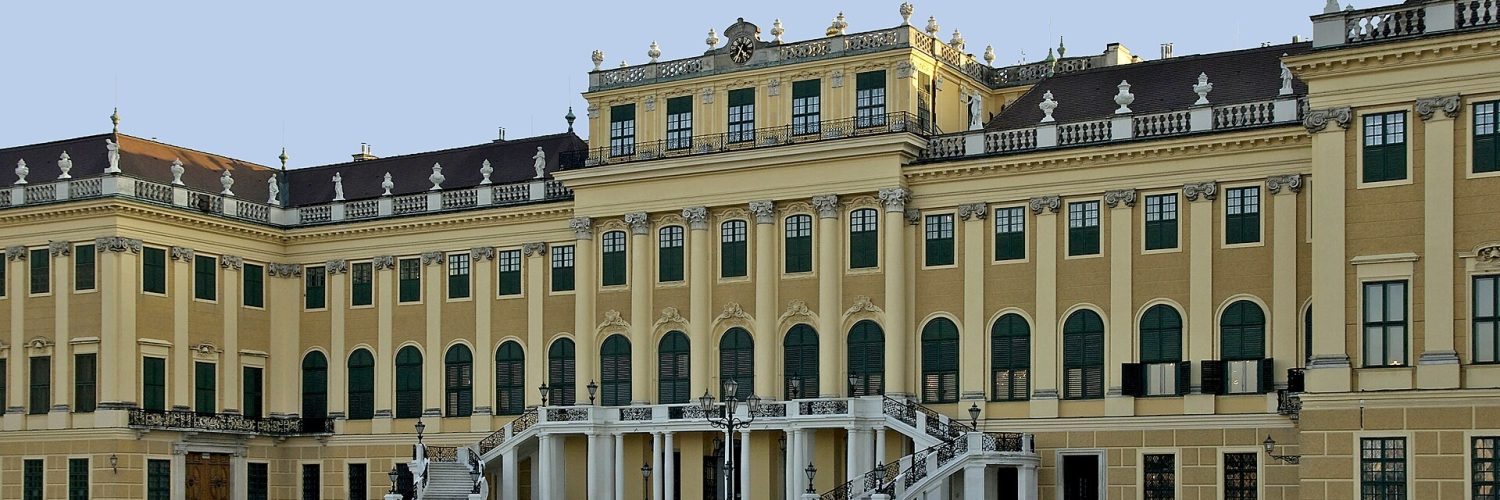
Vienna’s big sights run on fixed admission times, and the palace ones in particular sell out. Schoenbrunn is the clearest case: admission is by timed slot, and in high season the walk-up desks are gone by late morning.
Current Schoenbrunn prices, from the palace itself:
- State Apartments — 30 euro adult, 20 euro child from 6. A compact route through the ceremonial rooms, roughly 40 minutes.
- Palace Ticket — 42 euro adult, 30 euro child. The full interior route with audio guide. This is what older guides still call the Grand Tour.
- Classic Pass — 49 euro adult, 36 euro child, 42 euro with a Vienna City Card. Bundles the palace with the Privy Garden, Orangery Garden, Maze and Gloriette. Summer season only, 27 March to 2 November 2026, and valid on the day of issue.
Two honest warnings. The Gloriette viewing terrace and the Privy Garden are reached by stairs only and are not suitable for wheelchair users, though the maze is accessible and the exhibition areas have ramps or a lift. And Schoenbrunn’s gardens are free, open long hours, and enormous. If your interest in Habsburg interiors is mild, spend nothing, walk up to the Gloriette for the view back over the city, and put the 42 euro somewhere else.
Elsewhere: the Kunsthistorisches Museum is 22 euro booked online, 24 euro at the door. Upper Belvedere is around 23 euro, with combination tickets covering two or three of the Belvedere sites. Both are free for under-19s, which is unusually generous and worth planning a family day around.
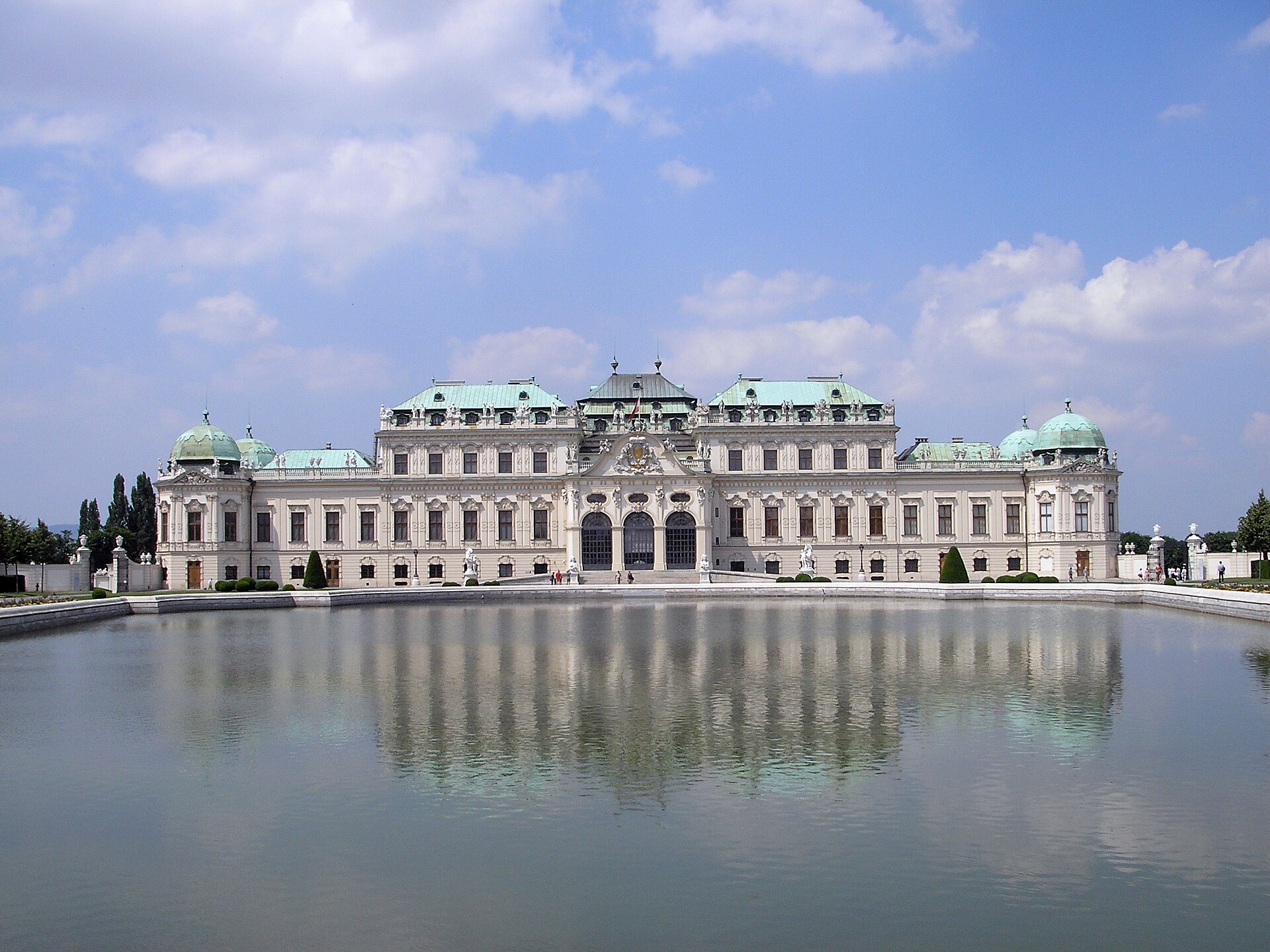
If you would rather see what is actually available on your dates before committing, this is the quickest way to scan Vienna’s bookable attractions and current prices in one place:
What is free, and not worse for it
Vienna is one of the few major European capitals where a genuinely good day costs nothing.
- The Ring itself. Walk it, or ride trams 1, 2 and 71 around most of it on a normal transport ticket. Ignore the branded sightseeing tram that charges several times as much for the same rails.
- The Stadtpark and the Volksgarten. The Volksgarten rose garden in June is one of the best free things in the city.
- The Prater. The park is free and huge. The famous Ferris wheel and the fairground rides are not, but nobody is obliged to buy.
- The Zentralfriedhof. Free to enter, larger than the first district, and home to Beethoven, Brahms, Schubert and Strauss. Genuinely one of the strangest and best afternoons in Vienna.
- The Donauinsel. A 21-kilometre artificial island in the Danube used by the city as its swimming pool and running track.
- Under-19s in the state museums. Free entry is the rule rather than the exception.
The ticket arithmetic that most guides get wrong
This changed in January 2026 and a lot of published advice has not caught up. The current Wiener Linien fares:
- Single ticket: 3.20 euro, valid 80 minutes in one direction with unlimited changes. Children 6 to 14 pay 1.60 euro. Bought from the driver on a tram, a single is 3.40 euro.
- 24-hour network ticket: 10.20 euro.
- Flexible 7-day Vienna ticket: 25.20 euro digital and non-transferable, or 28.90 euro as a transferable paper ticket.
Do the arithmetic before you buy the obvious thing. A 24-hour ticket only beats singles if you take four or more rides that day. And for a three-night trip, three consecutive 24-hour tickets cost 30.60 euro, which is more than the 25.20 euro seven-day ticket that also covers your arrival evening and departure morning. The seven-day ticket is very often the cheapest option for a stay of three days or more, which is the opposite of what most itineraries recommend.
Two rules that catch visitors. Timed tickets must be validated before you travel, in the blue machines at station entrances or inside trams and buses, and inspections are frequent and unsentimental. Children under six travel free, and under-15s travel free on Sundays, public holidays and during Vienna school holidays.
The Vienna City Card, starting at 19 euro, bundles transport with discounts at over 200 places. It is worth it only if you were going to pay for several of those attractions anyway. Run the numbers against a plain transport ticket rather than assuming.
The districts, and what each one is for
- 1st, Innere Stadt. The cathedral, the Hofburg, the opera, the luxury shopping. Also where every tout in a powdered wig will try to sell you a concert ticket. Stay here for convenience, eat here reluctantly.
- 2nd, Leopoldstadt. Across the Danube Canal. The Prater, the Augarten, a strong cafe and bar scene, and noticeably better value than the first.
- 4th and 5th, Wieden and Margareten. The Naschmarkt sits on the boundary. Good restaurants, walkable to the centre, quieter at night.
- 7th, Neubau. The one most visitors end up liking best. Independent shops along Neubaugasse, the MuseumsQuartier on its edge, and the highest density of places you would actually want to eat.
- 8th, Josefstadt. Small, residential, elegant, very central. A good compromise between price and location.
- 19th, Doebling. The wine villages. Grinzing and Nussdorf are where the Heuriger taverns are, up on the slopes with views back over the city.
A three-day route that does not double back
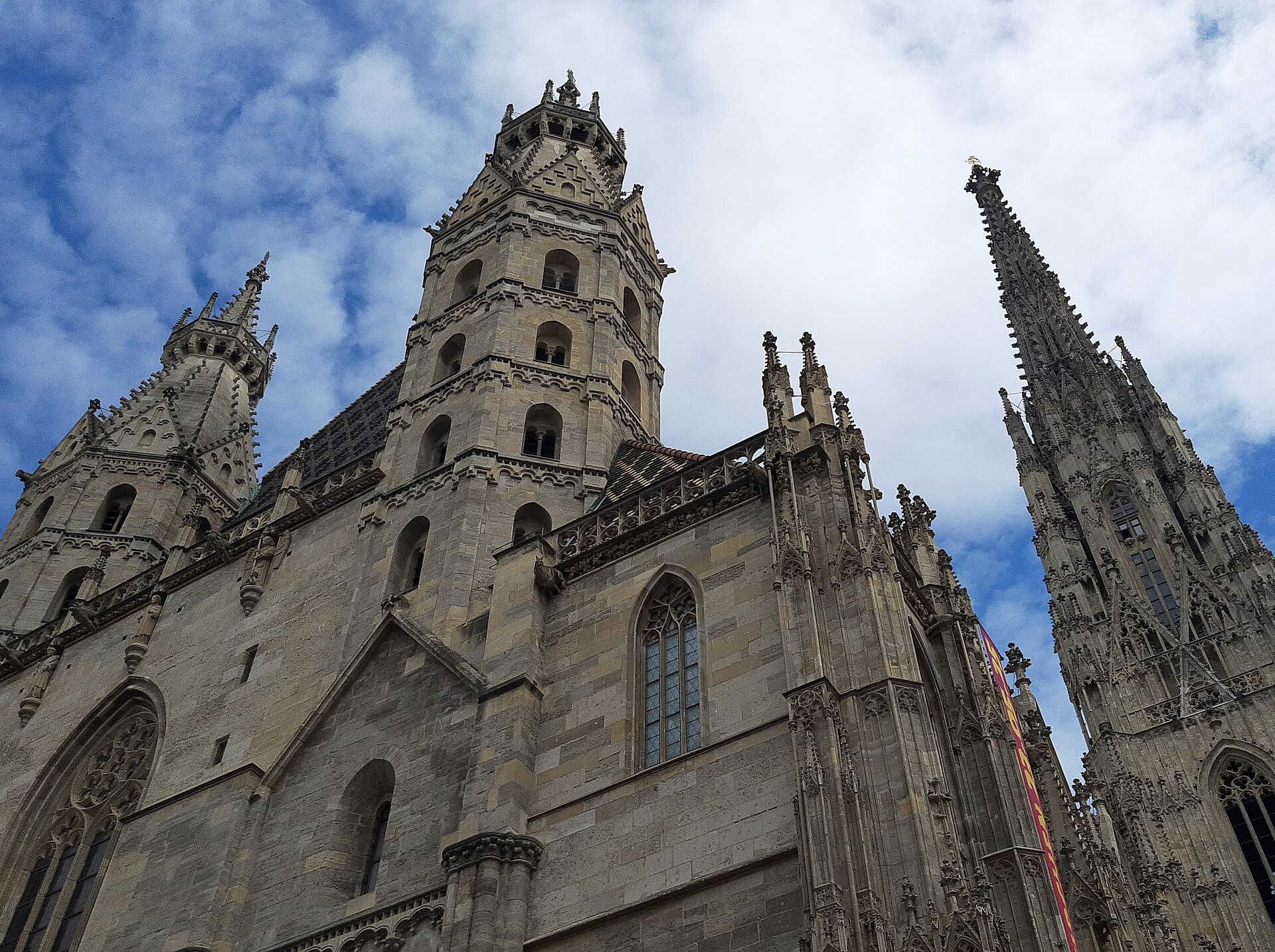
Day one, inside the Ring. Start at St. Stephen’s when it opens and before the tour groups land. Walk out through Graben and Kohlmarkt to the Hofburg. Spend the afternoon in one of the two museums facing each other across Maria-Theresien-Platz, then cross into the MuseumsQuartier courtyards, which are free and full of people doing nothing in particular. Evening: see the note on opera standing room below.
Day two, Schoenbrunn and the west. Book the earliest palace slot you can, do the interior, then give the gardens two unhurried hours and climb to the Gloriette. Back in town by mid-afternoon, spend what is left in Neubau.
Day three, the parts most visitors skip. Upper Belvedere in the morning for the Klimt collection, then either the Zentralfriedhof or, if the weather holds, tram and bus up to Grinzing for a late lunch at a Heuriger. If you have an evening flight, remember that the airport journey is longer than it used to be and build in the extra time.
Coffee houses, wine taverns, and not getting fleeced
The Viennese coffee house is a real institution and it has a real etiquette: you order one thing, you are brought a glass of tap water with it, and nobody will hurry you out for the next two hours. That is the deal, and it is why a five-euro coffee is not expensive when you use it properly. The waiter will not chase you, but he also will not come back unprompted, so catch his eye.
The other local institution is the Heuriger, a tavern where a winegrower sells the current year’s wine from their own vines, usually with a cold buffet paid for by weight. These cluster in the 19th district and in Stammersdorf across the Danube. They are seasonal and many close for months at a time, so check before you make the trip out.
Things that are not worth your money: the costumed concert sellers around Stephansplatz, whose 60-euro tickets buy variable quality in rooms that are not the ones on the flyer; and any restaurant on the main tourist axis with a laminated menu in six languages. Walk five minutes off Kaerntner Strasse and prices drop by a third.
The opera trick worth planning around
The Vienna State Opera keeps 435 standing places, and they are sold only on the day of the performance from 10:00 in the morning, starting at 4 euro with a BT-Card. That is not a typo. For the price of a coffee you can stand through a world-class production in one of the great opera houses, with your own subtitle screen in up to eight languages.
Two caveats. There are no performances at all in July and August, so a summer trip gets a guided tour instead. And if you would rather sit, under-27s pay 20 euro for selected performances, rising to 25 euro from September 2026, while children under 16 pay 15 euro, rising to 20 euro, with a minimum age of five.
Where to sleep
Location matters less in Vienna than in most capitals, because the U-Bahn is fast and the city is small. Anywhere within a few minutes of a U-Bahn station in districts 1 through 9 will work. The first district buys you a short walk to the cathedral and costs a clear premium for it; the 7th and 8th give you better food and better value for an extra ten minutes underground.
One timing note specific to the next year: with the airport rail line closed, being near Wien Hauptbahnhof or on the U1 has become more useful than being near Wien Mitte, which is the reverse of the usual advice.
Day trips worth the fare
- Bratislava. Roughly an hour by train, and a genuinely different country for the day. The cheapest international day trip in Europe.
- The Wachau valley. Melk abbey is about an hour out, and the stretch of Danube between Melk and Krems is the reason people photograph Austria.
- Salzburg. Around two and a half hours each way on a fast train, which makes it a long day rather than an easy one. Worth it only if you are not going to be back.
When to go
May, June and September are the best months: long days, gardens at their peak, and none of the August heat that makes the palace queues genuinely unpleasant. July and August are hot, busiest, and the opera is dark. Late November and December bring the Christmas markets, which are lovely and extremely crowded at weekends. January and February are cold, cheap and half empty, and the museums are at their most civilised.
Practical notes
- Tap water comes from Alpine springs by pipeline and is excellent. Buying bottled water in Vienna is a small act of self-harm.
- Tourist Info Vienna is at Albertinaplatz, open daily 09:00 to 18:00, and is genuinely useful for current closures.
- Sunday closing is real. Supermarkets shut, and outside restaurants and museums the city goes quiet. Plan a park, a museum or a cemetery for Sundays, not a shopping day.
- Vienna is one of the safer large European cities, and the main street-level annoyance is ticket touts rather than anything dangerous. Ordinary pickpocket caution around Stephansplatz and on the U1 is enough.
- Over-tourism in Vienna is concentrated almost entirely in the first district and at Schoenbrunn. Ten minutes on a tram solves it.
Further reading
If you are building a wider central European trip, our guides to things to do in Prague and things to do in Istanbul cover the two obvious rail connections at either end of the old empire. For a similar imperial-capital-turned-manageable-city, see Lisbon, and for the same trick played on a smaller stage, Edinburgh and Porto.