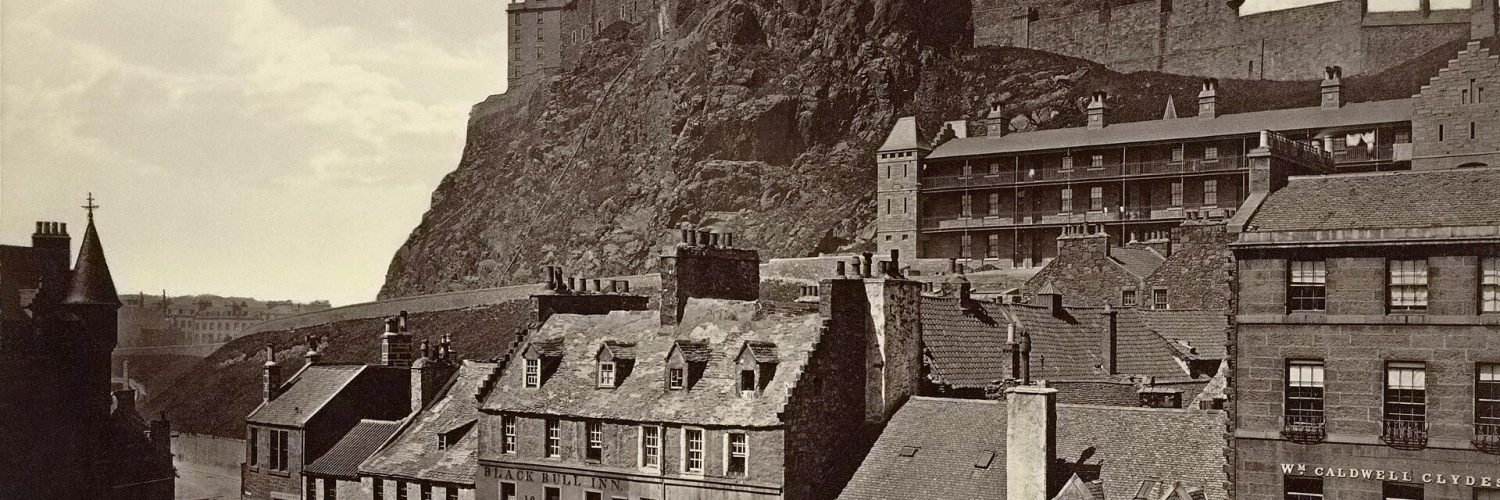
Edinburgh is not a city that was planned and then built. It is a city that was squeezed onto a dead volcano, gave up, and built a second city next door out of spite. Almost everything that confuses a first-time visitor — why the streets have basements that open onto other streets, why a five-minute walk on the map takes twenty minutes and 140 steps, why the Old Town smells of smoke and the New Town smells of nothing — comes directly from that geology. Understand the rock and the rest of Edinburgh stops being charmingly baffling and starts making sense.
Two things also make 2026 a specific year to visit rather than a generic one. On 24 July 2026 Edinburgh became the first city in the United Kingdom to charge a tourist tax, a 5% levy on the accommodation portion of every paid overnight stay. And the festival season, which runs 7–31 August, is now large enough that the city genuinely behaves like a different place for those three weeks. Both facts change what you should book, when, and for how much.
The rock, the ridge and the reason the city looks like this
Around 340 million years ago a volcano erupted where Edinburgh Castle now stands. The volcano died and its hard basalt plug survived. Much later, glaciers grinding east to west hit that plug, split around it, and scoured out the ground on either side while leaving a long tapering ramp of softer rock protected in the lee. Geologists call the shape a crag and tail. Edinburgh calls it the Royal Mile.
That single ramp — castle at the high western end, Holyrood Palace at the low eastern end, roughly one Scots mile between them — was the entire city for about six centuries. Hemmed in by a defensive wall and by a loch to the north, medieval Edinburgh could not grow outwards, so it grew upwards. Eleven and twelve-storey tenements went up in the 1600s, which made this one of the tallest cities in Europe long before lifts existed. The narrow alleys running downhill off the spine are the closes, and they are steep because the tail of the volcano is steep.
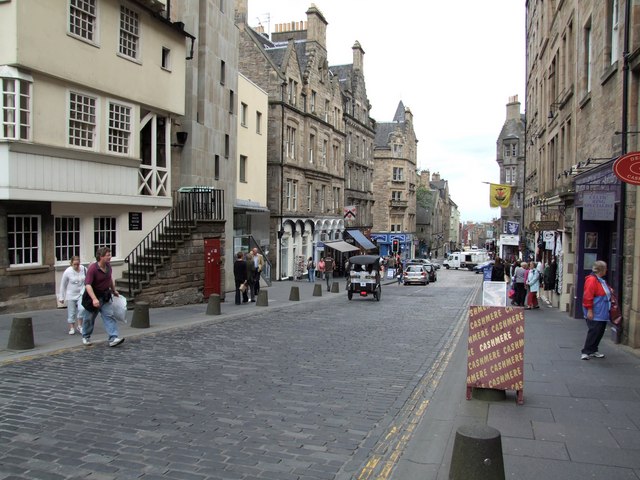
By the 1760s the Old Town was filthy and overcrowded, so the city drained the Nor Loch, threw a bridge across the gap, and laid out an entirely separate Georgian city on the flat ground to the north: straight streets, wide pavements, symmetrical squares, no closes. That is why Edinburgh feels like two cities. It is two cities. The drained loch is now Princes Street Gardens, and the railway runs along the bottom of it, which is why Waverley Station sits in a ditch in the middle of town.
The practical consequence: when you look at a map and see two streets crossing, they may not actually meet. One may be forty feet above the other. Budget more walking time than the distance suggests, and wear shoes with grip — the setts (the square granite cobbles) are lethal in rain, and it rains.
Getting in from the airport
Edinburgh Airport is about 13 km west of the centre and there is no rail link, so you have three sensible options and one expensive one.
The tram is the simplest. It runs from a stop directly outside the terminal to St Andrew Square in the New Town in roughly 35 minutes. An adult airport single is £7.90 and an open return is £9.50, so if you are coming back the same way the return pays for itself immediately. Buy before you board — there are machines at the stop and you cannot pay the driver.
The Airlink 100 bus covers the same route, more frequently, and drops at Waverley Bridge. If you expect to use city buses and trams heavily on arrival day, a Lothian NETWORK day ticket at £14.00 covers the entire network including Airlink and trams in all zones, which can be better value than buying an airport single plus separate city fares.
A pre-booked private transfer makes sense with luggage, small children, or a flight landing after the trams stop. It is the only option that puts you at your actual front door, which matters more than usual in a city where your hotel may be up a close with no vehicle access.
A taxi from the rank is metered and the most expensive of the four for a solo traveller, though it evens out for a group of four.
What you must book ahead, and what it costs
Edinburgh has a small number of genuinely capacity-constrained attractions and a large number that you can simply walk into. Knowing which is which is most of the planning.
Edinburgh Castle is the one that catches people out. It uses 30-minute timed entry slots and it sells out well in advance in summer — and once online tickets are gone, there are no tickets at the gate. Booking online is also cheaper: an adult ticket is £23.50 online against £26.00 walk-up, a concession (65+ or unemployed, not students) is £19.00 against £21.00, and a child aged 7–15 is £14.00 against £15.50. A family of two adults and two children is £67.50 online. The audio guide is a separate £4.00 and worth it, because the castle labelling is thin. If your dates are flexible, the adult Flexi ticket at £38.00 lets you enter on any day in a seven-day window without picking a slot — useful in August when the weather decides your itinerary for you.
The Real Mary King’s Close, the buried 17th-century street under the City Chambers, runs guided tours every 15 minutes and caps group sizes, so it books out days ahead in season. Expect around £25 for an adult and £19 for a child.
Everything else on the standard list — Camera Obscura, the Scotch Whisky Experience, Holyrood Palace, the Scott Monument — can usually be booked a day or two out, and in shoulder season on the morning of.
If you are comparing timed-entry slots and combination tickets, it is worth checking live availability rather than a blog’s snapshot, because Edinburgh reshuffles opening hours around the festival and around Hogmanay:
What is free, and honestly just as good
This is the part most Edinburgh guides bury, and it deserves to be near the top. Scotland’s national collections do not charge admission.
- The National Museum of Scotland on Chambers Street is free, open daily 10:00–17:00, and is one of the best museums in Britain. Dolly the sheep is there. So is the roof terrace, which gives you a castle view without the castle queue.
- The Scottish National Gallery on the Mound is free, open daily 10:00–17:00 with a late opening on Thursdays. The Portrait Gallery and the Gallery of Modern Art are also free.
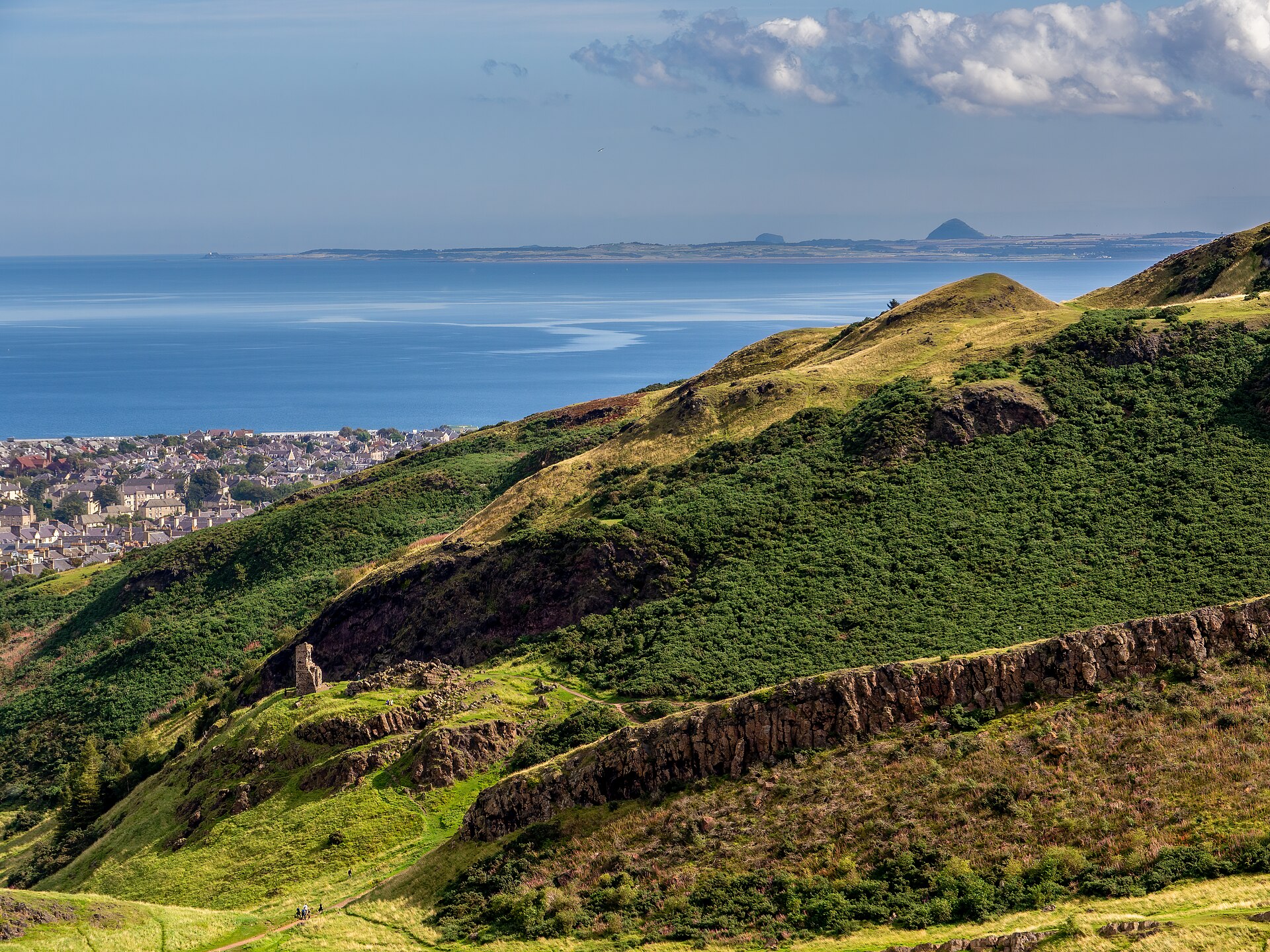
- Arthur’s Seat costs nothing and is the best single hour in Edinburgh. It is the eroded core of the same volcanic system as the castle rock, 251 m high, and from the top you see the whole crag-and-tail geometry laid out beneath you. Allow 90 minutes round trip from the Holyrood side and do not attempt it in the shoes you brought for the restaurant.
- Dean Village and the Water of Leith walkway — a former milling hamlet ten minutes from Princes Street, then a wooded river path that will take you all the way to Leith if you let it.
- Greyfriars Kirkyard, Calton Hill and the Cockburn Street closes — all free, all more atmospheric than several things that charge £20.
What is not worth the money
An honest guide has to include this section. The Royal Mile tartan and cashmere shops are, with a handful of exceptions, selling goods made nowhere near Scotland at prices set for cruise-ship footfall. The “free” walking tours are tip-based and the tipping expectation is real, so treat them as costing £10–15 per person and judge them on that basis. Several ghost tours sell the same underground vaults under different brand names at different prices — check the address before you compare. And the Scott Monument climb is 287 very tight spiral steps for a view that Calton Hill gives you for free, five minutes away, without the claustrophobia.
The neighbourhoods, and what each one is for
Old Town — the ridge itself. Atmospheric, steep, loud until 2am in August, and the closes are genuinely dark at night in a way that is either wonderful or unnerving. Best for a short first visit where you want to walk out of the door into the postcard.
New Town — Georgian, flat, elegant, and quieter. The good independent shops are on Thistle Street and Rose Street rather than on Princes Street, which is now largely chain retail. Best for a second visit, or a first visit if you value sleep.
Stockbridge — a village that the city grew around, ten minutes downhill from the New Town, with a Sunday market, good delis and the Water of Leith on the doorstep. Best for a stay of four nights or more.
Leith — the old port, two miles north, connected by the tram extension. It has the concentration of ambitious restaurants that the Old Town does not, and prices to match, but accommodation is markedly cheaper than the centre.
Southside and Marchmont — student territory in term time, festival territory in August, quiet Victorian tenements the rest of the year. Walking distance to the Meadows and the museum.
Bruntsfield and Morningside — residential, well served by buses, and where you will find the best value on a family-sized apartment.
A three-day route that respects the hills
The single biggest planning error in Edinburgh is zig-zagging up and down the ridge. Work with the gradient.
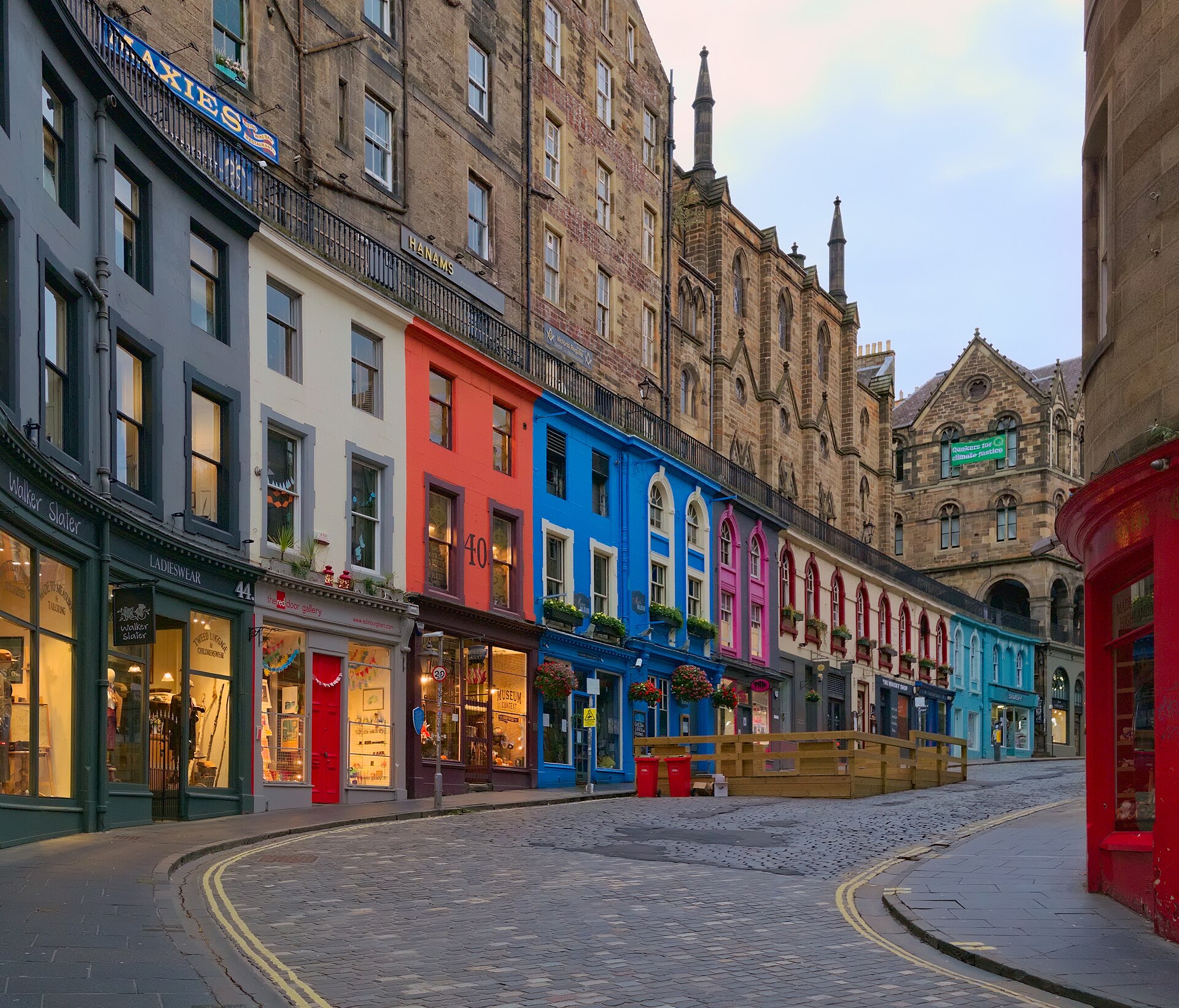
Day one — downhill. Start at the castle on your booked morning slot. Walk east down the Royal Mile, detouring into St Giles’ Cathedral and one or two closes. Lunch in the Grassmarket or on Victoria Street. Afternoon at Holyrood Palace or the Scottish Parliament (free, and architecturally the most argued-about building in Scotland). Finish with Arthur’s Seat if the light holds.
Day two — flat. The New Town. Scottish National Gallery in the morning, Princes Street Gardens, then Charlotte Square and the Georgian House. Walk down to Stockbridge for lunch and follow the Water of Leith to Dean Village. Evening: Calton Hill for sunset, which is a ten-minute climb rather than an expedition.
Day three — choose one. Either the National Museum of Scotland plus Greyfriars and the Southside, or leave the city entirely for a day trip. If you have a fourth day, do both.
Eating, drinking, and the things nobody warns you about
Scottish food has changed enormously in twenty years and Edinburgh is where you see it. Leith and Stockbridge are the strongest areas; the Royal Mile is the weakest, for the obvious reason. Book anywhere ambitious at least two weeks ahead in August and one week ahead the rest of the year.
Haggis is worth trying and the vegetarian version is genuinely good rather than a consolation. Cullen skink — smoked haddock, potato and onion soup — is the thing to order on a cold day. Scottish breakfast includes a tattie scone and a slice of black pudding, and you should let both happen.
On whisky: a bar dram of something interesting costs less than a distillery tour and teaches you more. Ask the bartender what they would drink; in Edinburgh they will actually tell you rather than steer you to the expensive bottle.
Two practical warnings. First, pubs in Scotland can and do stop serving earlier than visitors expect outside festival season — check, do not assume. Second, in August the city’s restaurant capacity is unchanged while its population roughly doubles, so a walk-in dinner at 8pm is not a plan.
Getting around once you are here
The centre is walkable end to end in about 40 minutes if you stay on one level. For everything else, Lothian Buses and the trams share a fare system and take contactless.
An adult single is £2.40 and a child single £1.20. A City DAY ticket is £6.00, but if you simply tap the same contactless card all day the automatic cap brings you out at £5.70, so there is rarely a reason to buy a day ticket in advance. The weekly cap is £26.50 on the same card. City tickets do not cover the airport zone; the NETWORK day ticket at £14.00 does.
Note that the daily cap only works if everyone in your party taps their own card. One card cannot pay for two people and still cap.
Where to stay — and the 5% that is new in 2026
Since 24 July 2026, Edinburgh charges a Visitor Levy of 5% on the accommodation element of any paid overnight stay. It applies to hotels, B&Bs, guest houses, hostels, self-catering flats, aparthotels, short-term lets, campsites and caravan pitches — effectively everything. It is calculated on the accommodation cost before VAT, it does not apply to meals, parking or transport billed separately, and it is capped at the first five consecutive nights of a stay.
Two things follow from that. First, a headline room rate you see now is not the price you pay, so compare like for like at the final checkout screen rather than at the search results stage. Second, because the cap kicks in after five nights, a long stay is proportionally cheaper than several short ones — a seven-night stay is taxed on five nights, but two separate four-night stays are taxed on all eight.
The council expects the levy to raise up to £50 million a year, earmarked for city operations, culture, heritage and tourism management. Whether you think that is fair is up to you; either way it is now on the bill.
On timing: rooms in central Edinburgh for the August festival period sell out and reprice months in advance, and the difference between an August rate and a February rate for the same room can be a factor of three. If your dates are fixed in August, book as early as you possibly can. If they are not, almost any other month is better value.
Day trips, and whether you need a car
You do not need a car in Edinburgh itself — parking is expensive, much of the Old Town is restricted, and the bus network is good. You may want one for a day or two beyond the city.
Reachable by train without a car: Glasgow (about 50 minutes), Stirling and its castle (about 50 minutes), North Berwick and the Seabird Centre (about 35 minutes), Linlithgow Palace (about 20 minutes). Rosslyn Chapel is a bus ride away.
Worth a car: the Fife coastal villages (Anstruther, Crail, St Monans), the Borders abbeys, and anything in the Highlands, where public transport thins out fast. Picking up at the airport rather than in the city centre is usually cheaper and spares you the first hour of one-way systems.
If the Highlands are the real reason you are flying to Scotland, our route-by-route breakdown of renting a car for the North Coast 500 covers the single-track road etiquette, fuel gaps and booking lead times that catch people out.
When to go
August is the Festival Fringe (7–31 August in 2026) and the Royal Edinburgh Military Tattoo (7–29 August). It is extraordinary and it is exhausting. Prices peak, queues are everywhere, and the city is at its most alive. Come for this deliberately or avoid it deliberately, but do not arrive in August by accident.
May, June and September are the sweet spot: long daylight, moderate crowds, and accommodation at something close to a normal price. September in particular is underrated.
December brings the Christmas market and Hogmanay, which is a genuine three-day event and prices accordingly.
January to March is cold, dark by 16:00, and cheap. The museums are free and warm, the pubs have fires, and you will have Arthur’s Seat almost to yourself. This is the honest answer for a budget trip.
Practical notes
- Scotland uses pounds sterling. Scottish banknotes are legal currency and spend normally in Scotland; some retailers in England are unfamiliar with them, so spend them before you leave.
- Contactless is accepted essentially everywhere, including on buses and trams.
- Edinburgh is a comparatively safe city, but the Old Town closes are poorly lit and the Cowgate at 2am in August is chaotic rather than dangerous. Ordinary caution is enough.
- The weather changes hourly. A packable waterproof is more useful than an umbrella, because of the wind.
- Over-tourism is a live local argument here, and the levy is part of it. Staying outside the Old Town, using local buses and eating away from the Royal Mile spreads your money into the city rather than onto the ridge.
Further reading
- Things to do in London — the obvious pairing if you are arriving through England.
- Car rental for the North Coast 500 — the Highland route most Edinburgh trips get extended into.
- Renting a car in Ireland — if Edinburgh is one stop on a wider British Isles trip.