

Hawaii is a strange case in the eSIM world, and the reason is simple: it is a US state. Whether you need to buy anything at all comes down entirely to where your phone plan was issued, and about half the people reading a guide like this do not need to buy anything. So let us split the audience first, then get to the part that actually matters in Hawaii — which is not price, but where the signal disappears.
Do you even need an eSIM for Hawaii?
- US plan (any of the 50 states): Hawaii is domestic. Your plan works exactly as it does at home, with no roaming charges and no add-ons. Buy nothing. This surprises people because Hawaii feels international, but your carrier does not see it that way.
- Canadian plan: Check your US roaming add-on. Most Canadian carriers sell a daily US roaming pass, and for a week-long trip that is often competitive with a travel eSIM. For anything longer, an eSIM usually wins.
- UK, EU, Australian, NZ or Asian plan: You need something. Default international roaming to the US is where the horror-story bills come from, and a travel eSIM is nearly always dramatically cheaper.
That first bullet is the single most useful line in this article, and most Hawaii eSIM guides bury it or leave it out entirely because it costs them a sale.
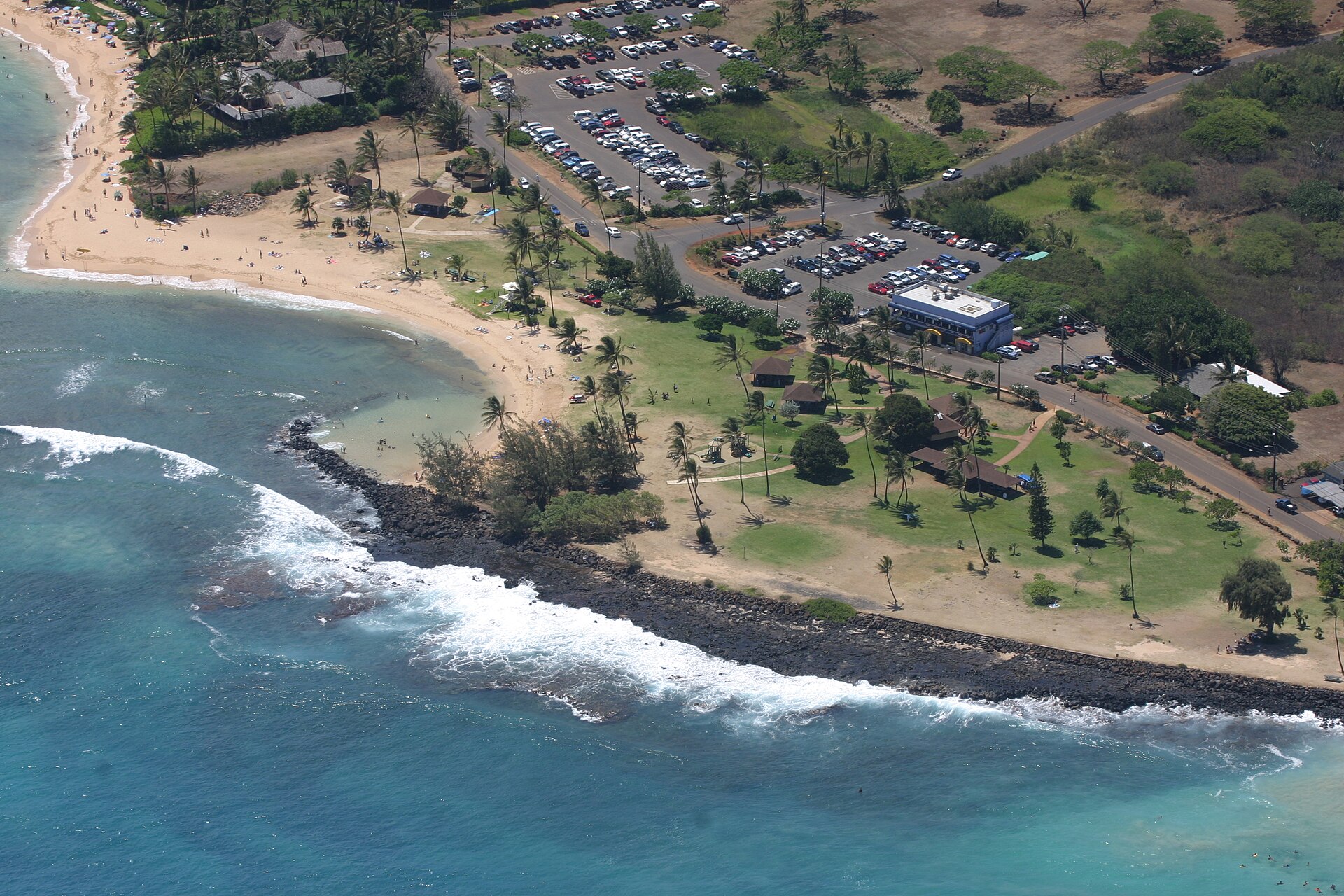
Where you base yourself in Honolulu shapes everything else on this list — how early you can start, what you can reach without transport, and how much of the day goes to getting back. Compare the options before you lock in dates.
The thing that actually matters: Hawaii’s dead zones
Choosing between eSIM providers is a minor decision. Understanding Hawaii’s coverage geography is a major one, because the islands have genuine, large, well-documented gaps — and they sit exactly where visitors go.
On the raw numbers, Verizon has the broadest footprint in the state, reaching roughly 78% of the land area by FCC data. T-Mobile posts the fastest median download speeds, around 61 Mbps. AT&T scores highest on reliability. Which network your eSIM roams onto therefore changes your experience noticeably, and it is worth asking a provider directly rather than assuming.
Here is where coverage fails, island by island:
Big Island (Hawai‘i)
Hilo and Kona are well covered. The problems start when you head into the interior. In Hawai‘i Volcanoes National Park, service is reasonable near the summit visitor centres and then largely absent along Chain of Craters Road and throughout the coastal and backcountry sections. That road is a 30-kilometre dead-end drive down to the sea and back — plan on being offline for the round trip.
The Ka‘u district in the south and the remote Kohala areas are similarly thin, as is the track down to Road to the Sea near South Point and the Waipi‘o Valley lookout and floor.
Maui
Two gaps matter here. The back side of Haleakalā — the Pi‘ilani Highway running from Kīpahulu through Kaupō toward Ulupalakua — has essentially no native coverage from any of the three major carriers. This is the “back road from Hana” that rental agreements often discourage, and it is a genuinely bad place to break down with no phone.
The Haleakalā summit area is patchy and carrier-dependent. If you are booked on a sunrise permit, do not assume you can pull up the reservation on your phone at the gate at 04:00. Screenshot it.
The Road to Hana itself has intermittent service — enough to be unreliable, not enough to depend on.
Kauai and O‘ahu
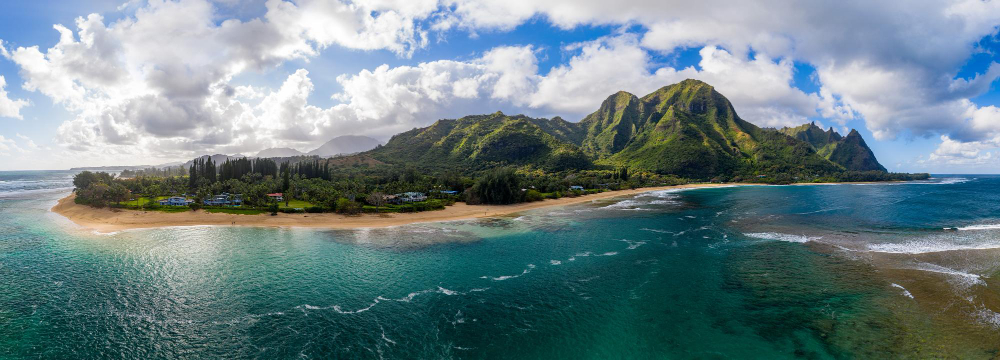
O‘ahu is the best-covered island by a wide margin; Honolulu and the whole southern shore are dense and fast. On Kauai, the main highway ring is fine, but the Nā Pali coast, the Kalalau Trail and the interior around Waimea Canyon drop off quickly. Kauai has no road around the north-west of the island, and the coverage map reflects that.
What this means practically
- Download offline maps for every island before you land. Not the island you are on — all of them. This is the single highest-value five minutes of trip prep.
- Screenshot every reservation. Haleakalā sunrise permits, luau tickets, snorkel tours, rental car confirmations. Trailheads and park gates are precisely where you have no signal.
- Tell someone your hiking plan. On the Kalalau Trail, the Haleakalā back road or the Volcanoes backcountry, you cannot call for help. This is a safety point, not a convenience one.
- Do not rely on live traffic for the Road to Hana or Chain of Craters Road. Both are slow, both are long, and neither will re-route you.
Choosing a provider, if you need one
For international visitors, the comparison comes down to a few practical questions rather than headline price:
- Which US network does it use? Given the coverage differences above, a provider roaming onto Verizon or AT&T infrastructure will generally serve you better in rural Hawaii than one that does not. Ask before you buy.
- Data-only or a real number? Most travel eSIMs are data-only. That is fine for maps and messaging but will not receive a US SMS verification code, which some tour operators and rental desks use.
- How long are you staying? For two weeks or more, a US prepaid plan bought on arrival at a carrier store in Honolulu or Kahului can undercut a travel eSIM — and gives you a US number. For a week, the eSIM wins on convenience.
- Are you island-hopping or continuing to the mainland? Both are domestic US, so any US-coverage plan handles the whole trip. Do not buy a Hawaii-specific product; it does not exist as a meaningful category.
If Hawaii is one leg of a longer multi-country trip, a global roaming product such as DrimSim means one profile across every stop rather than a new plan at each border. For a Hawaii-only trip from overseas, a straightforward US data plan is usually better value — compare on cost per gigabyte and be honest about how much data you will actually use on a beach holiday.

For the days when the plan is simply to see Honolulu, these are the experiences worth reserving in advance rather than deciding at the door — the popular ones sell out in high season.
Setup notes specific to Hawaii
Install the eSIM at home over Wi-Fi before you travel, and activate it after you land — activation usually starts a validity clock, and you do not want to burn a day of it over the Pacific. Honolulu, Kahului, Kona and Lihue airports all have solid free Wi-Fi if you need to finish setup on arrival.
Set the eSIM as your mobile data line, leave your home SIM as default for calls and texts, and switch data roaming off on the home SIM. And check whether your provider covers all the Hawaiian islands rather than just “United States” — coverage is generally identical, but it costs nothing to confirm.
One quirk worth knowing: Hawaii is UTC−10 and does not observe daylight saving. That is a 2-to-3 hour gap to the US West Coast depending on the season, and 10 to 11 hours behind the UK. If your eSIM plan is sold in 24-hour blocks, check which time zone the provider uses to count them.
The dead-zone answer changed in 2025: satellite fallback now covers Hawaii
Everything above about where the signal disappears is still true — but there is now a second layer underneath it, and it is the single most useful development for anyone hiking Haleakalā or driving the Saddle Road. T-Mobile’s T-Satellite service, built on SpaceX’s Starlink direct-to-cell satellites, launched commercially in 2025 and explicitly covers Hawaii alongside the continental US, Puerto Rico and parts of southern Alaska. More than 650 Starlink satellites now support it.
The mechanism is the part worth understanding. There is no special handset, no external antenna and nothing to point at the sky beyond having an unobstructed view of it. A standard LTE phone that loses terrestrial signal simply hands over to the satellite layer, and the satellites behave like very high, very fast-moving cell towers. In practice you notice it as a slightly delayed message rather than as a mode you switch into.
What it actually carries
This is not a general internet connection, and treating it as one will disappoint you. T-Satellite carries SMS, WhatsApp, and a defined list of low-bandwidth apps — Google Maps, AllTrails, AccuWeather, X and a growing set of others. That list is well matched to the Hawaii problem: it is exactly maps, trail navigation, weather and “I am running two hours late” that you need on the Hāna Highway or above the Haleakalā crater rim, and none of them need much bandwidth.
Why this belongs in an eSIM guide specifically
Because of how it is sold. T-Satellite is bundled on T-Mobile’s top-tier plan, but for everyone else it is a roughly US$10 per month add-on — and critically, that add-on is available to compatible AT&T and Verizon customers too, provided the handset has a free, unlocked eSIM slot. In other words, the second eSIM profile on your phone is the delivery mechanism. If you were already planning to install a travel eSIM for Hawaii, you have a decision to make about which profile occupies that slot.
For a visitor from outside the US the calculation is different again: a month of satellite fallback costs about the same as a mid-sized travel data plan. If your itinerary is Waikīkī and Lahaina, it is money wasted. If it is Mauna Kea at dawn, the Kalalau Trail, or a rental car on the unpaved stretch toward South Point, it buys something that no amount of terrestrial data will.
Which terrestrial network to prefer, and why it is not obvious
Hawaii’s three national carriers do not fail in the same places, which matters if you are choosing a travel eSIM by its host network rather than by brand. Coverage is dense and reliable across O‘ahu on all three. The divergence starts on the neighbour islands.
- Verizon has historically had the widest reach on the Big Island’s eastern and northern coasts and along the Hāna Highway — the classic answer for rural Maui and Hawai‘i Island.
- T-Mobile has the strongest mid-band 5G in the resort corridors and now carries the satellite layer described above, which changes the rural equation more than any tower build would.
- AT&T sits between the two, and is the one most likely to be the silent host network behind a generic travel eSIM sold as “USA” coverage.
Most travel eSIMs do not let you pick. What some of them do let you do is switch host network from inside the provider’s app when a location is not working. Before you leave, find out whether yours has that setting — it is the difference between a bad afternoon in Hāna and a thirty-second fix.
Two Hawaii-specific traps worth pre-empting
Inter-island flights are short enough to break things. Honolulu to Kahului is roughly 25 minutes gate to gate. An eSIM that re-registers on the network after every airplane-mode cycle can spend a meaningful fraction of that reconnecting, and some providers count a “day” of a daily-allowance plan from first connection. If you are island-hopping on a daily plan, you can burn days faster than nights.
Rental car hotspots are not a substitute. Several rental fleets in Hawaii advertise in-car Wi-Fi. It is the same cellular network your phone is already on, resold — it does not reach anywhere your handset cannot, and it stops working the moment you park and walk. Do not let it replace a plan for the trail.
The arrival leg is the one most people leave to chance. A pre-booked transfer from the airport into Honolulu costs little more than a metered taxi and removes the negotiation at the kerb after a long flight.
The short version
- US plan? Hawaii is domestic. Buy nothing.
- Overseas plan? Get a US-coverage eSIM, not a “Hawaii” one.
- Verizon has the widest rural footprint; T-Mobile the fastest speeds; AT&T the best reliability scores.
- Download offline maps for all islands before you fly.
- Screenshot every booking — especially Haleakalā sunrise permits.
- Assume no signal on Chain of Craters Road, the Haleakalā back road, and the Nā Pali coast.

Add comment