

Guatemala tightened its telecom rules in 2026: every physical SIM card sold in the country must now have its IMEI logged against the buyer’s passport in a national anti-theft registry. The part almost nobody explains at the Tigo or Claro counter is that the rule has a 30-day exemption — anyone staying a month or less, and anyone using a travel eSIM instead of a physical local SIM, sits outside it entirely. The travelers who actually need to think about this are long-stay volunteers, Spanish-school students and remote workers who cross that 30-day line without realizing their SIM needs re-registering.
The Registry Rule, and Who It Actually Catches
Buy a physical Tigo or Claro SIM and stay longer than 30 days, and the shop is required to log your phone’s IMEI number against your passport in the national registry — a response to phone theft and SIM fraud, not a tourism measure. Stay under 30 days on a physical SIM, or skip the physical SIM entirely by using a travel eSIM or roaming, and the requirement never touches you. In practice, most short-trip visitors can ignore the registry conversation completely; it only becomes real for the volunteer staying ten weeks in Xela or the remote worker based in Antigua past their first month, who will need to bring the phone itself back to the shop to complete the registration once the 30 days are up.
What a Local SIM Actually Costs vs. the Same Networks Sold as an eSIM
Bought in person with a passport, Tigo’s own prepaid packages run around Q35 (roughly $4.70) for 5GB over 7 days, and about Q120 (roughly $16) for 15GB over 30 days, with a Q10 (about $1.35) 1GB/1-day option for short hops between flights. Claro’s walk-in equivalent is a 15GB, 30-day bundle with unlimited local calls and free social-media apps for 199 GTQ — roughly $27 at typical exchange rates.
Now compare that to the same networks resold internationally as travel eSIMs. Marketplace listings built on Claro’s network price a data-only eSIM at roughly $27.53 for just 5GB over 30 days, and about $54.12 for 10GB over 30 days — close to double the per-gigabyte price of walking into a Claro store with a passport, for less data. Airalo’s own Guatemala eSIM, which rides Tigo’s network, skips fixed-GB tiers altogether and sells unlimited data instead: $19.50 for 3 days, $39 for 7 days, and $99 for 30 days. None of these products are a bad deal on their own terms — you are paying for not needing a shop, a queue or a Spanish-language conversation — but it is worth knowing the size of that premium before assuming an eSIM is automatically the cheap option.
One more practical note: Guatemala’s carriers still expect an unlocked phone for a physical SIM, and shops will generally check this before selling you one — a phone still tied to a US or European carrier contract will not accept a Tigo or Claro SIM no matter how new the registry rule is. eSIMs sidestep this entirely, since they are installed as a software profile rather than a swapped card, which is one more reason the convenience premium above exists.
Airport Kiosk vs. a Shop in Town
La Aurora’s arrivals hall has both Tigo and Claro counters, and they are the easiest place to buy a physical SIM on your first day — but airport pricing typically runs 20–30% above what the same package costs at a branch in Zona 10 or a mall in Antigua. If you are only buying a small starter package to get through the first 24 hours, the airport premium is trivial. If you are buying the 30-day bundle you plan to live on for the whole trip, it is worth the ten-minute detour into town.
When the Convenience Premium Is Worth Paying
- Trips under roughly two weeks, where a few dollars of theoretical overpayment is smaller than the time cost of finding a kiosk with a backpack on.
- Late-night arrivals into La Aurora, where every shop is closed and a working map matters before you have even located your hotel.
- Multi-country Central America runs — a regional or global eSIM avoids buying and registering a fresh local SIM in every country you cross, including neighboring Belize and Mexico.
When the Local SIM Wins
Past roughly three weeks, or for anyone burning heavy data daily on video calls, uploads or streaming, buying a physical Tigo or Claro SIM after landing and topping up the Q35–Q120 packages directly works out meaningfully cheaper over a full trip than repeated eSIM purchases — Airalo’s 30-day unlimited option alone costs roughly four times Claro’s own 30-day walk-in bundle. The trade-off is the passport-and-counter process, an unlocked phone, and, past 30 days, the IMEI registration described above.
Coverage: Where Tigo and Claro Actually Work
Guatemala City, Antigua, Quetzaltenango and the Atitlán lake towns generally get solid 4G on both networks, with 5G expanding around the capital. Tigo tends to have the wider reach outside the capital; Claro is generally competitive in cities and along the Pacific coast. Coverage on remote hiking routes such as the Acatenango volcano trail is patchy and changes by carrier and season — treat any signal there as a bonus rather than something to plan around, and do not assume a single lakeside town has even coverage across its own shoreline. If a lodge or homestay advertises Wi-Fi, ask about the connection speed before you arrive — in smaller Atitlán towns it is often satellite-fed and slow enough that mobile data is the more reliable option anyway.
What Is Not Worth Paying For
Global “worldwide data” passes that bundle Guatemala in with 80–90 other countries usually charge a daily rate well above a Guatemala-only plan — skip them unless your itinerary genuinely spans several regions in the same week. Some resellers also charge extra to have a physical SIM delivered to your hotel before you land; a short taxi ride to any mall kiosk gets you the identical physical SIM, same day, for the shop price alone. And unless you are actually going to burn more than 10–15GB in a month, Airalo’s unlimited tier is solving a problem most travelers do not have — a fixed-data local package covers it for a fraction of the cost.
Crossing Into Belize, Honduras or Mexico
A Guatemala-only data plan stops working the moment you cross a land border. Regional or global eSIMs keep running through the crossing itself — genuinely useful at a border post, where a working map, a translation app and the ability to check the official exit-stamp fee are worth more than usual. If Belize or Mexico are next on the route, our separate guides cover what each country’s SIM and eSIM market actually costs: Belize’s two tourist SIM options, priced within $2.50 of each other, and Mexico’s 2026 eSIM and SIM-registry changes.
Before You Fly
- Confirm your phone is eSIM-compatible and carrier-unlocked (Settings → About → look for an EID number).
- Install any eSIM on home Wi-Fi before departure and label it clearly so you don’t confuse it with your home line.
- Turn off data roaming on your home SIM to avoid accidental per-MB roaming charges.
- Download offline maps for Guatemala City, Antigua and Atitlán, plus an offline translation pack.
- If you will be in the country past 30 days on a physical SIM, ask the shop directly whether your purchase requires IMEI registration — enforcement has shifted more than once since the law passed, and staff are the most current source.
Quick Answers
Do I need to register anything if I am only visiting for a week? No — the IMEI registry only applies to physical SIMs held past 30 days, and eSIM or roaming users are exempt regardless of trip length.
Is a physical SIM actually cheaper than an eSIM here? Per gigabyte, usually yes, sometimes by a wide margin — but you are trading a lower price for a shop visit, a passport check, and an unlocked phone.

Will my eSIM work the whole trip? Coverage on the tourist corridor (Guatemala City, Antigua, Atitlán, Quetzaltenango) is reliable; treat any signal on volcano trails or deep in rural areas as a bonus, not a guarantee.
Prices checked against Tigo, Claro and Airalo listings, plus travel-eSIM marketplace data, in September 2026; exchange rates and operator pricing shift, so treat quetzal-to-dollar conversions as approximate.
If the eSIM refuses to activate
Three failures cover nearly every case. The handset is carrier-locked, so the profile installs but never attaches to a network. Data roaming is switched off for the secondary line — a separate toggle from the primary on both iOS and Android. Or the profile was installed on airport Wi-Fi with no mobile signal to register against, which a single flight-mode cycle outside the terminal usually clears.
Install before you fly, while you still have working data at home, but leave the line switched off until you land. Most providers start the validity clock on first network attachment rather than at purchase.
Where coverage actually matters
Antigua and Guatemala City are well covered and you will rarely notice a difference between providers. The gaps open up on the lake and in the highlands: signal around Lake Atitlán is patchy between villages and depends heavily on which side of the water you are on, and the road up to Semuc Champey loses service for long stretches. Download offline maps before you leave a city, not after.
Where to stay
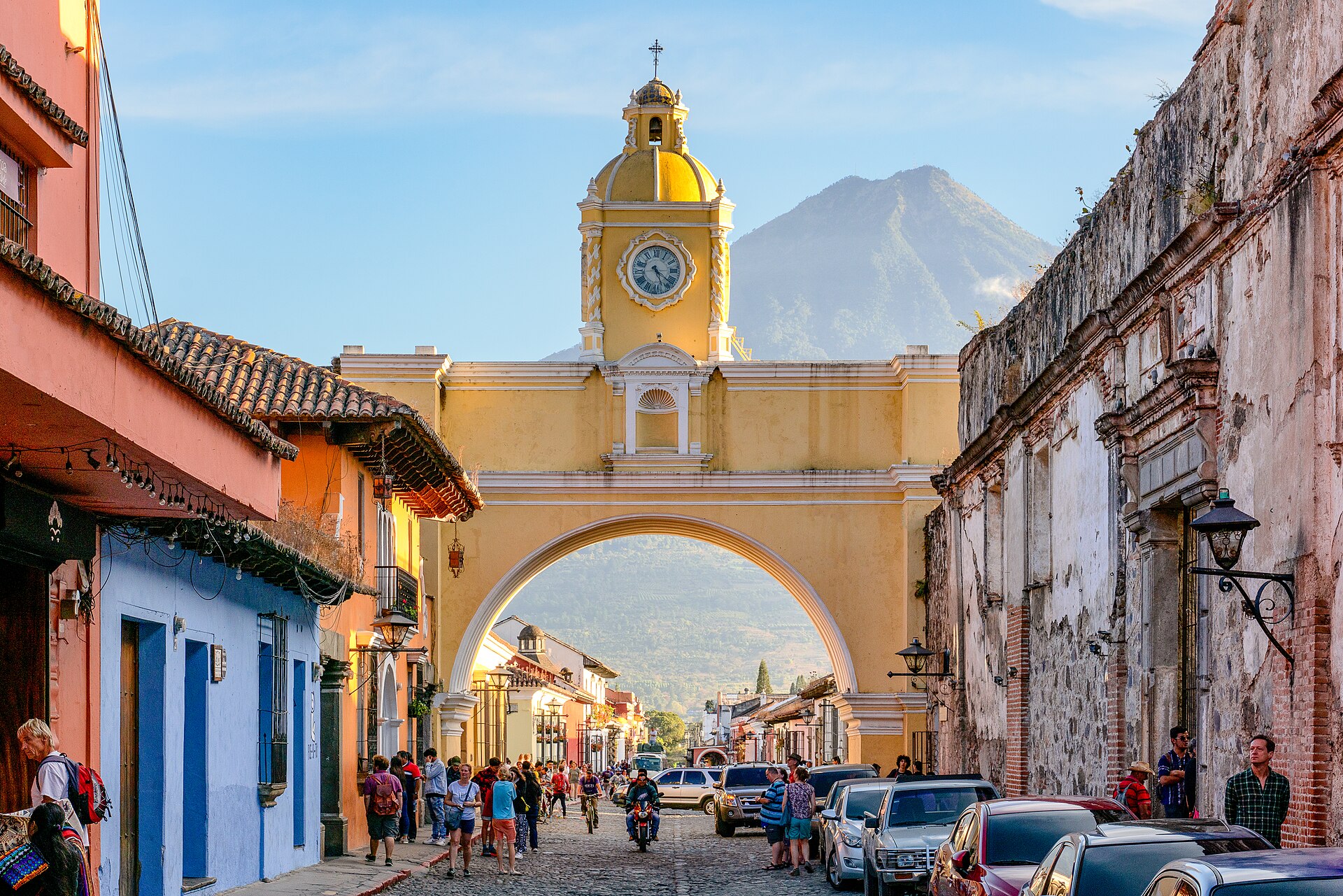
Most itineraries split between Antigua and one of the lake villages, with a night near the airport at either end. Antigua has the widest range of rooms and the shortest walk to everything; Panajachel is the practical lake base, while San Marcos and Santa Cruz are quieter and reached by boat.







Add comment