Osaka’s hotel map is organised around one line. The Midosuji subway line runs north to south through the city — Shin-Osaka, Umeda, Shinsaibashi, Namba, Tennoji — and connects the shinkansen station, the two main entertainment districts, and the southern transport hub in a single 20-minute ride. Almost every practical question about where to stay in Osaka reduces to which Midosuji stop you sleep near, and whether you need to be north or south of the river.
The other thing to settle before you book: from 2026 Osaka Prefecture applies a lowered accommodation tax threshold, so mid-range and even some budget hotels now collect it. Rooms under ¥5,000 per person per night remain exempt, ¥5,000 to ¥14,999 attracts ¥200 per person per night, and the levy scales up to a maximum of ¥500. It is paid on-site, per person, per night, and it is almost never included in the rate you see when booking online. On a family of four staying six nights that is a real number, not a rounding error.
North or south: the only decision that really matters
Osaka splits into Kita (north, around Umeda) and Minami (south, around Namba and Shinsaibashi). Locals treat these as two different cities and visitors who pick the wrong one spend a lot of time on trains.
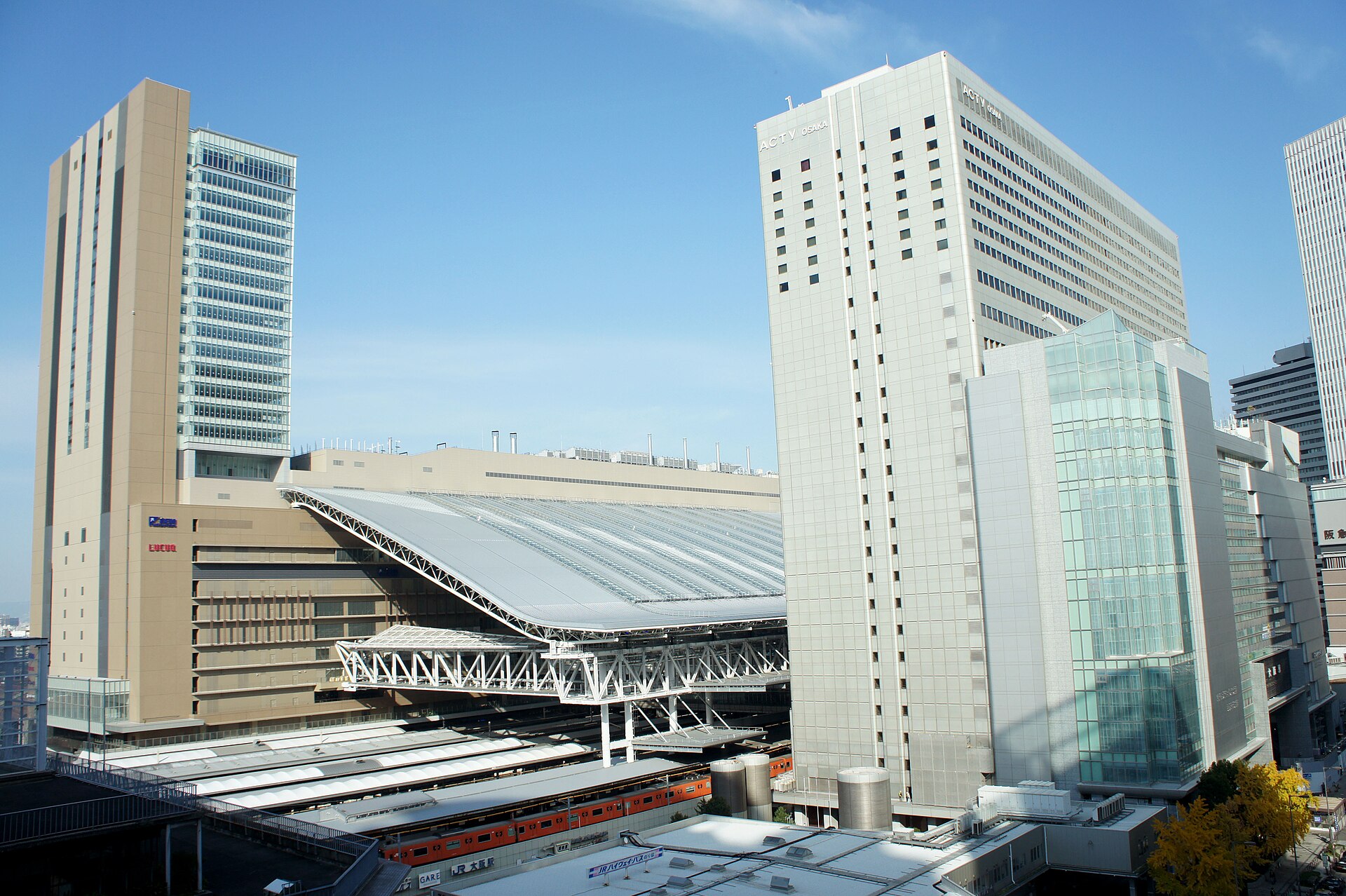
Kita / Umeda is the transport and business half. JR Osaka Station, the Hankyu and Hanshin private railways, the airport limousine bus terminal and the Umeda subway complex all sit within a few hundred metres of each other, wrapped in department stores and the Osaka Station City complex. Hotels here are newer, taller and more likely to be international chains. It is the right base if you are day-tripping to Kyoto, Kobe or Himeji, all of which are 15 to 40 minutes away by train from here.
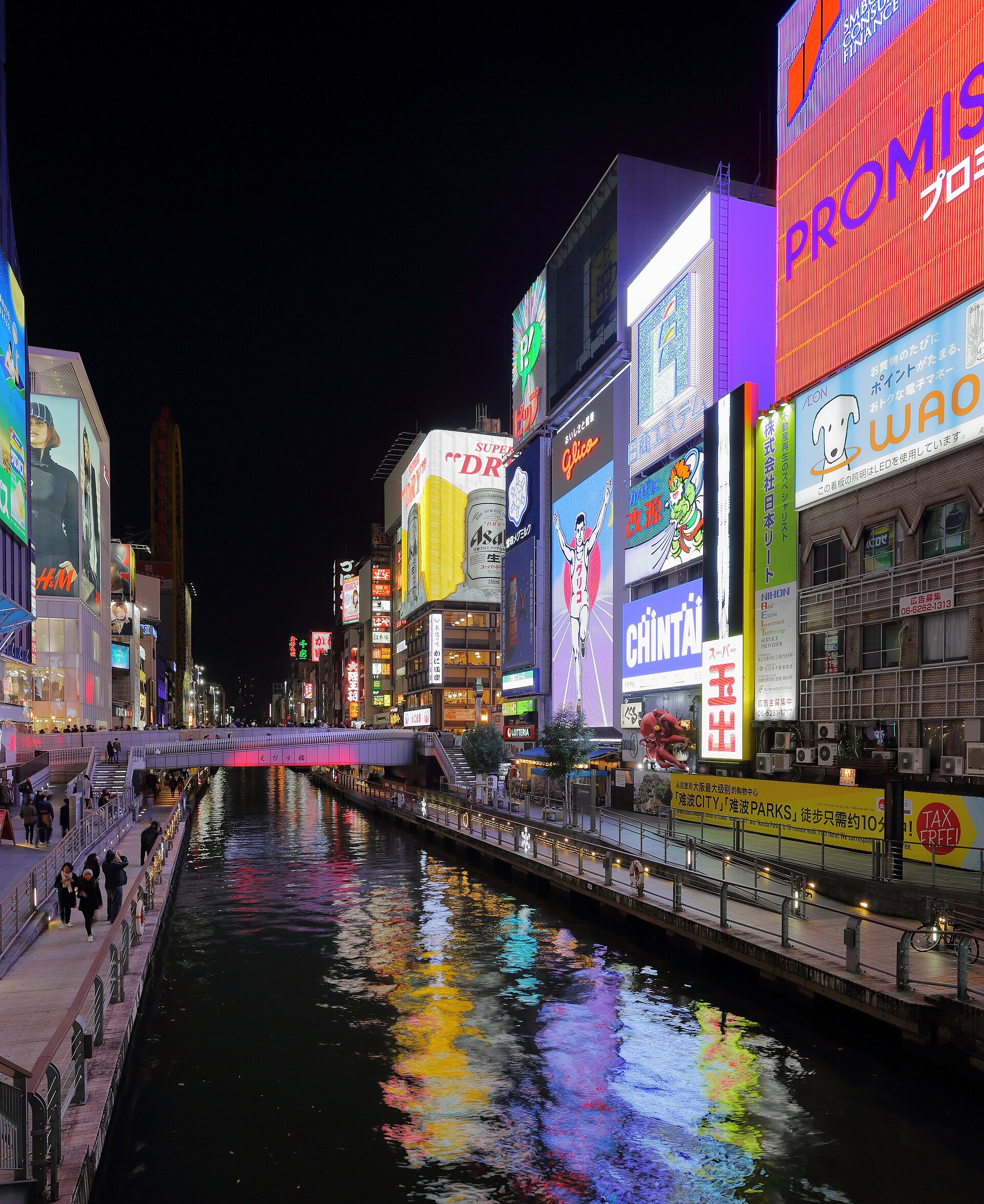
Minami / Namba and Shinsaibashi is the eating and drinking half. Dotonbori’s canal, the Glico running man sign, Kuromon market, Shinsaibashi’s covered shopping arcade and Amerikamura’s youth culture are all packed into a walkable square. Namba Station is the terminus of the Nankai line from Kansai Airport, which makes arrival easy. It is the right base for a first visit focused on Osaka itself.
Umeda: for connections and day trips
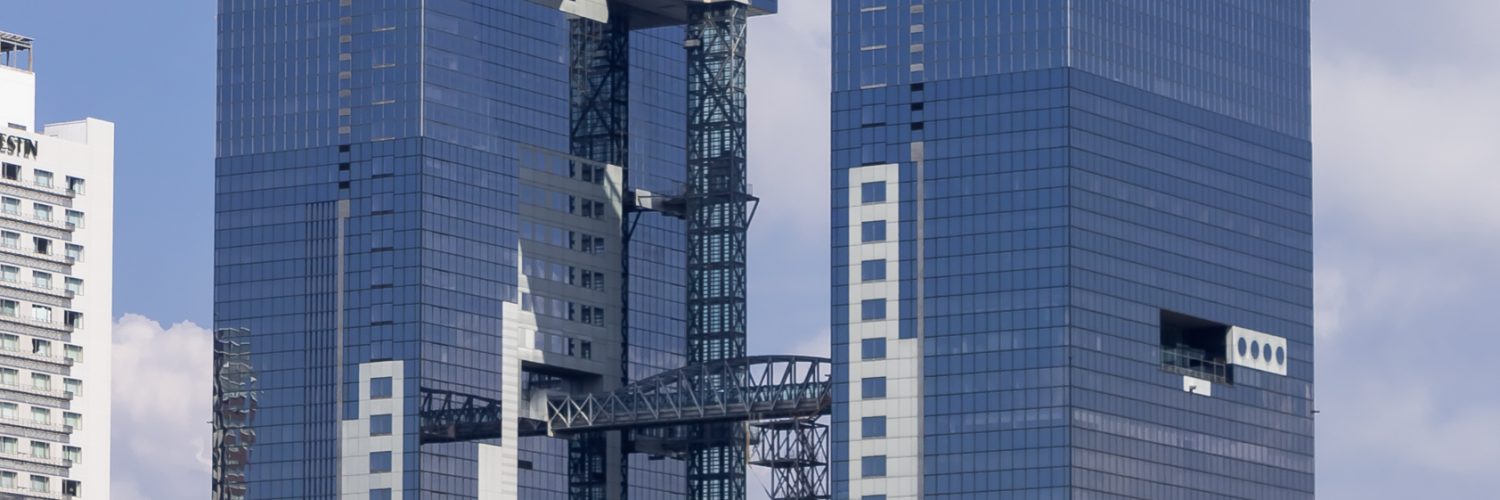
Stay in Umeda if your itinerary treats Osaka as a hub. The area contains three separate railway stations under overlapping names, which is confusing for two days and extremely convenient thereafter. Umeda Sky Building’s floating garden observatory sits a ten-minute walk northwest and gives the best free-standing view in the northern city.
What you give up: Umeda after 10pm is a business district with the shutters down. The restaurants are in basements and department store floors rather than on the street, and the atmosphere is corporate rather than chaotic.
Best for: business travellers, Kyoto and Kobe day trips, shinkansen arrivals via nearby Shin-Osaka, families who want quiet.
Namba and Shinsaibashi: for the Osaka people come for
This is where the city’s reputation lives. Dotonbori is loud, neon, crowded and genuinely fun; Kuromon Ichiba market is a five-minute walk; Hozenji Yokocho’s lantern-lit alley sits one street back from the noise. Hotels range from capsule and hostel bunks through business hotels to a handful of luxury properties, and the density means you can eat at 2am without planning.
What you give up: sleep, if you pick badly. Rooms facing Dotonbori or the Sennichimae arcade are noisy until late. Ask for a high floor away from the canal, and note that Namba is a short walk from Tobita and the Shinsekai fringe, where the atmosphere shifts noticeably after dark.
Best for: first-time visitors, food-led trips, nightlife, arriving from Kansai Airport on the Nankai line.
Shin-Osaka: only if the shinkansen is the point
Shin-Osaka is the bullet train station, one Midosuji stop north of Umeda. It is not a neighbourhood in any meaningful sense — it is a station with hotels around it and very little else. Choose it if you are arriving late by shinkansen and leaving early, or if you are doing a Japan Rail Pass tour where Osaka is one night in a chain of cities. Do not choose it for a three-day Osaka stay; you will commute into your own holiday.
Tennoji and Shinsekai: cheapest, and improving fast
Tennoji sits at the southern end of the Midosuji line, wrapped around Tennoji Park, the zoo, Shitennoji temple and the Abeno Harukas tower, which is one of the tallest buildings in Japan. Room rates here are consistently below Namba and Umeda for equivalent quality, and the JR loop line plus the Midosuji line make it well connected.
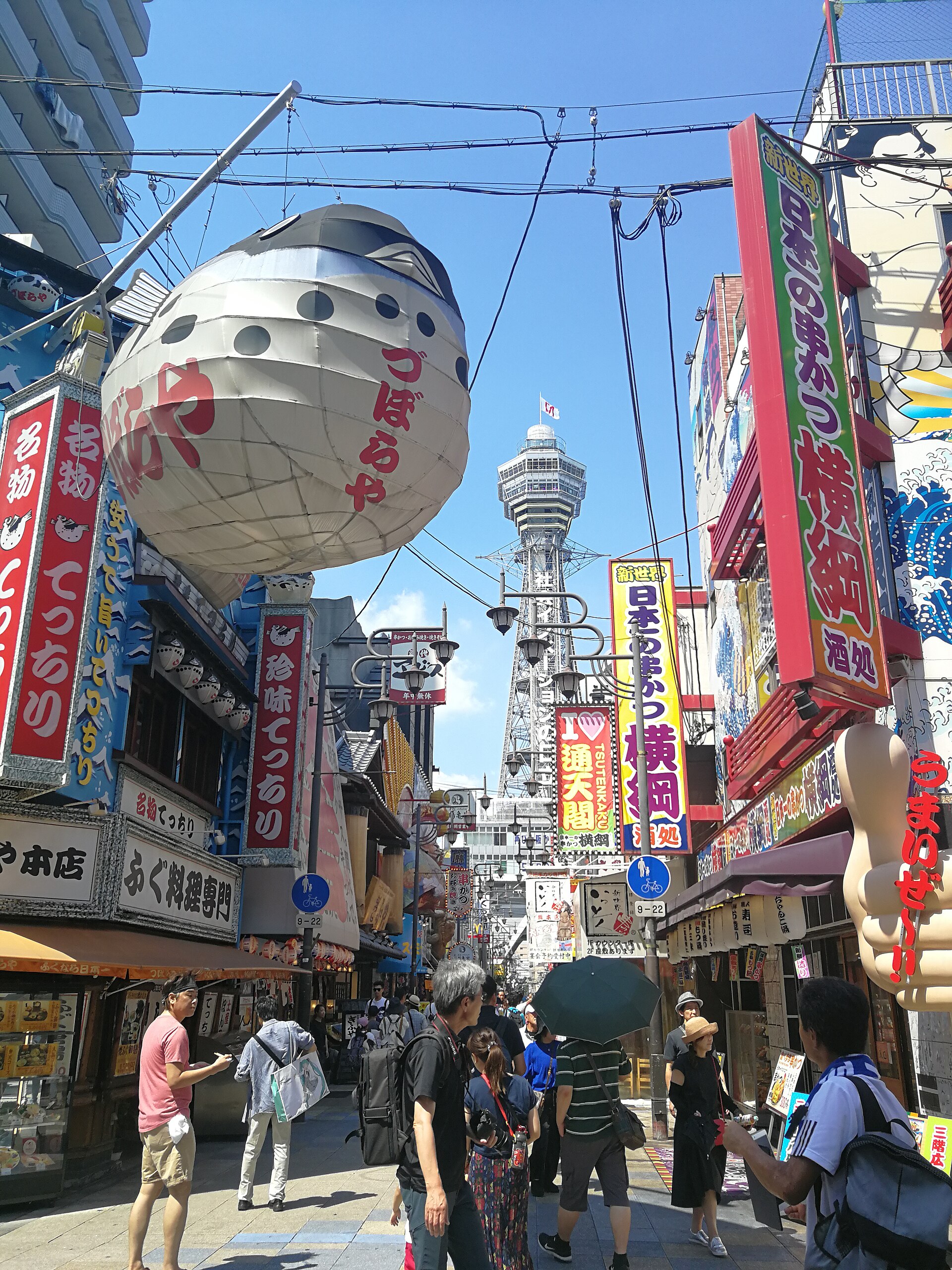
Neighbouring Shinsekai, under the Tsutenkaku tower, is the district that guidebooks used to warn about. It is a retro-kitsch food quarter now — kushikatsu skewers, old arcades, standing bars — and perfectly fine to walk through in the evening. The area immediately west of it around Nishinari and Airin remains Japan’s largest day-labourer district and is the one part of Osaka where budget accommodation is cheap for reasons a traveller should understand before booking a ¥2,000 room.
Best for: budget travellers, longer stays, anyone who values value over walking distance to Dotonbori.
Bay Area and Universal City: for the parks
If Universal Studios Japan is the reason for the trip, staying at a Universal City hotel buys you early park entry on some tickets and a five-minute walk home when the children collapse. The bay area also holds the Osaka Aquarium Kaiyukan and the Tempozan ferris wheel. Everything else in the city is 20 to 30 minutes away by train, so this is a trade — convenience for the park against distance from everything else.
Getting in from the airports
Kansai International (KIX) is 50 km southwest of the city on an artificial island. The Nankai line runs directly to Namba, which is why Minami is the easy landing spot; JR’s Haruka express runs to Tennoji and Shin-Osaka. Limousine buses serve Umeda and the major hotels. Osaka Itami (ITM) is the domestic airport, much closer to the city, connected by monorail and bus.
Arriving late with luggage and a family is the case where a fixed-price door-to-door transfer beats dragging suitcases through three station transfers. Our Tokyo airport transfer guide covers the same calculation on the other side of the country.
Transport passes and whether they change your choice
An ICOCA card costs ¥2,000, which includes a ¥500 deposit and ¥1,500 of credit, and works on almost every train, subway and bus in the Kansai region as well as most convenience stores. Get one regardless of where you stay.
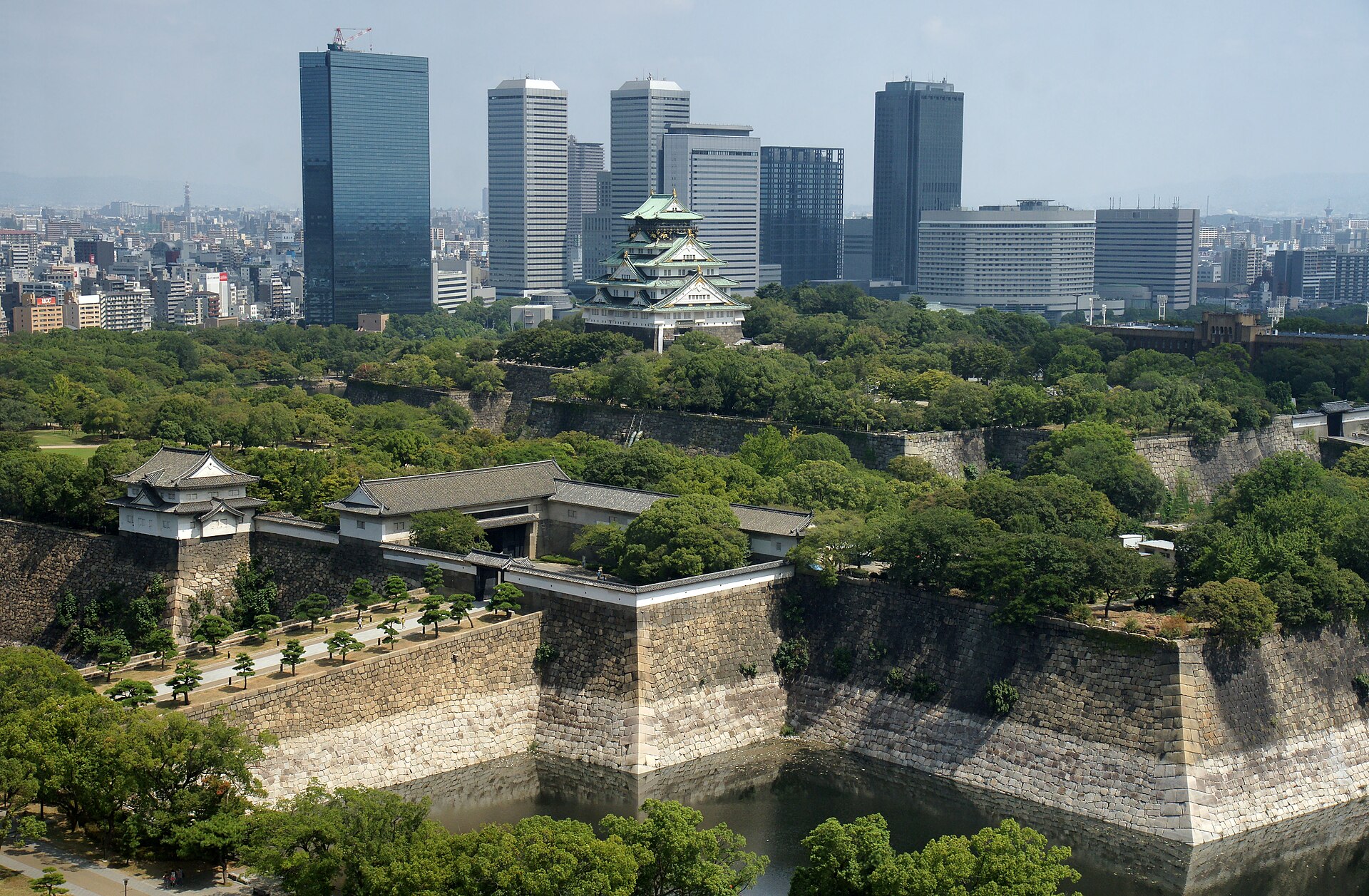
The Osaka Amazing Pass is ¥3,500 for one day or ¥5,000 for two consecutive days, and bundles unlimited subway and bus travel with free entry to a long list of attractions including Osaka Castle’s keep, Umeda Sky Building and the Tempozan wheel. There is also a ¥4,300 monorail version that adds Osaka Monorail access, useful if you are arriving or leaving through Itami. The pass pays off if you are doing three or more of its included attractions in a day — which is realistic for a Kita-based itinerary and less so if you are in Minami eating your way through Dotonbori.
Kyoto’s March 2026 tax revision, and what it does to the Osaka-base argument
The Osaka-base-and-day-trip strategy used to rest purely on room rates. As of March 2026 the tax code backs it up as well. Kyoto City rewrote its lodging tax into a five-step ladder that is far steeper than Osaka’s at the top: ¥200 below ¥6,000 per person per night, ¥400 from ¥6,000, ¥1,000 from ¥20,000, ¥4,000 from ¥50,000, and ¥10,000 at ¥100,000 and above. Osaka’s ladder, unchanged, stops at ¥500.
At the level most visitors book this is a wash — ¥400 a head on either side of the prefectural line. The gap opens above ¥20,000 per person per night, which in Kyoto during blossom or autumn colour is an ordinary mid-range rate rather than a luxury one. Two people, five nights, a ¥20,000-a-head room: ¥10,000 of tax in Kyoto against ¥5,000 in Osaka. At the top of the market the difference stops being a rounding error entirely.
Two mechanics decide which band you land in, and both are easy to get wrong. The tax is charged per person, not per room, so it scales with the size of your party rather than the number of keys you book — a family of four pays it four times over. And it is assessed on the pre-tax rate per person, not the headline room price: a ¥30,000 twin is ¥15,000 a head, which in Osaka is the ¥400 band rather than the ¥500 one, and a ¥28,000 twin is ¥14,000 a head and drops to ¥200. Both cities collect it on-site at check-in, on top of the 10% consumption tax, and both require it to show on the receipt. Neither includes it in an online quote, so compare rates net of it before concluding the two cities are close.
What a room actually costs
Osaka is cheaper than Tokyo and noticeably cheaper than Kyoto during peak periods, which is why a growing number of visitors base themselves here and day-trip to Kyoto instead of the reverse. That arbitrage is the single most useful budgeting insight for a Kansai trip: Kyoto hotel rates during cherry blossom and autumn leaves seasons roughly double, while Osaka’s rise far less, and the two cities are 15 minutes apart by shinkansen or about 30 by regular express.
Peak periods to avoid or budget for: late March to early April for cherry blossom, Golden Week from late April to early May, mid-August for Obon, and late November for autumn colour. New Year is quiet on the streets but many businesses close. The cheapest months are January, February and June, the last of which is the rainy season and the reason the rates drop.
Room sizes are the other adjustment. A standard Japanese business hotel double is genuinely small by Western standards, often 15 to 18 square metres, and a “double” bed may be 140 cm wide. Reading the room dimensions in the listing is more useful than reading the star rating.
The one-line answer
First visit, three nights, here to eat: Namba or Shinsaibashi. Using Osaka as a base for Kyoto, Nara and Kobe: Umeda. Watching the budget: Tennoji. One night between bullet trains: Shin-Osaka. Travelling with children to Universal: Universal City. Everywhere else in the city is a variation on those five, and the Midosuji line will get you between them in under twenty minutes.
If Kansai is part of a longer Japan itinerary, our Tokyo neighbourhood guide and Tokyo city guide apply the same logic to a city where the wrong choice costs considerably more.