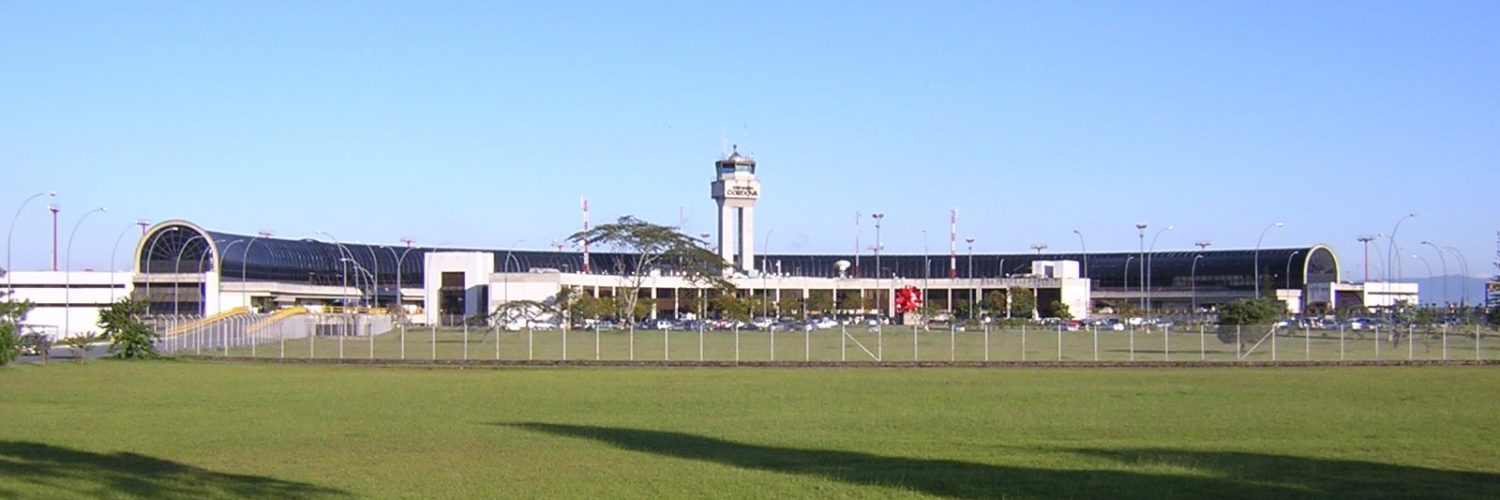
Medellín has a problem that almost no other city its size has: its international airport is not in Medellín, is not in the same valley, and is 500 metres higher up a mountain.
José María Córdova sits in Rionegro, about 35 km east of the city, on the Altiplano del Oriente at roughly 2,140 metres. Medellín itself is down in the Aburrá Valley at about 1,495 metres. Everything about getting from one to the other — the time, the cost, the reason your ears pop, the reason the temperature drops eight degrees when you step outside the terminal — comes from that geography.
Why the drive is the way it is
For decades the only route was Las Palmas, a beautiful, slow, switchbacked road over the ridge that separates the two plateaus. In fog — which is frequent up there — it was genuinely slow, and 60 to 90 minutes was normal.
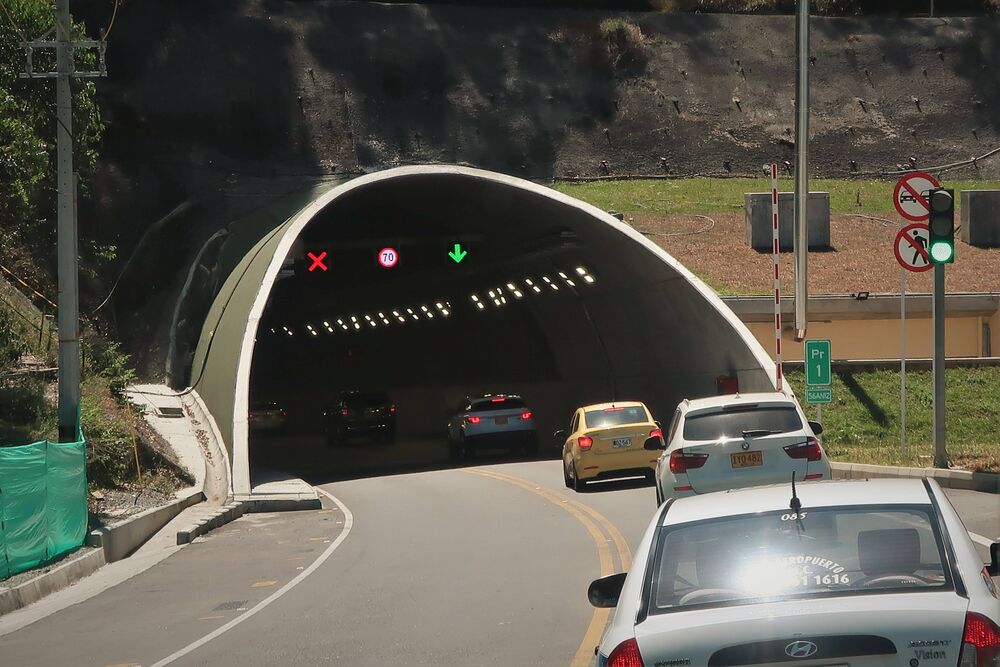
Then the Túnel de Oriente opened in 2019: an 8.2 km bore straight through the mountain that cut the run to roughly 25 to 40 minutes in normal traffic. It is a toll road, and for 2026 the car-category toll is COP 26,300. That toll is the single biggest reason quoted prices vary so much — a driver taking the tunnel is paying it, and a driver quoting you a suspiciously cheap fare is probably going over Las Palmas.
Ask which route the price includes. It is a reasonable question and any legitimate operator answers it immediately.
Every option, with what it costs
Official taxi
Medellín’s Secretaría de Movilidad sets a regulated fare for the run from the city to the airport: COP 132,000 in a standard taxi, COP 134,100 in an electric taxi and COP 143,100 in a luxury vehicle, in force since 2 February 2026. Coming the other way — terminal to city — there is no equivalently published fixed rate, and quoted fares typically land somewhere around COP 100,000 to 130,000.
Use the authorised white cabs with the blue stripe from the official rank outside arrivals. Confirm the fare before the boot closes. This is a well-run rank, not a scrum, but the inbound price is a negotiation in a way the outbound one is not.
Combuses shuttle
Combuses is the licensed airport bus and it is the cheapest sensible option: roughly COP 17,000 to 20,000, departing every 15 minutes or so from the ground-floor transport area, through the tunnel, about 35 minutes to Centro Comercial San Diego and then on towards Estación Exposiciones on the metro.
It is a genuinely good service and it has one limitation that decides the whole question: it drops you at San Diego, not at your door. If you are staying in El Poblado or Laureles you still need a taxi or a rideshare for the last leg, which erodes the saving and adds a transfer with luggage at the end of a long flight.
Pre-booked private transfer
The case for booking ahead in Medellín is stronger than in most cities, for three reasons. Flights from North America and Europe land late, often between 21:00 and 01:00, when the Combuses service has stopped. The price is fixed in advance including the toll, which removes the one genuinely opaque part of the arrival. And a driver who already has the address handles El Poblado’s steep one-way grid without a conversation in the dark.
Rideshare
App-based rides operate in Medellín and are widely used by residents. At the airport specifically the situation is less clean: pickup arrangements have historically been informal, drivers sometimes cancel airport runs, and the position is not the same as in the city where the apps work normally. Treat it as the fallback rather than the plan.
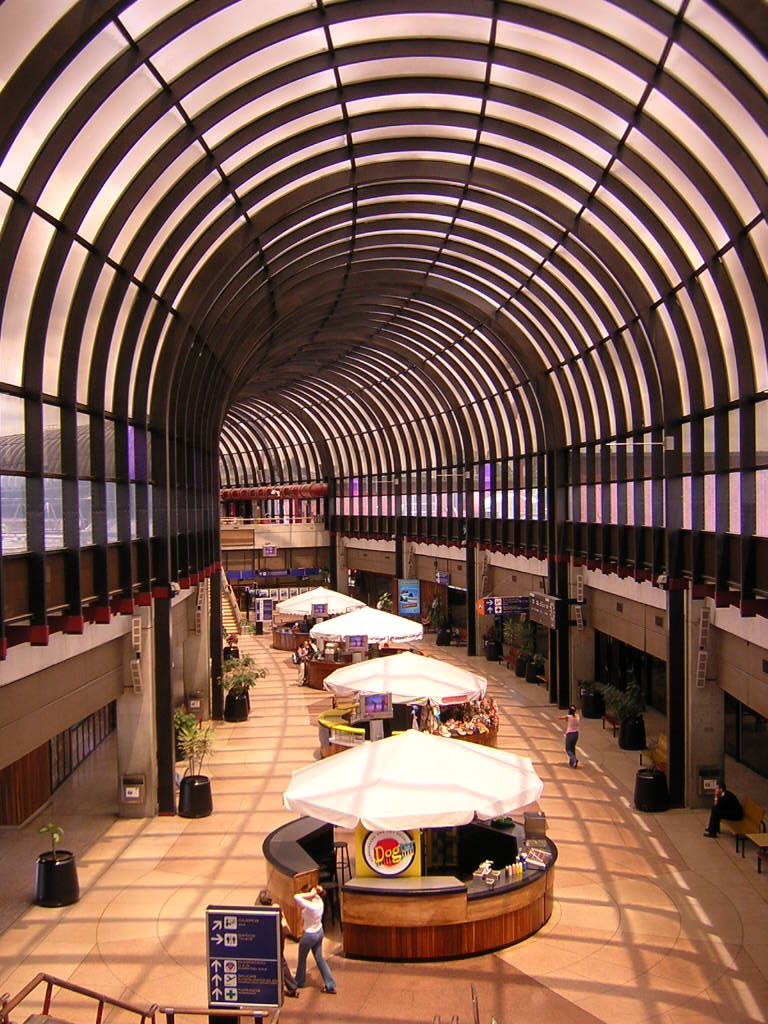
Which one you should actually pick
- Landing before 20:00, travelling light, staying near the centre or on the metro line: Combuses. It is COP 20,000 and it works.
- Landing late, two or more people, or luggage: pre-booked transfer. Split between two, it is close to the taxi fare with none of the arrival friction.
- Solo, comfortable in Spanish, happy to negotiate: the official rank is fine and fast.
- Heading straight to Guatapé, Santa Fe de Antioquia or the coffee region: skip the city entirely — the airport is already on the right side of the mountain for the east, and a rental car makes more sense collected here than downtown.
The other airport
Medellín has a second airport, Olaya Herrera, inside the city about ten minutes from El Poblado. It handles regional domestic flights on turboprops to places like Capurganá, Nuquí and Bahía Solano. If your itinerary includes a Pacific coast or Darién leg, check which airport your ticket uses — people have missed flights assuming both departures were from the same place, and they are 35 km and a mountain apart.
Practical notes for arrival
- Altitude and temperature. The airport is genuinely cool and often misty; Medellín is warm. Do not judge your packing by the terminal.
- Cash. ATMs are in the arrivals hall. Withdraw enough for the ride if you are taking a taxi; card acceptance in cabs is inconsistent.
- Traffic timing. Weekday evenings and Sunday afternoons — when Medellín returns from the Oriente towns — are the slow windows. Add half an hour.
- Departure buffer. Leaving the city, budget 90 minutes to the terminal even with the tunnel. The valley climb out of Medellín is where the delay lives, not the tunnel itself.
- eSIM before you land. Every option above is easier with data, and the airport wifi is adequate but not reliable.
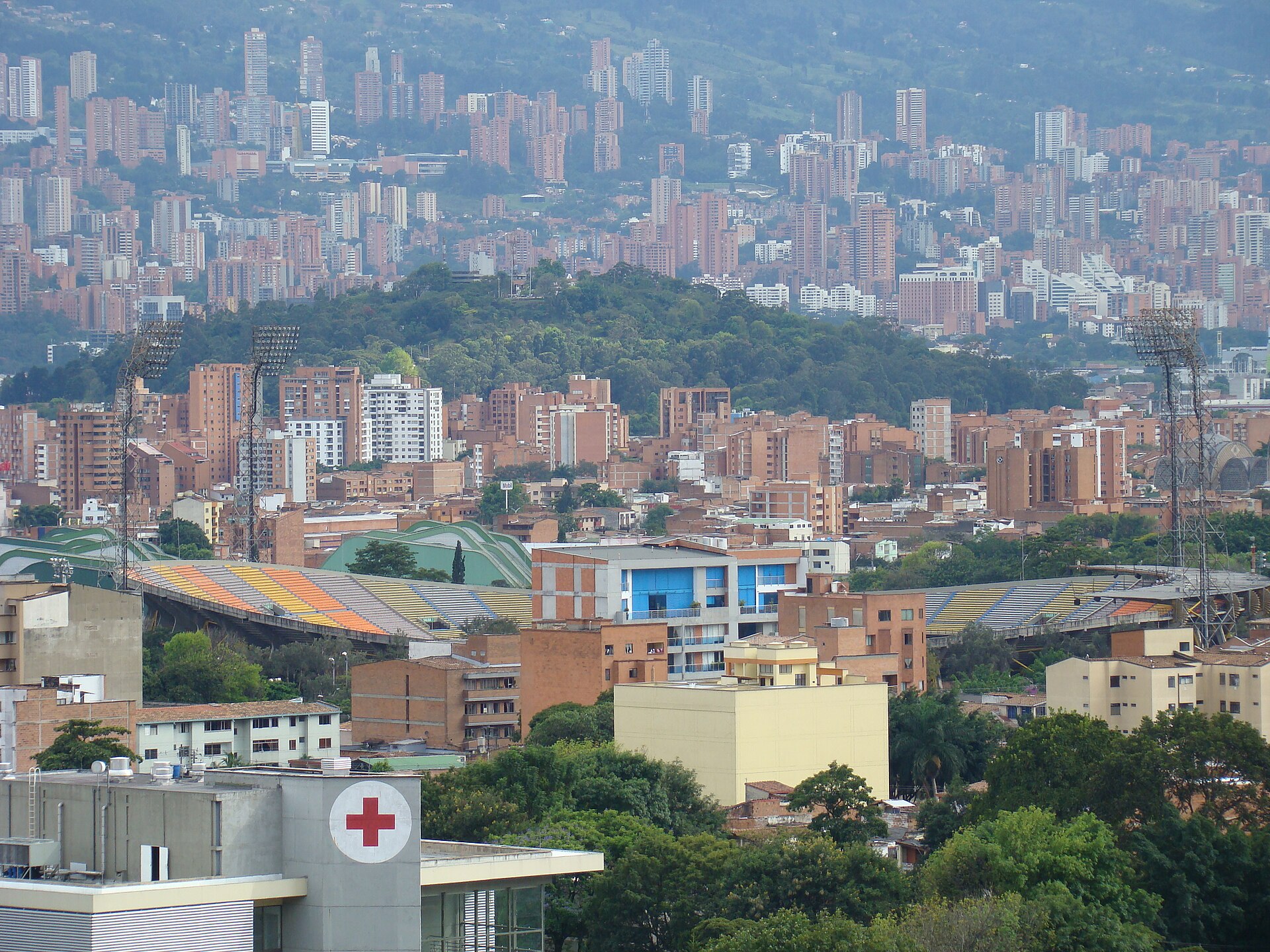
Where to stay, and how much the transfer depends on it
El Poblado is where most visitors stay: Parque Lleras, restaurants, the highest concentration of English. It is also up a steep hillside on narrow one-way streets, which is exactly where a driver with the address beats a driver with a screenshot.
Laureles is flatter, more residential, increasingly the choice of people on their second visit, and easier to reach. Envigado and Sabaneta, south along the metro, are cheaper and calmer. El Centro is for daytime — the museums and Botero’s sculptures are there, the nightlife is not.
The transfer cost barely changes between these, but the last-mile difficulty does, and that is the variable that decides whether the bus was a good idea.
If you are renting a car instead
Do not rent a car to get into Medellín. The city has a genuinely excellent metro, plus the Metrocable gondolas that climb the valley walls, and driving in the Aburrá Valley means one-way hillside streets, the pico y placa licence-plate restriction and expensive parking.
Do rent a car if you are leaving. Guatapé and the Peñol rock are two hours east on good road, Santa Fe de Antioquia is 90 minutes northwest, and the Oriente towns — Rionegro, Carmen de Viboral, El Retiro — are all within an hour of the airport itself. Collecting at the terminal and driving straight out avoids the city entirely.
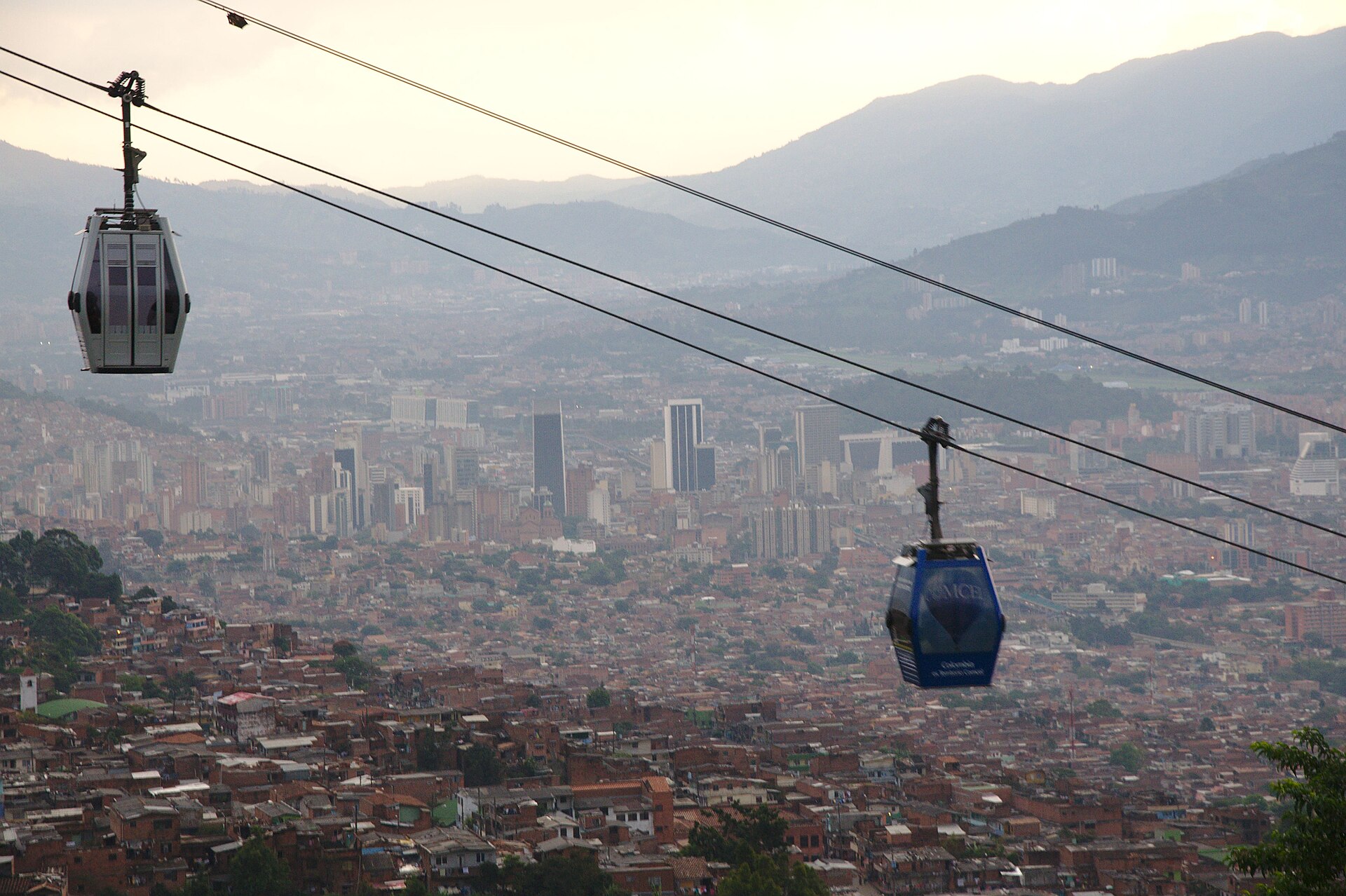
What the ride is actually like
Leaving the terminal you cross the Rionegro plateau — flat, green, full of greenhouses growing flowers for export, which is what this altiplano mostly does when it is not being an airport. Then the road drops towards the tunnel portal and the landscape closes in.
Inside, the Túnel de Oriente is 8.2 km of well-lit modern bore with emergency bays and a parallel escape tunnel, and it takes about six minutes end to end. You come out on the eastern wall of the Aburrá Valley and the whole of Medellín is suddenly below you, which is the single best first impression the city gives anyone. Ask the driver not to take Las Palmas and you lose the switchbacks; ask to take Las Palmas and you gain 25 minutes and a much better view. Both are defensible.
The last section descends into the valley on the Avenida Las Palmas corridor and joins the traffic. This is where the delay lives — not the tunnel, not the plateau, but the final six kilometres inside the city.
Avoiding the two common mistakes
The first is accepting a ride from someone who approaches you inside the terminal. Colombia’s airports are well policed and the official rank is right outside, but informal touts operate at every large airport in Latin America and the price is always worse than the regulated one. Walk to the marked rank or to your pre-booked driver.
The second is underestimating the return leg. Travellers who arrived in 30 minutes through the tunnel at midnight assume the same on a Friday at 17:00 and miss check-in. The tunnel is fast and constant; the city is not. Ninety minutes from El Poblado is the safe number, two hours if you are flying out on a Sunday evening.
Domestic connections
José María Córdova is the main domestic hub for Antioquia, with frequent short hops to Bogotá, Cartagena, Santa Marta and Cali. If you are chaining Colombian cities, the flights are cheap and the overland alternatives are long — Medellín to Cartagena is roughly 13 hours by road and just over an hour in the air. That is the one case where flying domestically inside Colombia is not a close decision.
Further reading
- Motorcycle rental in Medellín — the other way to reach Guatapé.
- Best eSIM for Colombia — sort data before you land.
- Motorcycle rental in Colombia — for longer routes out of Antioquia.
- Things to do in Lima — the usual next stop down the Pacific side.
- Santiago airport transfers — the same problem, a very different city.
Read next: Cartagena Airport Is 3 km From the Old City — Which Is Exactly Why People Overpay