
Almost every disappointing Marrakech trip traces back to the same decision, made in ten minutes on a booking site: the wrong neighbourhood. Marrakech is not one city but four or five, separated by walls, driving distance and about forty decibels. A riad buried in the medina and a resort in the Palmeraie are both “Marrakech”, and they produce completely different holidays. Here is how to choose the one you actually want.
First, understand what a riad actually is
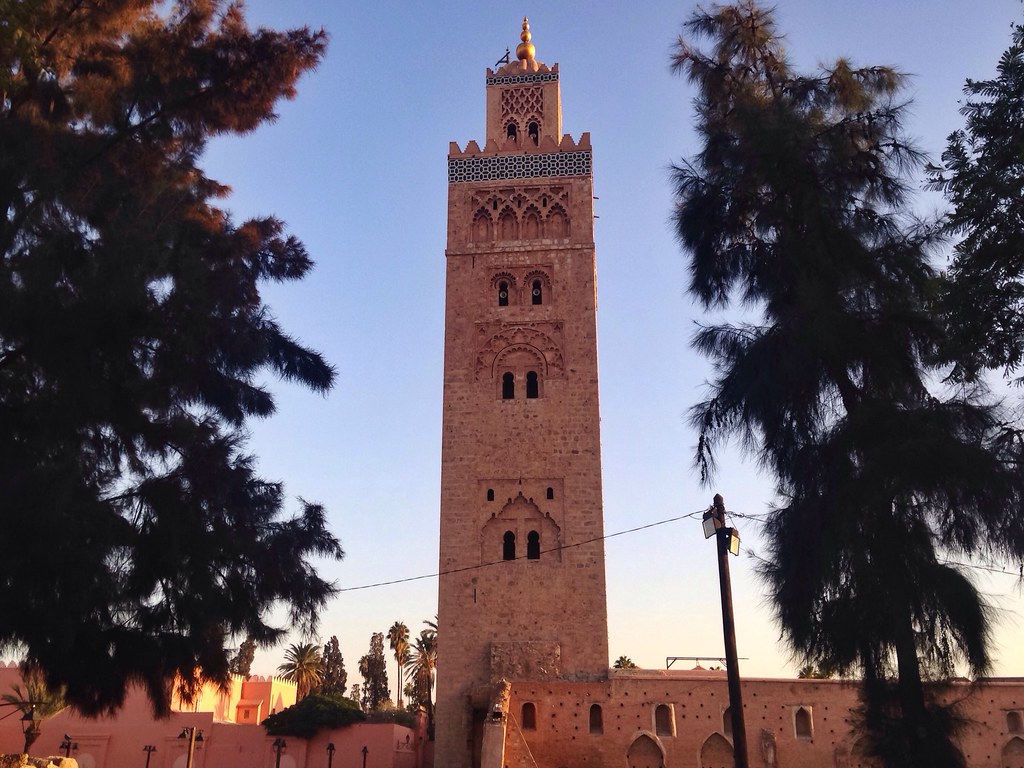
A riad is a traditional courtyard house, usually five to twelve rooms arranged around an open central patio with a fountain or a plunge pool, and a roof terrace where breakfast is served. The architecture is deliberately inward-facing: blank walls to the alley, everything beautiful on the inside. Staying in one is the single most distinctive thing about visiting Marrakech, and no hotel elsewhere replicates it.
The trade-offs are real and worth knowing before you book rather than after. No vehicle reaches the door. Medina lanes — derbs — are often under two metres wide, so a taxi drops you at the nearest vehicle point and a porter wheels your cases the last 100–400 metres. Rooms can be dark by design, since windows face the courtyard rather than the street. Sound travels beautifully around an open patio, which is charming until someone takes a call at midnight. And plunge pools are usually unheated, which is glorious in June and unusable in January.
The medina: where to be inside the walls
“Medina” covers a large area with very different characters:
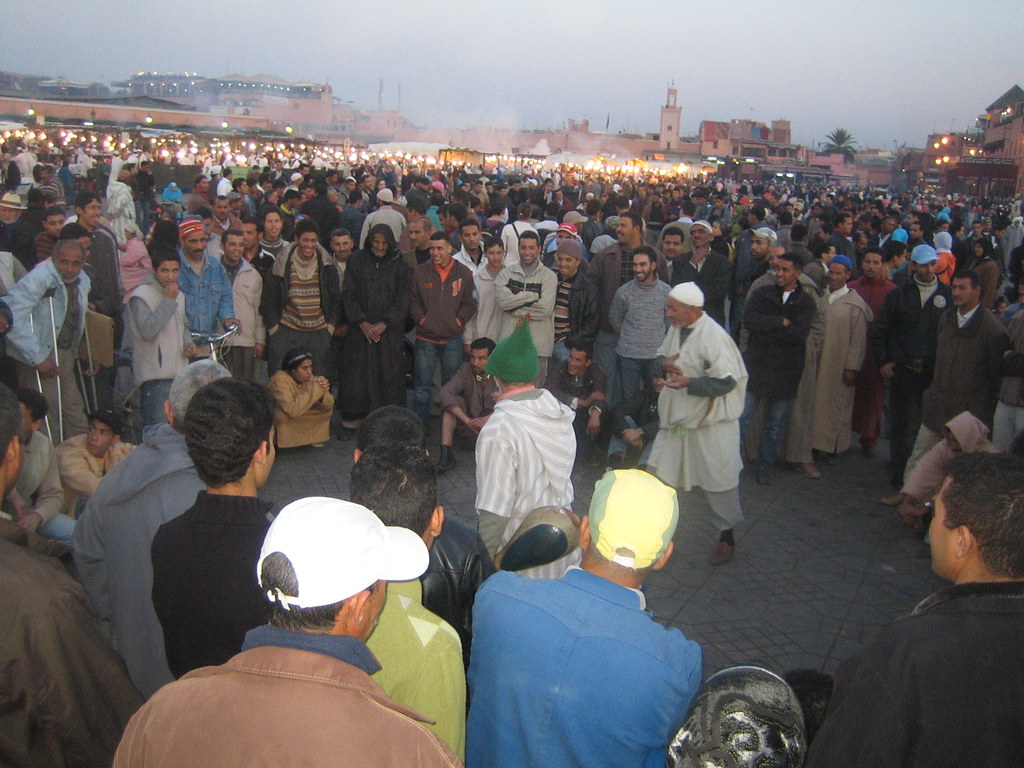
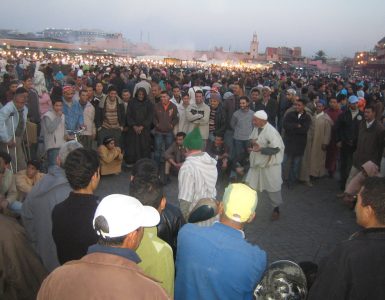
- Around Jemaa el-Fnaa — maximum atmosphere, minimum sleep. The square runs loud until roughly 1am and the first call to prayer arrives around 5am. Superb for two or three nights if you want to be in the middle of it.
- Mouassine and Dar el Bacha — the sweet spot for most visitors. Ten to fifteen minutes’ walk from the square, the best concentration of design-led riads, good restaurants, and lanes that are busy without being overwhelming.
- Kasbah — the southern quarter by the Saadian Tombs and Badi Palace. Quieter, more residential, closer to a taxi road, slightly further from the souks.
- Riad Laarous and Bab Doukkala — northern medina, noticeably calmer and cheaper, with more local life and fewer tourists. Best if it is not your first visit.
Wherever you land, ask the riad for a precise pinned location and a phone number before you arrive. Mapping apps are unreliable inside the derbs, and the standard arrival experience is a phone call followed by someone coming to fetch you.
Gueliz and Hivernage: the modern alternative
Gueliz is the French-built new town: wide boulevards, pavements, a tram of taxis, contemporary Moroccan restaurants, cafes serving alcohol, and international shops. It is not picturesque and that is the point — it is easy. Families with pushchairs, travellers with mobility limits, business visitors and anyone on a longer stay usually find Gueliz far more livable, and a taxi to the medina takes ten minutes and costs very little.
Hivernage sits between the two: manicured, quiet, full of large four- and five-star hotels with proper heated pools and spas, plus the city’s nightlife. It suits people who want a walkable distance to the medina without living inside it.
Palmeraie and the Route de l’Ourika are resort country — big gardens, real swimming pools, Atlas views, and a 20–30 minute drive to anything. Excellent for a rest, poor for spontaneity. If you choose this, budget for taxis or arrange transport with the property.
What it costs in 2026
- Budget medina riad: €40–70 per night for a double, breakfast usually included
- Mid-range design riad: €80–150, often with a plunge pool and a hammam
- High-end riad or boutique: €200–500+
- Gueliz three- and four-star hotels: €55–120
- Hivernage five-star: €180–400
- Palmeraie resorts: €140–350, plus transport
Add a municipal tourist tax of roughly 15–30 dirhams per person per night depending on the property’s category — frequently requested in cash at checkout, so keep small notes. Prices climb hardest over Easter, Christmas and New Year, and drop sharply in July and August, when daytime temperatures pass 40°C and only a pool makes the city bearable.
Season changes the right answer
March to May and September to November are the best months: warm days, cool evenings, and a riad courtyard at its most pleasant. June to August is genuinely hot; an unheated plunge pool becomes an asset and a north-facing room matters more than the view. December to February brings cold nights — Marrakech can drop to 5°C, medina buildings hold cold like stone, and many riads heat with portable units only. Ask directly about heating before booking a winter riad; it is the most common winter complaint. During Ramadan the city’s rhythm shifts entirely, with quiet days and a spectacular late-night atmosphere after the fast breaks — wonderful if you know what to expect.
Getting there and getting around
Marrakech Menara Airport (RAK) sits about 6 km from the centre, which is unusually close. Airport taxis are regulated, and it is worth knowing the actual numbers: as of 2026 the official daytime rate is roughly 70–90 dirhams to the medina and 70–80 to Gueliz, with about 20 percent added between 8pm and 6am. Drivers outside arrivals routinely open at 130–200 and hold that line, because it works often enough. Agree the total before you get in, and be willing to walk to the next car. For a first arrival with luggage and a riad you have never found before, a pre-booked car with a driver holding your name is the low-stress option; GetTransfer quotes fixed prices to the exact derb entrance. We have broken down every option in detail in our Marrakech airport transfer guide.
In the city, petit taxis are cheap; ask for the meter or agree the fare first, and carry small dirham notes because change is perennially scarce. Almost nothing in the medina takes cards.
There is a second problem that money does not solve: cars cannot reach most riads. The medina’s lanes are too narrow, so a taxi drops you at the nearest gate or square and you walk the last few hundred metres through an unlit maze with your luggage, at night, on your first evening. This is the most common reason a first night in Marrakech goes badly. Almost every riad will send someone with a cart to meet the car if you ask — that service is worth more than the fare difference.
What to book before you arrive
Marrakech runs on negotiation, which makes the handful of things with fixed, pre-bookable prices unusually useful — you know what you are paying, and you skip the queue in 38°C.
The Jardin Majorelle and the Yves Saint Laurent Museum are the clearest case: timed entry, regularly sold out in high season, and a long wait in full sun for anyone who turns up hoping. Bahia Palace and the Saadian Tombs are cheap and rarely need booking, but a combined ticket saves queueing three times. Le Jardin Secret is the quiet one worth an hour.
Day trips are where booking ahead matters most, because the alternative is arranging it through your riad at a markup or on Jemaa el-Fna with a stranger. The Ourika Valley is the easy half-day. Ait Ben Haddou over the Tizi n’Tichka pass is a long day and genuinely spectacular. The Agafay desert sunset dinners are heavily marketed and only 40 minutes away — which is either the appeal or the catch, depending on whether you thought you were going to the Sahara.
One honest note: the hammam experiences sold to visitors range from excellent to perfunctory, and price correlates weakly with quality. Ask your riad which one the staff actually use.
A simple decision rule
First visit, three to four nights, want the full experience: a riad in Mouassine or Dar el Bacha. Travelling with young children or a lot of luggage: Gueliz or Hivernage. Going in July or August: anywhere with a real pool, which usually means Hivernage or Palmeraie. Going in January: ask about heating, and lean towards a modern hotel. Second visit, want quiet and value: northern medina around Bab Doukkala. Here to rest rather than explore: Palmeraie, and accept the taxi fares.
Common questions, quickly
Are riads safe for solo women travellers? Widely reported as yes, and the small-property format means staff know exactly who is coming and going; most riads will arrange a walk-back after dinner if asked. Is alcohol available? In Gueliz and Hivernage freely, in the medina only at licensed riads and restaurants. Do riads accept cards? Most do for the room, few for extras. Is breakfast included? Usually in riads, often not in hotels. How many nights? Three or four in the city, with a day trip to the Atlas or the Agafay desert, suits most people.
Watch before you book
Compare Marrakech stays for your dates
Riads are small, so the good ones sell out months ahead in spring and autumn. Search by neighbourhood and filter for a pool if you are travelling in summer:
Compare riads and hotels in Marrakech on Booking.com →
Choosing a base elsewhere? See our guides to Porto, Tokyo and Mexico City.


Add comment