Search for a Kilimanjaro climb and you will find quotes ranging from $1,400 to $8,000 for what is nominally the same mountain, the same route and the same number of days. That spread is not marketing noise. It reflects real, structural differences in what the operator is paying for — and roughly $900 of every quote is fixed by the Tanzanian government before the operator has bought a single tent.
This is a line-by-line breakdown of where the money goes, what the low end quietly removes, and what a realistic all-in budget looks like once you include the things that are never in the package price.
The part nobody can discount: park fees
Kilimanjaro National Park charges per person per day, and the numbers are published. For a 7-day climb, park fees alone come to roughly $822 per climber. They break down as:
- Conservation fee: about $70 per person per day
- Camping fee: about $50 per person per night on camping routes; hut fees on Marangu are higher
- Rescue fee: a one-off charge of about $20 per climber per trip
- Crew entry fees: a smaller per-head charge for every guide and porter, which for a typical 1:3 crew ratio adds meaningfully
- VAT at 18% applies on top of most of it
Two consequences follow. First, park fees are 25 to 35 percent of any honest quote, and no operator can undercut them. Second, longer routes cost more in fees — a 9-day Northern Circuit carries roughly $280 more in park fees than a 6-day Machame, before anything else.
If a quote is under about $1,400 for seven days, the arithmetic does not work. Something is being cut, and it is almost always crew wages or food.
The second fixed cost: the people carrying your things
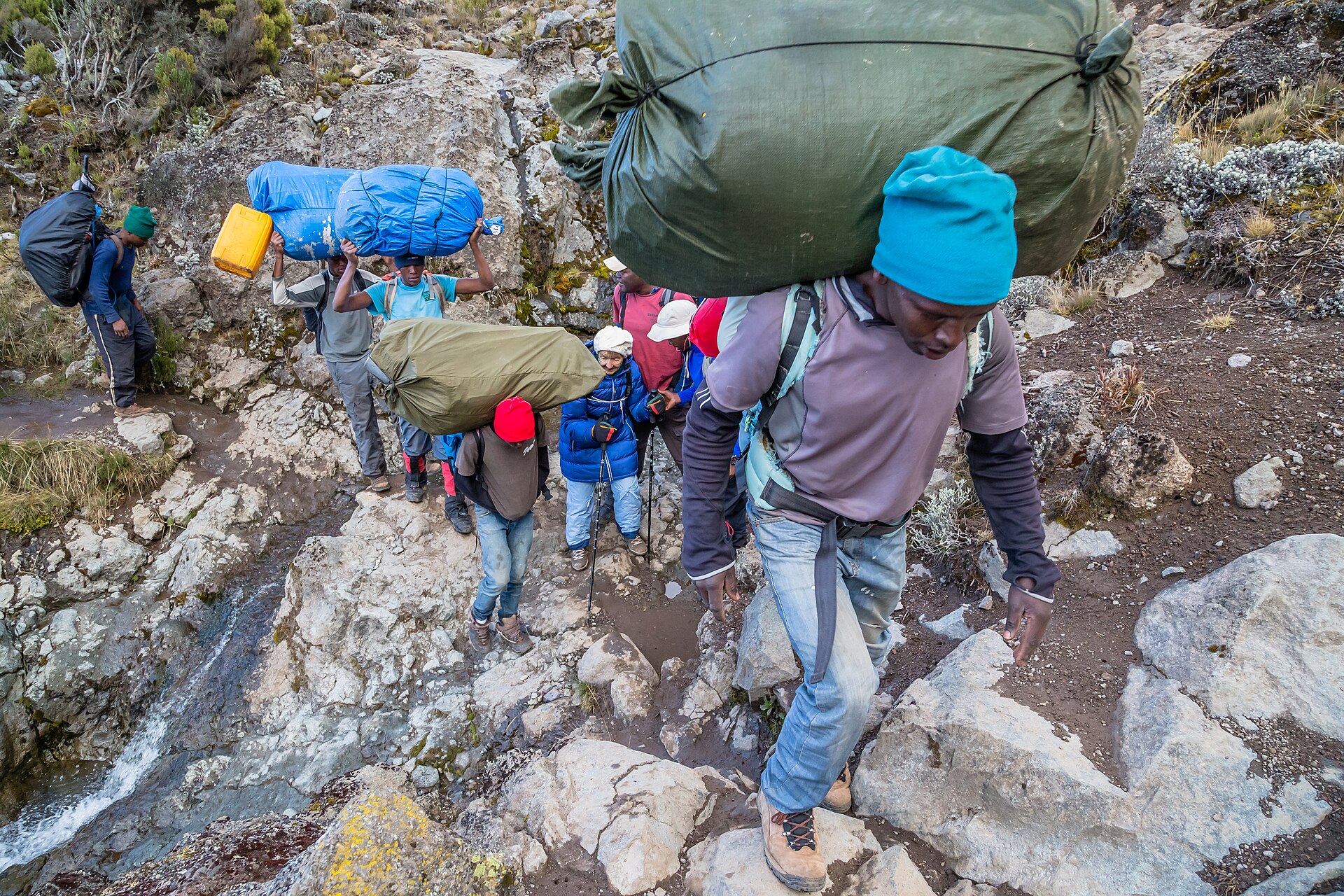
A single climber on a 7-day route is typically supported by a crew of 6 to 10 — a lead guide, an assistant guide, a cook, and four to seven porters. Operators budget roughly $80 to $150 per climber per day for crew wages and logistics, and food runs $10 to $20 per climber per day including the crew’s own meals.
This is where the ultra-budget operators make their margin. Kilimanjaro Porters Assistance Project guidelines set minimum wages and load limits (20 kg maximum per porter, excluding personal kit), and operators who follow them cannot compete with those who do not. Porters on cheap climbs are routinely underpaid, under-equipped and over-loaded, and hypothermia among porters remains a real problem on the mountain.
The practical filter: ask an operator directly what they pay porters per day, how many porters per climber they assign, and whether they are a KPAP partner. An operator who answers precisely is a different proposition from one who changes the subject.
What the price tiers actually mean
$1,400 – $2,200: the budget tier
Real climbs, real permits, and often a genuinely competent local guide. What tends to be missing: acclimatisation days (usually 5 or 6 days on Marangu or Machame), a portable altitude chamber, bottled oxygen, a dedicated summit-night assistant, and adequate porter pay. Summit success on a 5-day Marangu runs around 50 to 60 percent, which means roughly half the group turns around before Uhuru Peak.
$2,300 – $3,500: the mainstream tier
This is where most reputable operators sit and where a 7-day Machame climb typically lands at around $2,600. You get an extra acclimatisation day, a guide-to-climber ratio around 1:3 or 1:4, pulse oximeter checks twice daily, an emergency oxygen cylinder, and crew paid at or above KPAP minimums. Summit success on 7-day Machame runs around 85 percent, and on 8-day Lemosho above 90 percent.
$4,000 – $8,000: the premium tier
Western-owned or Western-branded operators, often with a Western guide alongside the local team. You are buying longer routes (8 to 9 days), private toilets, larger mess tents, better sleeping mats, Gamow bag on hand, more comprehensive pre-trip support and, frankly, a marketing budget. The mountain does not get easier. Your odds do improve, mostly because of the extra days.
The costs that are never in the package price
- Tips. Not optional in practice. Budget $250 to $350 per climber for the full crew on a 7-day climb, more for smaller groups since the crew cost is shared across fewer people. Bring it in cash, in USD, in small bills.
- International flights. Kilimanjaro International (JRO) is the convenient arrival point. Nairobi or Dar es Salaam plus a connection is sometimes cheaper.
- Visa. Tanzania’s eVisa is $50 for most nationalities and $100 for US passport holders (multiple entry). Apply online at least two weeks out.
- Travel insurance with high-altitude evacuation. Standard policies exclude trekking above 4,000 or 5,000 m. Kilimanjaro is 5,895 m. You need a policy that explicitly covers it, typically $80 to $200 for the trip. This is the single most-skipped and least-skippable line item.
- Hotel nights before and after. Two nights minimum in Moshi or Arusha, roughly $40 to $150 a night depending on tier.
- Gear. Rentable in Moshi for $5 to $15 per item per trip. Boots and a sleeping bag rated to -10 C or better are worth owning; almost everything else is worth renting.
- Vaccinations and medication. Yellow fever certificate required if arriving from an endemic country. Diamox (acetazolamide) is widely used and worth discussing with a doctor before you travel.
A realistic all-in budget
For one climber on a 7-day Machame route with a mid-tier operator:
- Climb package: $2,400
- Tips: $300
- Flights (Europe to JRO, return): $650 – $1,100
- Visa: $50 – $100
- High-altitude insurance: $120
- Two hotel nights: $120
- Gear rental: $80
- Meals, transfers, incidentals: $120
Total: roughly $3,840 to $4,340. Double the sticker price of the climb package is a good mental shortcut for first-timers budgeting from Europe or North America.
Which route, and why days matter more than money
- Marangu (5–6 days): the only hut route. Cheapest, most direct, worst acclimatisation profile, lowest success rate.
- Machame (6–7 days): the popular choice. Excellent climb-high-sleep-low profile via the Barranco Wall. Busy, but the crowding is overstated outside peak weeks.
- Lemosho (7–8 days): longer approach through rainforest from the west, quieter for the first two days, joins Machame at Barranco. Best balance of success rate and cost.
- Rongai (6–7 days): the northern approach, drier, better in the rainy shoulder months, gentler gradient but less effective acclimatisation.
- Northern Circuit (9 days): longest, quietest, highest success rate (around 95 percent), most expensive.
The strongest single predictor of whether you reach Uhuru Peak is not fitness, age or gear. It is how many nights you spend above 3,000 m before summit night. Paying $400 more for an extra day is the best value purchase available on this mountain.
When to go
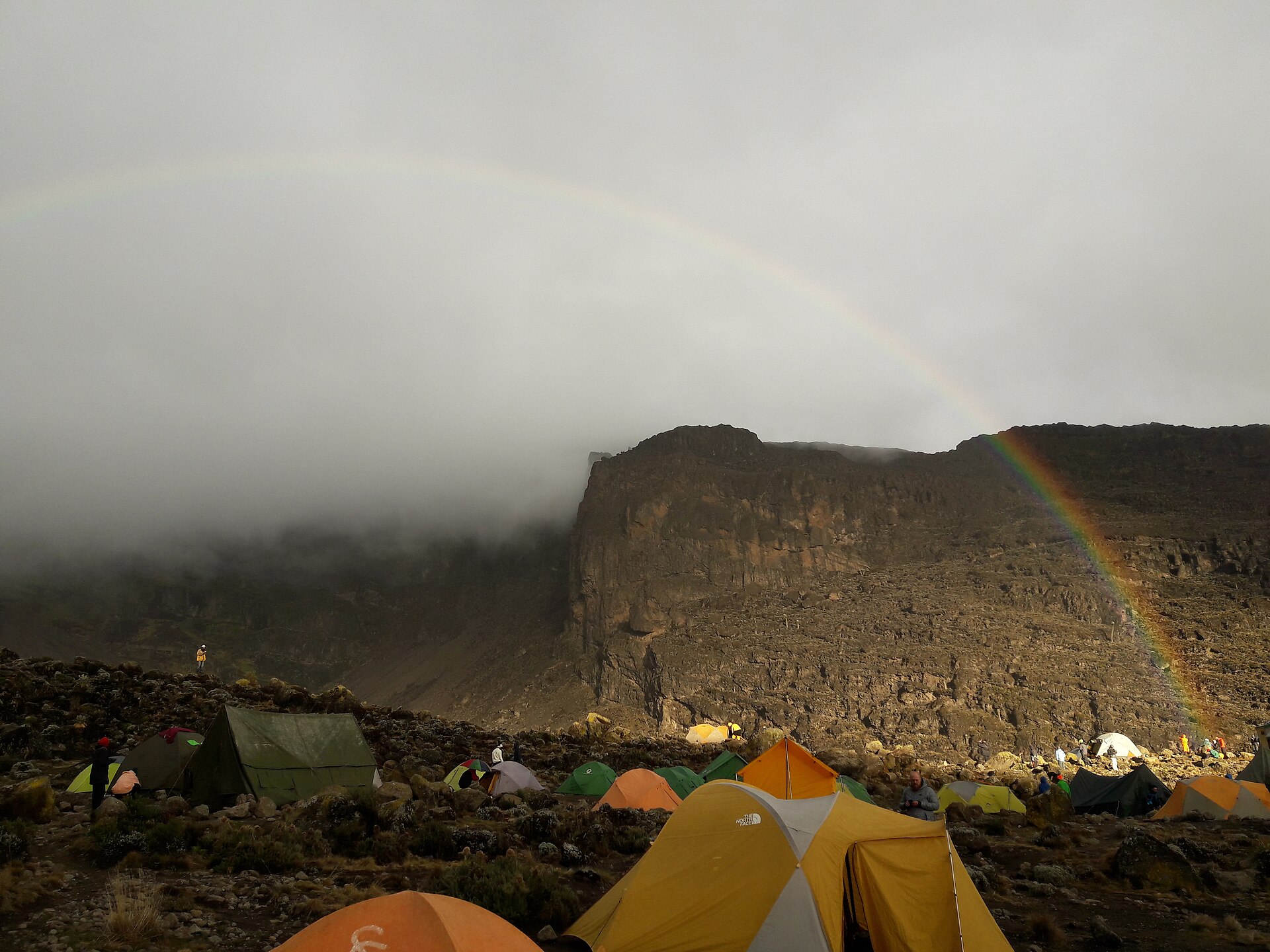
Two dry seasons: January to mid-March, and June to October. January and February are warmer and quieter; July to September is the busiest and the coldest at altitude. April, May and November are the long and short rains — climbs run, prices drop, and the rainforest section becomes genuinely unpleasant.
Full-moon summit nights are popular for the visibility and are booked out months ahead.
Getting there and where to sleep either side
Most climbers fly into Kilimanjaro International, which sits between Moshi and Arusha. Moshi is closer to the mountain and the more common base; Arusha is bigger and better placed if you are adding a safari.
Getting from the airport to your accommodation is the one leg worth arranging before you arrive — compare fixed-price transfers here:
Most operators include the airport transfer. If yours does not, or if you arrive a day early, pre-booking a JRO transfer avoids the arrivals-hall negotiation after a long-haul. For accommodation, compare Moshi hotels against Arusha options — the price difference is small and the location difference is not.
Add a safari or not?
Most people who fly to Tanzania for Kilimanjaro also do a safari, and the marginal cost of adding one is far lower than a separate trip. Budget $250 to $600 per person per day for a mid-range Serengeti and Ngorongoro circuit, or a fraction of that for Tarangire and Lake Manyara closer to Arusha.
Do the climb first and the safari after. Three days of sitting in a vehicle is a much better recovery than a warm-up.
Self-driving Tanzania is possible but rarely sensible for first-time visitors — park entry rules, road conditions and the requirement for a guide in some areas make an operator the simpler option. If you do want a vehicle for the Moshi–Arusha corridor, compare Tanzania rental rates before you commit.
Connectivity on the mountain
Cell coverage on Kilimanjaro is surprisingly good on the southern routes — you will get signal at most camps below 4,600 m, and many people send a message from the crater rim. A local eSIM is far cheaper than roaming and worth having for the days either side; Tanzania eSIM plans cost a few dollars for enough data to cover a two-week trip.
The one-line summary
Roughly $900 of your quote is park fees you cannot avoid, roughly $900 more is crew wages you should not avoid, and the difference between a 50 percent and a 90 percent chance of standing on the summit is about $400 worth of extra days. Budget $2,400 to $3,200 for the climb, then budget the same again for everything around it.
Related reading
Prices are indicative for 2026 in US dollars and vary by operator, route and group size. Park fees are set by Tanzania National Parks and change periodically — confirm current rates with your operator. Some links on this page are affiliate links; using them costs you nothing and helps keep this site running.