The Garden Route is the rare road trip where the road itself is the least dramatic part. The N2 between Cape Town and Port Elizabeth is a good, mostly dual-carriageway highway with fuel every 40 km and no altitude, no gravel and no border posts. What makes people nervous is everything around the driving: the one-way drop fee, the insurance excess, the cross-border letter, whether a 4×4 is necessary, and whether it is safe. This guide answers those in order, with 2026 prices.
Short version: you do not need a 4×4, you probably do want a one-way rental, and the single largest avoidable cost is the insurance excess — not the daily rate.
Do you need a 4×4? Almost certainly not
The classic Garden Route runs Cape Town to Hermanus, Mossel Bay, George, Wilderness, Knysna, Plettenberg Bay and on to Tsitsikamma and Storms River, and every kilometre of it is tarred. A standard hatchback handles the entire route. The places where ground clearance genuinely matters are optional detours: the gravel passes of the Little Karoo on Route 62, the Baviaanskloof beyond Willowmore, and some private game reserve access roads. Even then, a compact SUV with normal tyres is enough — true low-range 4×4 is for Namibia and Botswana, not the Western Cape coast.
Where you should size up is luggage and people. Four adults with suitcases do not fit in a Group B hatchback, and South African rental fleets are honest about boot capacity in a way that catches out travellers who booked on price alone. A Group D car or an estate is usually the right answer for two couples.
The one real argument for higher clearance: if your plan includes a self-drive safari at Addo Elephant National Park at the eastern end, the internal roads are gravel and a low car is uncomfortable rather than impossible. Compare with our guide to 4×4 rental in Namibia to see what a route that genuinely requires one looks like.
What a rental car actually costs in 2026
Rates swing hard by season. Broad 2026 ranges for a one-week rental, collected from Cape Town and George pickups:
- Compact manual (VW Polo Vivo, Suzuki Swift): roughly R450–R700 per day in low season (May–August), R750–R1,100 in December–January.
- Compact automatic: add about R150–R250 per day. Automatics are a minority of the South African fleet and they sell out first.
- Mid-size SUV (Toyota Corolla Cross, Hyundai Creta): R900–R1,500 per day depending on season.
- Full 4×4 with rooftop tent: R1,800–R3,000 per day. Almost nobody needs this for the Garden Route itself.
At current rates that is roughly €22–€35 a day for a compact in shoulder season — genuinely cheap by European or North American standards. The spread between the cheapest and most expensive quote for an identical car class is routinely 40%, so comparing is not optional. Fuel: petrol runs roughly R22–R24 per litre in 2026, and a compact doing 6 l/100 km covers the full Cape Town–Port Elizabeth run for about R1,100 (€55).
The one-way drop fee, and why it is usually worth paying
Most people fly into Cape Town and out of Port Elizabeth (Gqeberha), or the reverse, because driving the N2 twice wastes two days. Rental companies charge a one-way fee for the privilege: roughly R1,000 to R3,000 depending on the distance and the supplier, on top of the daily rate.
Do the arithmetic before you refuse it. The Cape Town to Port Elizabeth return leg is around 750 km, which is a full day of driving plus a tank of fuel — and it costs you a day of holiday. Against R1,000 to R3,000, a one-way rental is normally the cheaper option in real terms. The exception is a short trip that only goes as far as Knysna and back, where returning along Route 62 inland gives you a genuinely different drive and no fee at all.
Watch the drop-off location detail: some suppliers reduce the fee between airport branches but charge it in full for city-centre offices, and a few exclude the Eastern Cape entirely from one-way agreements. Confirm the fee in writing at the quote stage rather than at the counter.
Insurance, excess and the R25,000 problem
This is where Garden Route rentals go wrong. The advertised rate almost always includes basic collision damage waiver with a very high excess — the amount you remain liable for after any damage. Excesses in the R15,000 to R30,000 range are standard, and they are charged in full for a cracked windscreen or a kerbed alloy, both of which are common on South African roads.
Three ways to handle it. Buy the supplier’s super cover at the counter, which is the most expensive per day but the least argument at drop-off. Buy standalone third-party excess insurance before you travel, which is far cheaper but means you pay the rental company first and claim it back. Or rely on a credit card’s built-in rental cover, which frequently excludes South Africa or excludes tyres, glass and undercarriage — the three things most likely to be damaged here. Read the exclusion list before assuming you are covered.
Two South Africa-specific exclusions to check for explicitly: damage from gravel roads, since some policies void cover the moment you leave tar, and damage from animal strikes, which matters on the eastern stretches at dusk.
Crossing a border? Get the letter first
If your trip extends beyond South Africa — Lesotho, eSwatini, Namibia, Botswana, Zimbabwe or Mozambique — you need written cross-border permission from the rental company arranged before collection, not at the counter. Expect an additional daily fee of roughly R50 to R150, plus the vehicle registration documents and a letter of authority to show at the post. Turning up at a border without the paperwork means turning around; there is no on-the-spot fix.
For the standard Garden Route this does not apply. It only becomes relevant if you tack on a Lesotho loop or drive north into Namibia afterwards.
What the route costs beyond the car
The N2 has toll plazas on the eastern portion, the Tsitsikamma gate being the main one, payable in cash or card. Fuel is sold by attendants, never self-service, and a small tip of R5 to R10 is customary; most stations take cards but carrying some cash avoids the occasional offline card machine in smaller towns.
Park fees are the other line item. SANParks charges a daily conservation fee of R272 for international visitors, R136 for SADC passport holders and R68 for South African citizens and residents, which applies at Garden Route National Park sections including Storms River Mouth. From 1 April 2026 the Plaatbos and Goesa forest trails in Tsitsikamma also carry a daily fee, at R96 per international adult and R48 per child. If you plan on several parks over a longer trip, a Wild Card can pay for itself.
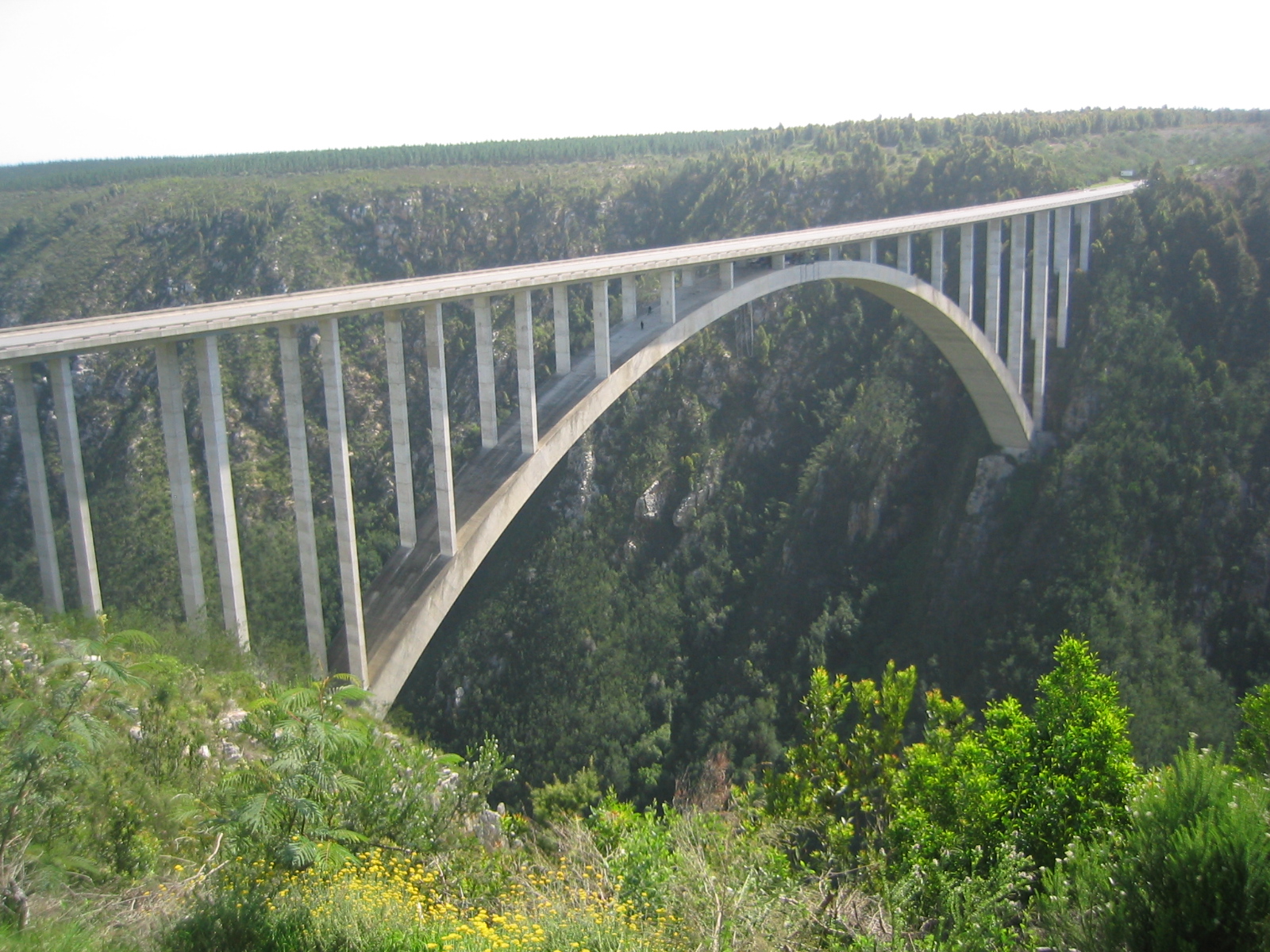
Activities: the Bloukrans bungy, the highest bridge bungy in the world at 216 metres, is R1,690 in 2026 including the skywalk, and the skywalk tour alone is R500 for those who would rather stay attached to the bridge.
Driving conditions, honestly
South Africa drives on the left. If you are coming from a right-hand-drive country the mechanics are familiar; if not, budget a nervous first hour and start with the airport-to-city leg rather than a mountain pass.
The yellow-line convention. Slower drivers pull onto the paved left shoulder to let faster traffic pass, and the overtaker flashes hazard lights as thanks. It is universal and technically discouraged. Never do it where the shoulder is broken or where pedestrians walk.
Pedestrians and livestock on rural roads. This is the single biggest hazard, especially at dawn and dusk. The standard advice from every local you ask is the same: do not drive intercity after dark on the Garden Route. It is not primarily about crime — it is about people, cattle and kudu on unlit roads.
Load shedding and traffic lights. Rolling power cuts still occur, and when they do, urban intersections lose their signals. A dead traffic light is legally a four-way stop; treat it as one even when nobody else does.
Minibus taxis. They stop without warning and pull out without warning. Leave space.
Speed enforcement. The limit is 120 km/h on the N2, 100 on rural roads and 60 in towns, and camera enforcement is active. Fines are passed to the rental company, which adds an administration charge and bills your card months later.
A seven-day driving plan
Day 1: Cape Town to Hermanus, 120 km. Whale watching from the cliff path between June and November — Hermanus is one of the best land-based whale-watching spots anywhere.
Day 2: Hermanus to Mossel Bay, 320 km, or take Route 62 inland through Montagu and Barrydale for a wine-and-mountain-pass alternative.
Day 3: Mossel Bay to Wilderness, 70 km. Short driving day. Kayak the Touw River, walk to the Map of Africa viewpoint.
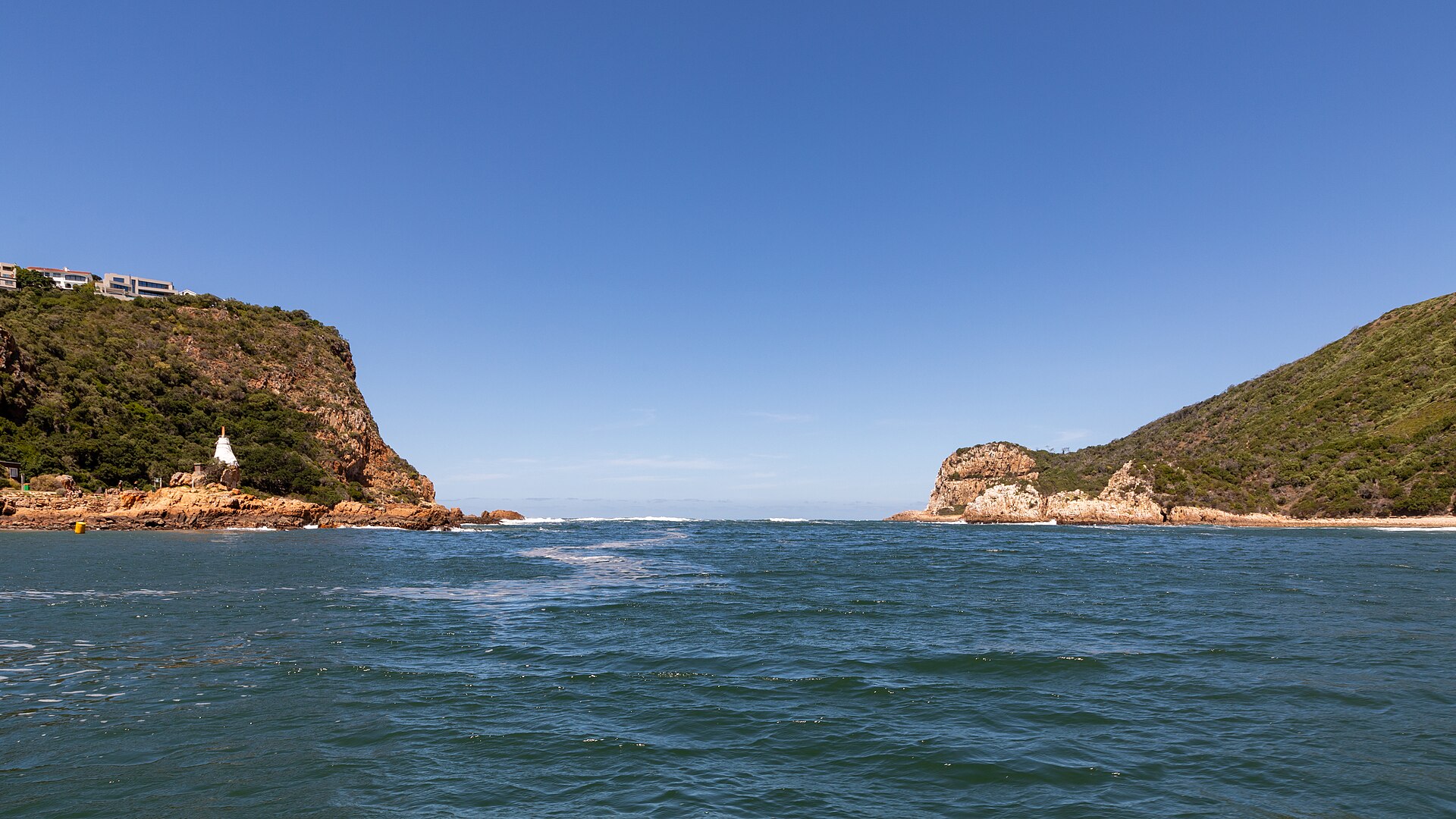
Day 4: Wilderness to Knysna, 50 km, over the lagoon. The Knysna Heads viewpoint, the oyster bars, and the ferry to Featherbed Nature Reserve.
Day 5: Knysna to Plettenberg Bay, 35 km. Beaches, the 9 km Robberg Peninsula hike, and the elephant and primate sanctuaries on the N2 between the two towns.
Day 6: Plettenberg Bay to Storms River, 70 km. Tsitsikamma, the suspension bridge at Storms River Mouth, Bloukrans on the way.
Day 7: Storms River to Port Elizabeth, 190 km, with Addo Elephant Park as an add-on day if you have it.
Total driving: under 900 km across a week. This is a genuinely relaxed route, and the most common mistake is compressing it into four days and spending all of them in the car.
Where to sleep along the way
Knysna and Plettenberg Bay are the two towns where accommodation gets expensive and scarce in December and January, which is South African school holidays plus international summer. Wilderness and Sedgefield are quieter and cheaper alternatives 30 minutes either side. Storms River Village is small and books out because it is the only base right at Tsitsikamma.
Shoulder season — March to May and September to November — is the sweet spot: whales are around from June, wildflowers in spring, and rates well below peak. Winter, June to August, is mild and green on this coast, with rain, and it is the cheapest time to drive it.
Arriving, and staying connected
If you land late in Cape Town, take a pre-booked transfer into the city and collect the car the next morning from a downtown branch — often cheaper than the airport branch anyway, since airport surcharges of 8–12% are standard. Coverage along the N2 is solid but degrades in the Tsitsikamma forest and on inland passes; a local SIM requires RICA registration with a passport and proof of address, so for a short trip a South Africa eSIM that activates before you land is the simpler option.
Is it safe?
The Garden Route is the most touristed corridor in South Africa and is considerably safer than the national crime statistics suggest, but sensible precautions still apply. Do not leave anything visible in a parked car, at trailheads especially. Do not drive intercity at night. Use secure parking at accommodation. Keep doors locked in urban traffic. Smash-and-grab at traffic lights is the realistic risk in Cape Town and Port Elizabeth, not on the open road between them.
If you are starting or ending in Cape Town and would rather not drive in the city itself, an airport transfer plus a rental collected on the day you leave town is a common and sensible split. Our Cape Town guide covers the city end of the trip.
The bottom line
Book a mid-size car rather than the cheapest hatchback, accept the one-way fee, and spend your money on excess reduction rather than a bigger engine. Drive in daylight, allow more days than the distances suggest, and let the short driving legs be the point. The Garden Route rewards a slow week and punishes a fast four days.