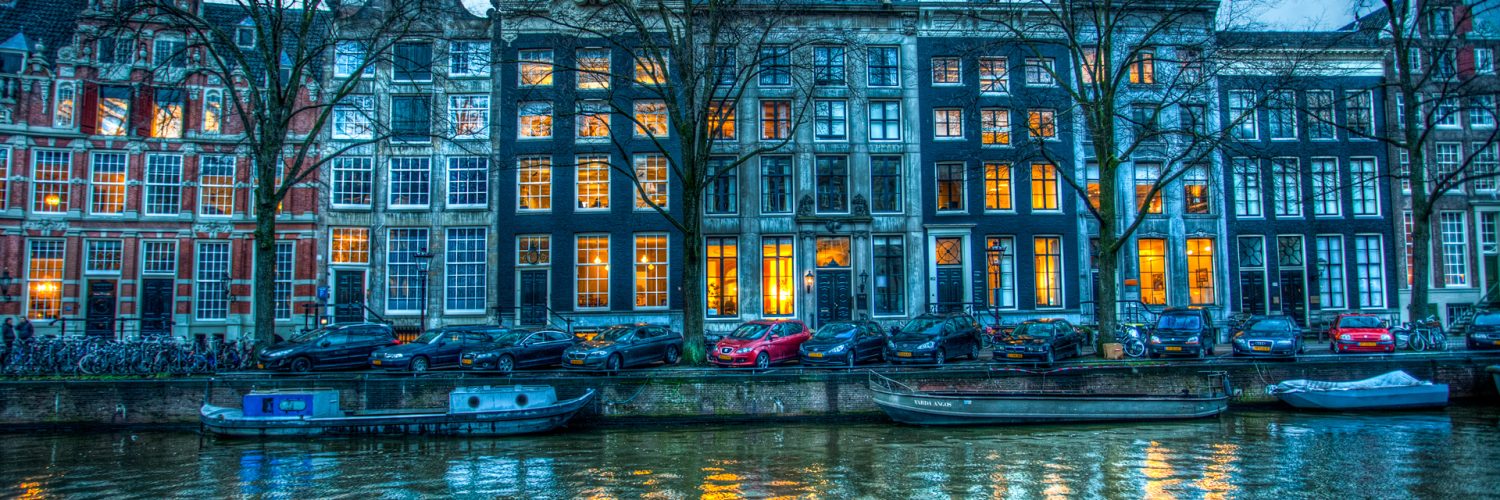
Amsterdam is a city of roughly 900,000 people that receives more than 20 million visitors a year, and almost all of them go to the same square kilometre. That statistic explains most of what you need to know: the famous parts are extremely crowded, the city is far bigger and stranger than those parts suggest, and the difference between a good trip and a disappointing one is mostly a matter of walking ten minutes further than everyone else.
A little context, because it explains the city
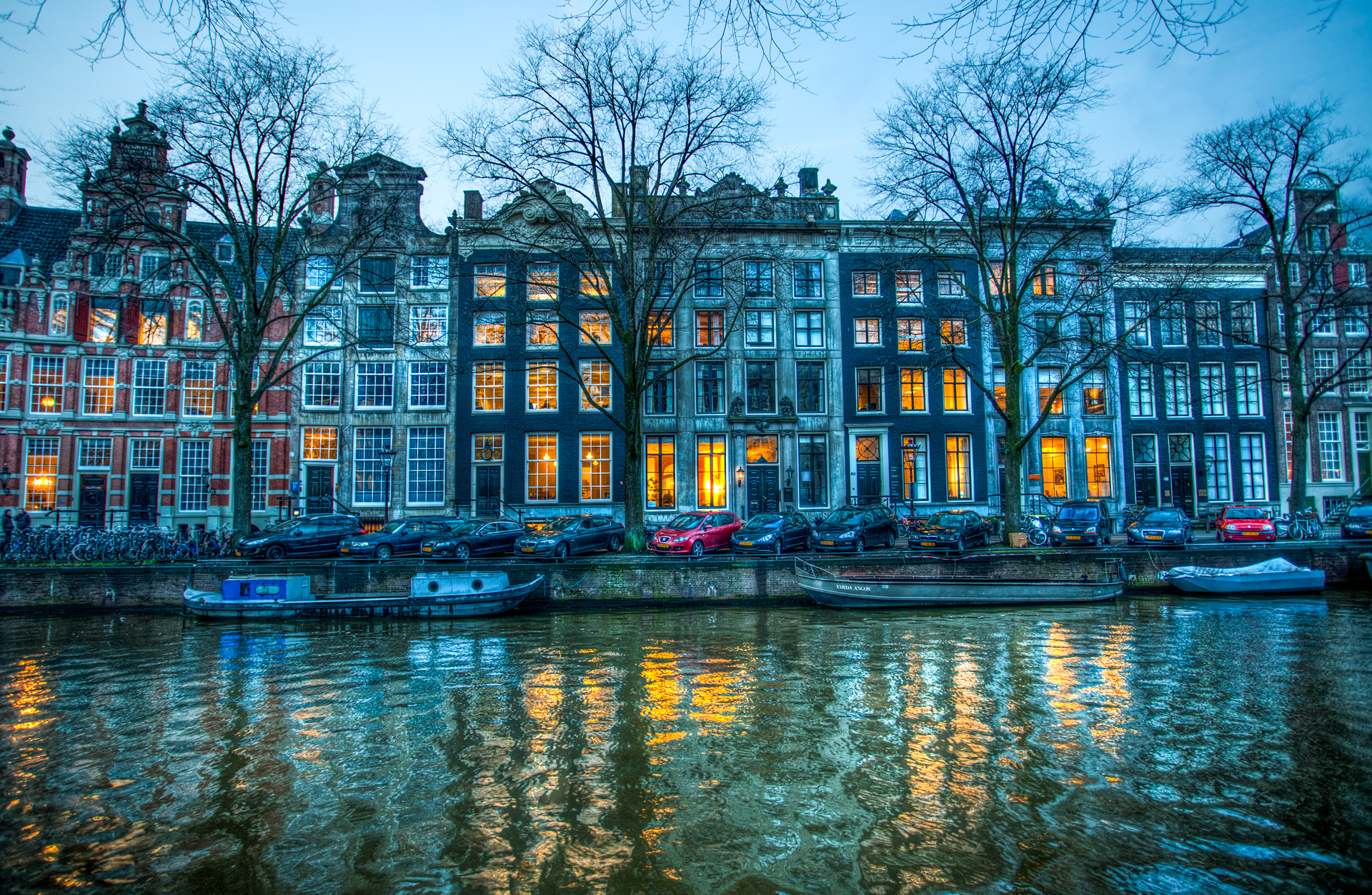
Amsterdam grew from a fishing village on a dammed river — the name is literally a dam on the Amstel. Its shape comes from the seventeenth century, when the city was the richest port in the world and the merchant class dug three concentric canals as a planned expansion. The narrow, tall, gabled houses along them are narrow because property was taxed on frontage width, and tall because merchants stored goods in the attic. The hoisting beams at the top of almost every house are how they got them up there.
That history is why the centre feels coherent rather than assembled. It was designed as one project and has barely changed since.
Getting in from Schiphol
Schiphol is 15 km southwest of the centre and one of the easiest major airports in Europe to leave. Trains run from directly beneath the terminal to Amsterdam Centraal every ten minutes or so, taking 15 to 20 minutes for roughly EUR 5.90. There is no reason to consider anything else in daylight with normal luggage.
The exceptions are late arrivals, groups of four or more, or accommodation outside the centre, in which case a pre-booked transfer costs less than two taxis and drops you at the door. A metered taxi runs EUR 45 to 60.
What genuinely needs booking in advance
- Anne Frank House — EUR 16.50 for adults. Tickets are released online on a rolling six-week window and disappear within hours. There is no ticket office and no same-day queue. If you want to go, set a reminder for the release date. This is the hardest ticket in the city.
- Van Gogh Museum — around EUR 24. Timed entry, online only, busy every day. The collection is the largest anywhere and the chronological hang genuinely tells a story.
- Rijksmuseum — around EUR 25. Enormous, and the Dutch Golden Age rooms are the reason to come.
- Canal cruises — dozens of operators, wildly variable quality. The small open boats are much better than the large glass-roofed ones.
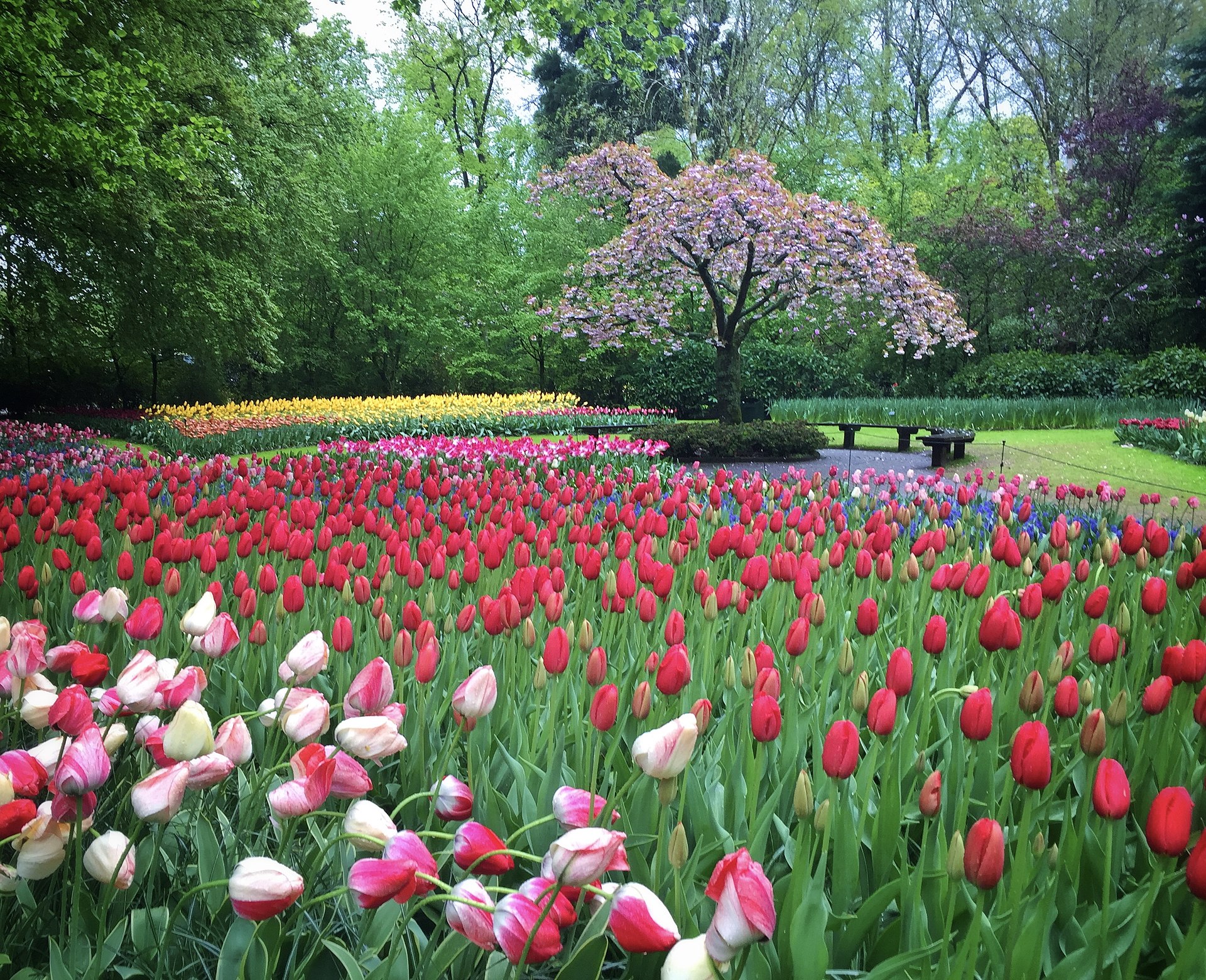
- Keukenhof — the tulip gardens, open only from late March to mid-May.
Here is what is currently bookable in Amsterdam and roughly what it costs:
Anne Frank House: the one ticket that runs on its own rules
Almost every other queue in Amsterdam can be solved on the day. This one cannot. The Anne Frank House sells tickets exclusively through its own website — there is no door sale, no kiosk, no reseller, no skip-the-line upgrade, and the I amsterdam City Card does not cover it. Anything advertised elsewhere as an Anne Frank House ticket is either a walking tour of the neighbourhood that never enters the building, or it is not real.
Tickets are released every Tuesday at 10:00 Amsterdam time, exactly six weeks ahead of the visit date. Between March and October the whole six-week block routinely goes within a few hours; in July and August it can go in under an hour. The planning rule follows from that: count back six weeks from the day you want, work out which Tuesday that is, and be logged in and waiting at 09:55. If you miss it, keep checking — a trickle of returned slots reappears, usually in the last day or two before the date, and the late-evening slots hold on longest.
The 2026 prices are EUR 16.50 for adults, EUR 7 for ages 10 to 17 and EUR 1 for under-tens. Whether the museum suits a young child is a separate judgement from whether you can get in: the house is steep, narrow and deliberately unlit, and it is not a place to improvise with a tired six-year-old.
One more number worth folding into the planning, because it changed this year. Dutch VAT on hotel and short-stay accommodation rose from 9% to 21% on 1 January 2026 — campsites kept the 9% rate — and it applied to bookings and prepayments made before that date too. Amsterdam’s own tourist tax of 12.5% of the room rate excluding VAT sits on top of that, and cruise passengers ashore for the day pay a flat EUR 15 per person instead. None of this changes what is worth seeing; it changes how many nights you can afford to see it over.
The museums beyond the big three
Amsterdam has around 75 museums and the queue is always at the same four. Some of the best are almost empty:
- Museum Van Loon and Museum Willet-Holthuysen — two preserved canal houses showing how the merchant class actually lived. Far more atmospheric than a reconstruction.
- Het Scheepvaartmuseum, the Maritime Museum — a replica East India Company ship you can board, in a beautiful seventeenth-century naval storehouse.
- The Stedelijk — modern and contemporary art, next door to the Van Gogh and a fraction as busy.
- Ons Lieve Heer op Solder — a clandestine Catholic church hidden in the attic of a canal house from the Reformation. Extraordinary and almost unknown.
- H ART Museum — large temporary exhibitions in a former almshouse on the Amstel.
Neighbourhoods worth your afternoon
- The Jordaan — originally working class, now the prettiest part of the city. Narrow streets, small bridges, brown cafes, the Noordermarkt on Saturdays.
- De Pijp — the most food-focused neighbourhood, home to the Albert Cuyp street market and Sarphatipark.
- Oost — genuinely local, with the Oosterpark, the Tropenmuseum and Dappermarkt.
- Noord — across the IJ on a free ferry from behind Centraal Station. Former shipyards turned into studios and festivals, the NDSM wharf, the A DAM Lookout tower. The most interesting thing happening in Amsterdam, four minutes away.
- Westerpark — a converted gasworks with restaurants and cinemas.
Cycling, honestly
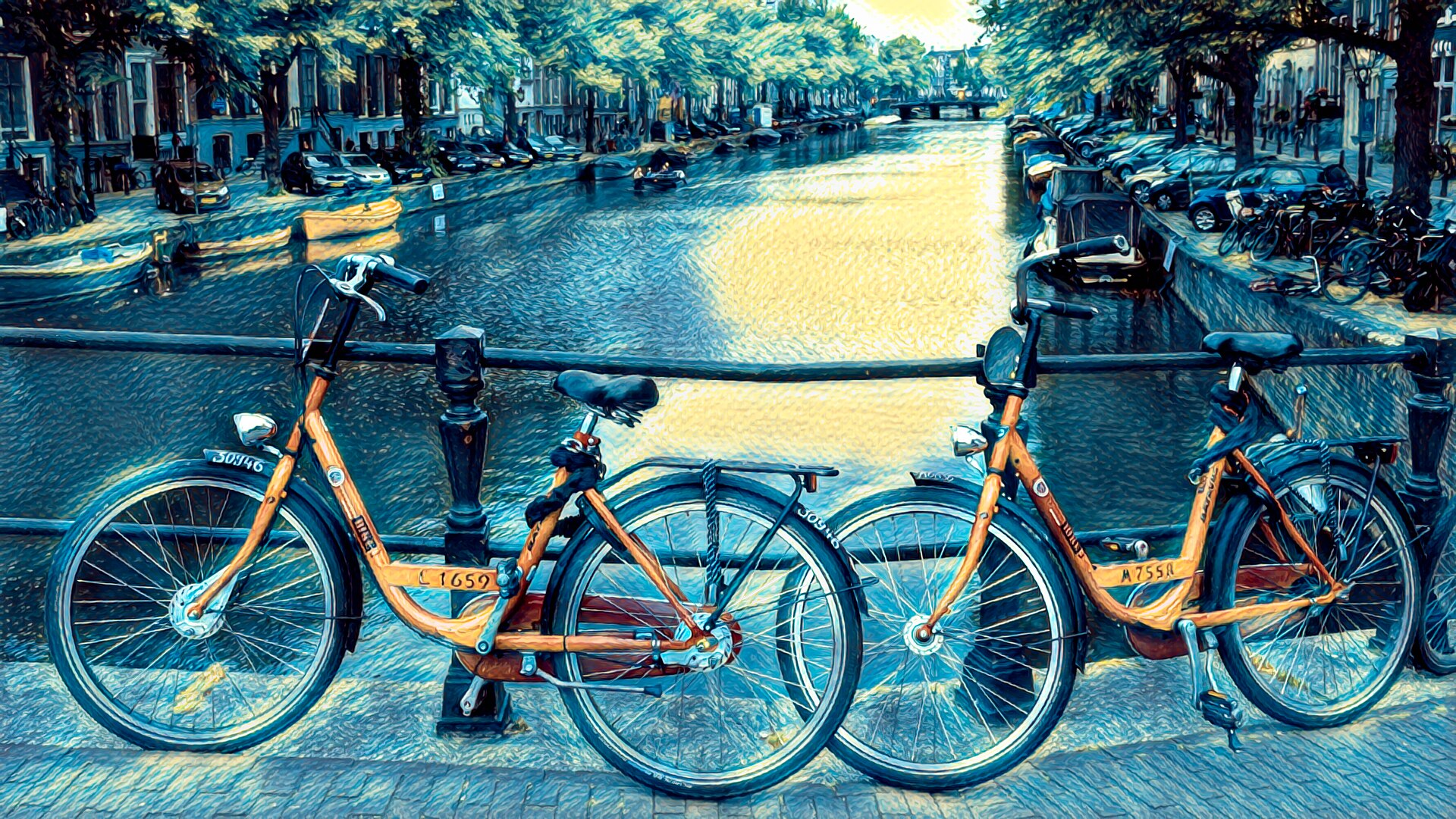
Amsterdam has roughly as many bicycles as residents and cycling is genuinely the fastest way to move around. It is also not the gentle experience visitors expect. Dutch cyclists move fast, do not brake for tourists, and the bike lanes have rules that everyone but you knows.
- Signal with your arm, look behind you before turning, keep right.
- Do not stop in a bike lane to check your phone. This is the most common tourist mistake.
- Trams have priority and their rails will catch a wheel if you cross at a shallow angle.
- Lock the frame to something fixed, always. Bike theft is endemic.
- Rental runs EUR 10 to 15 a day. Our Amsterdam bike rental guide covers operators and deposits.
If you are not a confident cyclist, the tram network is excellent and covers everything. There is no shame in it.
A three-day shape
- Day 1 — the museum quarter. Rijksmuseum at opening, lunch in De Pijp, Van Gogh in the afternoon, Vondelpark at dusk.
- Day 2 — old centre and canals. Begijnhof and the Nine Streets in the morning, a small-boat cruise at midday, the Jordaan in the afternoon, Anne Frank House if you got a ticket.
- Day 3 — Noord and the east. Free ferry to Noord, NDSM wharf, back for the Maritime Museum, then Oost for dinner.
With one day: the Nine Streets, a canal boat, the Rijksmuseum, the Jordaan in the evening. Skip Anne Frank rather than build the day around a ticket you probably cannot get.
Day trips
- Zaanse Schans — working windmills 20 minutes by train. Touristy but genuinely photogenic.
- Haarlem — 15 minutes by train, a smaller quieter Amsterdam with the excellent Frans Hals Museum.
- Utrecht — 25 minutes, split-level canal wharves, a proper Dutch city with a fraction of the visitors.
- Keukenhof and the bulb fields — spring only, roughly 40 minutes by bus.
- The Hague and Delft — an hour, for the Mauritshuis and Vermeer country.
Getting from the airport to your accommodation is the one leg worth arranging before you arrive — compare fixed-price transfers here:
Where to stay
- Canal ring — the classic choice, expensive, everything on foot.
- Jordaan — quieter, charming, slightly cheaper, still central.
- De Pijp — best food, good value, 15 minutes by tram.
- Oud-West — residential, near Vondelpark, underrated.
- Noord — cheapest, most interesting, and the ferry is free and runs all night.
Amsterdam rates are among the highest in Europe and rise sharply around King’s Day in late April and through summer. Compare Amsterdam accommodation early, and note the city tourist tax, which is a percentage of the room rate rather than a flat fee and is high by European standards.
When to go
April and May for tulips and long light. September for warm days and thinner crowds. June to August is busy and the canals smell in a heatwave. Winter is dark and often wet, but the museums are the point and December has genuine charm.
King’s Day on 27 April turns the whole city orange and is either the best or the worst day of the year to be there, depending entirely on your temperament.
Practical notes
- The Red Light District is a residential neighbourhood. Photographing the windows is prohibited and enforced, tour groups are restricted, and the city is actively discouraging the stag-party trade.
- Cannabis is tolerated rather than legal, sold only in licensed coffeeshops, with a smoking ban in parts of the centre. Edibles are much stronger than visitors expect.
- Cards over cash. Many places including supermarkets do not take cash at all. Some smaller places take only Dutch Maestro cards, which foreign visitors do not have. Carry a backup.
- Everyone speaks English, fluently, and will switch the moment they hear an accent.
- The I amsterdam City Card bundles museums and transport, and pays off only at three or more museums a day.
- Connectivity. Visiting from outside the EU, a Dutch eSIM costs a few euros and beats roaming.
Related reading
Prices are indicative for 2026. Some links on this page are affiliate links; using them costs you nothing and helps keep this site running.